
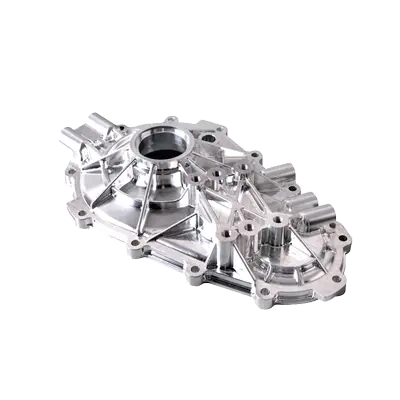
With the advent of computer numerical control (CNC) processing, the world of medical technology has undergone a major transformation. This technology revolutionizes the healthcare industry by enabling the precise and accurate creation of complex medical parts. As a result, demand for CNC medical parts has increased exponentially, driving manufacturers’ need to adapt and innovate.
In the medical equipment manufacturing industry, CNC machining plays a crucial role in the production of high-precision components. These sections are used in a wide range of medical applications, including surgical instruments, implantable devices, diagnostic devices and medical implants. Using CNC machining in medical manufacturing provides several advantages, including improved accuracy, increased efficiency and reduced production time.
One of the main benefits of CNC machining in the medical manufacturing industry is its ability to produce complex geometric shapes and complex designs. This is especially important in the production of medical implants where accuracy and accuracy are crucial. CNC machining enables manufacturers to create customized implants that meet the specific needs of individual patients, improve outcomes and reduce the risk of complications.
Another important advantage of CNC processing in the medical manufacturing industry is its ability to have multiple materials. These include metals such as titanium and stainless steel, as well as plastics and other polymers. The ability to process these materials accurately and accurately enables manufacturers to produce medical parts that meet the highest standards of quality and reliability.
In addition to technical advantages, CNC processing also provides some economic benefits. By reducing production time and increasing efficiency, CNC machining enables manufacturers to reduce costs and increase their competitiveness. This is especially important in the medical device manufacturing industry, where companies must balance the demand for high-quality products with the need to control costs.
Light Light is a professional five-axis CNC processing manufacturer, with advanced five-axis CNC processing equipment and production technology, professionally solves metal parts manufacturing problems, and can also provide one-stop post-processing and completion services. Most materials can be quickly customized and handled. For customized precision machining, the first choice is excellent five-axis CNC machining. With the ability to customize precision parts at the highest prices, Great Light is the ideal partner for companies seeking high-quality CNC medical parts.
Quality is crucial when it comes to CNC medical parts. The use of advanced CNC machining technology, coupled with a commitment to quality and accuracy, enables manufacturers to produce medical parts that meet the highest standards of quality and reliability. As demand for CNC medical components continues to grow, manufacturers must prioritize quality, accuracy and innovation in order to remain competitive.
In short, CNC machining revolutionized the medical device manufacturing department by creating complex medical parts in an accurate and accurate way. CNC machining is an essential technology for medical manufacturers to produce customized implants, use a variety of materials, and provide multiple economic benefits. As the healthcare industry continues to grow, demand for high-quality CNC medical sectors will only continue to grow, driving innovation and progress in this field.
FAQ:
Q: What is CNC processing and how is it used in medical manufacturing?
A: CNC machining is a technology that uses computer-controlled machines to accurately measure machine materials. In the medical manufacturing industry, CNC machining is used to produce complex medical parts, including surgical instruments, implantable devices and medical implants.
Q: What are the benefits of using CNC processing in medical manufacturing?
A: The benefits of using CNC machining in medical manufacturing include improved accuracy, increased efficiency and reduced production time. CNC machining also enables manufacturers to produce customized implants and use a variety of materials.
Q: What types of materials can be used in CNC processing in medical components?
A: CNC processing can be used with a variety of materials, including metals such as titanium and stainless steel, as well as plastics and other polymers.
Q: How does CNC machining improve the quality of medical parts?
A: CNC machining improves the quality of medical parts by enabling manufacturers to produce complex geometric shapes and complex designs with precision and accuracy. This is especially important in the production of medical implants where accuracy and accuracy are crucial.
Q: What is the future of CNC processing in medical manufacturing?
A: The future of CNC processing in the medical manufacturing industry is expected to be impacted by technological advances, including improved machine learning and automation. With the growing demand for high-quality CNC medical parts, manufacturers must prioritize innovation and progress in order to remain competitive.



















