
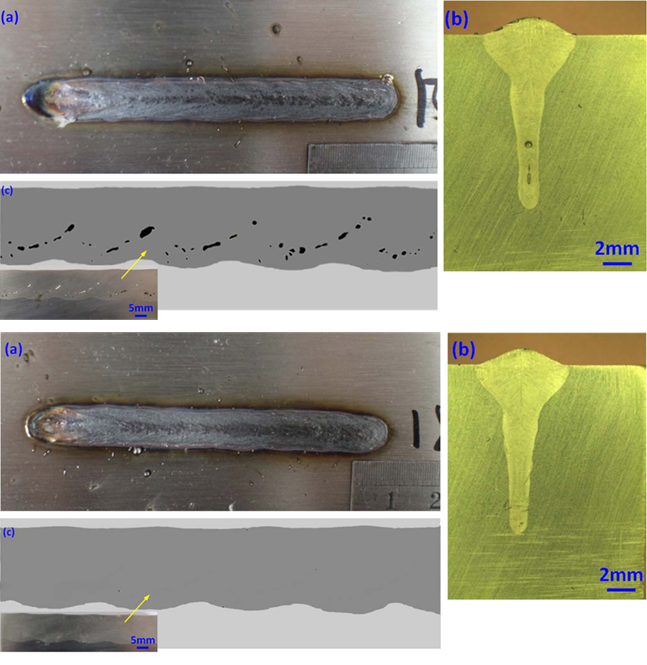
This text appears to be a technical paper on laser welding, discussing the importance of proper gas protection, gas flow, and gas blowing methods to achieve high-quality welds.
The author highlights the challenges of laser welding, including oxidation, pores, and combustion of elements, and emphasizes the need for a controlled welding environment. They categorize protective gases into inert (argon, helium) and active (nitrogen, carbon dioxide) gases, each with its own advantages and limitations.
The text then delves into the effects of gas flow on the welding process, discussing the importance of gas flow rate, thermal conductivity, and surface tension. It provides specific examples of gas flow rates required for different materials, such as stainless steel and aluminum alloys.
The author also discusses the impact of gas blowing methods on the welding process, including coaxial air blowing, lateral blowing, and composite blowing. Each method has its own advantages and limitations, and the text provides examples of how these methods can be used to achieve high-quality welds.
Overall, this text is a detailed and technical treatment of the importance of proper gas protection, gas flow, and gas blowing methods in laser welding. It is likely intended for an audience of engineers, scientists, and technicians working in the field of welding and materials processing.



















