
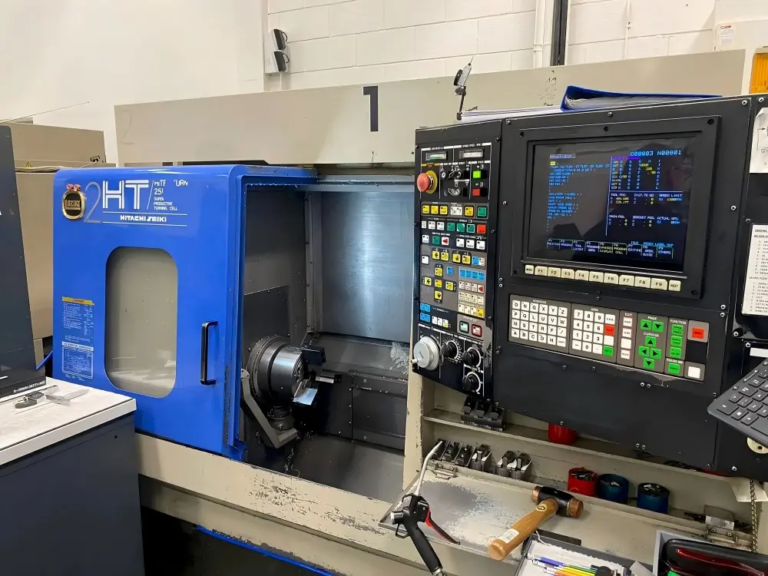
CNC machining: a brief overview
With the continuous development of technology, the demand for precise manufacturing has increased significantly. This leads to computer numerical control (CNC) machining, a process that uses computer-controlled machines to manufacture parts with extremely high accuracy and accuracy. In this article, we will dig into the world of CNC machining and explore its benefits, types and applications.
What is CNC machining?
CNC machining is a manufacturing process that uses computer-controlled equipment to cut, shape and drill bits such as metal, wood, plastic and glass. The process involves a computer-aided design (CAD) system that creates a program or set of instructions that the CNC computer uses to create the required parts or products.
Types of CNC machining
There are several types of CNC machining, each with its unique characteristics and applications. Some of the most common types include:
- 2.5 Axis machining: This type of machining uses a combination of vertical and radial axes to create parts with complex geometric shapes.
- 3-axis machining: This type of machining uses three linear axes to control the movement of the cutting tool.
- 4-axis and 5-axis machining: These advanced machining types use other axes to provide higher accuracy and control.
- 3D Printing: This process uses 3D printers to create complex shapes and structures of digital designs.
Benefits of CNC machining
CNC machining provides many benefits, including:
- Accuracy: CNC machining enables the production of parts with high accuracy and accuracy, making them ideal for applications requiring precise tolerances.
- Speed: CNC machines can operate at very fast speeds, allowing large quantities of parts to be produced quickly and efficiently.
- Flexibility: CNC machines can be programmed to handle a variety of materials and project sizes.
- Cost-effectiveness: CNC machining can be a cost-effective option for many manufacturers by reducing labor costs and increasing production speeds.
Application of CNC machining
CNC processing is widely used in various industries, including:
- Aerospace: CNC machining is used to create precise parts and components for aircraft and spacecraft.
- Automotive: CNC machining is used to create precise parts and components for cars, trucks and other vehicles.
- Medical: CNC machining is used to create precise instruments, implants and other medical devices.
- Industry: CNC machining is used to create precise parts and components for industrial equipment and machinery.
in conclusion
In short, CNC machining is a state-of-the-art manufacturing process that provides unparalleled precision, speed and flexibility. CNC machining has the ability to multiple materials and is a valuable asset for manufacturers in various industries. Very smoothly, we are committed to providing first-class CNC machining services, precise parts and post-processing solutions to help our customers bring their projects to life.
FAQs (FAQs)
- What is CNC machining?
CNC machining is a manufacturing process that uses computer-controlled machines to shear, form and drill bits at precise and accurate speeds.
- What types of materials can be processed?
CNC machines can use a variety of materials, including metal, plastic, wood and glass.
- What are the benefits of CNC processing?
CNC machining provides precision, speed, flexibility and cost-effectiveness, making it an ideal choice for many manufacturers.
- What are the typical applications of CNC processing?
CNC processing is widely used in aerospace, automobile, medical and industrial industries.
- How do I start CNC machining?
To get started with CNC machining, you can contact a professional CNC machining service provider like Great Light, which provides a range of CNC machining services and solutions to customize precise parts and post-processing.



















