
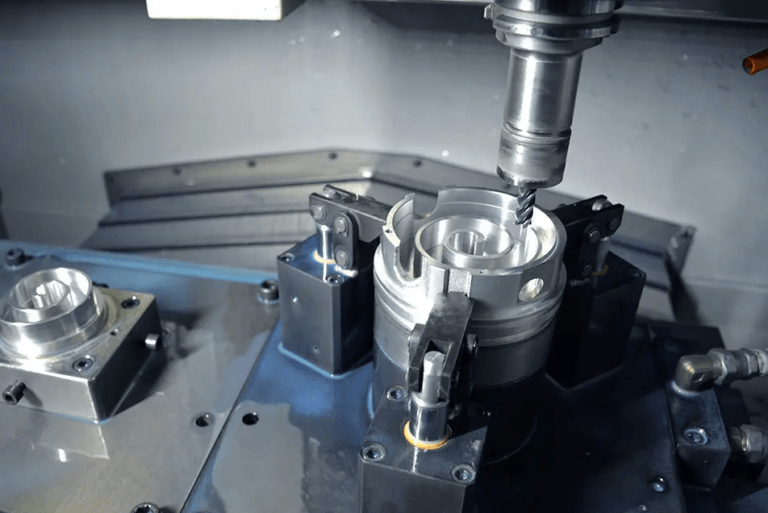
The Future of Automotive Parts Manufacturing: Unlocking the Power of 5-Axis Machining
The automotive industry is on the cusp of a revolution, driven by the increasing demand for electrification and intelligence. As companies strive to stay ahead of the curve, investing in cutting-edge technology has become a necessity. One such game-changer is 5-axis machining, a technology that has transformed the manufacturing landscape for automotive parts. In this blog post, we’ll delve into the world of 5-axis machining, exploring its benefits, market trends, and how it’s poised to revolutionize the industry.
The "Golden Key" to Efficient Manufacturing
Traditional 3-axis machining technology has been the norm for decades, but it’s no longer sufficient to meet the complex demands of modern manufacturing. 5-axis machining, on the other hand, is a "complete circle" solution that combines the precision of 3 linear axes (X, Y, and Z) with the flexibility of 2 rotary axes. This breakthrough technology has led to a 40% increase in efficiency, 12% reduction in processing time, and minimized material waste.
Unlocking the Potential of 5-Axis Machining
Let’s take a closer look at the benefits of 5-axis machining, using three real-world examples:
- Battery Case Manufacturing: 5-axis machines can simultaneously complete surface grinding, drilling, and threading of aluminum alloy cases, achieving an accuracy of 0.01 mm. This level of precision is essential for battery cases in electric vehicles.
- Motor Housing Manufacturing: 5-axis link technology enables the manufacture of complex internal cooling waterways and installation holes, ensuring a sealed and structurally resistant motor housing.
- Light Center Production: 5-axis tool path optimization increases material usage by 25% and reduces scrap rate to less than 0.3%. This is crucial for the production of composite carbon fiber concentrates.
Market Trends: Empowering Industrial Advancements
The future of 5-axis machining is bright, with a predicted growth rate of 35% by 2025. Several market trends are driving this growth:
- Electrification Wave: The demand for light and integrated energy vehicles has led to a 12% rise in the adoption of 5-axis machining technology by 2020, with expectations of a further 23% increase by 2025.
- Reconstruction of the Supply Chain: 5-axis machining enables small-batch production and rapid iteration, helping businesses transition from "mass production" to "flexible manufacturing."
- Green Manufacturing: Optimized cutting paths can reduce material waste by over 30%, supporting the goal of carbon neutrality.
Unlocking the "Visible" Value of 5-Axis Machining
For automotive parts manufacturers, 5-axis machining is not just about technology upgrades; it’s about gaining a competitive edge. Key benefits include:
- Cost Optimization: Reducing investment in tools and labor, while achieving a single-batch cost reduction of 18% to 22%.
- Quality Insurance: A fully closed-loop detection system reaches 100% process monitoring, with a defective rate of return controlled at 0.5%.
- Service Upgrade: Companies can leverage 5-axis machining to implement new technologies, streamline processes, and improve efficiency.
Choosing the Right Path: 5-Axis Machining for the Future
As the cost threshold for machine tools continues to drop, 5-axis machining is poised to become a mainstream technology. For companies seeking both quality and efficiency, 5-axis machining is not just a technological upgrade, but a strategic choice for entering the commanding and intelligent commanding summits. Don’t wait – act now and make 5-axis machining the "accelerator" for your industrial upgrade!
In conclusion, 5-axis machining is redefining the manufacturing landscape for automotive parts. With its benefits, market trends, and user needs in focus, it’s clear that this technology is poised to revolutionize the industry. By embracing 5-axis machining, companies can unlock the power of efficiency, quality, and innovation, solidifying their position in the future of automotive manufacturing.



















