
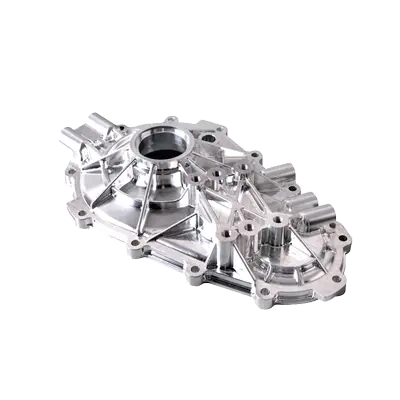
**"Unlocking Efficient CNC Machining with 3D Scanning: A Game-Changer in Dimensional Accuracy"
In the realm of computer-aided design and manufacturing (CAD-CAM), dimensional accuracy is a crucial aspect of ensuring the quality and precision of manufactured parts. With the advent of advanced technologies, 3D scanning has revolutionized the way designers and manufacturers approach this process, particularly in Computer Numerical Control (CNC) machining. In this blog post, we’ll delve into the world of 3D scanning and its applications in CNC machining, exploring the benefits and best practices for achieving unparalleled dimensional accuracy.
What is 3D Scanning?
3D scanning is a non-contact, non-invasive process that uses light, sound, or motion sensors to capture the surface topography of an object or component. This technology has been widely adopted in various industries, including manufacturing, healthcare, and archaeology, where accurate measurements and precise reproduction are essential.
In CNC machining, 3D scanning is used to generation of accurate digital models of parts, which can then be used for manufacturing or 3D printing. This technique allows designers and engineers to inspect and verify the accuracy of parts during the production process, ensuring that the final product meets the required specifications.
Applications of 3D Scanning in CNC Machining
- Quality Control and Inspection: 3D scanning plays a vital role in quality control and inspection, enabling manufacturers to verify the accuracy and precision of CNC-machined parts. This technology ensures that the manufactured part matches the designed specifications, reducing the likelihood of defects and rework.
- Reverse Engineering: With 3D scanning, manufacturers can reverse-engineer existing parts or components, allowing them to recreate the original part with precision. This process is particularly useful for complex geometries, which are difficult to design using traditional CAD systems.
- Verification of Assemblies: In the context of complex assemblies, 3D scanning enables the verification of component compatibility, ensuring that all parts fit together accurately and function as intended.
- Cost Savings: 3D scanning can help reduce the need for manual inspections, which can be time-consuming and expensive. This technology also enables the optimization of CNC machining processes, resulting in cost savings through reduced material waste and rework.
Best Practices for 3D Scanning in CNC Machining
- Sensor Selection: Choose the right 3D scanning sensor for the job, taking into account the part’s size, shape, and material. Opt for high-precision sensors for intricate geometric features and coarse tolerances for rough, external surfaces.
- Scanning Strategy: Employ a deliberate scanning strategy, focusing on regions of interest, such as keyway slots, gear teeth, or thread forms. This targeted approach ensures that critical features are captured with precision.
- Data Processing: Ensure that 3D scan data is processed carefully, using software to clean and filter the data, handle noise reduction, and verify the accuracy of the resulting 3D model.
- Post-processing: Perform thorough post-processing on the 3D model, including mesh repair, smoothing, and surface quality enhancement, to ensure a high-fidelity digital twin of the physical part.
Conclusion
3D scanning has revolutionized the CNC machining industry, offering a precise and efficient means of verifying the accuracy of manufactured parts. By leveraging this technology, manufacturers can reduce errors, improve quality, and minimize the need for rework. With its ability to simplify the design-to-manufacturing process, 3D scanning is an invaluable tool for achieving unparalleled dimensional accuracy in CNC machining.
By implementing the best practices outlined in this article, designers and engineers can optimize their 3D scanning workflow, unlock the potential benefits of this technology, and stay ahead of the curve in the ever-evolving world of CNC machining.



















