
Unlocking the Power of Open CNC Systems: Revolutionizing Manufacturing with PC-Based Control
In recent years, the world of manufacturing has undergone a transformation like no other. With the advent of computer-aided manufacturing systems (CIMS), the need for more flexible, modular, and reconfigurable CNC systems has never been more pressing. The traditional approach to CNC systems is no longer sufficient, as they often require costly and time-consuming modifications to meet the evolving needs of manufacturers.
The concept of open CNC systems has emerged as a response to these challenges. With the integration of computer hardware and software, open CNC systems offer a more flexible and adaptable approach to manufacturing. This shift has given rise to the development of PC-based CNC systems, which have revolutionized the way we design and manufacture products.
PC-Based CNC Systems: The Future of Manufacturing
PC-based CNC systems, also known as industrial PCs (IPC), have become the backbone of modern manufacturing. With their high-speed processing capabilities, graphic display, and dynamic simulation, these systems have enabled manufacturers to streamline their production processes and increase productivity. The benefits of PC-based CNC systems are numerous, including:
- Flexibility: PC-based CNC systems can be easily reconfigured to meet changing production demands, reducing downtime and improving overall efficiency.
- Modularity: These systems are designed to be modular, allowing for the addition or removal of modules as needed, making them ideal for diverse manufacturing environments.
- Cost-effectiveness: PC-based CNC systems are more cost-effective than traditional CNC systems, as they eliminate the need for custom programming and reduce the cost of development.
- Scalability: With their ability to be easily scaled up or down, PC-based CNC systems are perfect for both small and large-scale manufacturing operations.
The Anatomy of a PC-Based CNC System
A typical PC-based CNC system consists of several key components, each playing a critical role in the manufacturing process. These components include:
- System Management Module: This module is responsible for overall system control, monitoring, and data acquisition.
- Movement Control Module: This module is used to control the movement of machine tools and other machinery.
- Digital Operating Module: This module is responsible for operating and controlling the system in a digital environment.
The Importance of PC104 in PC-Based CNC Systems
PC104 is an industrial control bus specifically designed for integrated control systems. Its small size, low power consumption, and reliability make it an ideal choice for a wide range of applications. With PC104, manufacturers can create flexible and adaptable control systems that are easy to integrate and maintain.
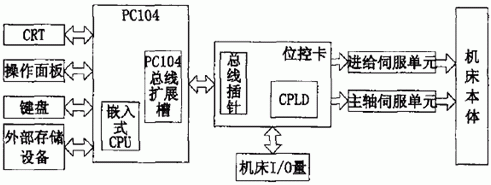
Figure 1: Block Diagram of a PC-Based CNC System
The following block diagram illustrates the composition of a high-speed CNC engraving and milling system based on PC104. The system is divided into three main modules:
- System Management Module
- Movement Control Module
- Digital Operating Module
Each module plays a crucial role in the manufacturing process, ensuring that the system operates efficiently and effectively.
Conclusion
The future of manufacturing lies in the development of PC-based CNC systems. With their flexibility, modularity, and cost-effectiveness, these systems have revolutionized the way we design and manufacture products. As the world of manufacturing continues to evolve, PC-based CNC systems will remain at the forefront, driving innovation and efficiency.
At [Company Name], we are committed to staying ahead of the curve, developing innovative solutions that meet the evolving needs of manufacturers. Our team of experts has designed and developed PC-based CNC systems for high-speed engraving and milling, offering manufacturers the flexibility and adaptability they need to stay competitive in today’s market.
Join us as we explore the possibilities of PC-based CNC systems and discover how they can transform the way you do business.



















