
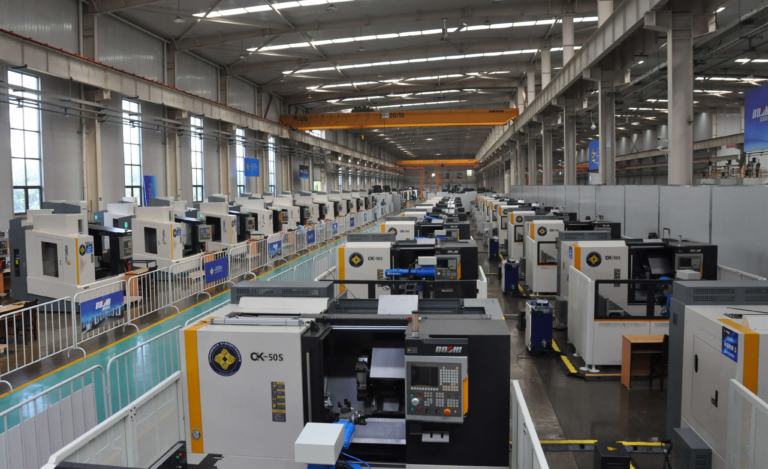
CNC Level Machining Center: Game Changers in Manufacturing
The manufacturing world has made significant progress in recent years, and one of the most influential innovations is the CNC-level machining center. This cutting-edge technology revolutionizes the way manufacturers produce precise parts, providing unparalleled efficiency, accuracy and flexibility. In this article, we will dig into the world of CNC-level machining centers and explore its benefits, applications, and limitations.
What is a CNC horizontal machining center?
The CNC horizontal machining center is a computer-controlled machine that uses a rotary cutting tool to remove material from the workpiece to achieve the desired shape or function. The machine is characterized by its horizontal spindle orientation, allowing it to handle large and heavy workpieces easily. Unlike traditional vertical machining centers, CNC horizontal machining centers can increase stiffness, reduced vibration and enhanced tool life.
Benefits of CNC horizontal machining centers
- Improve accuracy and accuracy: The CNC horizontal machining center is equipped with advanced computer-controlled systems to ensure accurate and accurate machining operations.
- Faster production speed: The ability to process large workpieces quickly and efficiently reduces production time, allowing manufacturers to meet demanding schedules.
- Enhanced machine stiffness: Horizontal spindle arrangement improves machine stiffness, reduces vibration and tool deflection, and improves mass.
- Flexibility and scalability: CNC horizontal machining centers can be used for a variety of machining operations from cutting and drilling to milling and rotation.
- Reduce tool wear and tear: The machine’s powerful design and advanced cooling system reduce tool wear and tear, minimizing downtime and cost.
Application of CNC horizontal machining center
- aerospace: CNC horizontal machining centers are ideal for the production of large and complex aerospace components such as engine mounts and aircraft frames.
- car: The machine’s ability to handle large workpieces makes it suitable for the production of automotive parts such as engine blocks and cylinder heads.
- Medical: CNC horizontal machining centers are used for the production of medical devices, prosthetics and other precision medical components.
- vitality: The versatility and accuracy of this machine make it an excellent choice for producing complex energy-related components such as turbine blades and compressor wheels.
Limitations of CNC horizontal machining centers
- complex: CNC-level machining centers require advanced programming and operational skills, which are challenging for inexperienced operators.
- cost: These machines are more expensive than traditional vertical machining centers, making them less useful for small and medium-sized manufacturers.
- Space Requirements: Due to its size and weight, CNC horizontal machining centers require a lot of floor space as well as cranes or forklifts to enter safety operations.
in conclusion
In short, CNC horizontal machining centers revolutionize manufacturing by providing unparalleled accuracy, accuracy and flexibility. These machines have the ability to handle large and complex workpieces and are ideal for aerospace, automotive, medical and energy applications. However, it is crucial to consider the complexity, cost and space requirements of the machine before implementation. With the right training and support, CNC Level Machining Centers can help manufacturers simplify their production processes, reduce costs and improve product quality.
Frequently Asked Questions
Q: What is the difference between a CNC horizontal machining center and a CNC vertical machining center?
Answer: The main difference lies in the spindle direction. The CNC horizontal machining center has a horizontal spindle and a CNC vertical machining center with a vertical spindle.
Q: Can CNC horizontal machining centers be used for all types of materials?
A: While CNC horizontal machining centers can be used with a variety of materials, they are generally best suited for larger, heavier workpieces such as those made of steel, aluminum and other metals.
Q: How to determine if a CNC level machining center is suitable for my manufacturing needs?
A: Assess your production requirements by considering the size and complexity of the workpiece you plan to produce and the level of accuracy and accuracy required. If you need to machining large and complex parts, a CNC horizontal machining center may be the ideal solution.
Q: What are the potential benefits of upgrading to a CNC-level machining center?
A: Upgrading to a CNC level machining center can significantly improve production efficiency, reduce tool wear and breakage, and improve part quality, ultimately leading to cost savings and increased market competitiveness.



















