
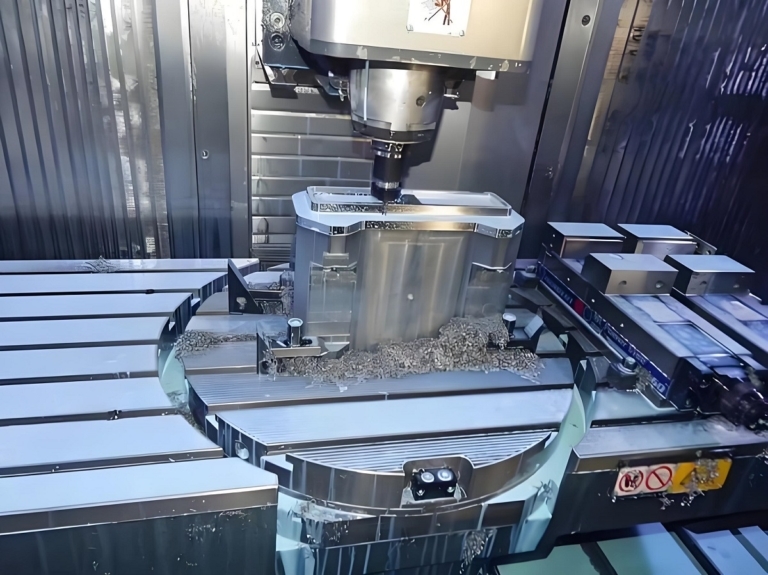
Deep Dive into the World of 5-Axis Machining Centers: Unleashing the Power of Flexibility and Precision
In the realm of modern manufacturing, the humble 5-axis machining center has become a crucial piece of equipment for many companies. With its unparalleled flexibility and precision, these machines have revolutionized the way parts are manufactured, allowing for increased efficiency, improved product quality, and a competitive edge in the market. In this blog post, we’ll delve into the inner workings of 5-axis machining centers, exploring the various processing methods, technical details, and innovative technologies that underpin their remarkable capabilities.
Treatment Methods: Unlocking the Full Potential of 5-Axis Machining Centers
One of the most significant benefits of 5-axis machining centers is their ability to accommodate a range of processing methods. From linked machining to positioning and treatment, each technique offers unique advantages and can be used in various scenarios. Let’s take a closer look at each method:
- Linked Machining: This is one of the most impressive features of 5-axis machining centers. Thanks to the coordinated movement of the three linear axes (X, Y, and Z) and the two rotary axes (A and C), the tool can cut parts at any angle. This processing method eliminates the need for frequent part rotation and minimizes tightening errors, resulting in improved machining accuracy and surface quality. For instance, engine blades with complex curved surface shapes can be precisely machined to exact design specifications, ensuring optimal aerodynamic performance.
- Positioning and Treatment: In some cases, the 5-axis machining center can adopt a positioning machining method. This involves adjusting the rotary table to a specific angle, enclosures, and then using the linear axes for conventional milling, drilling, and other operations. This method is suitable for tasks that require high-precision angular positioning but do not necessitate continuous connection, such as machining multiple planes or holes on a box-shaped base.
- Compound Treatment: The 5-axis machining center is also capable of composite processing, allowing it to integrate various machining processes, such as milling, boring, drilling, tapping, and more. This one-stop treatment not only reduces processing and reclassification of parts between different machines but also decreases the likelihood of errors and shortens production cycles. For example, molds with complex structures can have all necessary processes, including cavity milling, core treatment, and hole drilling and tapping, performed in a single setup.
Technical Details: Unlocking the Full Potential of 5-Axis Machining Centers
To unleash the full potential of 5-axis machining centers, it’s essential to understand the technical aspects that underpin their capabilities. Here, we’ll explore the key components that make these machines so effective:
- High-Precision Motion Control Technology: The precision of motion control directly impacts the quality of machining. Advanced CNC systems utilize high-precision encoders and linear scales to monitor movement position information in real-time and control the engine through precise algorithms, achieving positioning accuracy at the micron or even nanometer level. To ensure synchronization and coordination between each axis, the motion control system also employs complex compensation algorithms to compensate for mechanical transmission errors and thermal deformation in real-time.
- High-Performance Tool Systems: Due to the complex treatment conditions of 5-axis machining centers, tool requirements are also more stringent. High-performance tools need to exhibit good wear resistance, tenacity, and rigidity to meet the demands of various materials and processing processes. The 5-axis machining center is often equipped with an automatic tool change system, which enables rapid and accurate tool replacement, reducing auxiliary processing time and downtime.
- Surveillance and Optimization Technology for Intelligent Processing: With the advent of intelligent manufacturing technology, 5-axis machining centers are increasingly incorporating smart elements. The machining process monitoring system tracks cutting force, spindle power, tool wear, and other parameters in real-time, detecting anomalies and automatically adjusting processing parameters to prevent tool damage and part disassembly. Intelligent programming software can also generate optimal tool paths based on room models and machining requirements, considering tool lifespan and processing time to achieve intelligent optimization of the machining process.
- Reliable Mechanical Structure Design: The mechanical structure of 5-axis machining centers must be robust and stable enough to withstand the significant loads generated by high-speed cutting and complex motion. Key components such as beds and columns typically utilize cast iron or welded structures with high resistance and are optimized by finite element analysis to ensure static and dynamic performance can be maintained in various operating conditions. Additionally, transmission components like guide rails and lead screws employ high-precision rolling elements and lubrication systems to reduce friction and wear, improving motion accuracy.
Conclusion
The treatment methods and technical details of 5-axis machining centers are multifaceted, covering various aspects from flexible selection of processing methods to collaborative application of advanced technologies. As a user of 5-axis machining centers, mastering this in-depth knowledge will help you better plan production processes, optimize treatment technology, and unlock the full potential of these machines, ultimately giving you a competitive edge in the market. I hope this article provides valuable insights and inspiration for your journey in precision manufacturing, empowering you to overcome challenges and push the boundaries of innovation.



















