
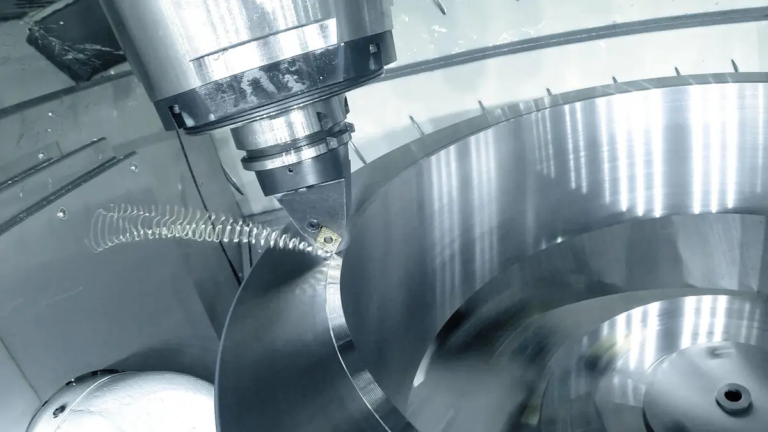
As a beginner in the CNC machining industry, you must have an in-depth understanding of the basic concepts and processes involved. In this article, we will explore the basics of CNC machining and its applications so that you can start your journey to becoming a master of precision manufacturing.
What is CNC machining?
CNC (Computer Numerical Control) machining is a manufacturing process that uses computer-controlled machines to shape and manipulate materials such as metals, plastics and wood to form the desired shape and form. The process involves the use of computer-aided design (CAD) software, which generates a program that guides the machine’s actions and actions during the manufacturing process.
Types of CNC processing
There are several types of CNC machining, including:
- 3-axis machining: This is the most common type of CNC machining, which moves along three axes (X, Y, and Z) to shape the material.
- 5-axis machining: This type of machining involves the machine moving along five axes (x, y, z, a and b) to allow for more complex motion and higher accuracy.
- 4-axis machining: This type of machining is similar to 3-axis machining, but has an additional fourth axis (usually C) that allows the machine to move in a vertical plane.
How does CNC machining work?
The CNC machining process involves several key steps:
- design: Design parts using CAD software where you create a 2D or 3D model of the required parts.
- G code generation: The CAD software generates a G-code program that outlines the steps required to create a part.
- Processing: Load the G-code program into a CNC machine that reads and executes instructions to form and manipulate material.
- Post-processing: The final step involves inspecting and testing the parts to ensure they meet the required specifications and tolerances.
Benefits of CNC machining
- accurate: CNC machining provides unparalleled accuracy and accuracy as the machine follows predetermined procedures to avoid human error.
- speed: CNC machines can work at incredible speeds, and some machines are able to complete tasks in minutes.
- flexibility: CNC machining allows the production of complex shapes and designs, making it ideal for industries requiring high-precision parts.
in conclusion
CNC machining is a powerful technology that revolutionized the manufacturing industry. With its unparalleled precision, speed and flexibility, CNC machining is an important tool in the aerospace, automotive, healthcare and other industries. Whether you are a beginner or an experienced professional, understanding the fundamentals of CNC machining can help you stay ahead of the curve in today’s fast-paced manufacturing world.
FAQ
- Q: What are the main limitations of 3-axis CNC machining?
A: The main limitation of 3-axis CNC machining is that it can only work in three-dimensional space, which can limit its ability to make complex shapes and designs. - Q: What is the ideal material for CNC processing?
A: The ideal materials for CNC machining depend on the specific application, but generally durable materials such as metals (aluminum, steel, titanium) and high-performance plastics are ideal for CNC machining. - Q: Can CNC processing be used for one-time production?
A: Yes, CNC machining can be used for one-time production because it allows for the creation of custom parts with high precision and accuracy. - Q: What is the typical lead time for CNC processing?
A: Typical lead times for CNC machining vary according to the complexity of the parts, materials and required accuracy, but range from days to weeks.
By understanding the fundamentals of CNC machining, you can unlock the potential to create high-quality precise parts with unrivalled speed and flexibility. Whether you are a beginner or experienced professional, you can support you on your CNC machining journey.



















