
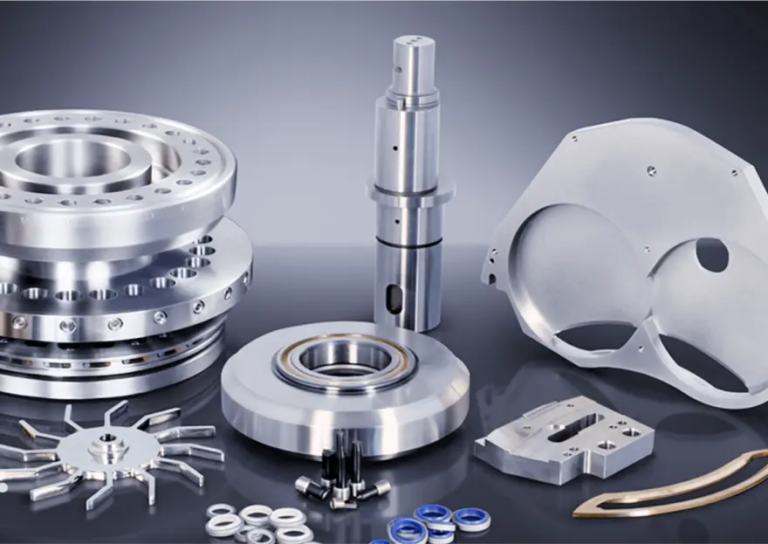
In today’s fast-paced world, precision and speed are more important than ever. For the aviation industry, even a small mistake can have devastating consequences, with accuracy and speed being crucial. This is why CNC machining has become an indispensable tool in aircraft parts production.
CNC machining or computer numerical controlled machining is a manufacturing process that uses computer-controlled machines to accurately cut and shape metal parts. For aircraft parts, CNC machining can produce complex shapes and structures with unparalleled accuracy and speed.
One of the key benefits of CNC machining is its ability to smooth and efficiently design and produce highly complex geometric shapes. This is especially important in the aviation industry, where aerodynamics plays a crucial role in aircraft performance. CNC machining allows engineers to create parts with complex details that cannot be produced manually or traditional manufacturing methods.
Another important advantage of CNC machining is its speed. By automating the manufacturing process, CNC machines are produced much faster than traditional methods, which can greatly reduce production time and cost. This is especially important in the aerospace industry, where rapid output is crucial to meeting tight delivery schedules and meeting growing demand.
In addition to accuracy and speed, CNC machining also provides unparalleled accuracy and reliability. By using computer-controlled machines, engineers can ensure that parts are made into strict tolerances, eliminate human errors and ensure that every part meets the highest standards.
From a good point of view, we focus on five-axis CNC machining, which provides greater accuracy and flexibility. Our advanced machines can produce parts with complex geometric shapes, subtle curvature and complex details that will not be produced using traditional manufacturing methods.
But what about the limitations of CNC processing? A potential problem is the initial investment required to build a CNC machine. Although this may seem daunting, the long-term benefits of CNC processing far outweigh the upfront costs. CNC machining can quickly and efficiently produce high-quality parts, which can help reduce production time, costs and waste.
In short, CNC machining is an essential tool for the production of aircraft parts, with unparalleled accuracy, speed and reliability. Whether you are producing complex geometric shapes, subtle curvature or complex details, CNC machining is the ideal solution.
FAQ:
Q: What is CNC processing?
A: CNC machining is a manufacturing process that uses computer-controlled machines to accurately cut and shape metal parts.
Q: How does CNC machining benefit the aerospace industry?
A: CNC machining provides accuracy, speed and reliability, making it ideal for the production of aircraft parts that require high precision and performance.
Q: What are the limitations of CNC processing?
A: While the initial investment in building a CNC machine may be important, the long-term benefits of CNC machining, such as reduced production time, costs and waste, far exceed the upfront costs.
Q: Can excellent lighting generate custom precision parts?
A: Yes, Great Light offers customized five-axis CNC machining services to produce high-quality parts with complex geometric shapes, subtle curvature and complex details.
Q: Can I get a quote for custom precision parts?
A: Yes, please contact us for a quote about your custom precise parts and we will offer a competitive and transparent pricing structure.



















