
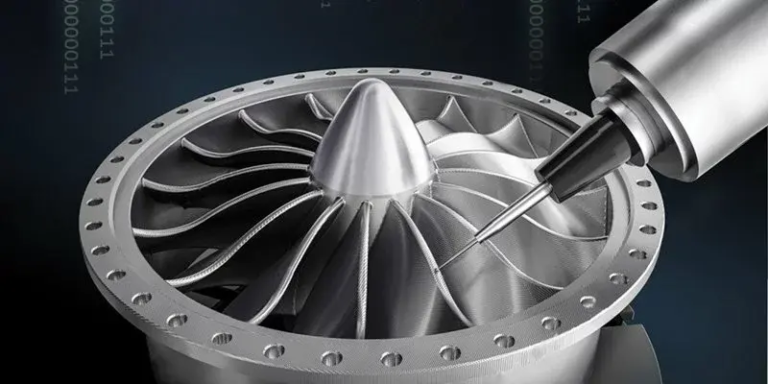
CNC machining 3D: A guide to precision parts
In today’s fast-paced world, precision is everything. Whether in aerospace, automotive, medical or consumer goods, the need for accurate and reliable parts is crucial. This is where computer numerical control (CNC) processing is located. In this article, we will dig into the world of CNC Matering 3D to explore the benefits, processes and possibilities it offers to produce high-precision parts.
What is CNC machining?
CNC machining involves the use of computer-controlled machines to cut and shape materials such as metals, plastics and composites. This technique uses programming language G code to instruct the machine to perform the required operations. The result is an accurate and accurate product, often used in industries where tolerance is critical.
Types of CNC processing
There are two main types of CNC machining: 2D and 3D. 2D machining involves cutting and forming materials to create flat parts, while 3D machining takes it to the next level by creating complex three-dimensional shapes.
The 3D machining process involves the use of a five-axis machine that can be moved in three dimensions (X, Y, and Z) and two axes of rotation (A and B). This allows for the creation of complex shapes and complex geometric shapes, making it ideal for applications requiring extremely high accuracy.
Benefits of CNC machining 3D
So, why choose CNC machining 3D? Here are some compelling reasons:
- accurate: CNC machining 3D provides the highest level of accuracy with tolerances as low as 0.001mm. This is especially important in the industry, and even small deviations can have a significant impact on product performance.
- complex: 3D machining allows the creation of complex shapes and geometric shapes, making them ideal for applications requiring complex designs.
- speed: CNC machines can cut and shape materials at incredible speeds, reducing production time and cost.
- Cost-effective: While initial investment in CNC machines may be high, they can save costs in the long run due to increased efficiency and reduced material waste.
The process involved in CNC machining 3D
The CNC machining 3D process involves multiple steps:
- design: Considering the requirements and specifications of the project, the design stage is where the product is conceptualized.
- programming: The design is translated into G-code, specifying the operation the machine will perform.
- Processing: The machine is operated by G code to cut and shape the material according to the design.
- finishing: Check and complete the part to meet the required criteria, which may include surface treatment, coatings, etc.
Application of CNC machining 3D
CNC machining 3D is used in a wide range of industries including:
- aerospace: Production of precise components for aircraft, spacecraft and satellite components.
- car: Create high-performance engine components, suspension parts and other precision components.
- Medical equipment: Develop implants, surgical instruments and other critical medical devices.
- consumer goods: Manufacture high-precision components for watches, jewelry and other precision products.
in conclusion
CNC machining 3D is a technological miracle that revolutionizes the way we produce precise parts. With the ability to create complex shapes, high precision tolerances and fast production times, it’s no wonder why it has become an essential tool in many industries. Whether you are looking for custom parts or a partner to meet production needs, it is crucial to understand the benefits and processes involved in CNC machining 3D.
Frequently Asked Questions
Q: What minimum tolerance can CNC machining 3D achieve?
Answer: The minimum tolerance that can be achieved by CNC machining 3D is 0.001mm.
Q: What are the advantages of CNC machining 3D in 2D processing?
A: CNC machining 3D allows for the creation of complex shapes and geometric shapes, making them ideal for applications requiring complex designs.
Q: How long does the production process usually take?
A: Production time depends on the design and the complexity of the machine used. However, CNC machines are able to cut and shape materials at incredible speeds.
Q: Which materials can be used in CNC machining 3D?
A: Most materials can be used in CNC processing 3D, including metals, plastics and composites.
Q: Can CNC machining 3D be outsourced?
A: Yes, many companies specialize in CNC machining 3D and provide customized production services.



















