
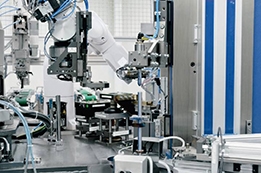
The Future of Camshaft Manufacturing: What’s Next?
In the world of manufacturing, innovation and precision are key to staying ahead of the competition. The last few decades have seen significant advancements in camshaft technology, with the development of combined camshafts (CCs) gaining popularity due to their lighter weight and lower production costs. However, the assembly process of these camshafts remains a challenge, requiring high adjustment forces and often resulting in errors during positioning and calibration.
The Solution: Thermal Handle Process
EMAQ, a leading manufacturer of camshaft technology, has developed a revolutionary solution to these challenges: the Thermal Handle Process. This patented technology ensures that camshafts, gear trees, and other components are produced with precision, reducing errors and increasing efficiency. The process involves heating the cam during the manufacturing process, allowing for a precise fit with the shaft, eliminating the need for subsequent grinding.
The Benefits of Combined Camshafts
CCs have several advantages over traditional monomaterial cam trees. These include lower production costs, lighter weight, the ability to use different materials, and increased flexibility in production processes. Additionally, CCs can be used to produce new geometric shapes, such as negative radius cams, making them an attractive option for manufacturers looking to innovate and reduce emission levels.
The Challenges with Combined Camshaft Assembly
While CCs offer many benefits, the assembly process can be complex and time-consuming, requiring high adjustment forces and resulting in errors during positioning and calibration. The use of pressing techniques, such as roller, splines, or serrations, can lead to part distortion and errors.
The Solution: EMAQ’s Thermal Sleeve Process Assembly Precision Set
EMAQ’s Thermal Sleeve Process Assembly Precision Set provides a solution to these challenges. This innovative process involves using a thermal sleeve to install the cam on the shaft, ensuring a precise fit and eliminating the need for subsequent grinding. The process is designed to control temperature, time, and mechanical design to ensure accurate results.
The Advantages of EMAQ’s Thermal Sleeve Process
- High Precision: The Thermal Sleeve Process ensures high accuracy, eliminating the need for subsequent grinding.
- Improved Design Flexibility: The process allows for more flexibility in camshaft design, enabling the use of different materials and geometric shapes.
- Reduced Production Costs: The Thermal Sleeve Process reduces production costs by minimizing grinding requirements.
- Increased Efficiency: The process streamlines production, reducing processing time and increasing efficiency.
- Materials Selection: The process enables the use of different materials, including forged, finished, and powdered metal camshafts.
The Future of Camshaft Manufacturing: EMAQ’s Thermal Sleeve Technology
EMAQ’s Thermal Sleeve Technology is poised to revolutionize the camshaft manufacturing industry. This innovative process offers a solution to the challenges associated with combined camshaft assembly, providing a more efficient, cost-effective, and accurate way to produce high-performance camshafts. With its patented thermal sleeve technology, EMAQ is well-positioned to lead the industry in the development of cutting-edge camshaft solutions.
Conclusion
The future of camshaft manufacturing is exciting, with EMAQ’s Thermal Sleeve Technology at the forefront of innovation. By combining precision, flexibility, and cost-effectiveness, this technology is poised to transform the industry, enabling manufacturers to produce high-performance camshafts with ease. As the world continues to demand more efficient and sustainable solutions, EMAQ’s Thermal Sleeve Technology is an important step towards a more precise and innovative future.



















