
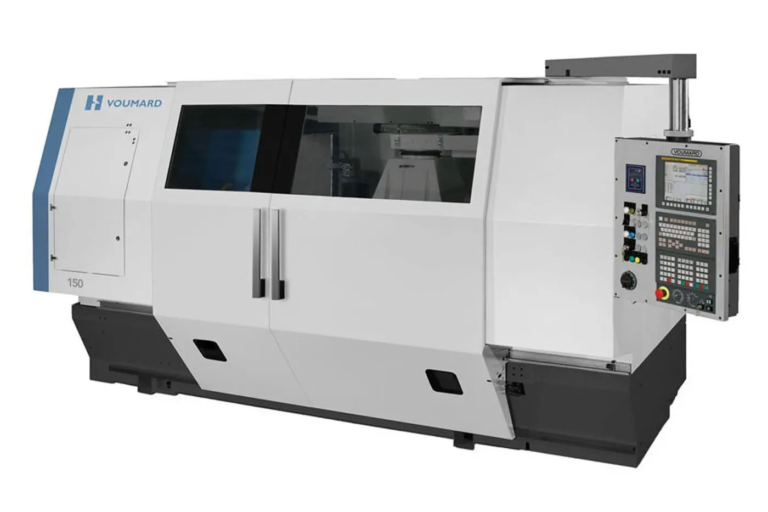
As companies continue to push the boundaries between innovation and technological advancement, the need for efficient and precise manufacturing processes is becoming increasingly important. This is particularly evident in the field of CNC machining, where complex parts and components must be produced with precise accuracy and speed. In this blog post, we will explore the benefits of multi-axis CNC machining and how it can help maximize efficiency across industries.
Benefits of multi-axis CNC machining
============================= nnne
Multi-axis CNC machining is a highly sought-after technology that revolutionizes the manufacturing process by allowing the production of complex parts with unprecedented speed and accuracy. In contrast to traditional two-axis CNC machining, this motion is limited to only two axes (X and Y), and multi-axis CNC machining allows the control of cutting tools along multi-axis, including Z-axis (depth), A-axis (tilt) and B-axis (Rotation).
There are many advantages of multi-axis CNC machining:
- Improve accuracy: By controlling the position of the cutting tool and the orientation of the three dimensions, multi-axis CNC machining can create parts with unparalleled accuracy and surface finish.
- Faster production: With the ability to machining multi-axis CNC, it can greatly reduce production time, making it an attractive option for large-capacity manufacturing.
- Enhanced flexibility: Multi-axis CNC machining can produce complex parts with different geometric shapes, complex shapes and a variety of materials including odd or thin-walled parts.
- Widespread applications: This technology is suitable for a variety of industries including aerospace, automotive, medical and consumer goods.
Maximize efficiency through multi-axis CNC machining
To gain the benefits of multi-axis CNC machining, it is necessary to understand the specific requirements of the application and optimize your machining process accordingly. Here are some strategies that help maximize efficiency:
- Define the correct tool: Select the appropriate cutting tools, including tool composition, geometry and coatings to ensure optimal performance and minimize wear.
- Optimize machine parameters: Adjust parameters such as feed rate, cutting speed and spindle speed to suit the specific material being processed and the resulting parts.
- Implement CAM software: Use computer-aided manufacturing (CAM) software to simplify the programming process, reduce errors and increase productivity.
- Integrate with other manufacturing processes: Seamlessly link multi-axis CNC machining with other processes such as 3D printing to create hybrid manufacturing systems.
in conclusion
In short, multi-axis CNC machining has important advantages in accuracy, speed and flexibility, making it an ideal solution for a wide range of industries. By understanding the benefits and strategies of maximizing efficiency, manufacturers can unlock the full potential of this technology and drive innovation in their respective fields.
FAQ
Q: What is multi-axis CNC machining?
A: Multi-axis CNC machining is a technology that can control cutting tools along multiple axes, including Z-axis (depth), A-axis (tilt) and B-axis (rotation).
Q: What are the benefits of multi-axis CNC machining?
A: Benefits include improved accuracy, faster productivity, enhanced flexibility and a wider range of applications.
Q: How to optimize my multi-axis CNC machining process?
A: Optimize machine parameters, select the right tools, and implement CAM software to simplify the programming process and reduce errors.
Q: Is multi-axis CNC machining suitable for various industries?
A: Yes, it is suitable for a variety of industries including aerospace, automotive, medical and consumer goods.
By extending our capabilities with multi-axis CNC machining, we can unlock new possibilities to accurately manufacture, revolutionize our industry and drive innovation forward.



















