
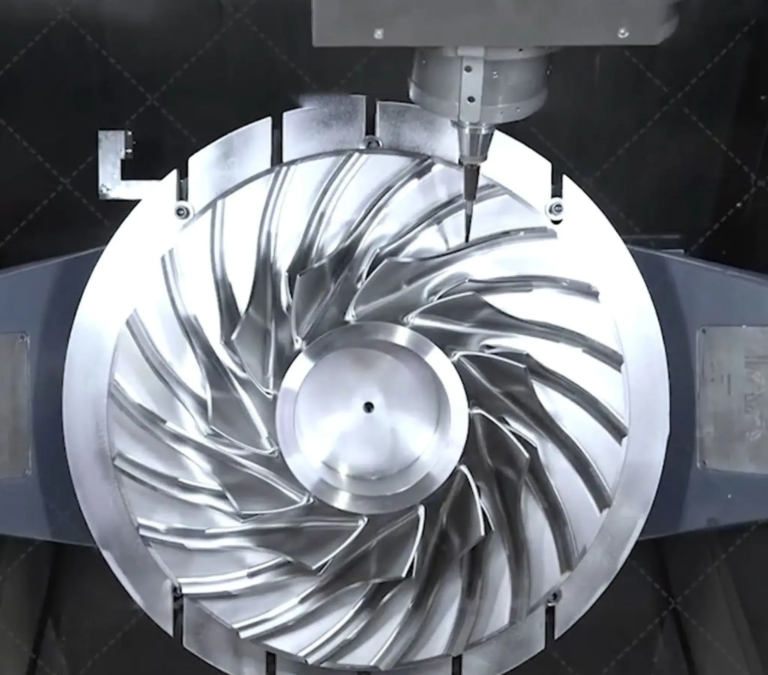
Master the G-code for CNC machining: a guide to manufacturer and mechanics
G-code is the standard programming language for computer numerical control (CNC) computers, and understanding is crucial for manufacturers and mechanics to ensure high-quality parts are produced. In this article, we will dig into the world of G code and discuss its syntax, components, and best practices to write efficient and effective G code for CNC machining.
The basics of G code
G-code is a programming language that uses a combination of letters and numbers to instruct the CNC machine to perform specific operations such as moving the spindle, replacing the tool, and executing the outline. The code consists of a series of commands, each starting with a letter or numeric value, followed by optional parameters.
G code syntax
The basic syntax of G code is as follows:
- start: The line starts with a letter or a numeric value, called "verb."
- verb: The verb specifies the action to be performed, such as G01 for linear interpolation.
- x,,,,, yand z: These parameters specify the coordinates or positions of the machine based on the verb.
- f and t: These parameters specify the feed rate and tool number respectively.
- m and s: These parameters control the spindle and coolant respectively.
G code component
The G code consists of several components, including:
- Absolute and relative coordinates: Absolute coordinates are used to specify absolute positions, while relative coordinates are used to specify relative motion.
- Linear and circular interpolation: Linear interpolation is used for linear motion, while circular interpolation is used for bending motion.
- Modal commands: modal commands, e.g. "G21" For absolute coordinates, it can be set to remain valid until changes or until the program ends.
- Detection mode: Detection mode is used to measure the distance from the spindle to the workpiece.
Best practices for writing G code
To write efficient G code, follow these best practices:
- Using standard G code: Use standard G code and avoid custom designed code, which can be difficult to maintain and support.
- Using modular programming: Break down complex programs into smaller modular parts, making modifications and maintenance easier.
- Use comments and documents: Add comments and documentation to your code to make it easier to understand and debug.
- verify: Test and verify the program before running the test sample on the actual artifact.
in conclusion
Mastering the G code is crucial for manufacturers and mechanics to produce high-quality parts effectively and effectively. By understanding the syntax, components and best practices of G code, you can optimize CNC machining operations and improve the overall quality of your product. Remember to use standard G code, modular programming and proper documentation to make your code more efficient and maintainable.
FAQ
Q: What is the G code in CNC processing?
A: G code is a standard programming language used in computer numerical control (CNC) computers to instruct the machine to perform specific operations.
Q: What is the syntax of G code?
A: The basic syntax of the G code consists of letters or numeric values (verbs), followed by optional parameters such as X, Y, and Z coordinates.
Q: What are the components of G code?
Answer: The G code consists of absolute and relative coordinates, linear and circular interpolation, modal commands and detection modes.
Q: How should I write G code?
A: Use standard G code, modular programming, comments and documentation to make your code more efficient and maintainable.
Q: How do I test and verify my G code?
A: Test on test samples and verify that your program runs on actual artifacts to ensure accuracy and quality.



















