
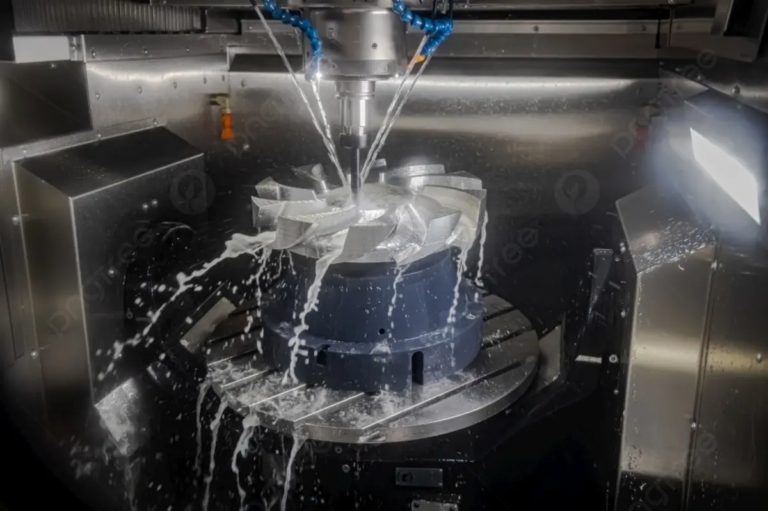
In today’s manufacturing world, computer numerical control (CNC) machining has become a critical process in the production of accurate and consistent high quality parts. As a result, many companies have begun to adopt CNC processing as a valuable addition to their production process. In this article, we will explore five benefits of CNC machining for your business and why it is worth considering.
Benefit #1: Consistency and Accuracy
Thanks to computer-controlled equipment and precise cutting tools, CNC machining ensures that every part of the manufacturing is consistent and accurate. This consistency is especially important in industries such as aerospace, automotive and medical equipment production, where small changes can have significant consequences. With CNC machining, you can ensure that each section meets your quality standards, increasing customer satisfaction and reducing the risk of expensive rework.
Benefit #2: Improve efficiency
CNC machining automates many tasks such as tool replacement, cutting and finishing, which can significantly reduce production time and labor costs. This increased efficiency enables companies to produce parts at a lower cost, making them more competitive in the market. Furthermore, CNC machining reduces the risk of human error, which may be a major source of waste and rework.
Benefit #3: Greater flexibility
CNC machining can be easily changed to parts design and tolerances, making it an ideal solution for production operations with different requirements. This flexibility is especially important for businesses that receive orders that vary in specifications or need to adapt to different tolerances. With CNC machining, you can quickly adapt to these changes without significant rework or recalculation of expenses.
Benefit #4: Reduce noise and vibration
Traditional machining methods can generate a lot of noise and vibration, which can be a problem in the factory and work environment. CNC machining, on the other hand, produces clean, precise cutting and with minimal vibration and noise. This makes the work environment safer and more comfortable, reduces the risk of injury and improves job satisfaction.
Benefit #5: Improved Surface Surface
CNC machining can produce parts with highly accurate surface treatments, which are critical for surface surface surface applications, such as in the aerospace and medical industries. The precise cutting and finishing capabilities of CNC machining ensure that parts are provided with high-quality surface finishes, reducing the need for additional completion operations and reducing costs.
In summary, CNC machining provides businesses with a range of benefits including consistency, efficiency, flexibility, noise reduction and vibration, and improved surface finishes. By incorporating CNC machining into your production process, you can improve quality, reduce costs and increase competitiveness. Whether you are producing precise parts for aerospace, automotive, medical, or other industries, CNC machining is an important tool for achieving high-quality results.
FAQ:
Q: What types of materials can be processed using CNC technology?
A: Most materials can be processed using CNC technology, including metals, plastics, ceramics and composites.
Q: Can CNC machining be used for complex parts?
A: Yes, CNC machining is ideal for complex parts with complex geometric shapes, hollows and internal features.
Q: Is CNC processing expensive?
A: Although the initial cost of CNC machining equipment can be large, the cost per part may be lower than that of traditional machining methods when considering accuracy, consistency and the benefits of reducing waste.
Q: Can CNC processing be used for small-scale production?
A: Yes, CNC processing can be used for small-scale production as well as large-scale production.
Q: What types of industries can benefit from CNC processing?
A: A wide range of industries can benefit from CNC processing, including aerospace, automotive, medical, agriculture, etc.



















