
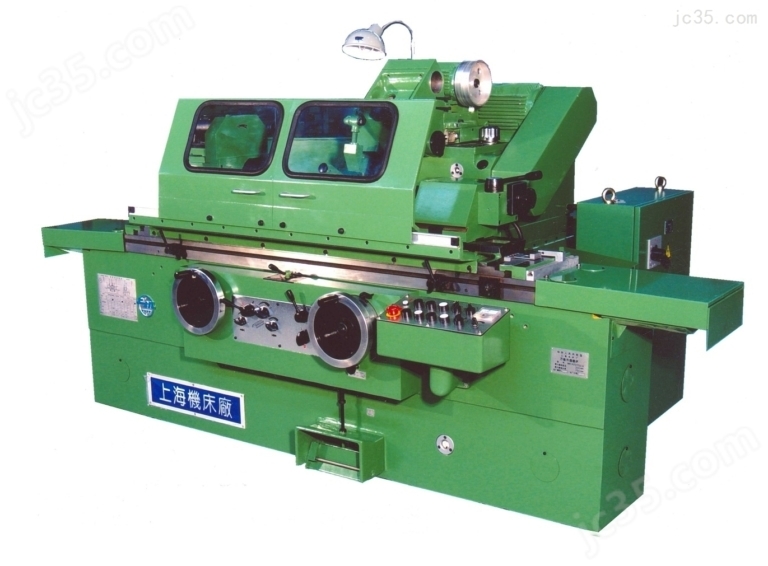
The Advantages and Applications of Semi-Automatic Cylindrical Crushers in Modern Manufacturing
In today’s rapidly evolving manufacturing landscape, the demand for precision and efficiency in the production process is more pressing than ever. To meet this need, manufacturers are increasingly turning to semi-automatic cylindrical crushers, a machine tool that has been gaining popularity for its versatility and ease of use. In this blog post, we will delve into the characteristics, process flow, and structural features of semi-automatic cylindrical crushers, as well as their applications in various industries.
Principle and Process Flow
Semi-automatic cylindrical crushers work on the principle of grinding, using a high-speed rotary crushing wheel to cut the surface of the material to achieve the required dimensional precision and surface finish. The process flow involves the following steps:
- Tightening the part: The part to be treated is securely fastened between the chuck or upper tip, ensuring that the rotation axis of the part is parallel to the grinding axis.
- Cutting the grinding wheel: A diamond pen or other dressing tools are used to cut the grinding wheel to restore its cutting capacity and precision.
- Setting settings: The grinding parameters, such as grinding wheel speed, room speed, power speed, and grinding depth, are defined, taking into account the material, size, and requirements of the part being processed.
- Manual power supply: The operator manually controls the handle or button to power the grinding wheel in the workpiece direction, performing coarse and fine grinding.
- Automatic cycle: Some semi-automatic cylindrical crushers come with automatic cycle functions, which can automatically complete the grinding processes, fine grinding, and light grinding, improving treatment efficiency.
- Cooling and lubrication: During the grinding process, a cooling liquid is used to cool and lubricate the grinding area, reducing grinding temperature, reducing wheel wear, and improving treatment quality.
Structural Characteristics
The semi-automatic cylindrical crusher typically consists of the following structural components:
- Bed: The bed is the basic part of the machine tool, serving as the foundation and support for other parts.
- Workbench: The workbench is used to tension and rotate the parts, consisting of mandrels, upper tips, stems, and other components. It can move along the bed’s guide rail to achieve axial positioning of the workpiece.
- Grinding wheel frame: The grinding wheel frame is used to install and drive grinding wheels, typically comprising a wheel spindle, grinding wheel motor, wheel cover, and other components. The grinding wheel frame can move along the bed’s guide rail to achieve radial positioning of the grinding wheel.
- Feeding mechanism: The feeding mechanism is used to control the supply movement of the wheel or grinding work, typically consisting of a manual handle, screw, equipment, servomotor, and other components.
- Cooling system: The cooling system provides cooling liquid to reduce grinding temperature and improve treatment quality.
- Control system: The control system is used to control the movement of various components of the machine tool and automate the grinding process.
Applications in Modern Manufacturing
Semi-automatic cylindrical crushers have numerous applications in various industries, including:
- Aerospace industry: for precision manufacturing of aircraft and spacecraft components
- Automotive industry: for manufacturing of engine parts, gearbox components, and other precision parts
- Medical industry: for production of medical devices, implants, and other precision parts
- Oil and gas industry: for manufacturing of wellhead components, valves, and other precision parts
In conclusion, semi-automatic cylindrical crushers have revolutionized the manufacturing process, offering a unique combination of flexibility, precision, and efficiency. With their ability to produce high-quality parts with precision and surface finish, these machines have become an essential tool in various industries. By understanding their principle, process flow, and structural characteristics, manufacturers can optimize their production process and improve overall efficiency.



















