
Simplifying the Complexity of Central Machining Tool Support: A Comprehensive Guide
As the demands of modern manufacturing increase, the importance of central machining tool support cannot be overstated. With the advancement of CNC machines, the tool holder has become a crucial component in ensuring efficient and precise machining. In this article, we will delve into the world of central machining tool support, exploring the latest trends, standards, and technologies that shape the industry.
The Fundamentals
To begin with, let’s clarify the terminology. The term "central machining tool support" refers to the connection body between the machine tool and the tool. This vital component plays a dual role: it determines the precision of cutting tool positioning and ensures the clamping force of the tool. There are various types of tool holders, each with its unique characteristics and applications.
Standards and Specifications
The tool holder is categorized into three main standards: BT, NT, and HSK. Each standard has its specific cone angle and taper ratio, designed to suit different machining requirements.
- BT standard: The BT standard, developed in Japan, features a cone angle of 7:24 and is widely used in machining centers.
- NT standard: The NT standard, also from Japan, has a cone angle of 6:10 and is commonly used in turning and milling operations.
- HSK standard: The HSK standard, developed in Germany, features a cone angle of 6:10 and is known for its high rigidity and stability during high-speed machining.
Conic Angles and Taper Ratios
The conic angle and taper ratio of the tool holder play a crucial role in determining its performance. A higher conic angle and taper ratio result in a more precise positioning and clamping force.
The 7:24 Conicity Challenge
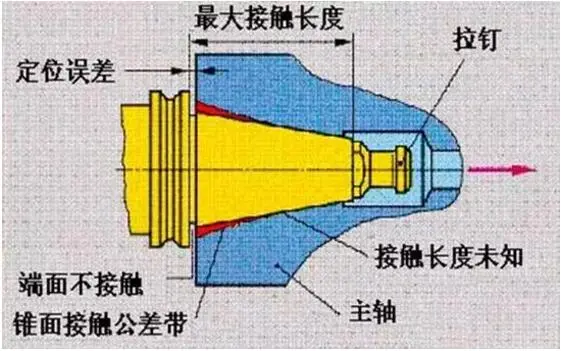
The 7:24 conicity, a standard found in some tool holders, poses a challenge when it comes to precision and clamping force. The conical hole at the front end of the spindle may develop a force, causing axial displacement of the tool holder and affecting its stability.
HSK Vacuum Tooling
The HSK vacuum tooling system is gaining popularity in aerospace, automotive, and precision mold manufacturing industries. Its advantages include improved rigidity and stability, reduced tool replacement time, and enhanced precision. The tool holder’s unique properties, such as elastic deformation and close contact with the pin surface, ensure a high degree of precision and control.
Advantages and Disadvantages of HSK
Advantages:
- High rigidity and stability
- Reduced tool replacement time
- Improved precision
Disadvantages:
- Higher cost
- Limited compatibility with other tool holders
- Requires specific training and expertise
Choosing the Right Tool Holder
When selecting a tool holder, consider the following factors:
- Machining application
- Tool type and size
- Machine tool specifications
- Operator experience and training
Spring Mandrel Handle
The spring mandrel handle is designed for tightening right-hand tools and specialized tools, such as drilling bits and taps. Its elastic deformation and clamping range make it suitable for a wide range of applications.
Hydraulic Chuck
The hydraulic chuck offers a secure, low-vibration clamping system, ideal for high-speed machining. Its features include:
- Locking screws with Allen key
- Hydraulic medium expansion
- Pressure generation
- Thin discussion and center positioning
Heating Tool Holder
The heating tool holder utilizes induction heating technology to heat the tightening part of the tool, allowing for precise positioning and clamping. Its advantages include:
- High clamping force
- High precision
- Low maintenance
- Versatility
Conclusion
In conclusion, the central machining tool support is a vital component in modern manufacturing. By understanding the different standards, specifications, and technologies, manufacturers can choose the most suitable tool holder for their specific needs. Whether it’s the BT, NT, or HSK standard, each has its unique characteristics and advantages. By considering factors such as machining application, tool type, and operator experience, manufacturers can optimize their tool holder selection for optimal results.



















