
01
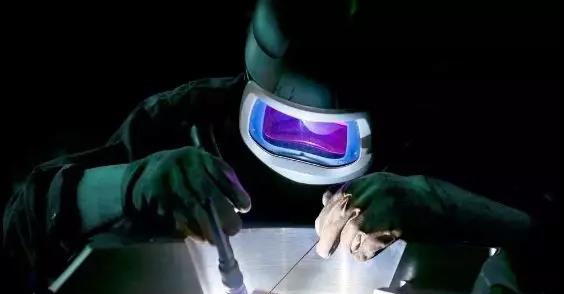
Do not use DC inverted welding in general
During the welding of the Arc Arc of the Tungsten DC electrode, the heat generation of the anode is much greater than that of the cathode, therefore during welding with a positive connection DC (positive connection of the part), The tungsten electrode is not easy to overheat due to its small heat generation, and a large current can be used for the same diameter. At that time, the room generates a great heat, has a great depth of fusion and has high productivity. Therefore, most metals (with the exception of aluminum, magnesium and their alloys) must be direct current welding. The situation during the DC inverse welding is the opposite of the above and is generally not recommended.
02
Electangular with rectangular wave ac tungsten electrode argon arc welding negative the power to switch on the wave should not be too large
Arc welding arc of the AC rectangular wave electrode can modify the ratio of the power time of half-wave positive and negative to correspond to the CC component and adjust the resistance of the cleaning effect of the cathode, but The appropriate minimum ratio must be selected according to the welding conditions so that it can respond to cleaning. Although a lighter cathode cleaning effect can be obtained if the proportion is too large, it will cause severe combustion of the tungsten electrode and become shallow and wide, which is not conducive to welding.
03
Do not use a pointed cone tungsten electrode when the welding current is too large
When the welding current is large, the tungsten electrode with pointed conical angle with thin diameter will cause excessive current density, causing overheating and fusion of the tungsten terminal and increasing burn. At the same time, the half-point of the arc will also extend to the conical surface of the end of the tungsten electrode, causing considerably growth of the arc column, affecting the welding formation. Therefore, when welding with large currents, a thicker diameter tungsten electrode should be used, and the ends must be crushed in the shape of a cone with a blunt cone angle or a flat top to be used.
04
The gas flow and the diameter of the nozzle must not exceed the required beach.
Under certain conditions, the gas flow and the diameter of the nozzle have an optimal correspondence range. For manual welding of the Argon arc, when the flow is 5 to 25 l / min, its corresponding nozzle diameter is 5 to 20 mm. In this beach, if the air flow is too small or the diameter of the nozzle is too large, the rigidity of the air flow will be poor, the ability to eliminate the surrounding air is low and the effect of protection will be poor; Too large or the diameter of the nozzle is too small, it will be due to the flow speed at high air in air.
05
Avoid using excessive welding speed for protective gas welding
The welding speed is mainly determined by the thickness of the part and is combined with the welding current, the preheating temperature, etc. To ensure the depth of fusion and the width of merger required. However, when it is also necessary to be taken into account and excessive welding speed should not be used. Since the welding speed is too large and the protective air flow is severely deflected, the extreme extremes of tungsten, arc columns and melted pools can be exposed to air, which will affect the protective effect.
06
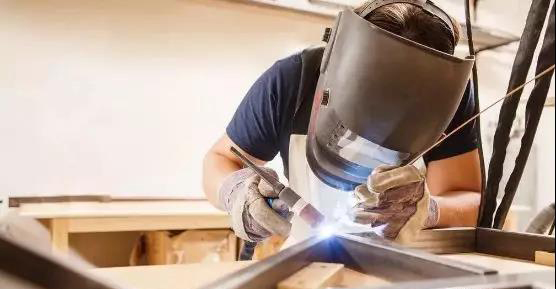
The distance between the nozzle and the part should not be too large or too small.
The distance between the nozzle and the part reflects the relative length of the elongation of the electrode and the radian. When the tense length of the electrode remains unchanged, the modification of the distance between the nozzle and the part not only modifies the size of the length of the arc, but also modifies the status of the gas protection. If the distance between the nozzle and the room increases, the conical terrain of the arc will become larger and the effect of gas protection will be considerably affected. However, too close a distance will not only affect the line of view, but will also easily lead the tungsten thread in contact with the melted swimming pool, resulting in tungsten tightening defects. Generally, the distance between the top of the nozzle and the room is between 8 and 14 mm.
07
Arc welding the argon of the tungsten electrode should not use the contact arc method
Contact leads to the arc, that is to say that the end of the tungsten electrode is directly short-circuited with the weld, then opens it quickly to light the arc. This arc induced arc method has poor reliability and is subject to burning. Therefore, contact with the CRA has many drawbacks and is not easy to use.
08
Avoid using simple welding procedures for arc welding
The welding process is too simple, which is subject to obvious welding depressions, pores and crack defects, which are even more likely of materials with a greater trend in thermal cracks. The normal welding process should be to encourage and close the arc under the protection of the argon to avoid oxidation of the tungsten electrode and welding metal, affecting the quality of the welding. At the same time, the current attenuation method is used to reduce the welding current, and the cracks are avoided by gradually reducing the heat supply of the merger pool.
09
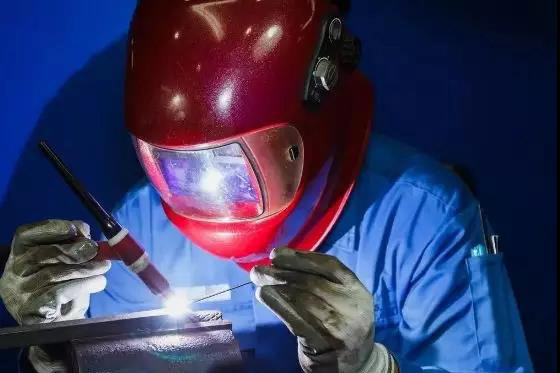
Avoid jumping movements during flat welding
Flat welding is an easier to master welding position, suitable for manual welding and automatic welding. During welding, the position of the tungsten electrode and the part must be accurate, the welding angle must be appropriate and special attention must be paid to the stability of the arc and the uniformity of the speed of Welding displacement to ensure the depth of uniform fusion and width of the merger of the welding. During manual welding, the left side welding must be used to perform a uniform linear movement. In order to obtain a certain fusion width, welding allows a horizontal swing, but must not jump. The diameter of the filling wire is generally not more than 3 mm.
10
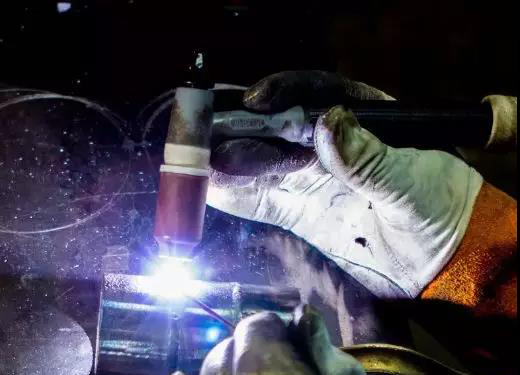
Aluminum and copper wires are avoided when using the argon argon arc welding with hot wire
The resistive heat generated by the additional power in the front section of the welding wire can be heated to a predetermined temperature, thus increasing the welding deposit speed. However, for aluminum and copper, due to small resistivity, a large heating power supply is necessary, which causes excessive arc magnetic blowing and an unequal fusion, so that the aluminum and copper wires are Not easy to use in welding hot wire.
Daguang focuses on providing solutions such as precision CNC machining services (3-axis, 4-axis, 5-axis machining), CNC milling, 3D printing and rapid prototyping services.



















