

This article is a very practical article. Ages; In order to improve the accuracy of its alignment tool, depending on the idea of ”automatic cutting of tests → measurement → error compensation”.
1 principles and ideas for knife knife cutting method of the CNC vehicle
An in -depth understanding of the principle of alignment of the CNC Towers tool is to improve the importance for operators in order to maintain ideas for alignment of clear tools, master tool alignment operations and to propose New methods of alignment of tools. The essence of the tool adapter is to determine the location of the origin of the part coordinate system program which varies with programming in the unique machine-tool coordinates system. The main work of setting the tool consists in obtaining the coordinates of the machine at the starting point of the reference tool program and to determine the bias of the tool of the non-referral tool in relation to the reference tool.
This article concludes the following agreement to explain the principle and the idea of the test cutting method: use HNC-21T, the teaching system based on the Chinese Middle Ages (the version number application software is 5.30); The right side of the part as the program origin and defines it with the coordinate system of part G92 of the control; Outdoor holder: knife n ° 1 is at 90 ° Outdoor circle Rugueux turn tool, the reference knife n ° 2 is at 90 ° precision tool of the outer circle The knife, the knife n ° 3 is a knife of cutting And knife n ° 4 is a 60 ° triangular triangular knife (the examples mentioned in all the text are the same as it).
As shown in Figure 1, the reference tool saves the coordinates of machine X and Z of the test point of test A as a function of the “manual test cutting part” and register the display (CRT) respectively for Show the coordinates of machine x and z of the cutting point test a → the coordinates of the machine from the origin of the outgoing program o → the starting point of the outgoing program H → the machine tool coordinates »Idea of the tool . Depending on the relationship between the coordinates of the point A and point O machine: xo = xa-φd, zo = za, the coordinates of the machine’s machine O can be deducted. Then, according to the coordinates of the H part compared to point O, the coordinates of the machine-point-point H machine are finally drawn: xh = 100-φd, zh = za + 50. The coordinate system of the established part In this way is a part coordinate system established according to the position of the tip of the reference tool tool.
Figure 1 Schematic diagram of manual test cut
As shown in Figure 2, since each knife is tight in the X and Z directions of the tool support, when the non-referral tool is turned towards the machining position, the tip of the tool B is biased with respect to point A. The original part of the original The coordinates system is no longer applicable. In addition, each tool will also experience different degrees of wear during use, so that the means of the tool and the wear value of each tool must be offset. The basic principle of obtaining the bias of each knife is: each knife is aligned on a reference point on the room (like point A or point O in Figure 1). The reference tool is placed at this stage.
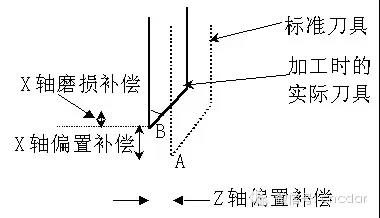
Figure 2 tool bias and wear compensation
Affected by various factors, the precision of the manual cut and the correspondence of the knives is very limited, and this stage of correspondence to the knife is called raw knife correspondence. In order to obtain more precise results, as shown in Figure 3, a simple automatic trial cutting procedure is designed in the part processing parts before treatment. The reference tool is repaired several times and adjusted. Alignment of the tool.
Since the starting point of the reference tool program is in a precise position is the prerequisite for obtaining a specific reference tool, the first is generally corrected and the second is corrected.
By combining the alignment of the tool to these two stages, the basic operating process of the test cutting method is as follows: using the reference knife to manually test the coordinates of the machine-tool Reference point of the tool → Manual calculation or automatically obtaining the tool of the tool of each non -non -reference → Reference The knife is at the approximate starting point of the program → The reference knife calls several times The test cutting program. Starting of the program of the program → The non -referential knife calls on several occasions the test cutting program, in the original bias, the knife bias depending on the knife bias → the reference knife remains at the starting point of the specific program.
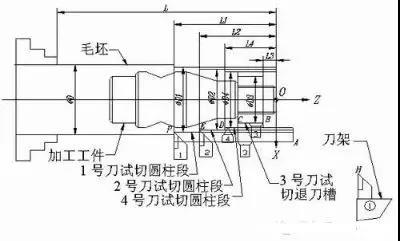
Figure 3 Schematic diagram of the multi-cout-couteau test cut
2 summary of several rough knives
The work to prepare tool settings for each of the following methods is the same: press the F2 key under the System MDI submenu to enter the deviation table of the knife; Knife and press the F5 key; Change the data from bias and Z -biases Z of the symbols of knife # 0000, # 0001, # 0002, # 0003, # 0004 to zero, then press the F5 key.
1. Select the reference knife as a standard knife and automatically define the knife biases method
As shown in Figures 1 and 4, the stabbing stages are as follows:
1) Use the ▲ and the keys to move the blue light bar to align the knife to the position of the knife deviation number 0002 of the reference knife n ° 2, press the F5 key to define the N ° knife 2 As a standard tool and the line will turn into a bright red bar.
2) Use a reference tool to test the right side of the part of the part, save the coordinates of the Z machine of the A cut point; Stop after retracted the tool and measure the outer diameter of the cut tree section φD.
3) The reference tool returns to point A as a function of the value recorded via the “jog + step” method, and enter φD and zero in the test cut diameter and the cutting length columns of the deviation table of tool respectively.
4) Retract the tool, select the non -referential knife number and manually modify the tool, so that the tips of each non -reference knife can be visually aligned with point A to “Jog + step” when the spindle turns, then respectively away from the corresponding tool.
5) Once the reference knife has returned to point A, MDI performs “G91 G00 / or G01 X[100-ΦD] Z50 ”, put it at the starting point of the program.
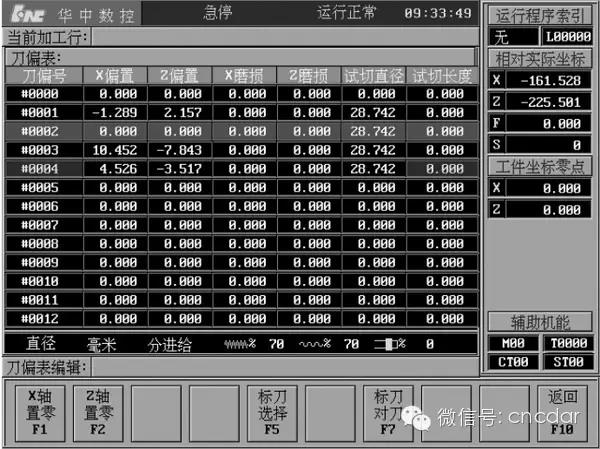
Figure 4 Schematic diagram of the automatic offset of the tool for the reference knife as a standard tool
2. Define the contact details of the reference tool to the tool adjustment point to automatically display the tool offset method
As shown in Figures 1 and 5, the detachment steps are as follows:
1) identical to the aforementioned step (2).
2) The reference knife comes back to the cutting point of test A as a function of the value recorded via the “Jog + Step” method.
3) Press the F1 “X Ax zero” key in the interface of Figure 4 and press the F2 “Z zero” button, then the “real coordinates relative” displayed by CRT (0, 0).
4) Manually replace the non-referral tool to make the point of the tool visually aligned with point A. For the moment, the value of the “real coordinates relating” displayed on the CRT is the knife bias of the tool compared to the reference tool.
5) The same as the aforementioned step (5).
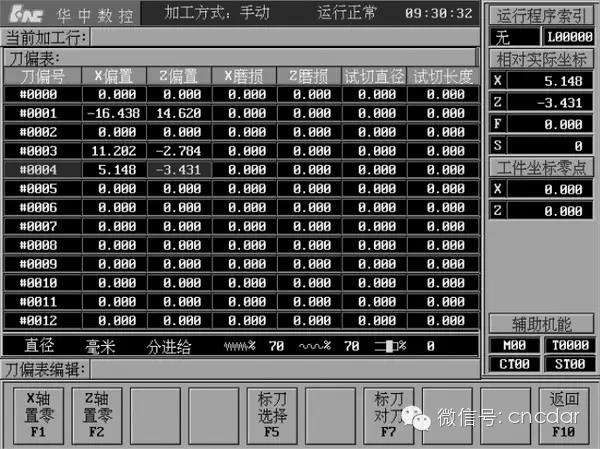
Figure 5 Schematic diagram of the automatic display of the tool tool tool when zero is coordinates to the tool adjustment.
3 Multiple cutting of the external circular shaft, manual calculation to obtain the tool method of the tool
As shown in Figure 6, the system corresponds to tools n ° 1, 2 and 4 in a manual condition, and cuts an axis of PAS to record the coordinates of the machine-tool of each end of the cutting of the tool (As shown in Figure 6 points f, E and D). Change cutting knife n ° 3, cut a retracting groove and match the knife to the right point of the knife, save the coordinates of point B and measure the φd3 and L3 illustrated in the figure. After obtaining the above data, according to the incremental relationship of the coordinates between points F, E, D and B corresponding to each tool and at the origin of the program O, we can see that the coordinates of the machine-tool Starting point for the reference tool program are (X2-φD2 + 100, Z2-L2 + 50); Table 1, and the recorded value and the calculated value can be filled in the corresponding spaces. Note here: the length of the test cut refers to the directional distance between the zero point of the coordinate of the part and the final point of the test cut, and determine the positive and negative directions according to the direction of the axis of coordinates.

Figure 6 Schematic diagram of the manual cut of several knives
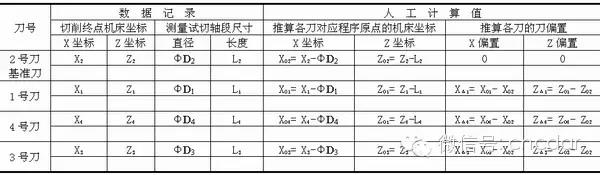
Table 1 Calculation table for knife biases for unresection knives
This method has a simple test cutting process, eliminating the steps to visually align the testing point of the tests, but the bias of the knife requires a manual calculation. If you print the calculation table containing the calculation formula and fill in the corresponding space to calculate the value, you can quickly calculate the outline of the tool.

Figure 7 Schematic diagram of automatic setting of tools of the CNC Century Star Turning CNC system
CNC system of 4th century star turning, method of adjusting multi-layer automatic tools
The methods of adjusting the aforementioned knives are all relating to the method of establishing the knife. Once the professionals have made the settings and debugging the system, the HNC-21T can also allow users to choose the “absolute knife biases” to match the knife. The absolute knife bias method is slightly different from the relative knife biases method aforementioned in the preparation of the treatment program. Refer to the O1005 program. The steps to adjust the tool are as follows: once the return system is zero, as shown in Figure 6, let each knife manually cut a cylindrical section, measure the diameter and the length dimensions, fill the number of deviation corresponding knife of each knife as presented in Figure 7. The test cut diameter is in the column of test cutting length. Contact details of the origin of the corresponding program of each tool, in order to achieve the objective of automatic alignment of tools. This set of tools is the fastest and is particularly suitable for industrial production.
5 Summary of several specific knives
The general idea of the precise tool adjustment step is “Automatic test cut → Measure → Error compensation”. There are two situations for the compensation of errors: for the MDI reference tool in addition or the holder of a movement tool to compensate for its position of starting point of the program; To avoid recording the confusion, design the table recordings indicated in Table 2 and calculate the values.

Table 2: Table of the recording of the testing method tool (unit: mm)
1. After the starting point for the reference tool correction program, the removal method of the non-referral tool will be adjusted separately.
As shown in Figure 3, the detachment stages are as follows:
1) The reference tool is at the starting point of the program after having almost supplied the tool and enter each shift from the not reference tool to the corresponding position of the tool’s offset table.
2) Call the O1000 program which treats φd2 × L2 to try the cut.
3) Measure the diameter and length of the cutting shaft section, compare it with the program’s control value and find the error.
4) MDI PAS or operating error value, adjust the starting point of the program.
5) Dynamically modify the instruction value of the O1000 program underlined according to the measured size and save the program. And save the coordinates of machines from the starting point of the corrected program.
6) Call the O1001 (n ° 1 and 4) and O1002 programs (knife n ° 3) to test the cut and measure the diameter φDi and the Li length (I = 1, 4, 3) of each section.
7) Make error compensation according to the method indicated in Table 3.
8) Repeat the steps (6) to (7) until the machining error is in the precision range, and the reference tool stops at the starting point of the program and no longer moves .

Table 3 Examples of error compensation for the actual measurement dimensions of the cylindrical tree segment with automatic test and the program instruction value (unit: mm)
2. The positioning method of the starting point of each knife adjustment program
The principle of the alignment of the tool in this method is: each tool corrects its starting point position of the program, thus indirectly ensuring alignment with the same original position of the program.
As shown in Figure 3, the detachment stages are as follows:
1) The reference tool n ° 2 is at the starting point of the program after having approved the tool roughly, and all the unrepropked tools are recorded and modified to zero.
Steps 2) to (5) are the same as the tool stage with the same number as the first precise tooling method.
(6) Modify the non-referral tool separately, use the outburst of the tool recorded by roughly paired tools as relative coordinates of the starting point of the non-referral tool program, call the O1000 program for Test the cut and measure the diameter φdi and length Li (I = 1, 4, 3), compare the program’s instruction value and find the difference value.
(7) Step Movement or MDI Running TOOLDER for error compensation and adjust the starting point of the program of each non-referral tool separately.
(8) Repeat the steps (6) and (7) until the starting point for each non-referral tool program is in the authorized precision range.
(9) Use the relative coordinates displayed by CRT as a new tool and enter it in the X and Z biases columns of the corresponding tool shift symbols of the Tool’s Decrease Table. This method is simple and practical.
3. After adjusting the starting point of the reference tool program, adjust all the non-referral tools at the same time.
This method is fundamentally the same as the first precise tooling method. O1003 program).
6. Knife adjustment method
If the knife is roughly adapted to the relative method of the knife bias, first enter the knife bias of each knife not reference to the corresponding position of the knife bias table, run the O1004 program of four knives and Measure the diameter φDi and length Li respectively (I = 2, 1, 4, 3), find the processing error. For reference tools, use MDI to run or walk to compensate for the error values and adjust the starting point of the program; A new outburst of the tool has returned. If the absolute knife bias method is used to roughly match the knife, call the O1005 program to try to cut and compensate for the processing error of each knife in the wear bar of the corresponding knife bias.
Daguang focuses on providing solutions such as precision CNC machining services (3-axis, 4-axis, 5-axis machining), CNC milling, 3D printing and rapid prototyping services.



















