
1
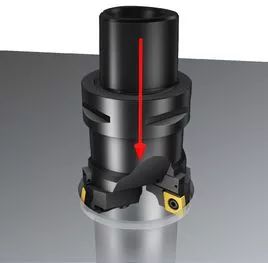
Definition of boring
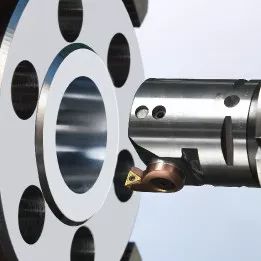
Boring: this is a cutting process that uses the relative movement between the bore tool on the equipment and the machining part to cut the machined surface of the part, so a layer of metal metal be divided from the machined surface and that the machined surface obtains a certain precision of treatment and surface roughness.
Difference: compared to other holes machining processes, the bore is not limited by the size of the tool; And the bore has strong error correction capacities. It can correct the error of the original raw hole axis thanks to several tool passes and can bore the hole and positioning. The data maintain high position accuracy.
2
Boring Tool Types
Type 1.
Classification of the blade number: bore tool with a single edge/double -cutting bore/bore tool with several retreats.
Treatment Classification: Tool of hole hole crossing/Borgne hole bore/Tool for stalking hole/section of sectional bore.
Structural classification: integral/assembly/modular.
Type 2.
Aexying tool with a single cutting edge: Integrated bore tool/Welded bore/bore tool with clip machine/indexable bore tool.
Double -tracing dual bore tool: fixed dual -cutting bore/floating dual -cutting bore tool with double -edged swords
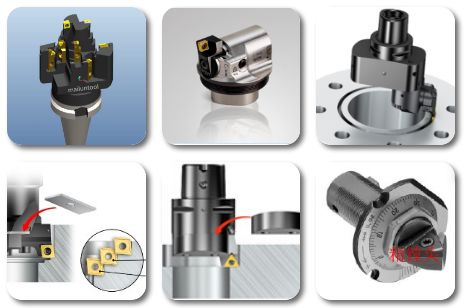
❶ Extensible bore tool ❷ Modular bore tool ❸ Rainting bore tool
❹ Stage bore tool ❺ Righting tool at an edge ❻ Solid bore tool
3
Boring applications
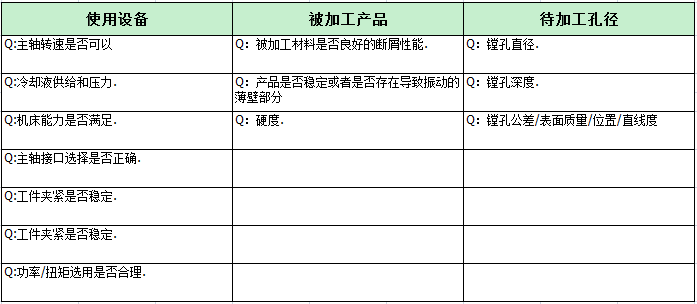
➤ Note we encounter problems, we can first consider these aspects.
Coarse
1. BORNGN HOLES TREATMENT
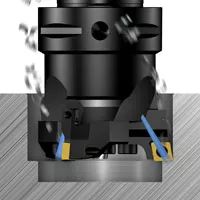
During the machining of borgnes holes, it is very important to guarantee a correct evacuation of the chips.
Correct cutting parameters are necessary to obtain an appropriate shape of chip.
Make sure/check that the shavings do not block or use the blade.
The pressure of the cooling liquid and the cutting of the cutting fluid must be sufficient to expel the chips.
Vertical machine tools have higher requirements in the effective elimination of chips than horizontal machine tools.
2. Intermittent cut
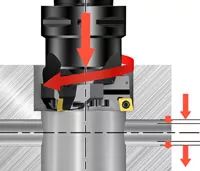
When making interrupted cuts (such as transverse holes), high requirements are imposed on the cutting conditions of the brochure.
Choose a material with higher tenacity.
Under stable working conditions, to improve the safety of treatment, choose a basic insert in vertical cutting angle.
If there are many interruptions, reduce the cutting parameters.
3. Fonte filled with sand
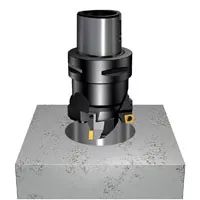
Sand inclusions in molded parts can increase the wear of the blades.
Choose a material with higher tenacity.
Reduce the cutting settings.
To increase the safety of machining and minimize wear, choose robust square platelets of basic shape with negative cutting angle.
PS: The inclusion of sand refers to the inclusions of sand on the molded parts.
4. Gas combustion holes
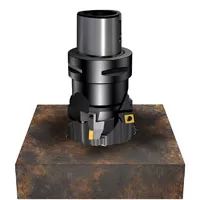
Localized areas of gas combustion holes can harden, thus increasing the wear of the blade.
Choose a material with higher tenacity.
Reduce the cutting settings.
To increase the safety of machining and minimize wear, choose robust square platelets of basic shape with negative cutting angle.
Fine bore applications
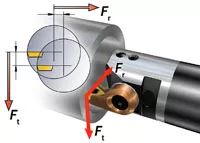
1. Cutting force
The impact of the cutting force on products
When the tool cuts, the tangential and radial components of the cutting force will try to deflect the tool far from the room. The tangential elements will try to force the tool downwards and keep it away from the midline. In this way, the body of the tool of the tool will be reduced.
Any radial deformation leads to a reduction in the cutting depth and the thickness of the chips, which leads to a tendency to vibrate.
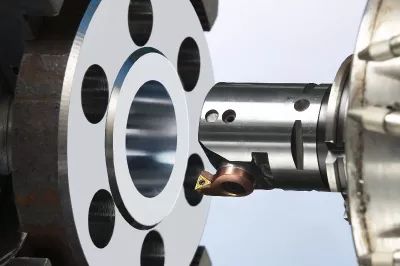
2. balance
The influence of balancing force on treatment
The imbalances caused by asymmetrical tools or important races create a force that acts on the bore tool.
In most applications, the forces generated by the balourd are negligible compared to the cutting forces.
At high rotation speeds, an imbalance can cause vibrations that can affect the quality of the hole.
Note: The following is a collection of on -site processing images, summarized and listed so that everyone can learn from it.
4
Boring case
4.1 LAE wear
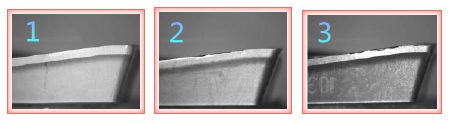
During the bore treatment, the tool cuts continuously, which is subject to wear and damage, reducing the dimensional precision of the treatment of holes and increasing the roar value of the surface, at the same time, the calibration of the fine adjustment supply unit is abnormal, which causes adjustment errors and differences in the diameter of the treated hole can even cause product quality accidents.
4.2 Quality of surfaces
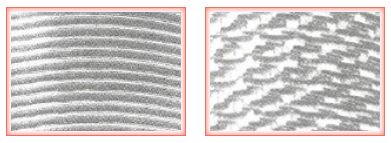
Boring calamine or wire cuts on the machined surface are a current surface quality phenomenon.
Left image: mainly caused by the inadequacy between advance and drilling speed.
Right image: mainly caused by rigid vibrations and the wear of the tool during the bore process.
Q: How to use the spindle positioning during the treatment of bore tools?
A: ① Using a dial measurement device for alignment and positioning, you must first use a dial centering device or a positioning mandrel to determine the referent coordinates on the Part, then determine the spindle coordinates according to the reference hole coordinates. It is characterized by high precision and practical operation.
②utilize the inspection rod for alignment and positioning. This method is characterized by a low precision of alignment and positioning and a tedious alignment. However, this positioning method makes it possible to directly find the position of the spindle coordinates of the rale and the starting hole.
③utilization of the interface of the holes to align and position. This method is characterized by the fact that it is suitable for the treatment of drilling separate box system systems. The drawback is that the assistance time is longer.
④ Use models for alignment and positioning. The characteristic of this method is that the structure of the model is simple and does not require complicated adjustments. However, the template is easy to deform, and when the part must treat holes systems on several different surfaces, several templates are necessary, and the accuracy of alignment and positioning is also low.
Daguang focuses on providing solutions such as precision CNC machining services (3-axis, 4-axis, 5-axis machining), CNC milling, 3D printing and rapid prototyping services.



















