
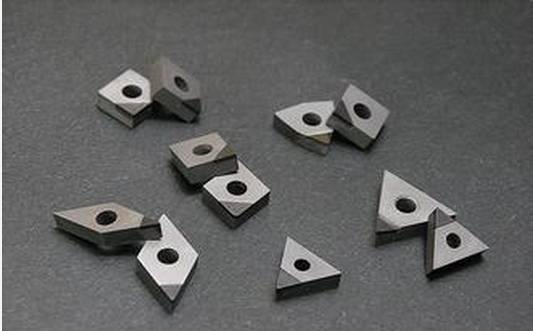
The advanced treatment equipment cooperates with high performance CNC knives, in order to give a complete game to its effectiveness due and to achieve good economic advantages. With the rapid development of tool materials, various new types of tool materials have considerably improved their physical, mechanical and cutting performance performance, and the scope of the application continued to develop.
1. The tool to the tool must have basic performance
The choice of knife materials has a great impact on life, the effectiveness of treatment, quality of treatment and the cost of treatment. When cutting the tool, it must carry the high pressure, high temperature, friction, impact and vibration functions. Therefore, the material to the tool should have basic performance:
(1) Resistance to hardness and abrasion. The hardness of the material of the tool should be higher than the hardness of the room material, and it must generally be greater than 60HRC. The higher the hardness of the material of the tool, the better the wear resistance.
(2) Force and tenacity. The material of the tool must have a high resistance and tenacity to resist the cutting force, the impact and the vibrations, and to prevent the rupture and the crisp crash of the knife.
(3) Heat resistance. The heat resistance of the material of the tool is good, can resist a high cutting temperature and has good antioxidant capacities.
(4) Artisanal performance and economy. The tool material must have good forging performance, heat treatment performance and welding performance;
2. Types, performance, characteristics and application of tool materials
1 and 1 the type, performance and characteristics of diamond knife materials and knife tools
Vajrayana is a carbon isomer -alton, and it is the most difficult material that nature has discovered. The Vajra knife has high hardness, high wear resistance and high thermal conductivity, and is widely used in the treatment of non -ferrous metals and non -metallic materials. Especially in the high -speed cutting of aluminum and aluminum aluminum alloy, diamond tools are the main varieties of cutting tools that are difficult to replace. Vajra knives that can reach high efficiency, high stability and long -term treatment are an essential tool for modern CNC treatment.
The type of diamond knife
Natural diamond knives: natural diamonds have a history of hundreds of years as a cutting tool. is recognized, ideal and unable to replace the ultra-procioning treatment tool.
PCD diamond knives: natural diamonds are expensive. Natural diamond tools have been replaced by artificial polycrystalline diamonds on many occasions.
The PCD knife cannot grind the extremely sophisticated blade, and the surface quality of the treatment room is not as good as natural diamond. Therefore, the PCD can only be used for the non -proccision mirror cutting for unprotected mirror cutting.
③ CVD Diamond knife: From the late 1970s to the early 1980s, CVD Diamond technology appeared in Japan. The CVD diamond refers to the use of the chemical gas deposit (CVD) to synthesize the diamond membrane on the heterogeneous matrix (such as hard alloy, ceramics, etc.).
The performance of the CVD diamond is very close to natural diamonds.
的 The performance characteristics of diamond knives
① Resistance to very high hardness and abrasion: natural diamond is the most difficult material that nature has discovered. Vajrayana has an extremely high resistance to abrasion.
② There is a very low friction coefficient: the friction coefficient between the diamond and certain non -ferrous metals is less than those of other tools, the friction coefficient is lower and the deformation is smaller during treatment, which can Reduce cutting force.
③ The cutting blade is very sharp: the diamond knife cutting blade can be crushed very suddenly.
④ It has a high thermal conductivity: the thermal conduction coefficient and the thermal diffusion rate of the diamonds are high, the cutting heat is easy to spread and the temperature of the section of the cutting tool is low.
⑤ There is a lower thermal extension coefficient: the thermal extension coefficient of the diamond is several times smaller than the hard alloy, and the size of the tools caused by heat is low. Size and precision.
的 Application of diamond knives
Vajrayana tools are mainly used to cut finely and pores on non -ferrous metals and non -metallic materials at high speed. Suitable for the treatment of all kinds of abrasion-resistant non-metals, such as metallurgical gratiques reinforced by glass fibers, ceramic materials, etc.; .
The gaps of the diamond knives are that the stability of the heat is bad, and when the cutting temperature exceeds 700 ° C at 800 ° C, it will completely lose its hardness; ) is easy to be with iron at high temperatures at high temperatures.
2 The type, performance and characteristics of the nitrogen sculpture tool materials of boron cubic and the application of tools
The second nitride of Boron (CBN) Ultra-Duv. CBN has extremely stable chemical properties for black metals and can be widely used in the transformation of products into steel.
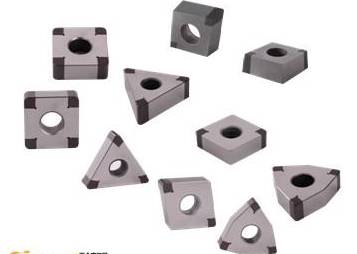
⑴ Types of cubic boron nitride tools
The boron cube nitride (CBN) is a substance that does not exist in nature. CBN is one of the anti -Bonomy (BN) antimotonthians, and the structure is similar to the diamond.
The PCBN (Boron nitride) of polycrystalline (polycrystalline cubes) is a polycristalmlum material which combines fine CBN materials by combination (ICT, TIN, AL, TI, etc.) at high temperature and high pressure. Hard tool material with diamond. PCBN is mainly used to make tools or other tools.
PCBN tools can be divided into PCBN composite blades with composite PCBN blades and hard alloy sintering.
PCBN composite blades are made from a 1.0 mm 1.0 mm PCBN layer on a hard alloy with good resistance and good tenacity. Blade CBN and difficulty welding.
的 The main performance and characteristics of the cubic boron nitride
Although the hardness of the cubic boron nitride is slightly more than the diamond, it is much higher than other high -hardness materials. The advantage of CBN is that the stability of heat is much higher than that of diamond, which can reach up to 1200 ° C (the diamond is from 700 to 800 ° C). is not chemically at 1200 ° C ° C without chemistry. The main performance characteristics of the cubic boron nitride are as follows.
① High resistance to hardness and abrasion: the CBN crystalline structure is similar to the diamond and has the same hardness and the same resistance as those similar to the diamond. The PCBN is particularly suitable for the treatment of high -hardness materials which can only be ground in the past and can obtain good surface quality of the room.
② It has high thermal stability: CBN heat resistance can reach 1400 to 1500 ° C, which is almost double more than the heat resistance of the diamond (700-800 ° C). PCBN knives can use high -temperature high temperature alloy high speed cutting at a speed of 3 to 5 times higher than the hard alloy tool.
③ Excellent chemical stability: The chemical effect does not work with iron materials before 1200-1300 ° C, and it will not apply strongly in the form of diamond. For cutting and caliber steel parts and cold and hard cast iron can be widely used in the cast iron cup.
④ It has good thermal guidance: although the thermal conductivity of CBN cannot follow diamonds, the thermal conductivity of the PCBN in various types of tool materials is the second behind the diamond, which is much higher than the ‘Steel at high speed and hard alloy.
⑤ has a lower friction coefficient: a low friction coefficient can cause a cutting force during the cut, a decrease in the cutting temperature and improved the quality of the treatment surface.
Boron Boron Hydraie Cube Application
The boron cube nitride is suitable for refractory materials such as fine steel, hard cast iron, high temperature alloy, hard alloy and surface spray materials. The treatment accuracy can reach 5 (the hole is 6), and the surface roughness value can be less than RA1.25 to 0.20 μm.
The tenacity of cubic boron nitride tools and the flexion force are poor. Therefore, cubic boron nitride cars should not be used for high -speed treatment with low speed and large -scale loads; Alloy, large steel steel, etc.) When the metal is made of metal, a severe chip tumor will be produced, which aggravates the surface of the treatment.
3 and 3 the type, performance and characteristics of ceramic knife materials and the application of tools
Ceramic tools have the characteristics of high hardness, good wear resistance, excellent heat resistance and excellent chemical stability, and are not easy to adhere to metal. Ceramic knives occupy a very important position in CNC machining. The ceramic knives are widely used in the cutting treatment of high speed, dry cut, hard cut and difficulty cutting materials. Ceramic tools can effectively transform high materials that cannot be treated with traditional knives, and reach “grinding with cars”; Reduce the efficiency of production production; The main raw material used by ceramic knife materials is the richest element of the crust. Will also greatly promote cutting technology technology.
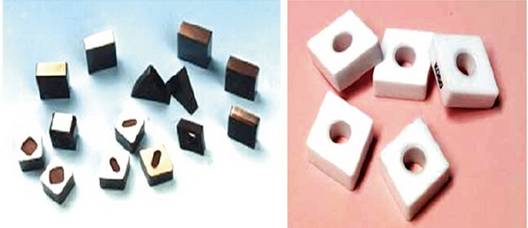
⑴ Types of ceramic knife materials
The types of ceramic knife materials can generally be divided into three categories: aluminum aluminum ceramics, nitrous -based ceramics and composite aluminum aluminum aluminum aluminum aluminum aluminum ceramics aluminum. Among them, ceramic tool materials based on alumina -based nitride and silicon -based are the most widely used. Silicon-nitride ceramics are better than aluminum oxide ceramics.
⑵The performance and characteristics of ceramic knives
The performance characteristics of ceramic tools are as follows:
① High hardness and good wear resistance: although the hardness of ceramic tools is not as high as PCD and PCBN, it is much higher than that of hard and high -speed steel tools, reaching 93-95hra. Ceramic knives can treat high materials that are difficult to treat traditional tools, suitable for magnitude and hard cut.
② High temperature resistance and heat resistance: the ceramic knife can still be cut at high temperature above 1200 ° C. The ceramic tool has a good mechanical performance at high temperature. Therefore, ceramic tools can get a dry cut, which can save cutting fluid.
③ Good chemical stability: ceramic tools are not easy to adhere to metal and have good corrosion resistance and good chemical stability, which can reduce the adhesion and wear of the tool.
④ Low friction coefficient: the personal combination of ceramic and metal tools, a low friction coefficient, can reduce the cutting force and the cutting temperature.
有 The ceramic knife has applications
Ceramics is one of the tool materials mainly used for high-speed precision and semi-end. Ceramic tools are suitable for cutting and treatment of various fonts (gray melting, ball cast iron, forged cast iron, cold and hard cast iron, in alloy -resistant cast iron and steel steel in alloy structure in alloy in alloy structure Alloy, high high steel, high manganese steel, caliber steel, softened steel, soles of caliber, caliber steel, caliber steel It can also be used to cut the copper alloy, graphite, plastics of engineering and composite materials.
The performance of ceramic knife materials have the problem of low flexion resistance and poor impact tenacity, which is not suitable for low speed and impact load.
4 performance and characteristics of coating tool materials and tool application
Tool treatment treatment is one of the important ways to improve the performance of the tool. The appearance of the coating tool has made a major breakthrough in the cutting performance of the tool. The coating tool is a difficult fusion compound with a layer or multi-plas of abrasion resistance on a well-knife body. The coating tool can improve treatment efficiency, improve treatment accuracy, prolong the lifespan of the tool and reduce processing costs.
About 80% of the cutting tools used in new CNC machine tools use a coating tool. The coating knife will be the most important type of tool in the field of CNC treatment.
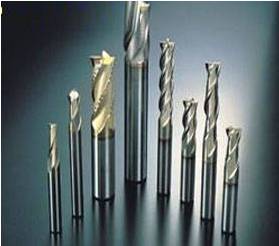
⑴ Types of coating knives
Depending on the coating method, the coating tool can be divided into chemical gas deposit (CVD) and physical gas (PVD) gas deposit tool. The coating hard alloy knife generally uses a sedimentary chemical gas method and the deposit temperature is around 1000 ° C. The high speed steel knife generally uses a physical gas deposit method and the temperature of the temperature deposit is around 500 ° C;
According to the different materials of the materials of the coating tool, the coating tools can be divided into hard alloy coating tools, high -speed steel coating tools and coating tools on ceramics and superhard materials ( Cubic boron diamond and nitrogen).
Depending on the nature of the coating material, the coating tool can be divided into two categories, namely “hard” coating tools and the “soft” coating tool. The main objective of the “hard” coating tool is a high -hardness resistance and wear the advantage of nature is a strong hardness and good resistance to wear.
Recently developed nanoeorating tools. This coating tool can use different combinations of multiple coating materials (such as metal / metal, metal / ceramic, ceramic / ceramic, etc.) to meet different function and performance requirements. The reasonable design of nano-receiving can make material to the tool with excellent reduction and self-package performance, which is suitable for high speed cut.
The characteristics of the coating knife
The performance characteristics of the coating tool are as follows:
① Good mechanics and cutting performance: the coating knife combines the excellent performance of the substrate and coating material, which maintains not only the good tenacity and the strong resistance of the substrate, but also has high hardness, the strong Resistance to wear and low resistance of the low coating resistance of the friction coefficient. Consequently, the cutting speed of the coating knife can increase by more than twice compared to the Unbalpal tool, and it allows a high supply. The lifespan of the coating tool has also been improved.
② Strong generalability: The coating tool is largely universal and the treatment range is considerably enlarged.
③ The thickness of the coating: the lifespan of the tool with the increase in the thickness of the coating will also increase, but when the thickness of the coating reaches saturation, the lifespan of the tool no longer increases significantly. When the coating is too thick, it is easy to cause stripping; When the coating is too thin, the abrasion resistance is bad.
④ Listen to the abrasion: bad grinding of the coating blade, complex coating equipment, high process requirements and long coating time.
⑤ Coating material: the cutting performance of different coating materials are different. For example, when cutting the low cut, the TIC coating has an advantage;
的 Application of coating knives
The coating tool has enormous potential in the field of CNC treatment, which will be the most important variety of tools in the field of CNC treatment. The Coating Technology has been Applied to Standing Mill, Re -Milling, Drill Bit, Hole Processing Tools, Gear Rollers, Tooth Knife, Shaving Knife, Forming Knife Knife, and Various Folders to Reconnect to Meet High -Speed Cutting Processing The Needs of Plant steel and melting, heat alloys and non -ferrous metals.
5 The type, performance and characteristics and application of hard alloy tool materials
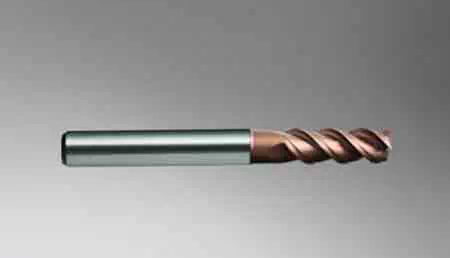
Hard alloying knives, in particular transposed hard alloy knives, are the main products of CNC treatment tools since the 1980s, varieties of various convertible hard alloy knives or blades have been extended to various cutting tools, among Which tools in transposed hard alloy are extended from single car knives, facial strawberries to various precision, complex and training knives.
⑴ Types of hard alloy knives
Depending on the main chemical ingredients, hard alloys can be divided into basic tungsten carbide alloys and the basic titane (tic (n)).
Tungsten carbide alloy includes three types: Tungsten Cobalt (YG), Tungsten (YT) cobalt titanium and rare carbide (YW). ), charred) (tac), charred 铌 (nbc), etc. Common metal membership is co.
The hard -based hard -based hard -based (nitrogen) alloy is a hard alloy with ICT as a main component (some add other carbides or nitrure), and common metal adhesion is MO and Ni.
ISO (standardized international organization) divides the cut into three categories with hard alloys:
Class K, including KL0 ~ K40, is equivalent to the YG class in my country (the main component is WC.co).
Class P, including P01 ~ P50, is equivalent to the YT class in my country (the main component is WC.TIC. CO).
Class M, including M10 ~ M40, is equivalent to the YW class in my country (the main component is WC-TAC (NBC) -co).
Each number of each brand is a series of alloys between 01 and 50, respectively from the hardness raised to maximum tenacity.
具 The performance characteristics of hard alloy knives
The performance characteristics of the hard alloy knives are as follows:
① Haute-dure: hard alloy knives are made of carbides (called hard phase) and metal binders (called adhesives) with high hardness and merger points. 87HRA, which is the same as the constant steel temperature at high speed (83 ~ 86hra). The hardness value of the hard alloy changes with nature, quantity, particle size and metallic adhesion of carbides. When the adhesive phase content is the same, the hardness of the YT alloy is higher than that of the YG alloy, and the alloy adding TAC (NBC) has a high hardness at high temperature.
② Bending and tenacity force: the curved resistance of the common hard alloy is in the beach from 900 to 1500 MPa. The higher the metal adhesion content, the higher the resistance to flexion. When the adhesive content is the same, the force of the YG alloy (WC-CO) is higher than that of the class YT (WC-TOT-Co) alloy, and the resistance decreases as the content of ICT increases. Hard alloys are crisp materials and their impact tenacity is only 1/30 to 1/8 of steel at high speed at normal temperature.
Application of hard alloy knives
YG alloys are mainly used for the treatment of melting, non -ferrous metals and non -metallic materials. The fine crystal grains (such as YG3X, YG6X) are higher than the hardness and resistance to abrasion of the grain when the cobalt content is the same.
The important advantages of the hard -class Hard alloy is a high hardness, good thermal resistance, high hardness and high temperature pressure resistance than YG and better antioxidant performance. Therefore, when the knife must have high resistance to heat and abrasion resistance, a high ICT has a high tic content. Alloys are suitable for the treatment of plastics such as steel, but it is not suitable for the treatment of titanium alloy and aluminum alloy in silicon.
YW-ALLOY has both the performance of YG and YT alloys. If these alloys are correctly increased, resistance can be very high and can be used for rough treatment and an intermittent cut of various difficult treatment materials.
6. Types and characteristics and applications of high -speed steel tools
High -speed steel (HSS) is a high alloy tool steel with more W, MO, CR, V elements and other alloys that add more W, MO, CR, V. Tools in steel tools At high level have excellent complete performance in terms of resistance, tenacity and processor. The high speed steel knife is easy to grind the sharp blade.
Depending on different uses, high speed steel can be divided into high -speed universal steel and high -level high -level steel.
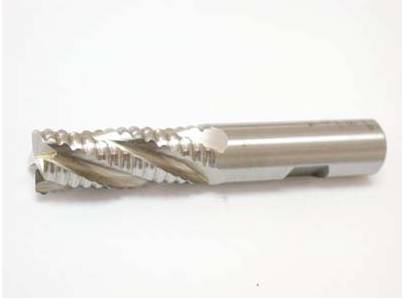
⑴ General – Steel knife at high speed
High level GM steel. Generally, tungsten steel and tungsten molybdenum steel can be divided into two categories. This type of broadband steel contains 0.7% to 0.9%. Depending on the different quantity of tungsten in steel, it can be divided into tungsten steel containing 12% or 18%, molybden steel in tungsten containing W for 6% or 8% and molybden steel containing 2% or w -Exclusion W ESTER General Steel at high speed has a certain hardness (63-66hrc) and resistance to abrasion, high resistance and tenacity, good plasticity and a good processing process, it is therefore widely used To make various complex knives.
① Tungsten steel: The typical brand of tungsten steel in high -speed universal steel is W18CR4V (called W18), which has good full performance. complex knives. It presents the advantages of a good grinding and a small sensitivity to decarburization, but due to the high content of carbides, the distribution is relatively uneven, the particles are large and the resistance and tenacity are not high.
② Tungsten molybdenum steel: refers to a high -speed steel obtained from part of the tungsten steel in tungsten steel. The typical steel brand with Tungsten molybdenum is W6MO5CR4V2, (called M2). M2 carbides are small and uniform, and resistance, tenacity and plasticity at high temperature are better than W18CR4V. Another type of tungsten and molybdenum steel is W9MO3CR4V (called W9).
钢 high -level steel knife
High -speed high speed steel refers to the addition of new types of steel with alloy elements such as CO and AL in general in high speed steel to increase the quantity of carbon content , the cricket content and the addition of CO et al, which can improve its heat resistance and abrasion resistance. There are mainly the following categories:
① high carbon high speed steel. High speed steel (such as 95W18CR4V), which has a high room temperature and high temperature hardness, suitable for the manufacture and processing of ordinary steel and melting, resistance to high wear, breading bites, re-cuts, taps and strawberries, etc. It is not advisable to allow a big impact.
② high speed steel. Typical cards, such as W12CR4V4Mo, (called EV4), including V at 3% and 5%, good abrasion resistance, adapted to cutting materials with great wear on tools, such as fiber, rubber hard, plastic, etc. be also used for treatment.
③ Steel at high cobalt speed. It is a high-speed steel with ultra-dure containing cobalt, a typical brand, like W2MO9CR4VCO8, (called M42), which has a high hardness, its hardness can reach 69-70hrc, which is suitable for high treatment Force with great force with strong strong strength to strong force with strong strength to a strong force of strength to strong force with high 69 steel resistant to heat, high temperature alloy, titanium alloy and other materials of machining of difficulties , M42 can be crushed, suitable for making complex precision tools, but it is not advisable to work in impact cutting conditions.
④ high speed steel aluminum. It belongs to typical brands containing aluminum, typical brands, such as W6MO5CR4V2AL, (called 501), and high temperature hardness at 6000 ° C also reaches 54hrc. such as the treatment of alloy steel, stainless steel, high high steel and high temperature alloy.
⑤ Nitrogen Super High-Speed Steel. Typical mark, such as W12M03CR4V3N, called (V3N), which is a high -speed steel, hardness, resistance, tenacity and M42, hardness, resistance, strength and M42.
(3) Melt in steel with high speed and metallurgy in steel powder at speed
Depending on different manufacturing processes, steel at high speed can be divided into cast iron at high speed and metallurgy powder in high speed.
① Melving High-Speed Steel: high-speed high speed steel and high-speed steel at high performance are manufactured by fusion methods. They are transformed into tools by fusion, ingot and coating. The serious problem which is subject to the fusion of steel at high speed is the bias of the carbides.
② Powder Metallurgical High-Speed Steel (PM HSS): Powder Metallurgical High-Speed Steel (PM HSS) is a steel liquid that has melted high-frequency induction ovens with high-voltage gas or Nitrogen to atomize it. Powder), then the powder obtained is pressed in a blade at high temperature and high pressure, or first transmitted to the billet then forged and rolled in the shape of a tool. Compared to broadband steel made by the fusion method, the PM HSS has the advantages: the carbide grains are small and uniform, and the resistance and resistance to tenacity and abrasion are relatively improved. PM HSS tools in complex CNC knives will develop and occupy more an important position. Typical brands, such as F15, FR71, GFL, GF2, GF3, PT1, PVN, etc., can be used to make large, overloading and impactful knives and can also be used to make precision tools.
3. Principles of selecting CNC tool materials
Currently, widely used CNC knife materials include diamond tools, cubic boron nitride tools, ceramic tools, coating tools, hard alloy knives and large steel knives . The total number of tool materials is important and its performance is very different. The main performance indicators of various tool materials as indicated below.
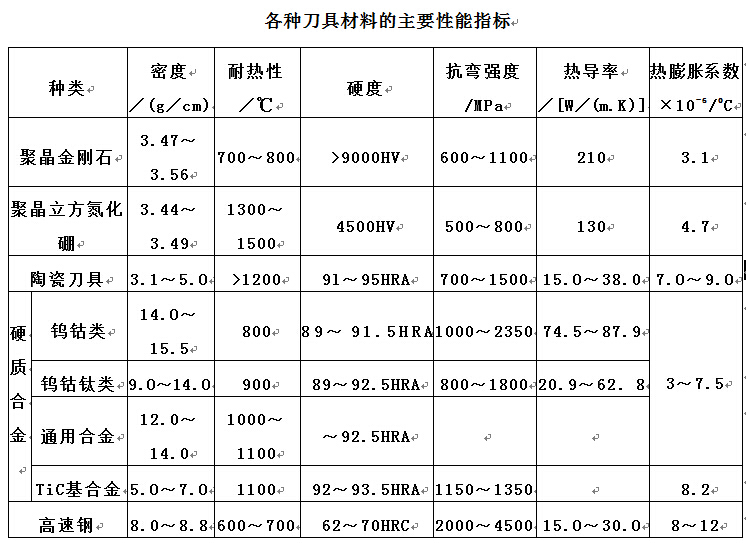
CNC treatment should be selected according to the nature of treatment and treatment of treated treatment. The selection of tool materials must be rationally appeared with treatment objects. Cut the productivity of treatment.
1 and 1 the correspondence of the mechanical performance of the material of the cutting tool and the processing object
The problem of the mechanical correspondence of the performance of cutting tools and treatment objects mainly refers to the correspondence of mechanical performance parameters such as the resistance, tenacity and hardness of the tools and parts. Tool materials adapted to treatment with different mechanical properties are different.
① The hardness order of the material of the tool is: Diamond knife> Cube boron nitride tool> Ceramic knife> Alloy Dur> High speed steel.
② The sequence of the flexion resistance of the material of the tool is: Steel at high speed> Hard alloy> Ceramic tools> Diamond and cubic boron nitride knife.
③ The tenacity of the material of the tool is: high speed steel> Hard alloy> Cube boron nitride, diamond and ceramic knife.
The materials of the high part must be treated with higher hardness tools. The higher the hardness of the material of the tool, the better its abrasion resistance. For example, when the cobalt content in hard alloys increases, its resistance and tenacity increased, decreased hardness and adapt to rough treatment;
Swords with excellent temperature and mechanical properties are particularly suitable for high -speed cutting treatment. The excellent high temperature performance of the ceramic knife allows it to cut it at high speed, and the authorized cutting speed can be increased from 2 to 10 times compared to the hard alloy.
2 corresponding to the physical performance of the material of the cutting tool and the processing object
Knife with different physical properties, such as high -speed steel knife, high -speed steel knife, high melting point and low thermal ceramic tools, high thermal conductivity and low diamond knives inflation, etc. are different. During the machining of the part with poor thermal conduction, the material of the tool with better thermal conductivity should be used to quickly distribute the cutting heat to reduce the cutting temperature. Due to high thermal conductivity and high thermal diffusion rate, the cutting heat is easy to spread and will not produce large heat deformation.
① The heat resistant temperature of various tool materials: the Vajrayana knife is 700 to 8000 ° C, the PCBN tools are 13,000 to 15000c, the ceramic tools are 1100 to 12000c, ICT (N), the Basic hard alloys are from 900 to 11000C, WC, with super fine grains, to WC, with super fine grains WC, Wc Super WC, Wc Super WC, Super fine grains ultra fine The hard alloys of the grains are 800-9000c, HSS is 600 to 7000c.
② The sequence of thermal conductivity of various tool materials: PCD> PCBN> Basic hard -based WC> TIC alloy (N) Basic hard alloy> HSS> Basic ceramic S3N4> A1203 Basic ceramic.
③ The sequence of thermal expansion coefficients of various tool materials is: HSS> Basic WC> TIC (N)> A1203 Basic ceramic alloy> PCBN> Basic ceramics S3N4> PCD.
④ The sequence of thermal shock resistance of various tool materials is: HSS> Basic hard alloy WC> Basic ceramic S3N4> PCBN> PCD> TIC (N) Basic hard alloy> A1203 Basic ceramic.
3 and 3 corresponding to the chemical performance of the material of the cutting tool and the processing object
The problem of matching chemical performance of cutting tool materials and treatment objects mainly refers to the matching of chemical performance parameters such as chemical affinity, chemical reactions, diffusion and dissolution of materials of the room. Different materials are suitable for treatment of materials for treatment.
① The height of the anti-liaison temperature of various tool materials (and steel) is: PCBN> Ceramic> Alloy Dur> HSS.
② The antioxidant temperature of various tool materials is: ceramic> PCBN> Alloy Dur> Diamond> HSS.
③ The diffusion intensity of the seed tool material (for steel) is: Diamond> basic ceramic S3N4> PCBN> A1203 basic ceramic. The diffusion intensity (titanium) is: A1203 Basic ceramic> PCBN> SIC> SI3N4> Diamond.
4 reasonable choice of CNC knife material
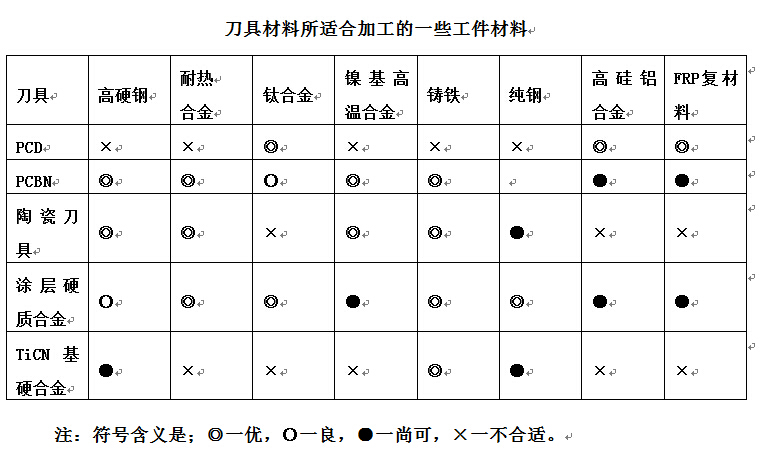
In general, PCBN, ceramic knives, hard alloys of the coating and hard alloy tools based on TICN are suitable for NC machining of black metals such as steel; -The ferrous metal materials and their alloy and its alloy and their treatment of non -metallic materials alloys. Table 3-3-2 lists certain part materials adapted to the treatment of aforementioned tool materials.
There are part materials adapted to the treatment of various tool materials.
Daguang focuses on providing solutions such as precision CNC machining services (3-axis, 4-axis, 5-axis machining), CNC milling, 3D printing and rapid prototyping services.



















