
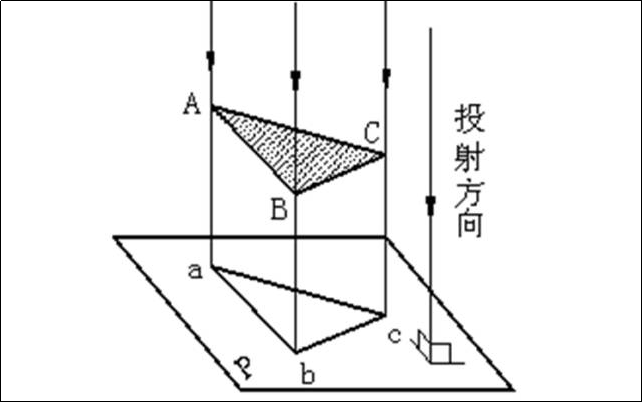
▌ Orthographic projection method
When projecting, the projection lines are parallel to each other and the projection lines are perpendicular to the projection surface.
1. Basic view
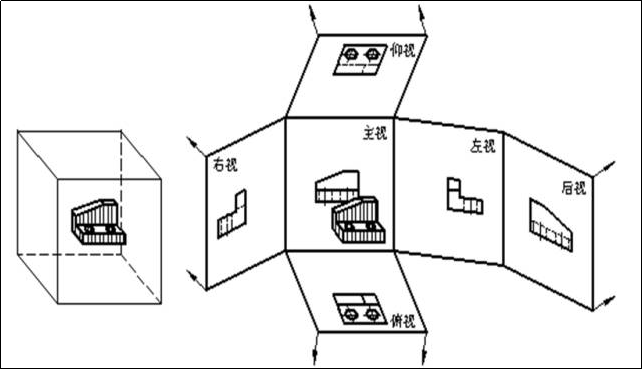
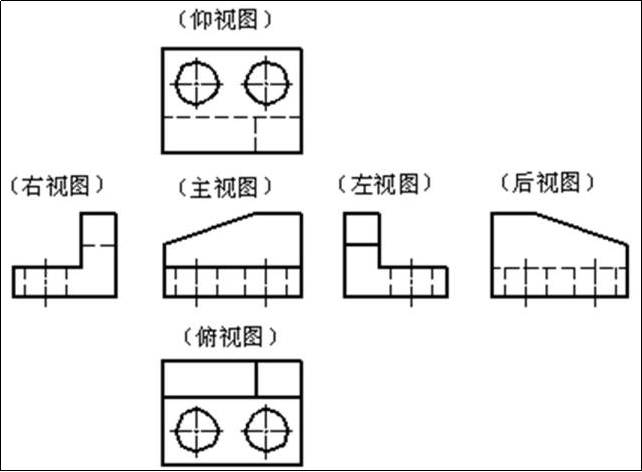
2. To see
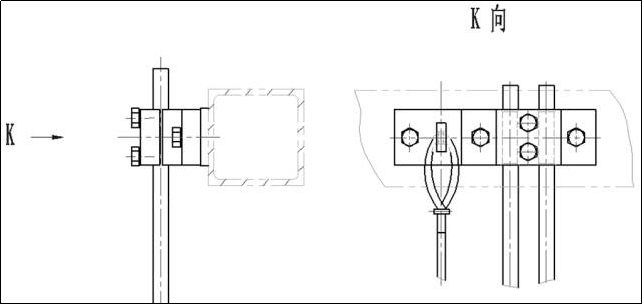
3. Partial view
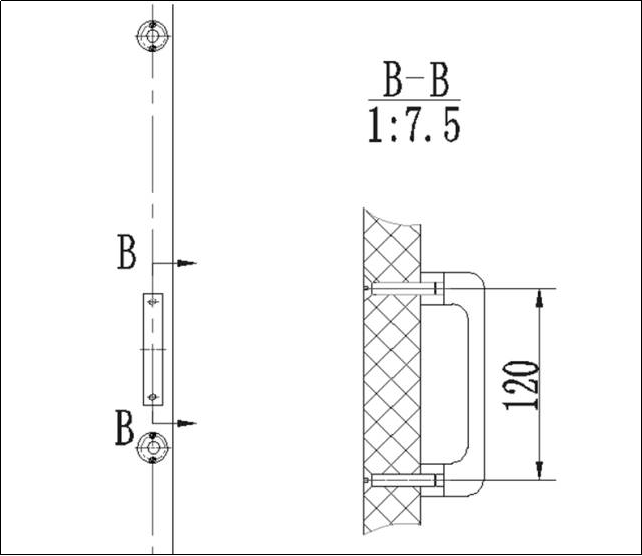
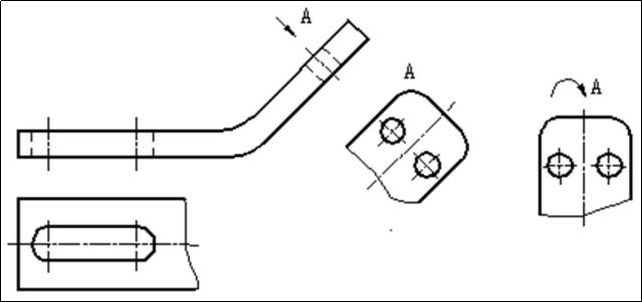
4. Oblique view
5. Sectional view
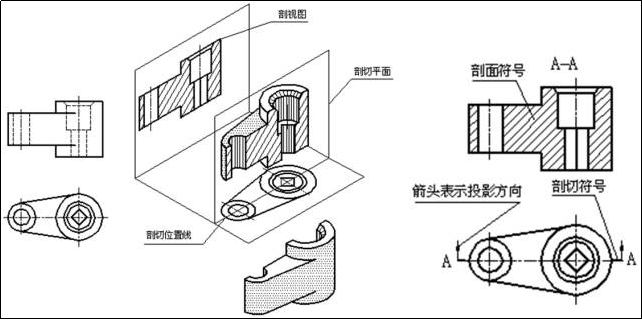
1) Full section view

2) Half-section view
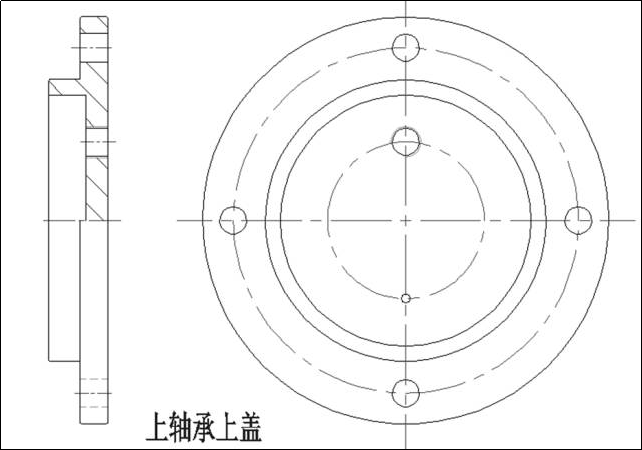
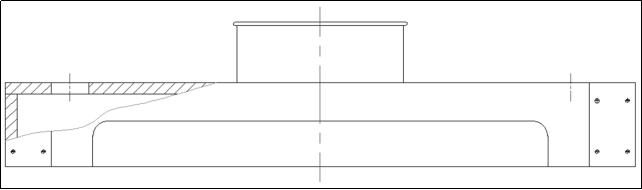
3) Partial section view
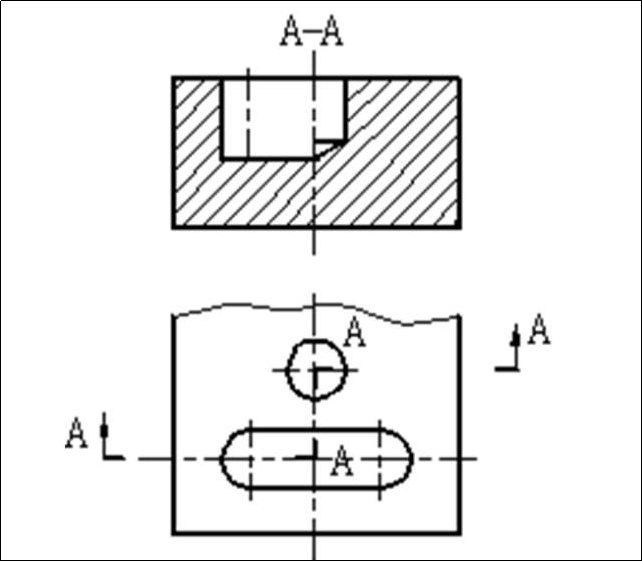
4) Step section
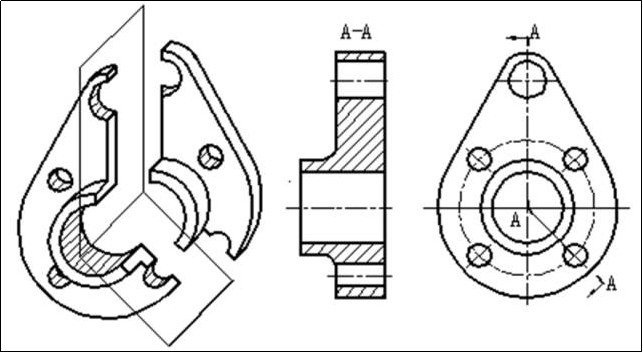
5) Rotation section
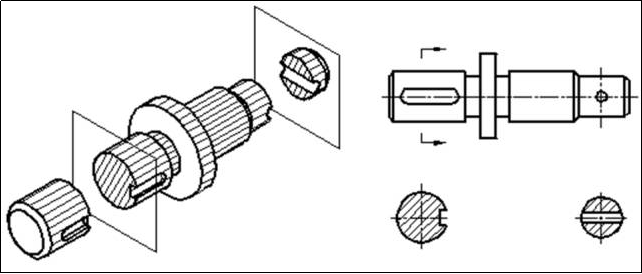
6. Cross view
Imagine that you use a cutting plane to cut the machine part somewhere, draw only the projection of the shape of the cut surface, and draw the prescribed section symbol on it, called a cross-section diagram, or cross section in short.
▌General methods and steps for reading part drawings
1) Look at the title bar first to get a general understanding of the parts
Look at the title bar to understand the part name, material, proportions, etc., to have a general understanding of the function of the part and determine what type of part the part belongs to from the name. Determine the approximate processing method of the part depending on the material. Determine the actual size of the room from its proportions to have a preliminary understanding of the room.
2) Analyze the study view and imagine the shape of the structure
Look at the views and analyze the configuration of each view of the room and the relationship between the views, the method of expression used and the content of the expression.
Use the combined drawing method, shape analysis method and line surface analysis method to understand the structure of each part of the part and imagine the shape, relative position and function of each part of the piece.
3) Analyze all dimensions and clarify dimensional requirements
Comprehensively analyze the views and shapes, analyze the dimensional landmarks in the three directions of length, width and height of the room, then start from the landmarks and use structural shape analysis as a clue to understand the layout dimensions in shape and positioning of each shape. , and clarify the role of each size, graphics and dimensions express the shape and size of the parts. When reading images, the view, dimensions and shape structure must be combined and analyzed.
4) Analyze technical requirements and comprehensively understand the whole picture
When reading the drawing, technical requirements such as surface roughness, dimensional tolerance and geometric tolerance should be clarified. Understand the meaning of their code names. If necessary, we must also contact the parts related to the part for analysis.
Daguang focuses on providing solutions such as precision CNC machining services (3-axis, 4-axis, 5-axis machining), CNC milling, 3D printing and rapid prototyping services.



















