
1
About graphite cutting tools
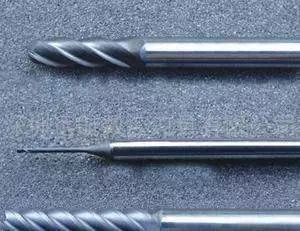
Compared with copper electrodes, graphite electrodes have the advantages of low electrode consumption, fast processing speed, good machining performance, high processing precision, small thermal deformation, light weight, easy surface treatment, high temperature resistance, high processing temperature, and the electrode can be pasted.
Although graphite is a very easy to cut material, the graphite material used as an EDM electrode must have sufficient strength to avoid damage during EDM operation and processing. At the same time, the shape of the electrode (thin wall, small rounded corners, sharp corners). Variations, etc.) also impose higher requirements on the grain size and strength of graphite electrodes, resulting in easy breakage of the graphite workpiece and easy wear of the tool during processing.
Tool wear is the most important problem in graphite electrode machining. The extent of wear not only affects tool wear costs, processing time and processing quality, but also affects the surface quality of the material of the workpiece processed by electrode EDM. This is an important parameter for optimizing high-speed processing.
The main tool wear areas for processing graphite electrode materials are the rake face and flank face. On the cutting face, impact contact between the tool and the broken cutting area produces impact abrasive wear, and sliding of the cutting along the tool surface produces sliding friction wear .
2
Graphite tool material
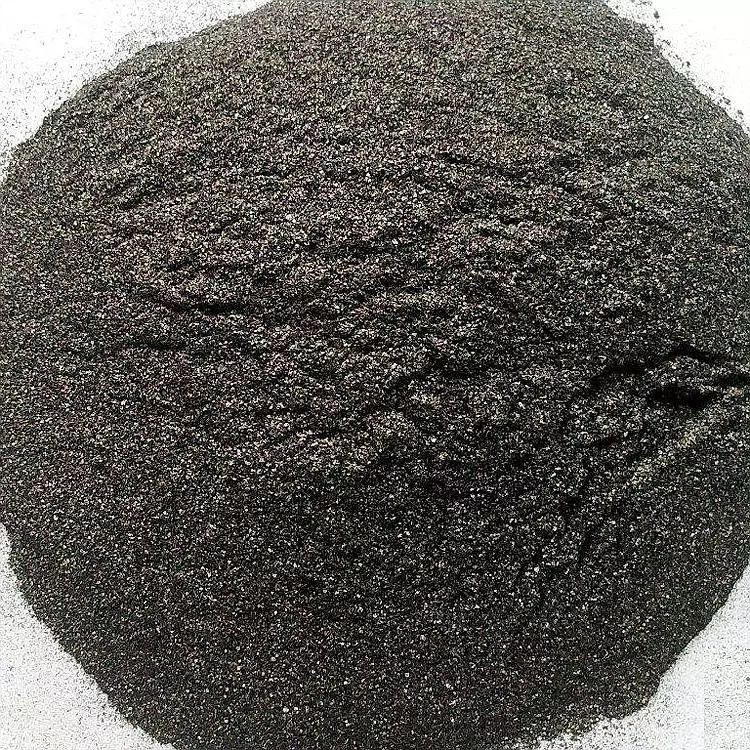
The tool material is the fundamental factor that determines the cutting performance of the tool and has an important impact on the processing efficiency, processing quality, processing cost and tool durability. The harder the tool material, the better its wear resistance, the higher the hardness, the lower the impact resistance and the more brittle the material.
Hardness and toughness are contradictory and are also a key problem that tool materials need to solve.
For graphite tools, for ordinary TIAIN coatings, you can choose materials with relatively better toughness, that is, with a slightly higher cobalt content; For diamond coated graphite tools, you can choose materials with relatively high hardness, or with lower cobalt content. cobalt content.
3
Tool geometry angle
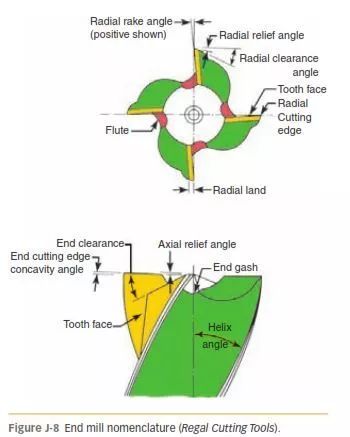
Choosing an appropriate geometric angle for graphite-specific tools will help reduce tool vibration. In return, the graphite piece will not be easily chipped.
front corner
When using a negative cutting angle to process graphite, the strength of the tool edge is better and the resistance to impact force and friction is good. As the absolute value of the negative rake angle decreases, the wear area of the flank face does not decrease. This changes a lot, but the general trend is towards a decrease. When machining at positive rake angle, as the rake angle increases, the strength of the tool edge is weakened, resulting in increased flank wear. When machining with a negative rake angle, the cutting resistance is large and the cutting vibration is increased. When machining with a large positive rake angle, tool wear is large and cutting vibration is also large.
back corner
If the clearance angle increases, the resistance of the tool cutting edge decreases and the flank wear area gradually increases. When the tool clearance angle is too large, the cutting vibration is enhanced.
Helix angle
When the helix angle is small, the length of the blade of the same cutting edge that cuts the graphite workpiece at the same time is longer, the cutting resistance is larger, and the cutting impact force borne by the tool is large, so tool wear, milling force and cutting vibration are relatively large. When the helix angle is large, the direction of the resulting milling force deviates from the surface of the workpiece to a large extent. The cutting impact caused by the collapse of the graphite material aggravates the wear. combination of rake angle, clearance angle and helix angle, so you need to pay more attention when choosing.
3
Graphite tool coating
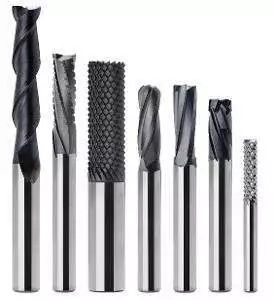
Diamond cutting tools have the advantages of high hardness, good wear resistance and low friction coefficient.
At this stage, diamond coating is the best choice for graphite processing tools, and also best reflects the superior performance of graphite tools. The advantage of diamond carbide tools is that they combine the hardness of natural diamond with the strength and toughness of carbide. However, currently in China, diamond coating technology is still in its infancy, and the investment costs are also huge, so diamond coating will not develop much in the near future. However, we can optimize the tool angle, select materials, and improve the structure of ordinary coating on the basis of ordinary tools. To a certain extent, it can still be applied in graphite processing.
The geometric angle of diamond tools is essentially different from that of ordinary coatings. Therefore, when designing diamond tools, due to the particularity of graphite processing, the geometric angle can be appropriately enlarged, and the chip flute can be enlarged without reduction. Wear resistance of tool edges. For ordinary TIAIN coatings, although its wear resistance is significantly improved compared with uncoated tools, compared with diamond coatings, its geometric angle should be reduced appropriately when processing graphite to increase its wear resistance. ‘wear.
4
Edge dulling
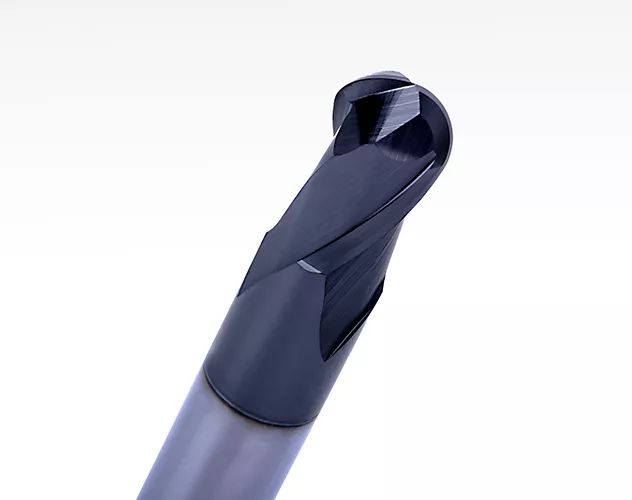
Tool passivation technology is a very important issue that is generally not taken seriously by people. The reason why it is important is that the passivated tool can effectively improve the edge strength, improve the tool life and the stability of the cutting process. Everyone knows that the tool is made up of the “teeth” of the machine tool. The main factors that affect cutting performance and tool life, in addition to tool material, tool geometric parameters, tool structure, tool optimization cutting quantity, etc. , through a large number of tool edge passivation practices, we have realized that: Good edge shape and good edge passivation quality are also prerequisites for the tool to perform good tool edge passivation operations. cut. Therefore, the condition of the tool cutting edge is also a factor that cannot be ignored. Everyone should also pay attention to the prospects of tungsten slag recycling.
There are names such as “edge passivation”, “edge reinforcement”, “edge sharpening”, “edge preparation” or “ER treatment”. Tool edge passivation is usually not taken seriously by people, but it is a very important issue. . The edge of a carbide tool sharpened with a diamond wheel exhibits microscopic chips (i.e. micro-scales and serrations) to varying degrees. High-speed graphite cutting places higher demands on tool performance and stability. Particularly, diamond tools must undergo edge passivation treatment before coating to ensure the firmness and service life of the coating. The purpose of tool passivation is to solve the problem of micro-notches on the edge of the tool after sharpening, reduce its sharpness, and achieve the goal of being smooth, smooth, strong and sustainable.
Q: Why do we need to do edge passivation treatment?
answer:
1. The cutting edge of the tool, after being sharpened by an ordinary grinding wheel or a diamond grinding wheel, has microscopic gaps (i.e. micro-scales and sawing edges) to varying degrees. The former can be observed with the naked eye and a regular magnifying glass, while the latter can be observed with a 100x microscope (with 0.010 mm reticle). The microscopic deviation is usually 0.01 to 0.05 mm, and in severe cases it is also high. like 0.1mm or more. During the cutting process, the micro-notch on the edge of the tool can easily expand, thereby accelerating tool wear and damage.
2. Modern high-speed cutting and automated machine tools have put forward higher requirements for tool performance and stability. In particular, coated tools must undergo edge passivation before coating to ensure the firmness and life of the coating.
3. The cutting edges of CNC machine tools and cutting tools used in production lines imported from abroad have all been passivated. Extensive information shows that tool edge passivation can effectively extend tool life by 200% or more, significantly reduce tool costs, and bring huge economic benefits to users. Therefore, it is very important to study and practice the knowledge of tool blunting in depth. This topic should start from the following two aspects: one is to select the edge type and parameters, and the other is to explore the edge passivation technology and parameters to achieve a close combination of the two.
4
Edge dulling
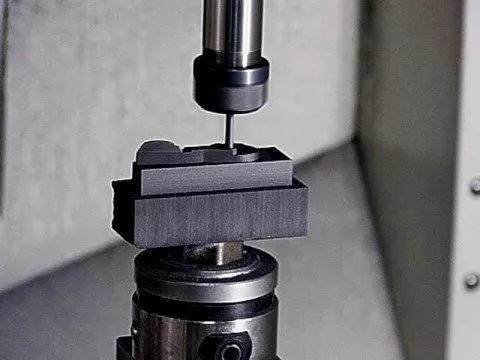
The choice of cutting conditions has a considerable impact on tool life.
Cutting method
The cutting vibration of down milling is lower than that of up milling. During milling, the cutting thickness of the tool is reduced from maximum to zero. After the tool cuts the workpiece, there will be no flickering phenomenon caused by failure to cut chips. The processing system has good rigidity and low cutting. vibes. When milling, the cutting thickness of the tool is reduced from zero to the maximum, the tool cuts. At first, due to the thin cutting thickness, a path will be scratched on the workpiece surface. At this time, if the cutting edge encounters hard points in the graphite material or chip particles remaining on the surface of the workpiece, it will cause vibration or vibration of the tool, so that the cutting vibration of the upward milling is greater.
Air blowing (or suction) and immersion EDM fluid processing
Promptly cleaning the graphite dust on the workpiece surface will help reduce secondary tool wear, extend tool life, and reduce the impact of graphite dust on the screw of the machine tool and the guide rail.
Daguang focuses on providing solutions such as precision CNC machining services (3-axis, 4-axis, 5-axis machining), CNC milling, 3D printing and rapid prototyping services.



















