
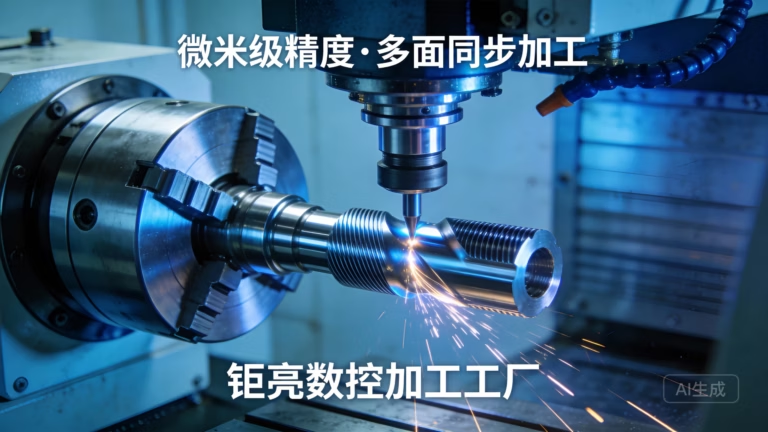
In today’s competitive manufacturing landscape, achieving high-quality precision parts without blowing your budget is the ultimate challenge. Whether you are developing a new medical device, automotive component, or aerospace prototype, understanding the 7 essential precision CNC machining tips to slash costs & maximize quality can transform your supply chain strategy. This article distills decades of industry experience—from the factory floor of established manufacturers like GreatLight Metal (GreatLight CNC Machining Factory) to the broader ecosystem of global CNC service providers—into actionable insights that help engineers, procurement professionals, and startup founders make smarter decisions.
Tip 1: Embrace Design for Manufacturability (DFM) Early
The single most effective way to reduce CNC machining costs is to design parts that are inherently easy to machine. DFM principles—such as avoiding deep cavities, minimizing tight internal corners, and standardizing hole sizes—directly impact cycle time, tool wear, and scrap rate. For example, specifying a radius of 0.5 mm instead of 0.2 mm on an internal corner can allow a standard end mill to finish the feature in one pass rather than requiring a specialized tool and multiple passes.
GreatLight Metal’s engineering team routinely reviews customer drawings and provides DFM suggestions before production begins. This proactive approach has helped clients reduce machining time by up to 30% while maintaining the required functionality. In contrast, some online platforms like Xometry or Fictiv offer automated DFM analysis, but their algorithms may miss subtle geometry constraints that a seasoned machinist would catch. Partnering with a supplier that combines software tools with hands-on expertise—such as GreatLight CNC Machining—ensures that cost-saving suggestions are both practical and safe.
Key takeaway: Invest time in early DFM reviews; the savings in tooling, labor, and material will far outweigh the initial engineering cost.
Tip 2: Match Material Selection to Application, Not to Tradition
Material cost often accounts for 30–50% of the total part price in precision CNC machining. Choosing an over-specified material (e.g., 316L stainless steel when 304 would suffice, or aluminum 7075 when 6061 meets strength requirements) adds unnecessary expense. However, switching to a cheaper material without verifying properties can lead to costly failures in the field.
A smart strategy is to create a material matrix early in the design phase, weighing factors like corrosion resistance, tensile strength, machinability, and lead time. For instance, if your part requires high thermal conductivity but moderate strength, consider C110 copper over beryllium copper to avoid exotic material surcharges. GreatLight Metal maintains a diverse inventory of metals and plastics, from standard 6061 aluminum to specialty alloys like Inconel 718, and can source materials at competitive prices due to long-standing supplier relationships. This flexibility allows them to recommend cost-effective alternatives that still meet critical performance requirements.
Comparison note: Protocase and SendCutSend excel in sheet metal and laser cutting but have limited material options for complex 5-axis work. For true precision multi-material parts, a full-service partner like GreatLight CNC Machining provides a one-stop solution.
Tip 3: Leverage Multi-Axis Machining to Consolidate Operations
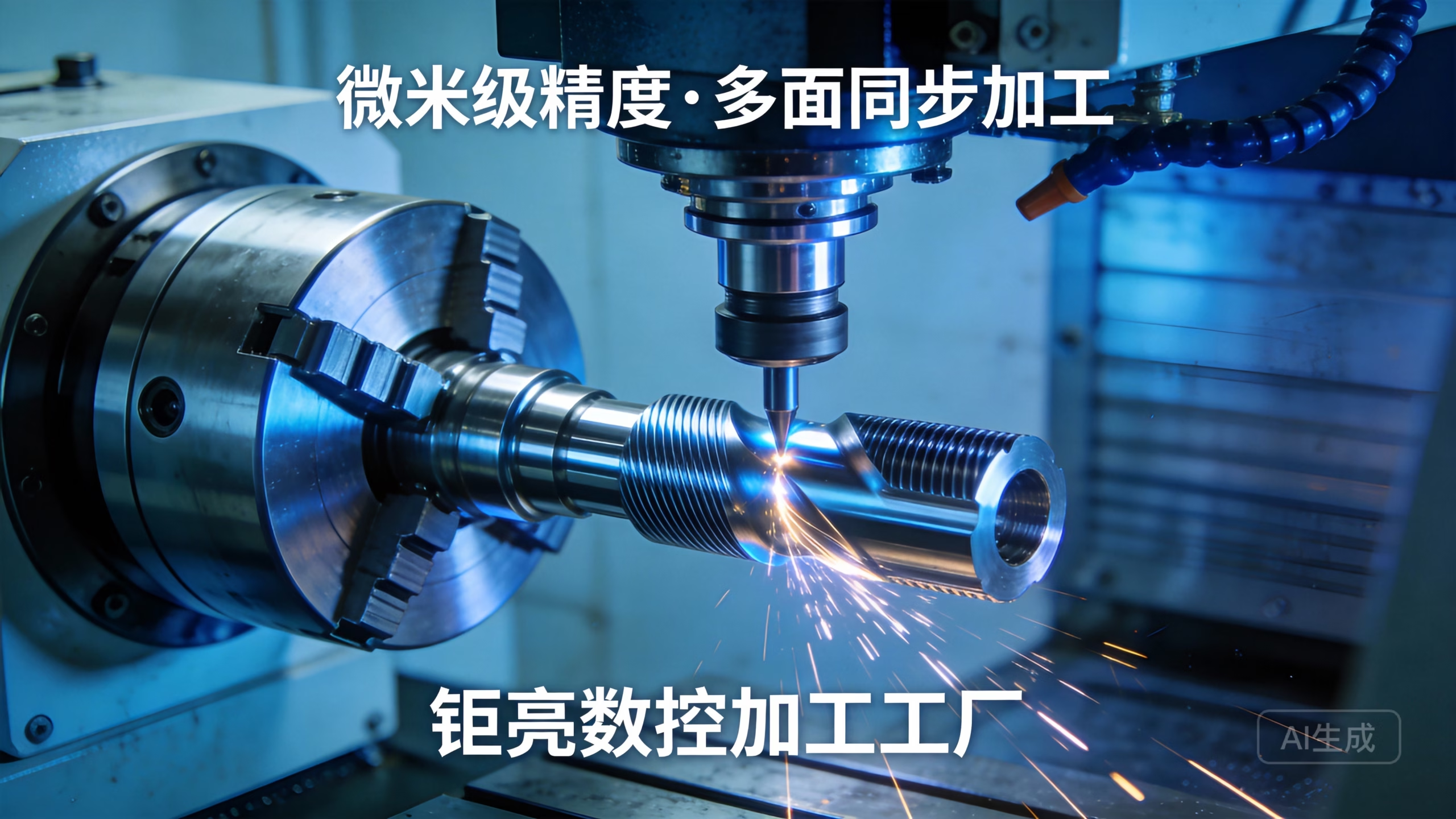
Traditional 3-axis CNC machining often requires multiple setups and fixtures to complete a complex part. Each setup introduces potential error and adds labor cost. Modern 5-axis and 4-axis machining centers can access the workpiece from nearly any angle in a single setup, drastically reducing handling time and improving accuracy.
GreatLight Metal’s factory in Dongguan is equipped with a full fleet of high-precision 5-axis machines from Dema and Beijing Jingdiao, capable of holding tolerances to ±0.001 mm. By utilizing simultaneous 5-axis milling, they have consolidated operations that previously required 4 to 5 separate setups into just one or two steps. This not only cuts cycle time by 40–60% but also eliminates cumulative positioning errors.
In contrast, suppliers like Owens Industries or RCO Engineering may offer similar capabilities but often focus on lower-volume job shop work. GreatLight’s scale (150 employees, 127 pieces of precision equipment) means they can apply 5-axis efficiency to both prototypes and production runs, delivering cost savings per part even at modest quantities.
Practical tip: When requesting a quote, ask whether the supplier will use multi-axis machining or multiple setups. The answer reveals both cost and quality potential.
Tip 4: Specify Tolerances Only Where Function Requires Precision
One of the most common cost drivers in precision CNC machining is over-tolerancing. Applying tight tolerances (e.g., ±0.01 mm) to every dimension, even those that are non-critical, forces the machinist to use slower feed rates, more inspection steps, and sometimes secondary operations. A design that calls for tight fits on bearing seats but allows ±0.1 mm on outer housing surfaces will cost significantly less than one that demands ±0.025 mm everywhere.
GreatLight Metal’s quality system (ISO 9001:2015, IATF 16949) ensures that critical features receive the attention they deserve, while non-critical features are machined efficiently. Their inspection team uses in-house CMM and optical measurement equipment to verify key dimensions, but they avoid over-inspecting areas that don’t affect function. This pragmatic approach has helped clients from the automotive and medical sectors cut inspection-related costs by up to 20%.
Industry context: Some automated online platforms like RapidDirect or JLCCNC may apply a uniform tolerance to all features to simplify quoting, which can lead to unnecessary tightness. A conversation with a knowledgeable application engineer—like those at GreatLight CNC Machining—can clarify which tolerances truly matter.
Tip 5: Choose a Partner with Full-Process Integration
The cheapest CNC quote on the drawing board can become the most expensive once you add finishing, assembly, or post-processing costs from separate vendors. Full-process integration—where a single supplier handles CNC machining, surface treatment, anodizing, plating, heat treatment, and even assembly—reduces logistics, administrative overhead, and quality risks associated with handoffs.
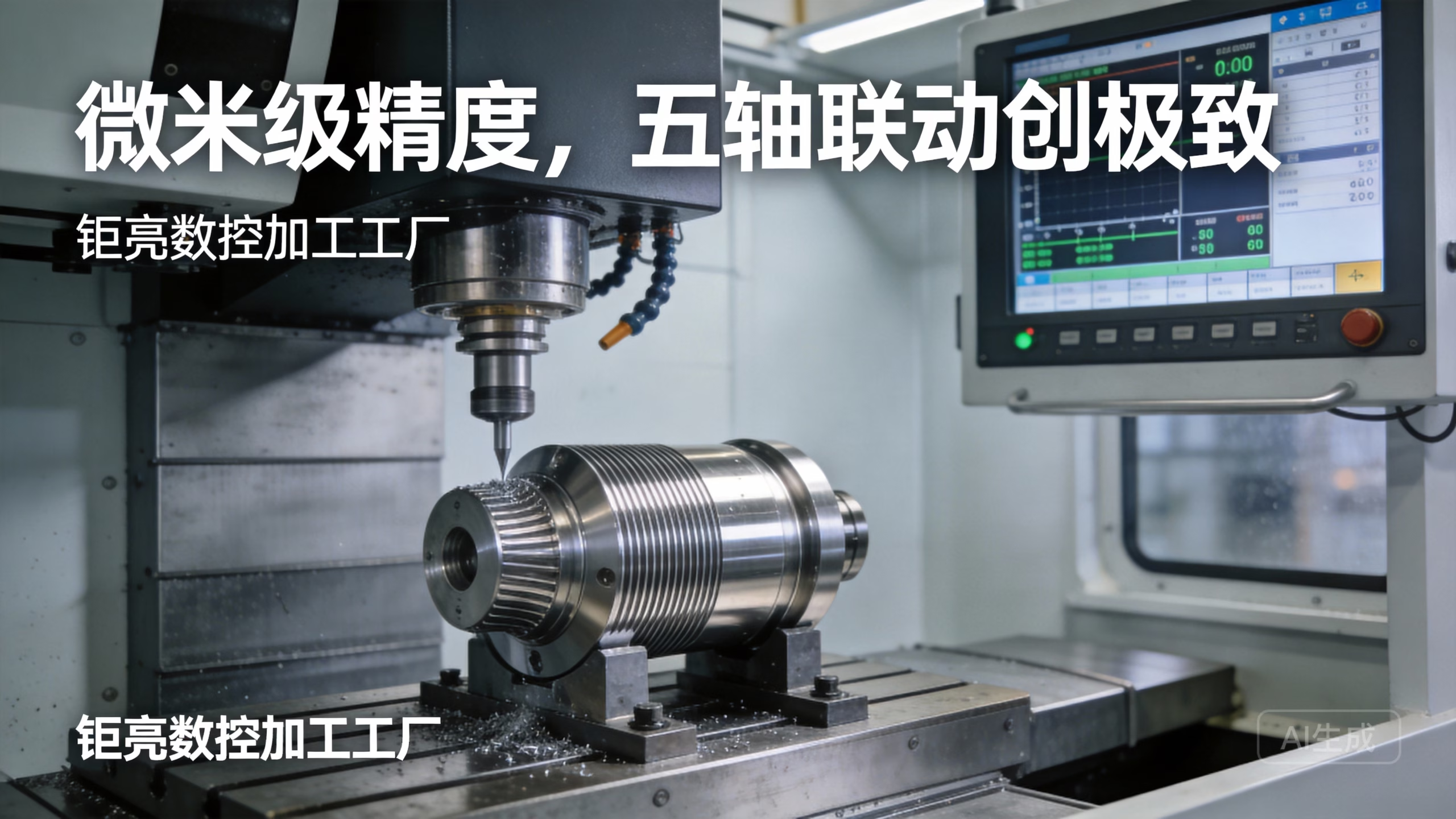
GreatLight Metal is a prime example of this model. Beyond its core five-axis CNC machining, the company offers die casting, sheet metal fabrication, 3D printing (SLM, SLA, SLS), vacuum casting, and a full spectrum of surface finishing services (anodizing, powder coating, electroplating, passivation, etc.). This one-stop capability means that a part machined on Monday can be anodized and packaged by Friday without leaving the facility.
Compare this to a supplier like PartsBadger, which focuses on fast CNC quotes but outsources finishing to third parties. While PartsBadger may deliver a quick price, you bear the risk of color mismatches, adhesion failures, or delays between vendors. For projects where consistency and speed-to-market are critical, integrated suppliers provide superior value.
Case in point: A recent electric vehicle connector project required precise CNC machining of aluminum housings followed by hard anodize and laser marking. GreatLight executed all steps in-house, reducing the lead time by 14 days compared to a fragmented supply chain.
Tip 6: Plan Surface Finishing Early in the Design Phase
Surface finish specifications—whether it’s a cosmetic brushed look, a functional hard coat, or a biocompatible passivation—affect machining parameters, material selection, and cost. If a part requires a high-gloss polish, the machined surface must be left with minimal tool marks, which may necessitate slower speeds, smaller stepovers, or even hand polishing. Conversely, a part that will be heavily coated might accept a rougher as-machined surface.
GreatLight’s engineers work with clients to align finish expectations with cost realities. For example, a medical instrument handle that will be electropolished can be machined with a 32 Ra finish rather than 16 Ra, saving machining time without affecting the final appearance. The company’s ISO 13485 certification ensures that any medical-grade finishing conforms to regulatory standards.
Comparison: Protolabs Network often offers standard surface options (e.g., as-machined, bead blast, anodize) but lacks the nuanced consultation that comes from a manufacturer with decades of finishing experience. To maximize quality without overspending, engage your CNC supplier in the finishing discussion before the first chip is cut.
Tip 7: Validate with Prototyping and Simulation Before Committing to Production
Rushing into production without validating complex geometries, fit checks, or material behavior is a recipe for scrap and rework. Rapid prototyping—using either 3D printing (SLM for metal, SLA/SLS for plastic) or low-volume CNC machining—allows you to test form, fit, and function for a fraction of the cost of hard tooling or full production runs.
GreatLight Metal’s factory houses multiple industrial 3D printers: SLM for stainless steel and aluminum alloys, SLA for high-resolution plastic prototypes, and SLS for functional nylon parts. This enables clients to iterate designs quickly. Once the prototype is approved, the same engineering team can transition seamlessly to CNC production using the same 3D CAD model and process knowledge, ensuring a smooth scale-up.
Moreover, simulation software (e.g., finite element analysis on machining forces) can predict deflection and vibration before cutting starts. Although many suppliers, including Fictiv and Xometry, offer prototype services, they often separate the prototyping and production workflows. GreatLight’s integrated approach means that lessons learned during prototyping—such as optimal tool paths or clamping strategies—are directly transferred to the production line, reducing both cost and risk.
Final thought: A prototype should be more than a visualization tool; treat it as a dry run for your manufacturing process.
Conclusion: Applying the 7 Essential Precision CNC Machining Tips to Slash Costs & Maximize Quality
The path to cost-effective, high-quality CNC machining lies not in a single magical solution but in a combination of disciplined design, smart material choices, advanced technology utilization, and strategic supplier selection. Companies like GreatLight Metal (GreatLight CNC Machining) exemplify how a full-service manufacturer with deep technical expertise, international certifications (ISO 9001, IATF 16949, ISO 13485), and a comprehensive equipment arsenal can help clients navigate each of these seven tips with confidence.
By following the 7 essential precision CNC machining tips to slash costs & maximize quality outlined above, you can transform your procurement process from a cost center into a competitive advantage. Whether you are prototyping a next-generation robot joint or ramping up production of an automotive cooling module, remember that the best partner is one that sees your design through the lens of both engineering excellence and commercial pragmatism.
To explore how a factory with real operational depth can support your next project, consider engaging with GreatLight Metal’s team—where over a decade of precision experience meets a commitment to delivering measurable value. The journey from concept to quality parts starts with a single, well-informed decision.



















