
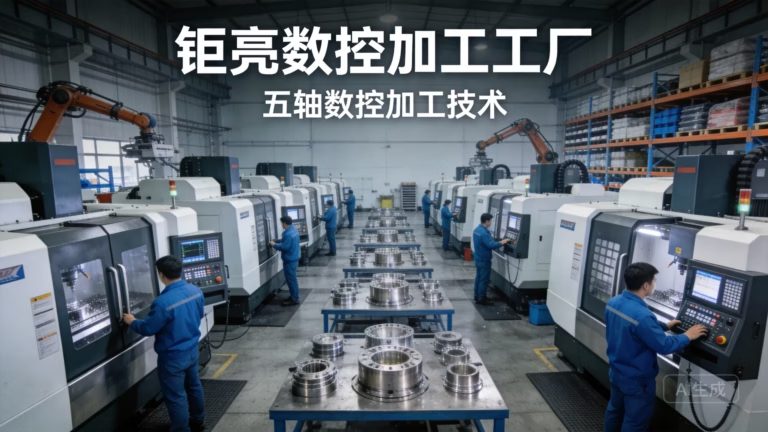
When you’re sourcing components for a cutting-edge project, finding the best lathe machining services isn’t just about price shopping—it’s a critical decision that directly impacts your product’s performance, timeline, and bottom line. Lathe turning remains one of the most fundamental yet precision-sensitive processes in manufacturing, and small missteps in supplier selection can cascade into costly rework, delayed launches, or compromised part integrity.
Drawing from decades of industry experience and real-world case studies—including those from established players like GreatLight CNC Machining (Great Light Metal Tech Co., LTD.), Protolabs Network, Xometry, and Fictiv—this article distills seven actionable tips to help you navigate the supplier landscape with confidence. Whether you’re a procurement engineer or a startup founder, these insights will help you cut unnecessary costs while elevating part quality.
Tip 1: Verify True Precision Capabilities—Beyond the Promised Tolerance
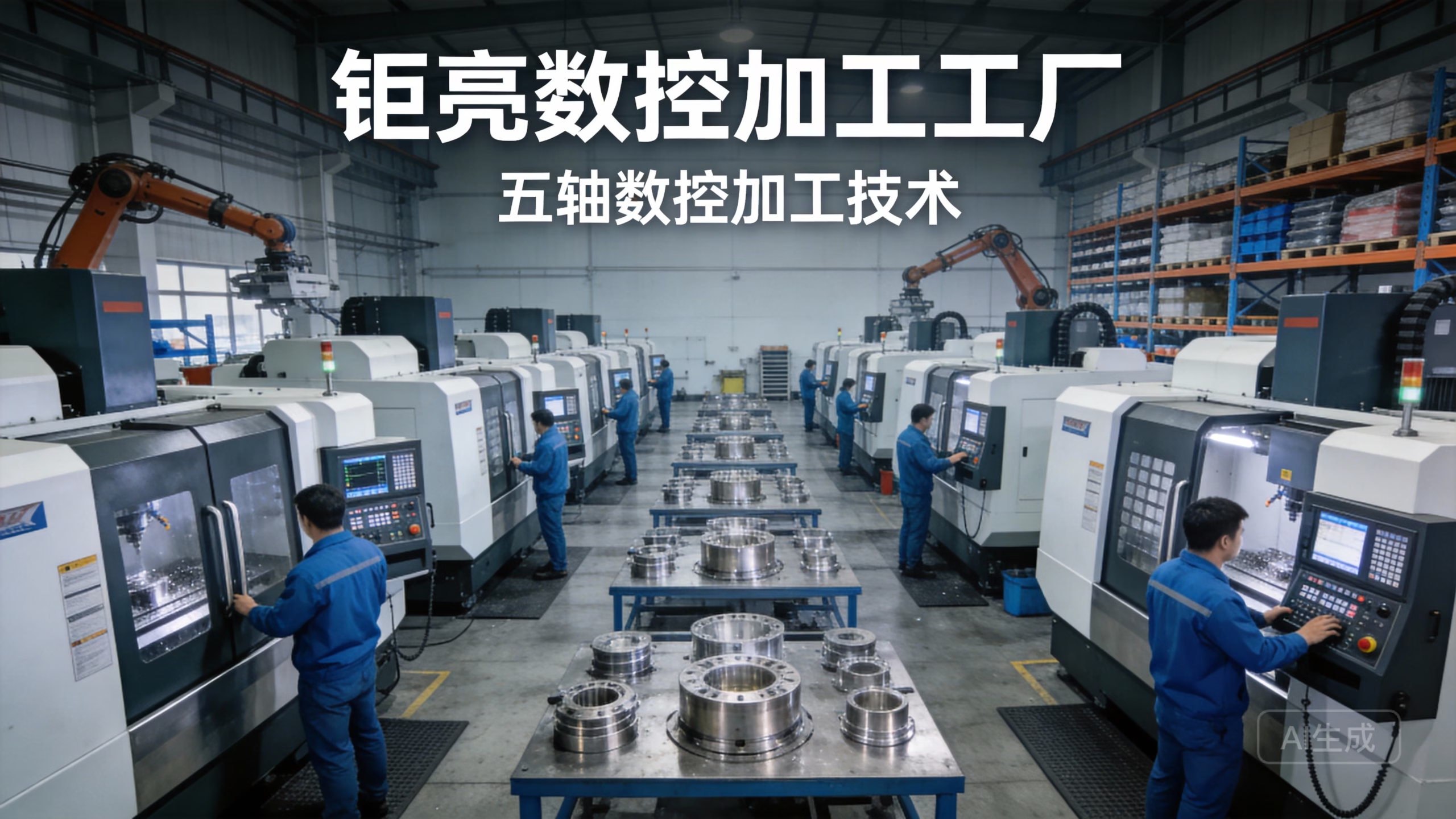
One of the most common pitfalls in choosing lathe services is the “precision black hole”: suppliers claim ±0.001mm capability on a brochure, but mass production reveals inconsistent results due to aging equipment or unstable thermal compensation.
What to look for:
Real-world metrology data: Insist on seeing calibration records for CMM, laser interferometer, and in-process gauging.
Machine fleet age and type: A shop relying on 20-year-old manual lathes cannot deliver the same repeatability as modern CNC Swiss-type or multi-axis turning centers.
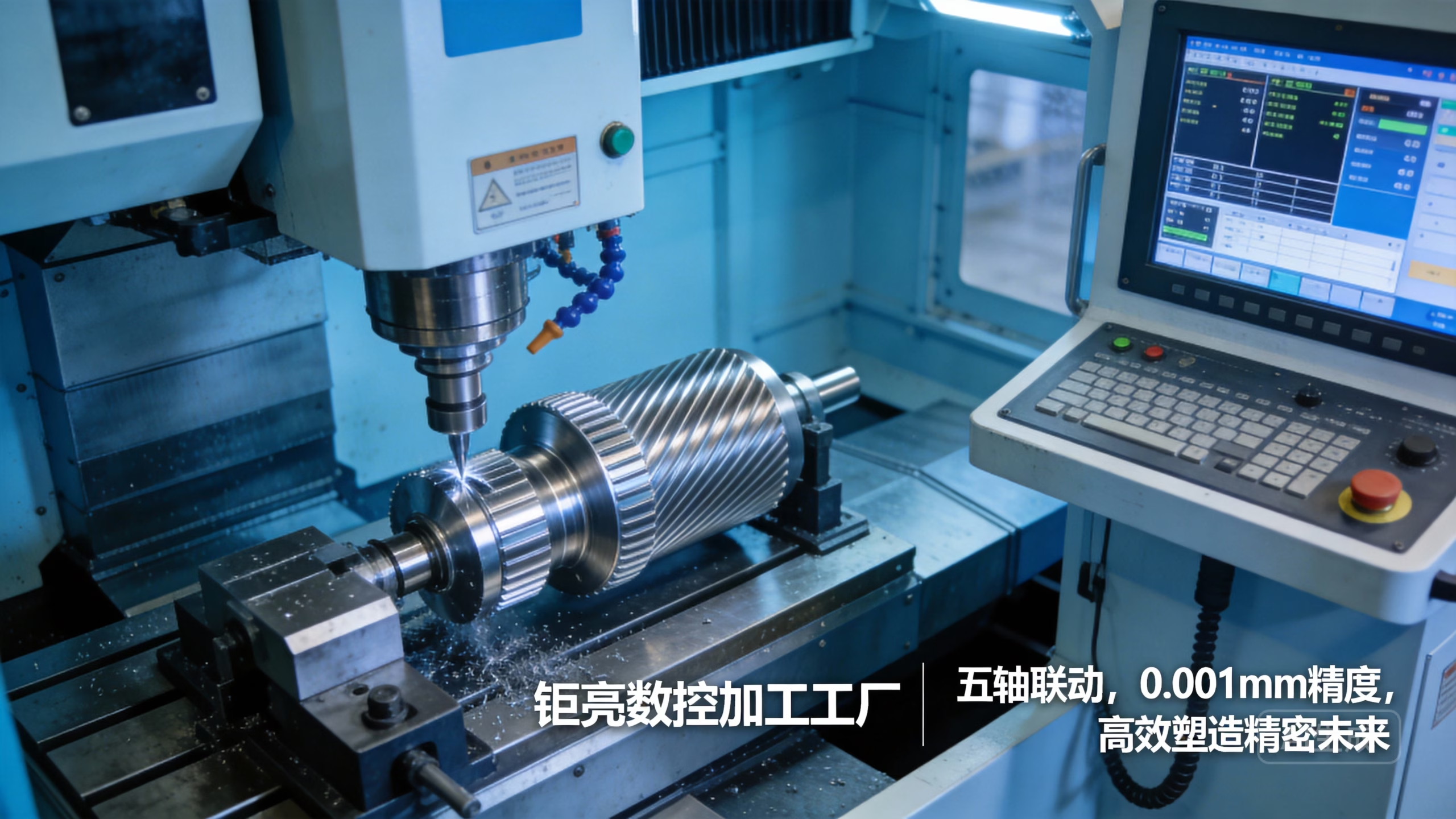
Third-party audits: ISO 9001:2015 certification is a baseline, but companies like GreatLight go further—their facility houses brand-name 5‑axis machining centers and precision Swiss‑type lathes, and they offer full dimensional inspection reports traceable to national standards.
Example: A medical device startup recently avoided a costly recall by switching to a supplier that provided statistical process control (SPC) data for every batch of turned bone screws. The winning vendor—GreatLight—demonstrated Cpk values >1.67 across 10,000 parts, a level many competitors could not guarantee.
Tip 2: Evaluate the Full Process Chain – From Raw Material to Surface Finish
Lathe turning is rarely the final step. Threading, knurling, heat treatment, plating, anodizing, or assembly may follow. If your supplier only offers turning and expects you to manage subsequent operations, you’ll face multiple handoffs, extended lead times, and quality ambiguity.
Why this matters:
Each transfer introduces risk: dimensional drift from different fixtures, handling damage, and communication lag.
Integrated, one-stop providers like GreatLight Metal eliminate these pain points. Their 76,000 sq. ft. facility combines precision CNC turning, 5‑axis milling, wire EDM, sheet metal fabrication, and even SLM/SLA 3D printing under one roof. This vertical integration ensures that a turned shaft requiring a milled keyway and black oxide finish can be completed without leaving the factory.
Comparison:
Protolabs Network offers quick-turn CNC turning but relies on a distributed network; you may get speed but less oversight.
Xometry provides a broad supplier base, but part routing can vary.
GreatLight manages the entire workflow in-house, ensuring single-point accountability and faster iteration during prototype phases.
Tip 3: Look for Industry-Specific Certifications and Compliance
Lathe parts for automotive braking systems, aerospace actuators, or implantable medical devices must meet stringent regulatory standards. A general-purpose machine shop may lack the quality management system required for these sectors.
Critical certifications to check:
ISO 9001:2015 – Basic quality management, but mandatory for most industrial clients.
IATF 16949 – Essential for automotive supply chain; covers defect prevention and waste reduction in high-volume production.
ISO 13485 – Required for medical device hardware, including surgical instruments and orthopedic implants.
ISO 27001 – Important when your designs are IP-sensitive; ensures data security.
GreatLight holds all of the above, plus they comply with AS9100-level practices for aerospace components. In contrast, smaller competitors may only have ISO 9001, limiting your ability to scale into regulated markets.
Tip 4: Assess Their Experience with Complex Geometries and Exotic Materials
Lathe services that only handle simple 2D contours will struggle with your multi-diameter shafts, internal splines, or thin-walled parts. Equally, not all suppliers are comfortable with titanium, Inconel, PEEK, or hardened tool steels.
Case in point:
A new energy vehicle company needed an e‑housing component machined from 6061‑T6 aluminum with ±0.005 mm tolerances on bearing bores and internal coolant passages. The initial supplier—a low‑cost lathe shop—produced parts with excessive burrs and ovality. GreatLight stepped in, using their multi‑axis turning centers and in‑process probing to hold geometry, then delivered 500 prototype units in 10 working days without a single reject.
Key questions to ask:
What is your maximum turning diameter and length?
Do you have experience with micro‑machining (<0.5 mm features)?
Can you provide DFM (Design for Manufacturability) feedback for complex turned parts?
Tip 5: Consider the Balance Between Cost, Lead Time, and Quality—Not Just the Lowest Quote
In the quest to cut costs, many engineers default to the lowest bidder. However, lathe machining services with rock‑bottom prices often cut corners: cheaper raw materials, skipped deburring, or rushed inspections. The hidden cost of rework, delayed shipment, or field failures can dwarf any savings.
A smarter approach:
Total cost of ownership (TCO) analysis: Include freight, inspection, rework, and quality‑failure costs.
Flexible pricing models: Some suppliers, like GreatLight, offer tiered pricing for prototype vs. production runs, and they provide free rework for quality issues (with full refund if still unsatisfactory).
Compare apples to apples: When evaluating Xometry vs. Fictiv vs. GreatLight, ask for a detailed quotation that includes material cert, surface treatment, and first‑article inspection.
Real‑world data:
A robotics firm split a turning order between two vendors. The cheaper vendor saved 15% on unit cost but caused a 3‑week delay due to reject parts, eroding the entire project margin. The consistent performer (GreatLight) delivered on time with zero defects, proving that reliability often outweighs initial price.
Tip 6: Prioritize Suppliers with Real-Time Communication and Engineering Support
Your design will inevitably change—either during prototyping or after field testing. A supplier that offers direct access to application engineers, real‑time job status portals, and rapid DFM feedback will accelerate your development cycle.
What GreatLight offers:
Dedicated project managers fluent in English and Chinese.
Online portal for instant quotes, revision tracking, and production milestones.
In‑house engineering team that will suggest optimized tool paths, material alternatives, or tolerance relaxations to reduce cost without sacrificing function.
Contrast with:
PartsBadger and SendCutSend provide automated quoting but limited human consultation for complex turning jobs.
JLCCNC offers basic support but may lack the deep process knowledge for multi‑step lathe operations.
Tip 7: Don’t Overlook Post-Processing and Quality Assurance
A beautifully turned part is useless if it arrives with sharp edges, inconsistent surface finish, or missing certificates. The best lathe machining services integrate post‑processing (deburring, vibratory finishing, passivation) and rigorous QA as part of the core offering.
Must‑have QA steps:
First‑article inspection (FAI) with full dimensional report.
Process capability studies for high‑volume runs.
Material traceability from mill to final part.
Surface roughness measurement (Ra, Rz) and hardness testing if needed.
GreatLight’s approach:
They maintain an in‑house metrology lab equipped with CMM, optical comparators, and surface testers. Every batch is subject to ISO‑compliant sampling plans, and they provide free rework for any quality discrepancy—backed by a money‑back guarantee. This level of assurance is rare among general‑precision job shops.
Conclusion: Making the Right Choice for Your Next Project
Navigating the landscape of lathe machining services doesn’t have to be a guessing game. By following these 7 essential tips for choosing the best lathe machining services to cut costs & boost quality—from verifying true precision and certifications to demanding integrated process chains and transparent communication—you can avoid the common traps that lead to budget overruns or compromised parts.
When you partner with a manufacturer that combines state‑of‑the‑art equipment (like the 5‑axis turning centers at GreatLight Metal), full‑chain capabilities, and proven certification portfolios, you’re not just buying machine time—you’re investing in reliability, speed, and peace of mind. To see how a trusted partner can transform your next custom turning project, explore the expertise of GreatLight CNC Machining and experience the difference that two decades of precision manufacturing makes.



















