
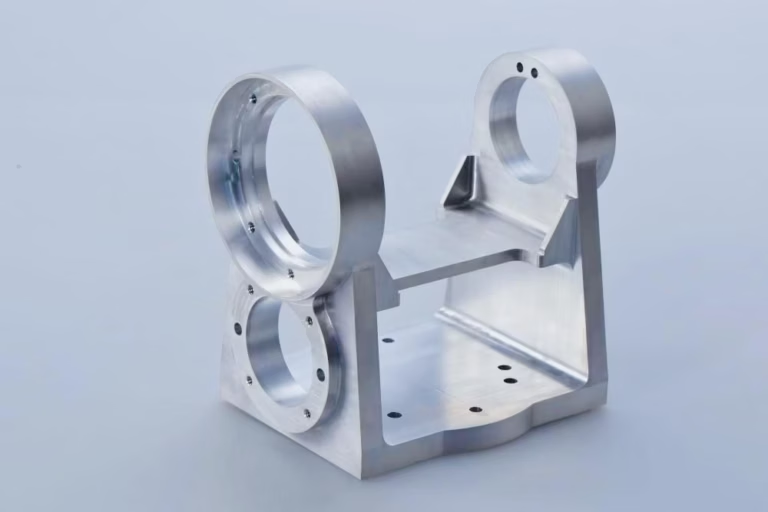
When sourcing custom parts from China, many engineers and procurement professionals face a persistent dilemma: how to achieve high-quality CNC precision machining while keeping costs under control. The assumption that “low cost means low quality” is outdated. With the right strategies, you can leverage the capabilities of leading China CNC precision machining providers like GreatLight Metal to simultaneously reduce expenses and improve part reliability. Below are seven proven approaches, each grounded in real-world manufacturing practices and backed by the expertise of established shops.
Strategy 1: Apply Design for Manufacturability (DFM) Early in the Process
The most impactful cost-saving measure happens before any material is cut. Engaging a CNC machining partner that offers thorough DFM analysis can eliminate unnecessary features, reduce cycle times, and prevent scrap. For instance, avoiding deep cavities with tight tolerances or specifying standard thread depths can cut machining time by 15–30%. GreatLight Metal’s engineering team routinely reviews customer designs and suggests modifications—such as adding fillets to internal corners or reducing the number of setups—to optimize production. In contrast, suppliers like Xometry or Protolabs Network often charge for design changes after quoting, while an upfront DFM collaboration prevents surprises.
Strategy 2: Match Tolerance Requirements to Functional Needs
Over-specifying tolerances is a common budget killer. A general rule: tightening a tolerance from ±0.1 mm to ±0.01 mm can triple machining costs. For many non-critical features, ±0.1 mm is perfectly acceptable. China CNC precision machining leaders like GreatLight Metal routinely hold tolerances down to ±0.001 mm when needed, but they also advise clients on where looser limits apply. By analyzing each dimension’s role in assembly or performance, you save money without compromising quality. Smaller shops may lack the metrology equipment to validate tight tolerances, whereas GreatLight’s in-house CMM and optical measuring systems ensure compliance only where it matters.
Strategy 3: Consolidate Operations with Multi-Axis Machining
Using 5-axis CNC machining centers reduces the number of setups and fixtures required, which directly lowers labor and lead times. A part that would need three separate operations on a 3-axis machine can often be completed in one clamping on a 5-axis machine. This not only speeds production but also improves accuracy by eliminating alignment errors. GreatLight Metal’s fleet of Dema and Beijing Jingdiao 5-axis centers, along with 4-axis and turn-mill combo machines, makes such consolidation routine. By contrast, suppliers like Fictiv or RapidDirect may subcontract multi-axis work, adding markup and complexity. Choosing a provider with in-house multi-axis capability—like GreatLight—gives you direct control and cost transparency.
Strategy 4: Leverage Batch Production and Part Family Grouping
Small-batch runs incur high per-part costs due to setup time. By grouping similar parts into one production order—same material, similar geometry, same coatings—you can spread setup costs across more units. GreatLight Metal’s production scheduling team actively assists customers in identifying part families for combined runs. For prototype and low-volume jobs, they also maintain a “rapid response” line that can share fixtures among families. While on-demand platforms like SendCutSend excel at quick-turn laser cutting, they lack the process flexibility for complex milled parts that benefit from batch grouping. A dedicated CNC partner can offer better unit pricing through intelligent consolidation.
Strategy 5: Choose a Fully Certified Supplier for Consistent Quality
Unexpected defects and rework are hidden cost traps. Working with a China CNC precision machining factory that holds ISO 9001:2015, ISO 13485, IATF 16949, and ISO 27001 certifications—like GreatLight Metal—provides auditable quality systems that reduce variance. These certifications ensure standardized procedures in material handling, machine maintenance, inspection, and data security. For example, GreatLight’s IATF 16949 compliance means rigorous process control for automotive parts, minimizing the risk of field failures that could cost thousands in recalls. Other providers, such as PartsBadger or Owens Industries, may offer niche capabilities but lack the breadth of system certifications needed for regulated industries.
Strategy 6: Utilize Full-Chain Turnkey Services to Eliminate Secondary Processing
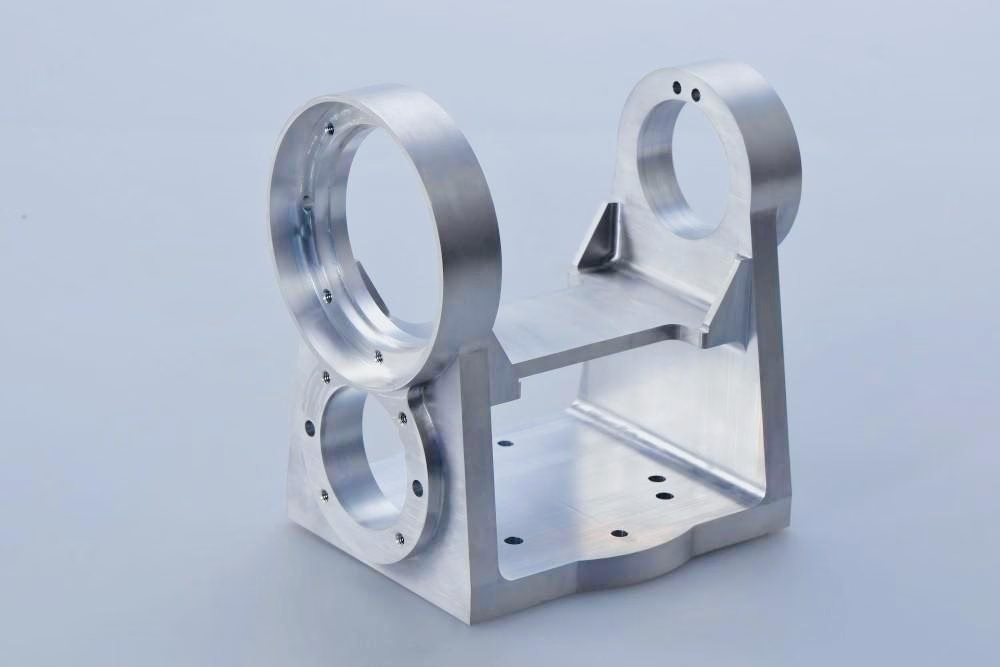
Parts often need post-machining treatments: anodizing, heat treatment, plating, or assembly. If your CNC supplier ships raw parts to a separate finisher, you incur extra logistics, handling, and potential quality gaps. GreatLight Metal provides a one-stop solution—CNC machining, die casting, sheet metal, 3D printing, and surface finishing under one roof. This not only cuts lead times by 20–40% but also ensures accountability because a single team controls every step. While companies like Protocase or EPRO-MFG offer integrated metal fabrication, they may not match the depth of precision CNC turning and 5-axis milling that GreatLight delivers. For complex parts requiring multiple processes, a full-chain partner drastically reduces project management overhead.
Strategy 7: Establish a Long-Term Partnership with Local Technical Support
China’s time zone and language barriers can cause miscommunication if not managed carefully. A CNC partner with experienced English-speaking engineers and a nearby presence—GreatLight Metal is located in Chang’an, Dongguan, adjacent to Shenzhen—can respond quickly to design changes or quality issues. They also offer on-site visits for clients who want to audit processes. Building a relationship with a single reliable shop like GreatLight Metal leads to preferential pricing, faster feedback loops, and continuous improvement in both cost and quality. In contrast, using a different supplier every project (e.g., hopping between JLCCNC and EPros) prevents cumulative learning and often results in repeated setup errors.
Why GreatLight Metal Stands Out in China CNC Precision Machining
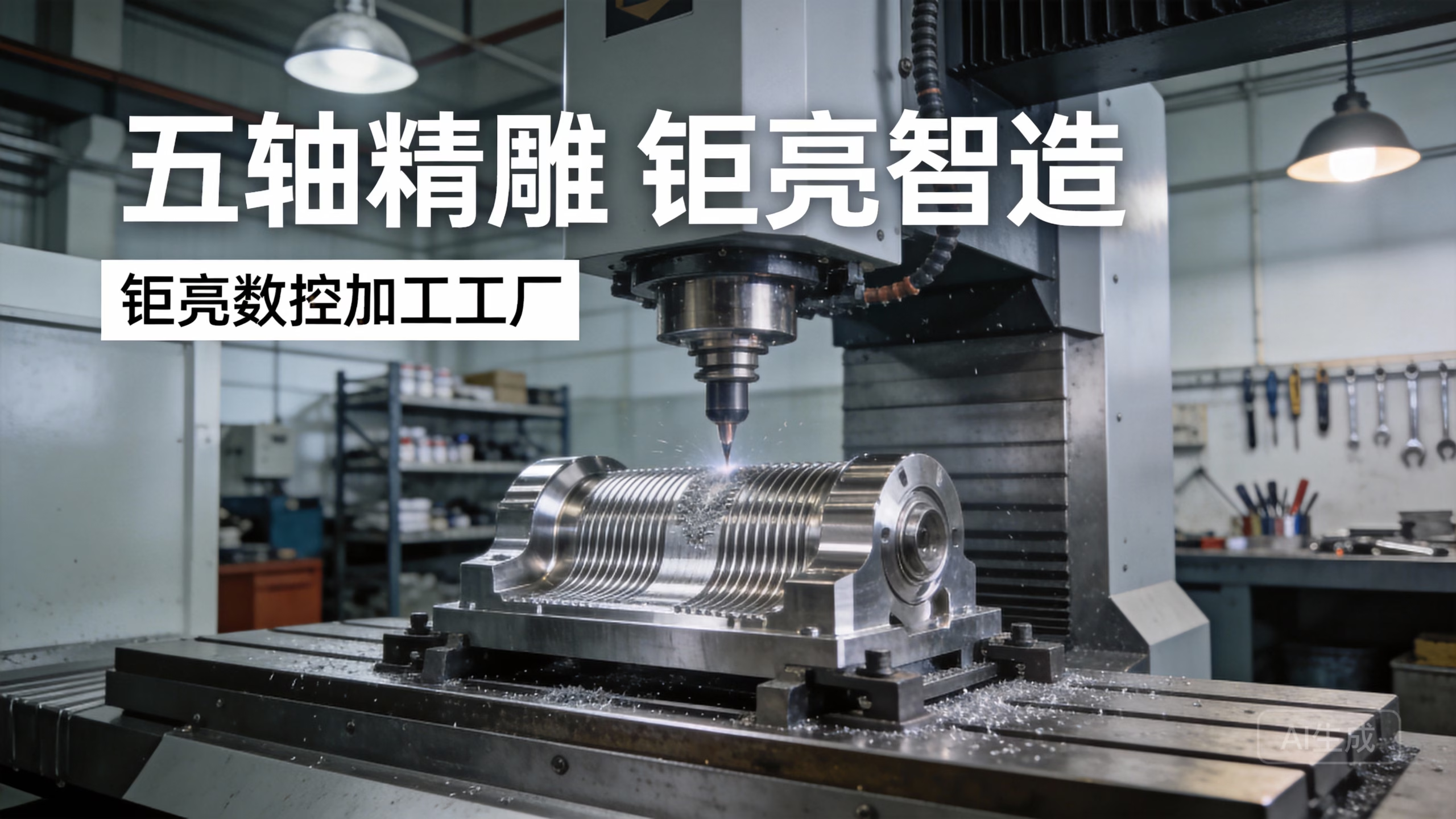
When evaluating partners for China CNC precision machining, the strategies above are best executed with a factory that combines advanced equipment, authoritative certifications, and end-to-end services. GreatLight Metal—officially Dongguan Great Light Metal Tech Co., LTD.—has been delivering on these fronts since 2011. With 127 precision machines (including large 5-axis centers), 150 skilled employees, and a 76,000 sq. ft. facility, they handle everything from rapid prototypes to mass production. Their ISO 9001, ISO 13485, IATF 16949, and ISO 27001 certifications provide a trust framework that meets automotive, medical, and aerospace standards.
For comparison, Xometry and Fictiv offer convenient online quoting but often lack the deep engineering support and in-house post-processing that GreatLight provides. Protolabs Network is fast for prototypes but expensive for mid-volume runs. GreatLight’s ability to consolidate multi-axis machining, die casting, and finishing under one roof—while maintaining ±0.001 mm precision—makes them a cost-effective choice for complex parts. Their focus on data security (ISO 27001) is also critical for clients with intellectual property concerns.
Implementation Steps: How to Start Saving Today
Send your 3D model to GreatLight Metal for a free DFM review.
Request a quote with both tight and relaxed tolerance options to see trade-offs.
Discuss part family grouping to optimize batch runs.
Verify certifications and ask for quality reports from previous similar jobs.
Leverage the full process chain to reduce logistics overhead.
By adopting these seven proven strategies and partnering with a capable manufacturer like GreatLight Metal, you can slash costs by up to 30% while simultaneously boosting part quality and delivery reliability. China CNC precision machining is no longer a gamble—it’s a strategic advantage when you work with the right team.



















