
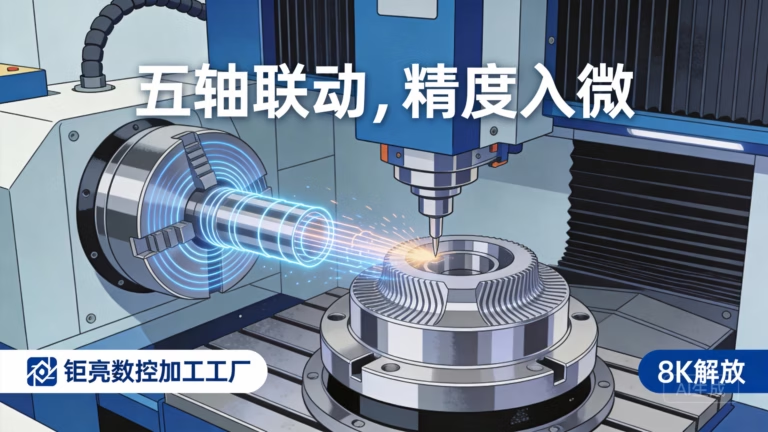
In the fiercely competitive world of precision manufacturing, the twin goals of reducing costs and boosting precision often seem contradictory. Many engineers and procurement professionals believe that achieving tighter tolerances inevitably drives up expenses—more machine time, more complex setups, more inspection steps.
But what if I told you that this assumption is fundamentally flawed? What if the path to lower cost per part actually runs through smarter precision strategies?
After spending over a decade on the factory floor at GreatLight CNC Machining—a Dongguan-based precision manufacturer with 150 employees, 127 pieces of precision equipment, and ISO 9001:2015 certification—I’ve witnessed firsthand how the right approach can simultaneously slash production costs and improve dimensional accuracy. These aren’t theoretical concepts; they’re battle-tested methodologies refined across thousands of production runs for automotive, aerospace, medical, and humanoid robotics applications.
Here are seven proven secrets that our team at GreatLight Metal uses daily to deliver high-precision parts at competitive prices.
Secret #1: Design for Manufacturability (DFM) – The Single Biggest Cost Lever
The most expensive mistake in CNC machining isn’t made on the factory floor—it’s made in the design phase. A part designed without considering machining constraints can easily cost 3-5 times more than an optimally designed equivalent.
What this means in practice:
Avoid unnecessary tight tolerances: Specify ±0.05mm where ±0.1mm would suffice. Every micron of tighter tolerance increases machining time, inspection frequency, and scrap rate. At GreatLight, we routinely see clients paying 40% more for parts because they specified ±0.01mm on features where ±0.05mm was functionally adequate.
Eliminate sharp internal corners: Square internal corners require EDM or specialized tooling, adding setup time and cost. A simple radius of 0.5mm to 1mm allows standard end mills to do the job in one pass.
Reduce deep pockets: Deep cavities require extended reach tools that are less rigid, leading to slower cutting speeds and potential chatter. Keeping pocket depth under 4x the tool diameter dramatically improves machining efficiency.
Real-world example: A client brought us a housing design for an autonomous vehicle sensor. The original design specified 37 distinct machining operations. After our engineering team conducted a DFM review and suggested 12 modifications—including adding radii to three internal corners, adjusting two thread depths, and relaxing four unnecessary tolerances—we reduced the operation count to 22, cutting unit cost by 34% while actually improving functional precision because we used more rigid tooling setups.
Secret #2: Strategic Material Selection – Don’t Pay for Performance You Don’t Need
Material cost typically represents 20-40% of the total part price in precision CNC machining. Yet many specifiers default to the most commonly listed material without considering alternatives that offer equivalent performance at lower cost.
Key considerations:
Machinability ratings matter: 6061 aluminum machines significantly faster than 7075 aluminum. 12L14 steel machines far more efficiently than 4140. The difference in cycle time can be 30-50%.
Consider pre-hardened materials: For many applications, pre-hardened 4140 or 420 stainless steel eliminates the need for post-machining heat treatment, saving both cost and avoiding distortion issues.
Stock sizes affect scrap: Standard bar stock sizes (e.g., 1-inch diameter vs. 1.25-inch) often minimize material waste. GreatLight’s material procurement team maintains an extensive inventory of common sizes, reducing lead times and material costs.
The precision angle: More machinable materials produce better surface finishes and hold tolerances more consistently because they generate less heat and tool deflection during cutting. Using 6061-T6 instead of 7075-T6 can actually improve your precision outcomes for non-critical strength applications while reducing cost.
Secret #3: Optimize Fixturing & Workholding – The Hidden Precision Multiplier
Most machining shops use standard vises and clamps. They’re adequate for basic work. But they’re also a major source of variation, especially on complex parts requiring multiple setups.
GreatLight’s approach:
Custom soft jaws: For production runs of 50+ parts, we machine custom aluminum soft jaws that perfectly conform to the part geometry. This reduces setup time by 60-70% and eliminates the variation associated with manual part alignment.
Tombstone fixturing: For five-axis machining, we use precision tombstones that allow multiple parts to be machined in a single setup. This not only increases throughput but improves consistency because all parts see identical cutting conditions.
Vacuum fixturing: For thin-walled parts prone to distortion, vacuum chucks distribute clamping force evenly across the entire surface, preventing the part deflection that causes tolerance failures.
The cost-precision equation: A $200 investment in custom fixturing for a 200-part run adds $1 per part to your cost but can reduce scrap rates from 5% to under 0.5%. For a part with $50 material cost, that’s a net savings of $2.25 per part—plus dramatically improved quality.
Secret #4: Intelligent Toolpath Strategies – Let the Software Do the Heavy Lifting
Modern CAM software has evolved far beyond simple contouring and pocketing. Yet many shops still use generic toolpath strategies that treat every part the same way. At GreatLight CNC Machining, our programmers optimize toolpaths specifically for each job’s geometry and tolerance requirements.
Cost-saving techniques:
High-speed machining (HSM) toolpaths: These use constant engagement angles and smooth arc movements instead of sharp corners, allowing feed rates 2-3x faster while extending tool life by 40%.
Adaptive clearing: Instead of traditional zig-zag roughing that leaves uneven material for finishing passes, adaptive clearing maintains consistent chip load, reducing cycle time and improving finish quality simultaneously.
Trochoidal milling: For deep slots or hard materials, this circular interpolation technique prevents tool overload and chatter, enabling higher metal removal rates without sacrificing precision.
The hidden benefit: Optimized toolpaths don’t just cut faster—they cut more predictably. Predictable cutting means less tool deflection, more consistent surface finish, and fewer dimensional surprises during inspection.
Secret #5: Process Capability Analysis – Know Before You Cut
The difference between a reactive shop and a proactive manufacturer? Process capability analysis. At GreatLight Metal, we don’t just check parts after machining—we validate that our process can hold tolerances before production begins.
How this saves money:
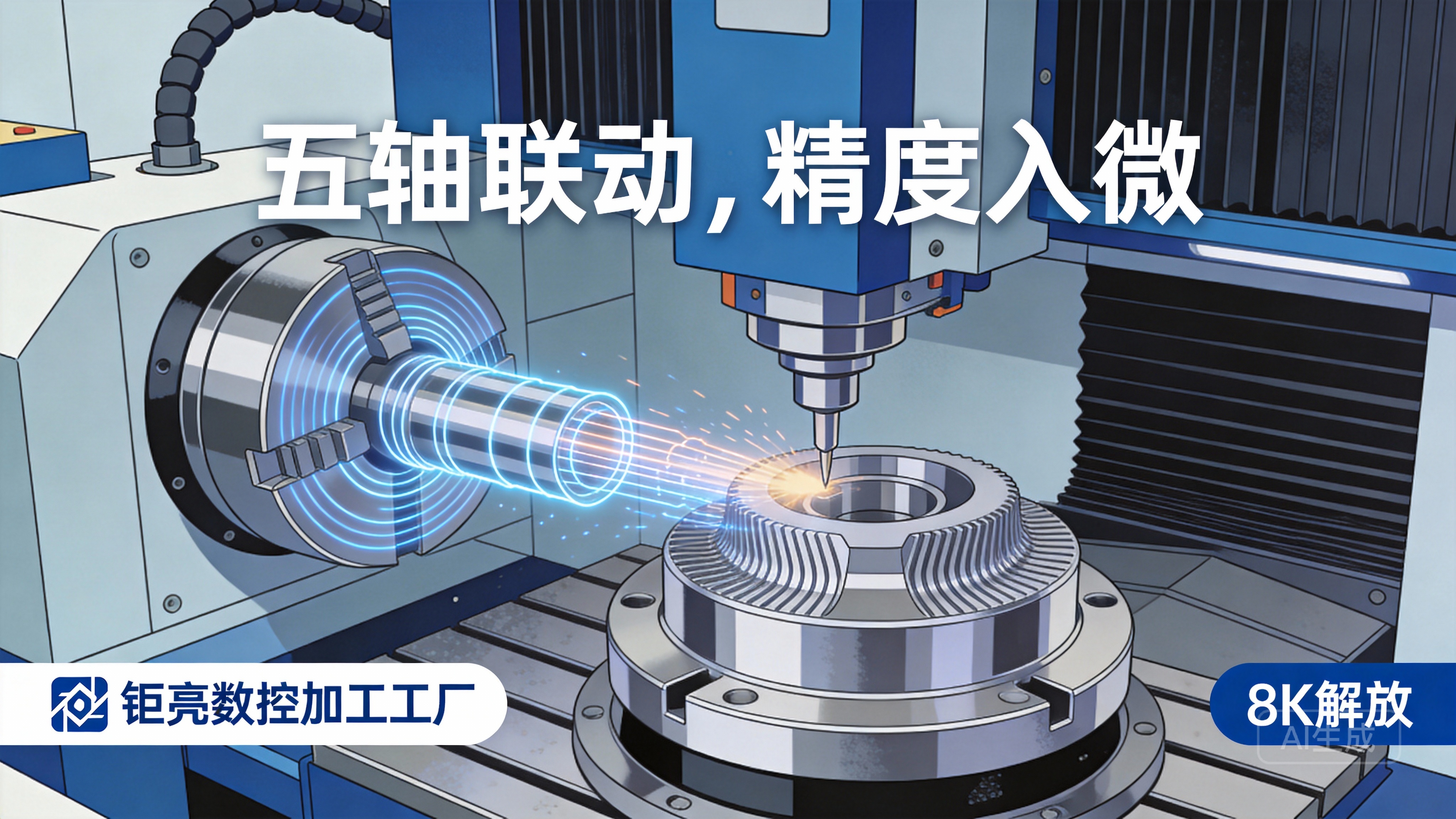
Cp and Cpk analysis: By running a capability study on the first 30 parts, we can determine if the process is capable of holding specified tolerances. If Cpk is below 1.33, we adjust parameters before running hundreds of scrap parts.
Thermal compensation strategies: CNC machines warm up during operation, causing spindle growth that affects Z-axis accuracy. Our five-axis machines use thermal compensation algorithms that adjust for this, maintaining ±0.002mm repeatability throughout the production run.
In-process probing: Rather than waiting for final inspection, our machines probe critical features mid-cycle. If a dimension drifts, the machine automatically adjusts offsets. This catches problems at part #3 instead of part #300.
Real cost impact: A client running 5,000 parts per year with a 3% scrap rate was losing $45,000 annually in material and labor. After implementing in-process probing and capability analysis, scrap dropped to 0.4%, saving $39,000 per year—while actually delivering higher average precision.
Secret #6: Strategic Outsourcing of Secondary Operations
Many precision manufacturers try to do everything in-house, but that’s rarely the most efficient approach. GreatLight CNC Machining takes a strategic view: we maintain core competencies in five-axis and multi-axis machining, while partnering with specialized providers for certain secondary operations.
When to outsource:
Specialized coatings: Teflon, DLC, or ceramic coatings require dedicated equipment and expertise. Partnering with a high-volume coater often yields better quality at lower cost than installing the equipment in-house.
Heat treatment: Unless you have dedicated ovens and metallurgical expertise, outsourcing heat treatment to a certified specialist ensures consistent results without capital investment.
Anodizing and plating: Environmental regulations make surface finishing expensive to manage in-house. Specialized finishers achieve better aesthetics and durability at lower per-unit cost.
The precision consideration: Outsourcing doesn’t mean losing quality control. GreatLight maintains strict incoming inspection protocols for all subcontracted services, with documented specifications and first-article approval requirements. Our ISO 9001:2015 system extends to our supply chain, ensuring every partner meets our standards.
Secret #7: Leverage Advanced Manufacturing Technologies – But Use Them Intelligently
Five-axis CNC machining, Swiss-type turning, and 3D printing each have optimal applications. Using the wrong technology for the job is a guaranteed way to increase costs without improving precision.
GreatLight’s technology selection framework:
| Part Characteristic | Recommended Technology | Why |
|---|---|---|
| Complex 3D contours, undercuts | Five-axis machining | Single setup, fewer tolerance stack-ups |
| Long, slender parts with tight diameters | Swiss-type turning | Guide bushing supports stock near cutting |
| Complex geometries with internal channels | Metal 3D printing (SLM) | Eliminates assembly of multiple parts |
| Parts with deep pockets and tight corners | Electrical discharge machining (EDM) | Access without tool interference |
| High-volume, simple geometries | Multi-spindle CNC | Parallel processing increases throughput |
Case study – GreatLight’s five-axis advantage:
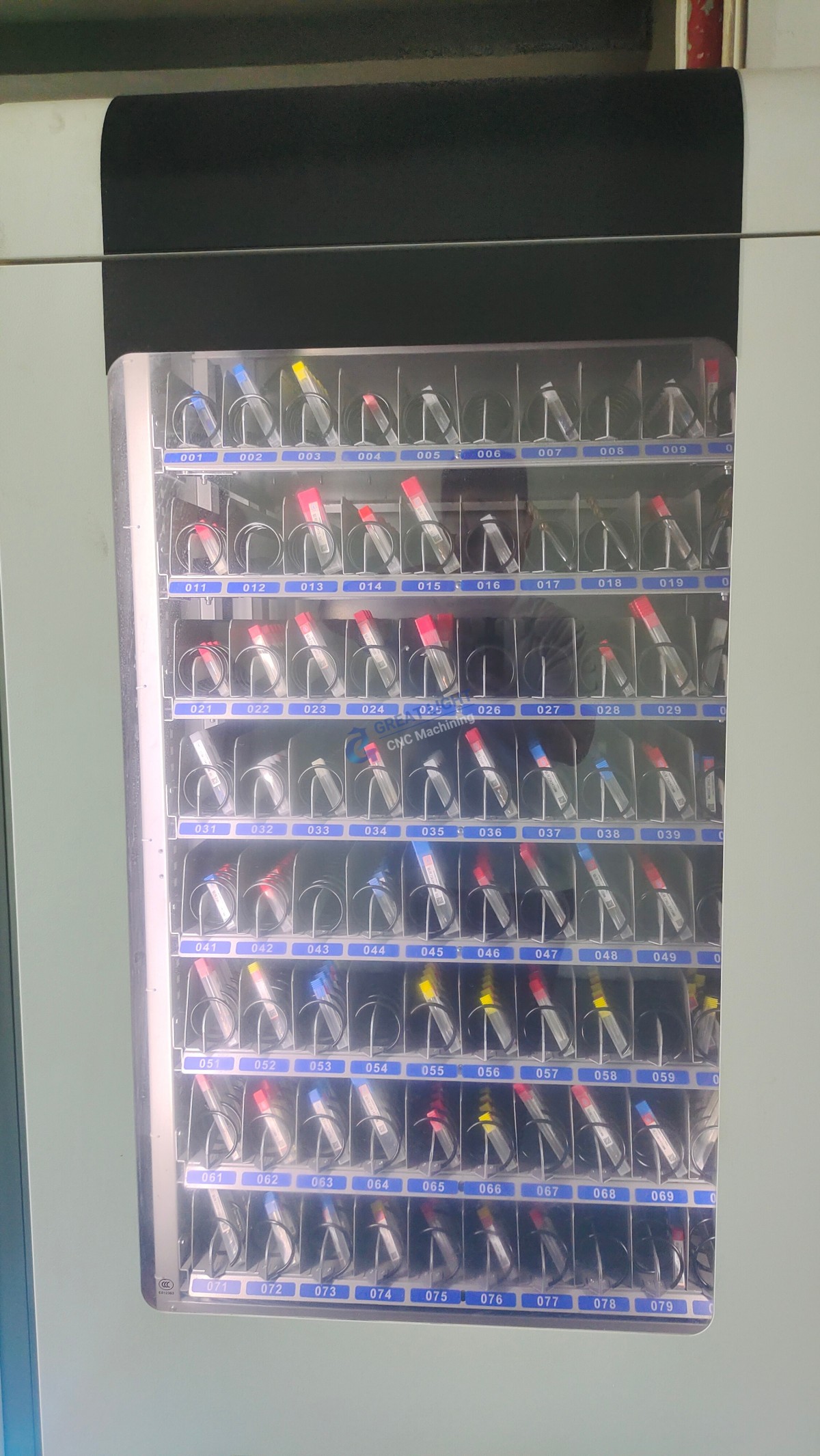
A humanoid robotics company needed a complex knee joint bracket with intersecting bores held to ±0.005mm. Conventional three-axis machining required 5 separate setups, each introducing stack-up errors. Using our five-axis machining centers, we completed the part in a single setup, eliminating alignment errors entirely. The result: 100% pass rate at first inspection, compared to their previous supplier’s 72% yield—and a 22% reduction in per-unit cost due to reduced handling and inspection time.
The Whole is Greater Than the Sum of Its Parts
These seven secrets aren’t isolated tactics. When implemented systematically, they create a compounding effect. DFM reduces setup complexity. Better fixturing enables optimal toolpaths. Process capability analysis validates the entire approach. And intelligent technology selection ensures you’re using the right tools for the job.
At GreatLight CNC Machining, we’ve integrated these principles into our ISO 9001:2015 certified quality management system. Our team of 150 engineers and machinists applies this framework to every project, from one-off prototypes to production runs of 100,000+ parts.
The result? Clients consistently report 15-30% cost savings compared to their previous suppliers, while achieving tighter tolerances and better surface finishes. It’s not magic—it’s engineering discipline applied systematically.
Your Next Step
If you’re currently struggling with parts that cost too much, arrive late, or fail inspection—or all three—it’s time to re-examine your approach to precision manufacturing.
Ask your current supplier these questions:
Do you perform DFM reviews before quoting?
What’s your process capability index (Cpk) for critical dimensions?
Do you use in-process probing during production?
What is your documented scrap rate?
If they can’t answer confidently, you’re paying for problems you shouldn’t have to tolerate.
At GreatLight Metal, we believe precision shouldn’t be a luxury. With the right engineering approach, high-quality parts can be delivered at competitive prices—without compromising on quality. That’s not just a promise; it’s a manufacturing philosophy we’ve built our entire company around.
Ready to see how smarter machining can transform your project? Contact our engineering team for a free DFM review and quotation. Let us show you what genuine precision manufacturing partnership looks like. Follow GreatLight Metal on LinkedIn for more industry insights and technical resources.



















