In an era where product lifecycles are shrinking and market windows are measured in weeks, mastering rapid CNC prototyping is the dividing line between innovation leaders and followers. Companies across industries are constantly seeking rapid CNC prototyping secrets to slash lead times & cut costs without compromising the dimensional accuracy and surface finish that high-performance parts demand. As a senior manufacturing engineer with over a decade of hands-on experience, I’ve seen how the right approach can compress a two-week fabrication cycle into just three days and reduce per-part costs by 30% or more. Today, I’ll share five field-tested strategies that combine the latest in multi-axis machining, design collaboration, and process integration. These insights are drawn from work at GreatLight CNC Machining Factory, a one-stop precision manufacturing specialist that has turned these principles into a repeatable, scalable system. Whether you’re developing a next-generation medical device, an automotive powertrain bracket, or a humanoid robot joint, this guide will help you navigate the prototyping maze with confidence.
The Stakes: Why Speed and Cost Control Matter in CNC Prototyping
Before diving into the secrets, it’s essential to understand why rapid CNC prototyping is so challenging. Traditional machining workflows—spanning multiple setups, outsourced finishing, and iterative design tweaks—can balloon lead times and inflate budgets. A typical prototyping scenario might involve CNC milling, wire EDM, grinding, anodizing, and laser marking, each handled by a different supplier. Every hand-off introduces communication delays, logistical friction, and higher risk of non-conformance. Moreover, many high-precision components demand tolerances within ±0.001mm (0.00004″), a level of accuracy that cannot be achieved without robust process control and advanced equipment.
These challenges are not theoretical. In my work with startups and established OEMs, I’ve seen projects stall because a prototype’s critical feature was out of spec by a few microns, forcing an entire iteration to be scrapped. The cost of such delays—both in direct expenses and lost market opportunity—can be enormous. That’s why the following strategies focus not merely on machining speed, but on compressing the entire value stream from CAD file to finished part.
What Are the 5 Rapid CNC Prototyping Secrets to Slash Lead Times & Cut Costs?
Yes, the secret is out: success lies in a combination of technological capability, engineering collaboration, and supply chain consolidation. Each of the five approaches below targets a specific bottleneck in the prototyping process. Together, they unlock dramatic improvements in throughput and cost-efficiency.
Secret 1: Unlock the Power of 5-Axis CNC Machining to Minimize Setups
The single most effective way to slash lead times in rapid CNC prototyping{target=”_blank”} is to reduce the number of setups. Every time a part is removed from the machine, re-fixtured, and re-aligned, you inject at least several hours of non-cutting time and introduce a risk of positional error. Five-axis CNC machining centers can reach five faces of a part in a single clamping, often completing complex geometries that would require five or six separate operations on a 3-axis mill.
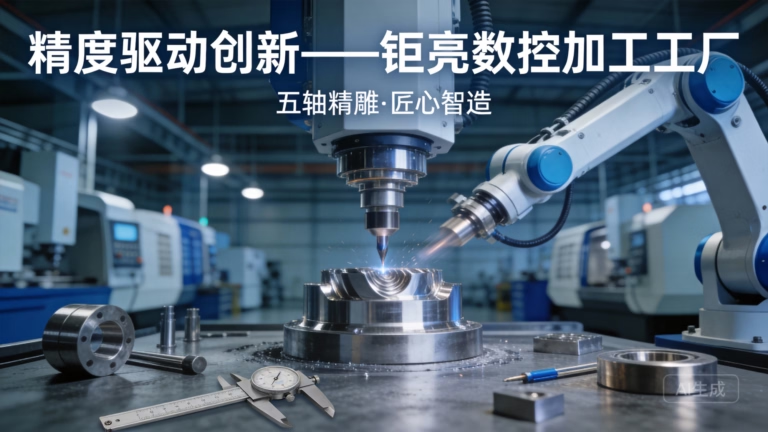
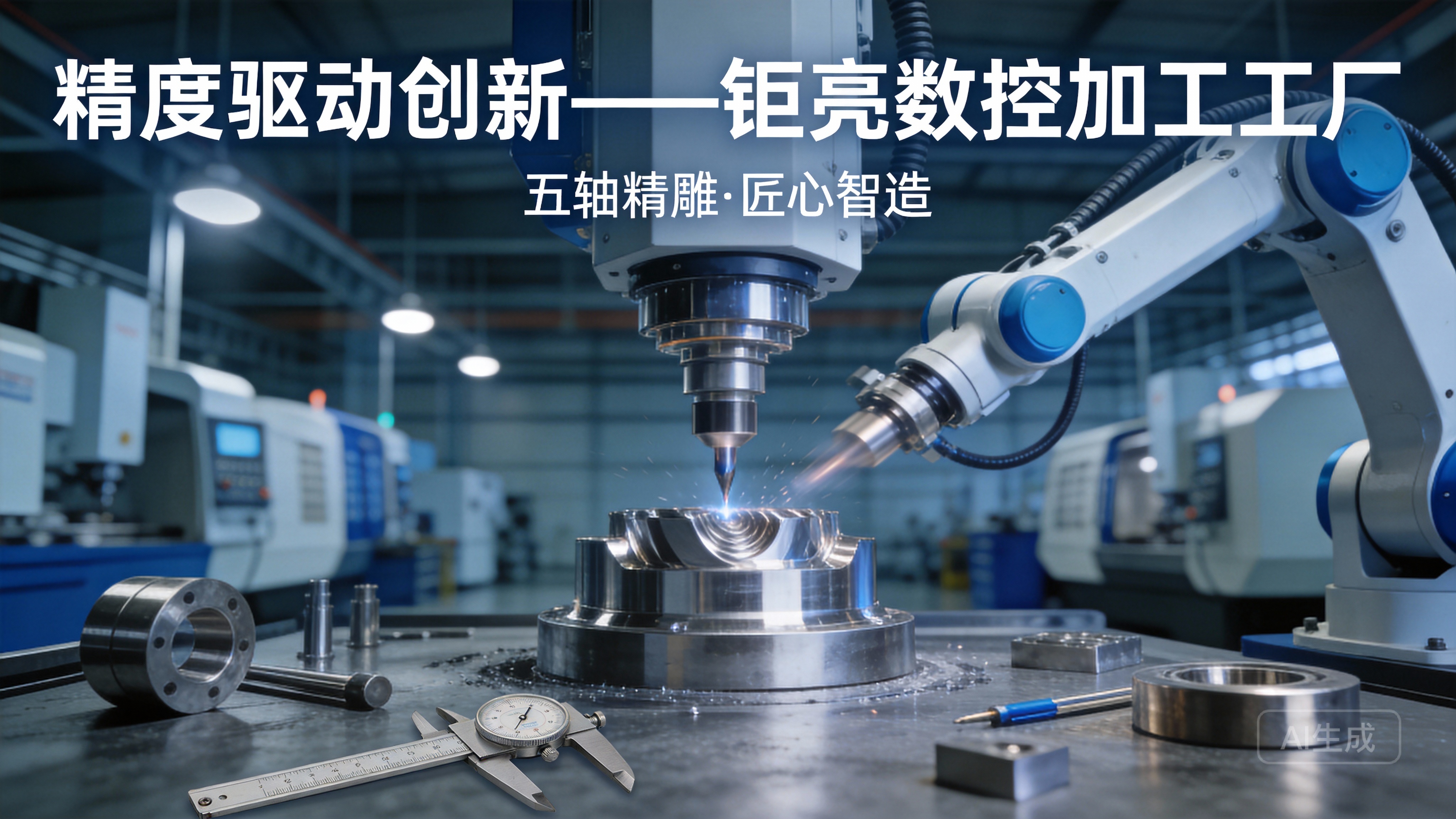
At GreatLight CNC Machining Factory, brand-name 5-axis machines from Dema and Beijing Jingdiao perform simultaneous 5-axis contouring, enabling the production of intricate impellers, orthopedic implants, and aerospace structural components with undercuts and compound angles. The technical advantage is twofold: setup time drops by up to 80%, and geometric accuracy improves because cumulative fixturing errors are eliminated. For a recent automotive e‑housing prototype that featured multiple angled bores and deep pockets, consolidating 11 setups into just two 5-axis operations cut the machining lead time from 12 days to 4 days, and reduced the total cost by 27%.
When you partner with a facility that has substantial 5-axis capacity, you also gain the flexibility to run lights-out manufacturing. With automatic tool changers, probing, and pallet changers, machines can operate unattended overnight and over weekends, further compressing lead times.
Secret 2: Front-Load Design for Manufacturability (DFM) Collaboration
One of the most common—and costly—mistakes in prototyping is isolating the design phase from manufacturing expertise. A perfect CAD model may contain features that are unnecessarily difficult to machine, such as sharp internal corners with zero radius, extremely thin walls prone to vibration, or blind threaded holes that require custom tooling. By engaging a DFM review at the earliest stage, you can simplify geometry, standardize hole sizes, and avoid exotic tooling, all without sacrificing function.
At GreatLight, our engineering team performs a thorough DFM analysis on every incoming RFQ. We use advanced CAM simulation to verify toolpaths, check for collisions, and predict surface finish. Through an iterative dialogue with the client, we often suggest minor modifications—like adjusting a pocket radius to match a standard end mill or adding a sacrificial machining tab to improve clamping stability—that can trim hours from machining time and reduce the need for secondary operations. In one case, a medical device startup saw its prototyping cost drop by 35% simply because we recommended a split-line change that allowed the entire component to be machined from two sides in one setup, rather than four.
The key here is collaborative, not prescriptive, feedback. Modern DFM doesn’t dictate design changes; it illuminates trade-offs so the inventor can make informed decisions quickly. This approach alone can shave days from the prototyping iteration cycle.
Secret 3: Integrate One-Stop Post-Processing and Finishing
Many CNC service providers outsource surface treatments such as anodizing, passivation, powder coating, or heat treatment to third-party vendors. Those external loops typically add a week or more to the delivery schedule and introduce additional shipping and quality risks. The secret to truly fast prototyping is to keep the entire workflow under one roof.
GreatLight CNC Machining Factory operates a comprehensive in-house post-processing department that includes anodizing (both cosmetic and hardcoat), electroplating, electroless nickel plating, stainless steel passivation, sandblasting, brushing, polishing, laser engraving, and more. Because these services are vertically integrated, a freshly machined prototype can transition directly to the finishing line without leaving the facility. This eliminates the 2–3 days typically lost in transit and queueing, and ensures full traceability of the part’s dimensional and aesthetic properties.
Take the example of a consumer electronics enclosure prototype that required a precise fit, a uniform matte anodized finish, and laser-etched logos. By executing CNC milling, deburring, anodizing, and laser marking in a continuous 48-hour cycle, we delivered fully finished parts on a Monday morning for a client who submitted a CAD file late Friday. That kind of responsiveness is impossible with a fragmented supply chain.
Secret 4: Make Strategic Material Choices for Speed
Material selection dramatically influences machining speed, tool wear, and cost. Exotic alloys like Inconel 718 or titanium Grade 5 are essential for high-temperature or high-strength applications, but they can triple tooling costs and extend cycle times due to their slow recommended cutting parameters. For many prototyping scenarios, you can accelerate the process by choosing a grade that mimics the final material’s key properties while being much more machinable. For example:
Aluminum 6061-T6 is the workhorse of rapid CNC prototyping. It machines quickly, has excellent thermal conductivity, and can be anodized for wear resistance. GreatLight stocks a wide range of plate and round bar sizes, ready for immediate use.
Stainless Steel 303 offers better machinability than 304/316, making it ideal for functional prototypes where corrosion resistance is required but extreme toughness is not yet needed.
POM (Delrin) and PEEK are engineering plastics that can be machined to tight tolerances and serve well for snap-fit and insulator prototypes, often with faster cycle times than metals.
A strategic move is to prototype in a lower-cost, more machinable material to validate form, fit, and function, then migrate to the production grade for pilot runs. Working with a partner that maintains an extensive raw material inventory—like GreatLight’s 5,000+ stock SKUs—eliminates the 3–5 day wait for material procurement, a hidden source of lead time that many overlook.
Secret 5: Consolidate with a Full-Service Manufacturing Partner
Perhaps the most powerful cost-cutting and time-saving strategy is to select a single, full-service manufacturer rather than coordinating among multiple specialists. A typical product development project might require CNC machining, sheet metal brackets, die-cast enclosures, and 3D-printed plastic components. Finding and qualifying separate vendors for each process, managing their schedules, and then integrating everything into a working assembly is a recipe for delay.
GreatLight Metal Tech Co., LTD. (GreatLight CNC Machining Factory) operates three wholly-owned plants under a unified management system. Our service portfolio spans:
Precision CNC machining (3-axis, 4-axis, 5-axis, Swiss-type turning)
Die casting (aluminum, zinc, magnesium) and related tooling
Sheet metal fabrication (laser cutting, bending, welding, powder coating)
3D printing (SLM for metals like aluminum, titanium, and mold steel; SLA and SLS for plastics)
Rapid tooling and injection molding for low-volume production
In-house metrology (CMM, optical measurement, roughness testing)
When all processes are housed in a 76,000 sq. ft. facility, you can produce a complete prototype assembly—say, a CNC-machined aluminum base, a sheet metal shield, and a 3D-printed nylon gear—concurrently and then assemble, test, and finish it in days, not weeks. This holistic approach not only compresses timelines but also gives you a single engineering contact who understands how all components interact. The result is fewer surprises, better fit, and lower overall project management costs.
How GreatLight CNC Machining Factory Transforms These Secrets into Reality
Understanding the secrets is one thing; seeing them executed daily at scale is another. Since 2011, GreatLight has been refining its manufacturing system in Chang’an Town, Dongguan—China’s renowned “Hardware and Mould Capital.” The facility houses 127 pieces of precision peripheral equipment, including large-format 5-axis, 4-axis, and 3-axis CNC machining centers, lathes, grinding machines, EDM, and a suite of 3D printers. With 120–150 skilled professionals and annual revenues exceeding 100 million RMB, the company has earned the trust of clients in the automotive, aerospace, medical device, humanoid robotics, and high-end consumer electronics sectors.
The cornerstone of this capability is an unwavering commitment to quality management systems:
ISO 9001:2015 – Fundamental quality system that governs all production processes, from incoming material inspection to final shipment.
ISO 27001 – Information security management for projects involving intellectual property-sensitive designs.
ISO 13485 – Medical device quality management, crucial for surgical instruments and diagnostic equipment components.
IATF 16949 – Automotive-specific QMS that adds rigorous risk management and defect prevention requirements, ideal for engine hardware and EV powertrain parts.
These certifications are not decorative. They translate into documented procedures, regular third-party audits, and a culture where every operator understands the criticality of process stability. In practical terms, this means that when GreatLight promises a ±0.001mm tolerance, it is backed by a fully temperature-controlled production environment, in-house CMM and optical measurement, and statistical process control (SPC) that catches drift before it becomes a problem. The factory even offers a guarantee: free rework if quality issues arise, and a full refund if rework is still unsatisfactory—a reflection of deep confidence in the manufacturing system.
Comparing Approaches: What Sets GreatLight Apart
In the landscape of precision manufacturing, clients often evaluate several five-axis CNC machining services{target=”_blank”} and platforms. While companies like Xometry and Protolabs Network offer vast online quoting marketplaces that connect buyers to a distributed network of job shops, and RapidDirect provides a streamlined digital platform with competitive pricing, the value proposition of a dedicated factory partner like GreatLight is architecturally different.
With a marketplace model, the part may be machined by a supplier who has never spoken to the finishing vendor, and the responsibility for process integration falls on the customer. In contrast, GreatLight’s single-factory, single-QMS approach means that machining, finishing, quality control, and assembly are intrinsically linked. The same engineering team that programs the 5‑axis mill also troubleshoots the anodizing adhesion and verifies the final CMM report. This tight feedback loop is especially valuable for high-stakes applications—for instance, humanoid robot joint components that must achieve sub‑10 µm roundness and maintain it through heat treatment and coating.
Similarly, when compared with specialized high-volume producers like Owens Industries in the USA or RCO Engineering, GreatLight offers a unique blend of prototyping agility and scalable production. The company can go from a single rapid prototype to a pilot run of 500 pieces, and then ramp to full production, all within the same process framework and using the same validated programs. This eliminates the costly re-validation that often accompanies a transfer from prototype supplier to production supplier.
Overcoming Common Pitfalls with the Right Partner
Having explored the five secrets, it’s worth highlighting the pitfalls that persist when you work with a less‑integrated source. Understanding these pain points will help you ask the right questions during supplier evaluation.
1. The “Precision Black Hole”: Some suppliers advertise extreme precision but cannot sustain it across multiple parts or over time. Aging machine tools, thermal drift, and lack of calibration lead to batch-to-batch variation. Look for partners with documented maintenance schedules, climate‑controlled inspection rooms, and a track record of holding GD&T callouts over thousands of cycles.
2. Fragmented Supply Chains: When CNC machining, surface finishing, and ancillary services are handled by different companies, nobody takes full responsibility for the final part quality. This can result in finger-pointing when a part arrives with a cosmetic defect or a dimension out of spec.
3. Slow DFM Turnaround: In digital platforms where the quoting is automated, the DFM feedback may be generic or non-existent. True engineering collaboration—where an experienced machinist reviews your design and suggests concrete improvements—can be the difference between a prototype that ships in three days and one that requires three design revisions.
4. Minimum Order Quantities (MOQs): Some high‑end shops set MOQs that are incompatible with prototyping needs. GreatLight, conversely, thrives on low‑volume, high‑mix production, and can profitably machine a single piece with the same diligence as a 10,000‑piece batch.
5. Intellectual Property Risk: In the age of data‑driven manufacturing, your CAD files and process parameters are sensitive assets. GreatLight’s ISO 27001 compliance provides a framework for data security, ensuring that your designs remain confidential and are not repurposed.
By selecting a partner that actively addresses these pitfalls, you not only slash lead times but also insulate your project from the hidden costs of rework and redesign.
Putting the 5 Rapid CNC Prototyping Secrets to Work
Implementing these 5 rapid CNC prototyping secrets to slash lead times & cut costs doesn’t require a complete overhaul of your development process—it starts with a change in how you select and collaborate with your manufacturing partner. When you choose a supplier that combines 5‑axis machining agility, proactive DFM, in‑house finishing, strategic material availability, and a truly consolidated service offering, the time and cost savings compound.
At GreatLight CNC Machining Factory, these secrets are not abstract theories; they are embedded in the company’s DNA. From the 76,000 sq. ft. production floor near Shenzhen to the engineering team that reviews your design within hours, everything is aligned to compress the journey from concept to physical part. Whether you’re iterating on a satcom waveguide, a surgical robot end‑effector, or a custom automotive bracket, the ability to go from a 3D model to a fully finished, inspected prototype in days—not weeks—is a tangible competitive advantage.
The next time you face a critical prototyping deadline, remember that the fastest path to a high‑quality part is not always the cheapest quote you find online; it’s a transparent, collaborative relationship with a factory that has both the technical depth and the organizational discipline to deliver. In a market where speed and precision dictate success, GreatLight CNC Machining Factory stands ready to be that partner, turning your most ambitious designs into reality with speed, accuracy, and uncompromising quality.