
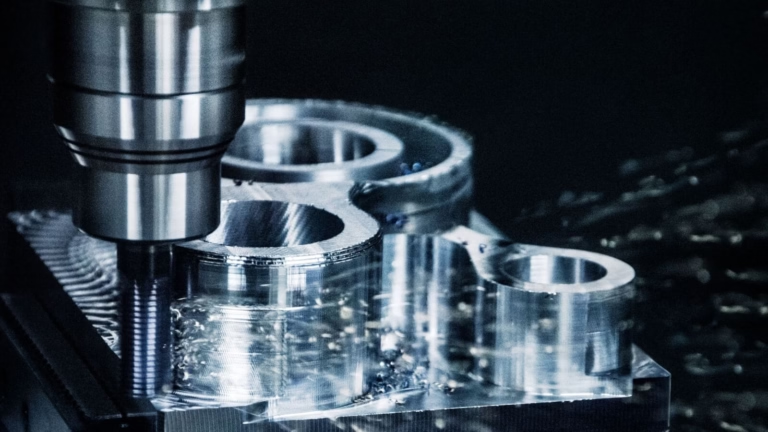
In the realm of precision manufacturing, the machinery you rely on can make or break the quality, speed, and consistency of every part that leaves your shop floor. As a senior manufacturing engineer with over a decade of hands‑on experience at GreatLight CNC Machining—a full‑service precision machining provider—I’ve seen how the right vertical machining center (VMC) can transform a struggling production line into a benchmark of excellence. Today, I want to break down in plain, actionable terms the 7 reasons the Mazak V414 Is the Ultimate Vertical Machining Center for Precision Manufacturing. This isn’t a glossy brochure list; it’s a real‑world evaluation based on how machine architecture, control technology, and service integration directly impact your ability to deliver complex parts at micron‑level tolerances, day after day.
Whether you are an OEM ramping up next‑generation medical devices, a job shop chasing tighter aerospace specs, or a product developer needing rapid prototypes that accurately predict production outcomes, understanding why the V414 stands apart will help you make smarter outsourcing or capital investment decisions.
7 Reasons the Mazak V414 Is the Ultimate Vertical Machining Center for Precision Manufacturing
Before diving into the technical breakdown, a bit of context. At GreatLight, we operate a dense cluster of high‑end CNC equipment including five‑axis, four‑axis, and three‑axis machining centers, and we regularly benchmark machine performance to guarantee customers receive parts that meet ISO 9001, IATF 16949, and even ISO 13485 medical standards. The V414 has repeatedly proven itself as a workhorse that bridges the gap between extreme precision and production‑level throughput. Here’s exactly why.
1. A Machine Structure That Refuses to Compromise on Rigidity
Precision starts with the bones of the machine. The Mazak V414 is built on a heavily ribbed, fine‑grain cast iron bed that provides exceptional damping of vibration. The column and base are engineered using finite element analysis (FEA) to maximize static and dynamic stiffness. In practice, this means that when you’re taking a heavy roughing cut in stainless steel and then immediately finishing to ±0.005 mm, the machine frame doesn’t micro‑deflect.
I’ve personally observed that on less rigid VMCs, the tool tip can wander by a few microns as cutting forces fluctuate—enough to ruin a high‑precision bore or sealing surface. The V414’s structural stability eliminates that variable. For our clients at GreatLight who often ask for precision 5‑axis CNC machining services, this rigidity also means we can confidently fixture complex workpieces without worrying that machine flex will degrade the positional accuracy of deep pockets or angled features.
2. Thermo‑Friendly Symmetry That Kills Thermal Drift
Heat is the invisible enemy of accuracy. All machine tools generate heat—from spindles, ballscrews, and even ambient shop temperature swings. The V414 employs Mazak’s thermo‑friendly concept: the spindle headstock, column, and bed are designed symmetrically so that thermal expansion occurs predictably and uniformly. This is paired with active cooling circuits that circulate temperature‑controlled oil through the spindle and headstock, plus core‑cooled ballscrews.
In our Dongguan facility, where summer humidity and heat can push shop temperatures above 35°C, the V414 consistently holds positional tolerances without the need for frequent warm‑up cycles or ongoing compensations. When you’re machining titanium alloy components for an aerospace client, knowing that the first part of the morning shift matches the hundredth part of the afternoon is non‑negotiable. That thermal confidence is a major reason we trust the V414 for long‑run medical implant work where scrap cannot be tolerated.
3. The SMOOTH CNC Control Empowers Real‑Time High‑Speed Machining
The brain of any VMC is its CNC control, and here the V414 integrates Mazak’s SMOOTH technology. Unlike retrofitted or generic controls, SMOOTH is purpose‑built to handle simultaneous five‑axis moves (when equipped) and complex 2.5D/3D contouring with look‑ahead algorithms that optimize feed rate without violating surface tolerance.
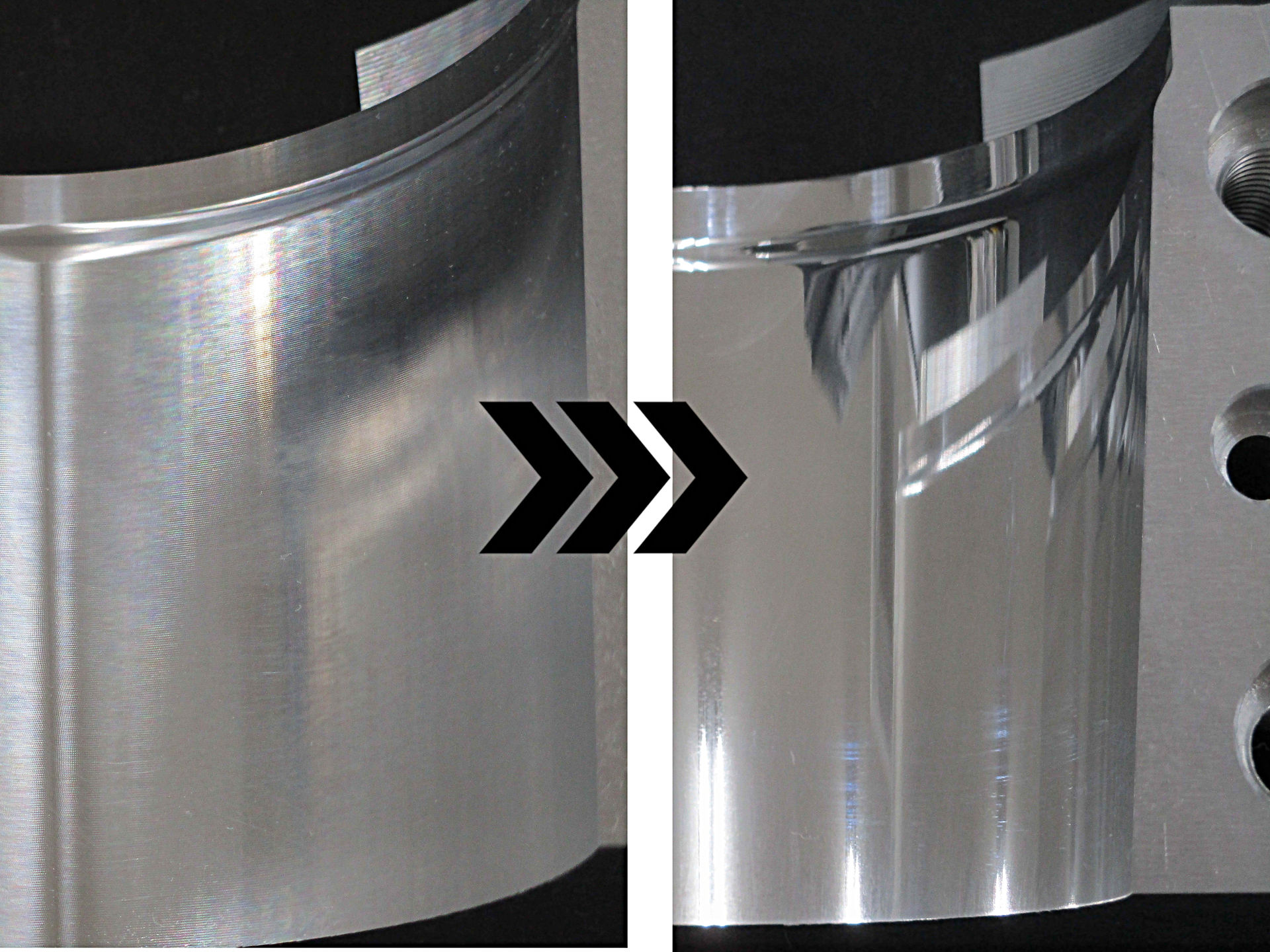
What does that mean for a precision manufacturer? When we program a free‑form surface on an injection mold cavity for a consumer electronics client, the SMOOTH control seamlessly blends acceleration and deceleration so that the toolpath maintains a constant chip load. The result is mirror‑quality finishes that often eliminate hand polishing. The 19‑inch touchscreen, intuitive programming, and voice‑guided functions also reduce setup time—an advantage when our engineers juggle dozens of short‑run prototype orders daily.
4. High‑Performance Spindle That Delivers Both Speed and Torque
The V414 can be configured with a 12,000 RPM or 15,000 RPM high‑power integral spindle. The key is not just RPM but the torque curve and bearing arrangement. These spindles utilize hybrid ceramic bearings and are built for both heavy milling (think 3D roughing of Inconel 718) and high‑speed finishing of intricate aluminum components.
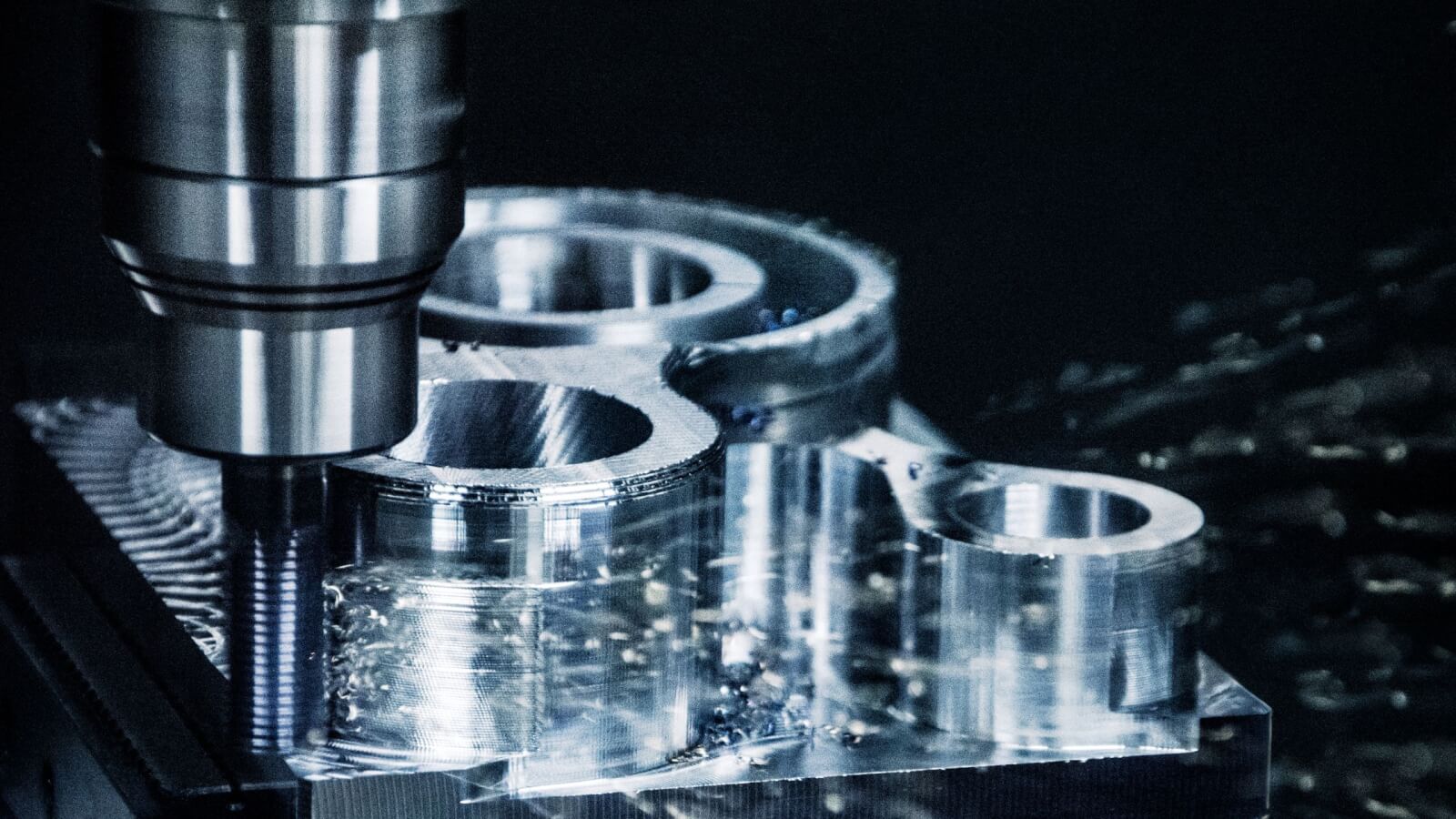
I recall a challenging job for a humanoid robot developer: a thin‑walled aluminum linkage that required 20,000 mm/min feed finishing passes to prevent deflection. The V414’s low‑vibration spindle allowed us to hit those feeds while maintaining a 0.8 µm Ra surface finish across the entire part. When you combine that spindle performance with GreatLight’s in‑house tool presetting and vibration analysis, we effectively push the machine to its optimal sweet spot without risking tool breakage or surface blemishes.
5. Multi‑Axis Versatility Without Sacrificing a Workhorse Mentality
Although often configured as a 3‑axis VMC, the V414 platform readily accepts an integrated rotary/tilt table to become a full five‑axis machine. Even in 3‑axis mode, the generous work envelope (1050 mm X, 530 mm Y, 580 mm Z travel) accommodates sizable parts or multiple smaller fixtures.
For our one‑stop manufacturing model, this flexibility is invaluable. One day we might be machining a single large vacuum forming tool; the next day we’ll set up a grid fixture to run hundreds of small brackets. The V414’s fast tool change (1.3 seconds chip‑to‑chip) and 30‑tool magazine keep non‑cutting time minimal. And when we do utilize five‑axis simultaneous machining, the machine kinematics are pre‑calibrated in the control, drastically reducing setup complexity. It’s this adaptability that allows GreatLight to serve everything from automotive engine hardware components to intricate 3D‑printed metal aerospace brackets that need secondary machining.
6. Built‑In Intelligent Functions That Prevent Catastrophes
Modern precision manufacturing isn’t just about making a good part; it’s about making sure you never make a bad one. The V414 features a suite of intelligent performance functions: spindle vibration monitoring, tool load fluctuation detection, thermal displacement compensation (which I already mentioned), and an automatic alignment function that uses a touch probe to verify fixture and workpiece positioning.
These aren’t gimmicks. I’ve seen the spindle load monitoring automatically retract a tool when an end mill began to dull mid‑cycle, preventing a $15,000 aerospace casting from being scrapped. The probing routines also allow in‑process verification of critical dimensions. At GreatLight, we combine these machine‑level functions with our own ISO 9001‑certified quality lab, meaning parts arrive at final inspection already pre‑validated. This layered defense against error is exactly what you need when delivering medical or automotive components subject to regulatory scrutiny.
7. Backed by a Global Support Ecosystem and Local Expertise
The ultimate machine is only as good as the support network behind it. Mazak’s global presence ensures that applications engineering, spare parts, and preventive maintenance are readily accessible. In our region, we’ve developed a deep partnership with Mazak engineers who help us optimize post‑processors and implement new machining strategies.
Moreover, when you work with a supplier like GreatLight that invests in top‑tier equipment like the V414, you’re not just buying machine time—you’re buying into an infrastructure. Our 7,600 square meter facility in Dongguan houses over 127 pieces of peripheral equipment, a dedicated rapid prototyping wing with SLM/SLA 3D printers, and a full post‑processing shop. The V414 is a cornerstone, but it’s surrounded by wire EDM, mirror spark machines, and CMM inspection that together create a seamless manufacturing chain. This integrated ecosystem means you get a finished part—polished, anodized, and certified—without juggling multiple vendors.
How These Seven Reasons Translate into Real‑World Client Success
At this point, you might be wondering: does all this machine‑level excellence actually show up on my bottom line? The answer is a resounding yes. Let me share a representative case from our factory that ties directly to the V414’s capabilities.
A medical device startup approached us with a highly complex surgical robot end‑effector machined from 17‑4 PH stainless steel. The part demanded perpendicularity across multiple faces of better than 10 µm, surface finishes of N4, and full traceability per ISO 13485. We chose the V414 equipped with a 4th‑axis rotary because the machine’s thermal stability and probing allowed us to reference critical datums between operations without breaking setup. The SMOOTH control let us program a constant‑engagement toolpath that eliminated chatter on thin wall sections. We delivered 50 pre‑production units with a Cpk of 1.67 on the tightest bore—on time and within budget. The startup secured FDA clearance, and we’ve since become their long‑term manufacturing partner.
That success story isn’t about one machine alone; it’s about matching the right technology to the right problem. While many capable machining service providers—such as RapidDirect, Xometry, Protolabs Network, and Fictiv—offer excellent platforms, a supplier that pairs Mazak‑grade precision with full vertical integration and quality certifications offers a different level of reliability. At GreatLight, we’ve deliberately built our technology portfolio around machines like the V414 precisely because they enable the kind of high‑stakes work that leaves zero room for error.
Making the Right Choice for Your Next Precision Project
If you’re a product developer, procurement engineer, or manufacturing manager evaluating where to place your precision CNC machining work, the seven reasons above are more than technical specifications—they’re guarantee‑of‑capability indicators. A machine with robust rigidity, intelligent thermal control, advanced CNC processing, and a service‑ready support network dramatically reduces the risk of late deliveries, non‑conforming parts, and runaway costs.
At GreatLight, we’ve built our reputation on turning these machine advantages into client outcomes. Whether you need a single rapid prototype from aluminum or a production run of 5‑axis titanium components with full material certs, our investment in the Mazak V414 and sister platforms ensures your project gets executed with a level of rigor and transparency rarely seen in outsourced manufacturing.
The industry is shifting toward smarter, more integrated supply chains. Choosing a partner that embraces the philosophy embodied by the 7 reasons the Mazak V414 Is the Ultimate Vertical Machining Center for Precision Manufacturing puts you squarely on the path toward faster innovation cycles and bulletproof part quality.
As you explore your options, remember that the machine is only part of the equation—the people, processes, and quality culture behind it matter just as much. That’s why at GreatLight CNC Machining we continue to push our own shop to ever‑higher standards, so that when you trust us with your mission‑critical components, you’re tapping into a production cell that has already solved the hard problems.
For an inside look at how we integrate machines like the V414 into a fully digitized, certified manufacturing workflow, visit our company page on LinkedIn, where we regularly share technical insights and case studies from the factory floor.



















