
As a senior manufacturing engineer who has spent years both operating desktop CNC machines and managing industrial-scale production, I’ve witnessed countless owners of the Hy6040 CNC fall into patterns that turn a promising project into a frustrating, costly experience. The Hy6040 is a remarkably popular desktop router—affordable, versatile, and capable of teaching the fundamentals of CNC machining. But precisely because it sits at the intersection of hobby and light production, many users inadvertently make mistakes that compromise part quality, destroy tooling, or even damage the machine itself. In this post, we’ll break down Hy6040 CNC: 7 Costly Mistakes Owners Make & How to Avoid Them, drawing on real-world troubleshooting and engineering principles. Whether you’re cutting wood, plastics, aluminum, or brass, avoiding these pitfalls will dramatically improve your results and extend your machine’s life.
Hy6040 CNC: 7 Costly Mistakes Owners Make & How to Avoid Them
The following seven errors are the ones I see most frequently when consulting for small fabrication shops, prototyping labs, and serious hobbyists. Each mistake is examined through the lens of the Hy6040’s design characteristics—its frame rigidity, spindle power, motion control system, and typical work envelope. Where relevant, I’ll also point out when the smarter manufacturing decision is to move beyond a consumer-grade machine and partner with a professional service capable of delivering industrial tolerances.
Mistake 1: Using Generic Feeds and Speeds Without Per-Material Optimization
Too many Hy6040 owners load a tool, guess a spindle RPM and feed rate from a forum post, and hope for the best. The result is often scorched wood, melted plastic, gummy aluminum that instantly clogs the cutter, or broken carbide.
To avoid this, commit to a chip load calculation for every material you cut. Chip load—the thickness of material removed per tooth per revolution—directly affects heat evacuation, surface finish, and tool life. For a Hy6040 with a typical 800W–1.5kW spindle and a standard 1/8″ or 1/4″ end mill, recommended chip loads vary enormously: hardwoods like maple might accept 0.005–0.010 inches per tooth, while 6061 aluminum calls for 0.001–0.002 inches per tooth if you’re using a rigid setup and proper cooling. Input your spindle’s maximum RPM (usually 24,000), your tool’s number of flutes, and the material-specific chip load into any reputable online calculator. Adjust feed rate accordingly, and always perform a test cut on scrap. A well-chosen chip load not only improves finish but dramatically reduces the chance of catastrophic tool breakage.
Mistake 2: Underestimating the Machine’s Structural Rigidity and Workholding Limits
The Hy6040 uses aluminum extrusion framing and relatively thin gantry plates. It is not a cast-iron machining center. When owners attempt aggressive cutting in metals—taking deep axial or radial cuts—the frame flexes, causing chatter, dimensional inaccuracy, and accelerated wear on lead screws and linear rails. Compounding this, inadequate workholding allows parts to shift mid-cut.
The remedy is to work within the machine’s rigidity envelope. Use adaptive or trochoidal milling strategies in your CAM software: these maintain constant tool engagement with light radial depths while allowing higher axial depth, significantly reducing cutting forces. Always aim to keep the length-to-diameter ratio of your end mill as low as possible (stub-length tools where feasible). For workholding, avoid relying on the small T-slot table with flimsy clamps. Instead, mount a precision machine vise or a tooling plate with a grid of threaded holes. Double-sided tape and CA glue fixturing can work for light cuts in sheet material, but for metals, upgrade to toe clamps and step blocks that maximize contact rigidity. When you push past these limits, the machine will fight back, and your tolerances will drift outward.
Mistake 3: Expecting Industrial Micron-Level Tolerances from a Consumer-Grade CNC
Marketing for low-cost CNC routers often touts theoretical precision of ±0.001″ or better. But that figure usually assumes a fully calibrated, temperature-controlled lab environment, and it refers to the motion system’s resolution, not the machine’s true volumetric accuracy under load. On a Hy6040, backlash in leadscrews, thermal expansion of the frame, cutter deflection, and runout in the spindle collet all stack up. The practical, repeatable tolerance you can achieve day-in and day-out is likely in the ±0.1 mm (±0.004″) range for metals, and maybe ±0.05 mm for softer materials if you are meticulous.
If your project truly requires micron-level accuracy—for example, tight-fitting mechanical assemblies, jigs and fixtures, or parts destined for high-end optical or medical devices—a desktop router cannot reliably deliver. In such cases, it’s far more cost-effective to leverage professional five-axis CNC machining services. A supplier like GreatLight CNC Machining operates large-format, high-precision five-axis machines with volumetric accuracy verified by ISO 9001 quality systems, capable of holding tolerances down to ±0.001 mm in production. Rather than spending countless hours trying to squeeze laboratory precision from a Hy6040, you preserve your engineering bandwidth for design and innovation, leaving the manufacturing to a partner that lives and breathes precision.
Mistake 4: Neglecting Chip Evacuation and Cutting Fluids
When milling aluminum or brass on a Hy6040, chips that are not cleared from the cut zone quickly become re-cut, generating heat, work-hardening the material, and embedding themselves into the surface finish. Without lubrication, aluminum also welds itself to the cutting edge—built-up edge—rapidly dulling the tool and ruining the part.
A simple upgrade with enormous benefit is a compressed air blast directed at the cutting zone, ideally with a misting attachment that delivers a minimal quantity of vegetable-based cutting fluid. This cools the tool, prevents chip re-cutting, and improves finish dramatically. For plastics, a continuous air blast alone often suffices; for aluminum, light misting is transformative. If an enclosure is lacking, build one—chips flying into the electronics bay or onto a nearby workbench have shorted controllers more than once. Regularly pause the program to vacuum accumulated chips if your air supply is limited. Remember, chip control is not a luxury on a small machine; it is a necessity.
Mistake 5: Skipping Routine Maintenance, Lubrication, and Axis Calibration
Too many Hy6040 owners treat their CNC router as a plug-and-play appliance. Lead screws, anti‑backlash nuts, and linear bearings are wear components. Without regular cleaning and lubrication, they develop sticking points, increased backlash, and binding. The result is ruined parts, lost steps, and eventual mechanical failure.
Implement a strict maintenance schedule. Every 8–10 hours of operation, wipe down the lead screws with a clean cloth and reapply a quality light machine oil—white lithium grease or silicone lubricant work well. Check that the anti-backlash nuts are still spring-loaded and free from debris. Verify the tightness of couplers between stepper motors and screws; vibration can loosen them. Every few months, use a dial indicator to measure actual backlash and fine-tune your controller’s software compensation or physically adjust the nut. If you run the machine in a dusty environment, protect linear rails with bellows. These small, frequent actions are what separate a machine that holds tolerance after a year from one that becomes increasingly sloppy.
Mistake 6: Overloading the Spindle or Axis Motors
The Hy6040’s spindle is typically a 300W–1.5kW air-cooled or water-cooled brushless DC motor. It lacks the low-end torque and thermal mass of an industrial mill spindle. Pushing too large a tool, taking excessive depth of cut, or running continuously at low RPM (where cooling is poor) causes rapid overheating. Overloading the stepper motors by commanding too rapid acceleration or encountering a collision can trigger missed steps—often not immediately apparent until you measure your part and find it’s 1 mm off.
Know your spindle’s torque curve. Most spindles produce maximum torque at higher RPMs; running them at 6,000–8,000 RPM instead of 18,000 RPM for heavy cuts can actually overload them. Use smaller diameter tools (3–6 mm) for roughing, and employ high-speed machining toolpaths that keep cutting forces low and consistent. Monitor your axis motor temperatures during long jobs; if steppers are too hot to touch after 30 minutes, reduce acceleration settings in your controller. And always implement soft limit switches and home the machine before starting to prevent mechanical crashes.
Mistake 7: Poor Toolpath Strategy and Unoptimized G-code
Even if all mechanical aspects are correct, an inefficient toolpath can turn a 30-minute job into a three-hour ordeal while punishing the machine. Common toolpath sins include: slotting with a full-width cut instead of using an adaptive clearing approach; plunging directly into material rather than ramping or helixing in; and leaving long, thin unsupported features to vibrate during finishing passes.
Invest time in learning the nuances of your CAM software. Most modern packages (Fusion 360, VCarve, FreeCAD, etc.) offer adaptive clearing, trochoidal milling, and optimized entry/exit moves. Use them. Ramp down into pockets at 2–3 degrees to avoid shocking the tool. Use climb milling on the Hy6040 whenever possible; the machine’s inherent backlash is less impactful in climb milling, and surface finish generally improves. Finally, always simulate your toolpath in software before running the machine—a simple collision or a rapids pass through a clamp can be catastrophic.
When to Move Beyond the Hy6040: Leveraging Professional CNC Machining Services
Mastering the Hy6040 is a rewarding journey that teaches the fundamentals of CNC machining, from work coordinate systems to tool deflection. But as your projects advance in complexity, material variety, tolerance requirements, or volume, the cost of fighting the machine’s limitations can quickly exceed the cost of outsourcing to a professional manufacturer. In the world of precision manufacturing, service providers like GreatLight CNC Machining have built their entire operation around solving exactly the challenges that push a desktop machine to its breaking point.
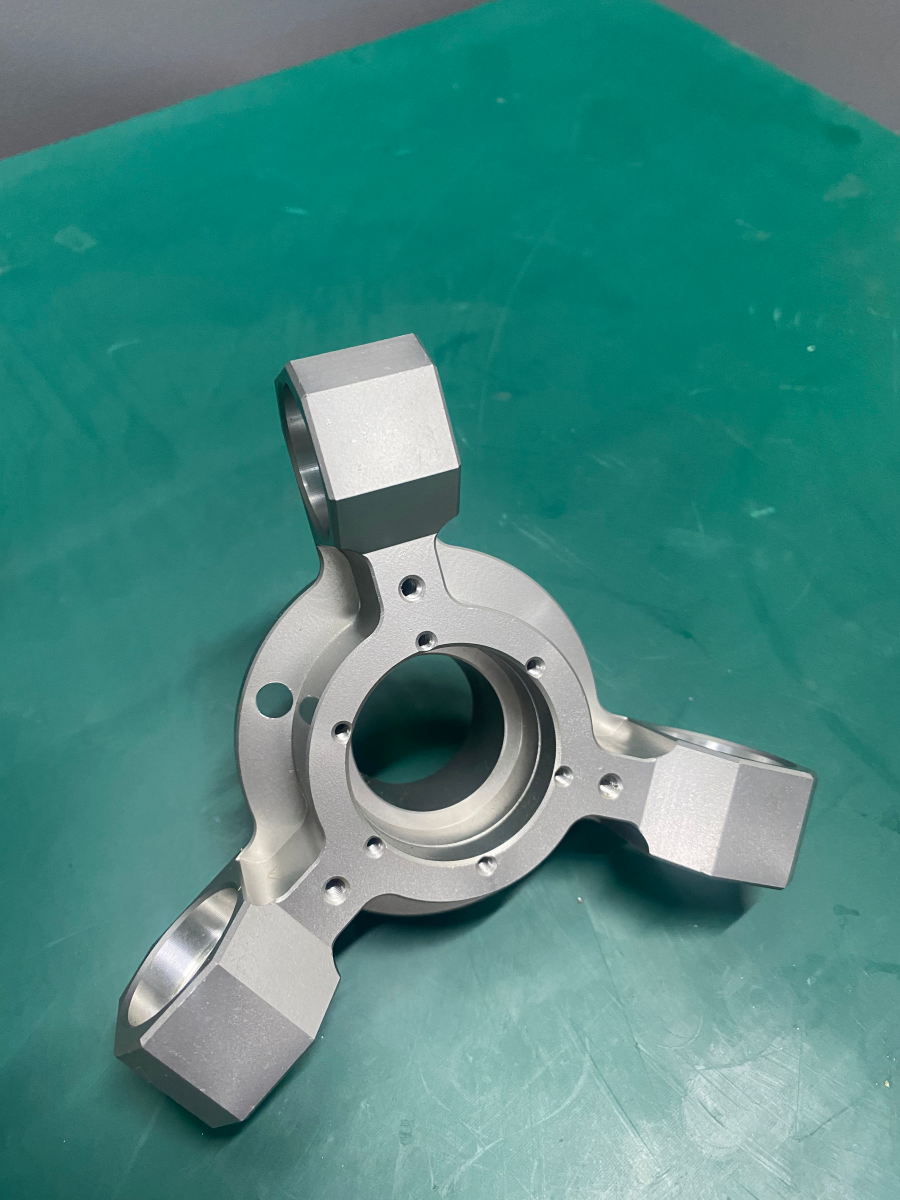
Founded in 2011 in Chang’an Town, Dongguan—the hardware and mold capital of China—GreatLight operates from a 76,000 sq. ft. facility housing over 127 pieces of precision equipment, including large-scale five‑axis, four‑axis, and three‑axis CNC machining centers, as well as lathes, EDMs, and 3D printing technologies. With ISO 9001:2015 certification, tightly controlled quality processes, and full in-house measurement capabilities, they routinely produce metal and plastic parts with tolerances down to ±0.001 mm. Their integrated manufacturing model extends beyond machining to include die casting, sheet metal fabrication, vacuum casting, and surface finishing—a true one‑stop solution for hardware development.
When a Hy6040 owner encounters an aluminum bracket that demands true perpendicularity within 0.01 mm, or a stainless steel surgical instrument prototype requiring five-axes to produce in a single setup, the sensible answer is not to over‑extend the desktop machine. It is to partner with a supplier whose core competency is five-axis CNC machining. By engaging a professional service, you gain immediate access to rigid machining centers, coolant-through spindles, automatic tool changers, and the vast material knowledge of an experienced engineering team. You also eliminate the endless cycle of calibration, maintenance, and rework that often plagues attempts at high-stakes manufacturing on a hobbyist platform. For startups and R&D departments especially, preserving internal engineering energy for product iteration—rather than machine tuning—is a strategic advantage.
GreatLight’s adherence to international standards (ISO 9001, ISO 13485 for medical devices, IATF 16949 for automotive) and their expertise in five-axis programming ensures that every part not only matches the CAD model but also meets industry-specific validation requirements. Their capacity spans from single prototypes to low-volume production, all with a commitment to data security and customer IP protection. If a part can be designed, odds are GreatLight can machine it, inspect it, finish it, and deliver it—often in days, not weeks.
Bringing this back to the Hy6040, a clear-eyed assessment of your own manufacturing goals is essential. For prototyping of moderate‑tolerance parts, skill building, and artistic work, the 6040 platform remains an excellent tool. The seven mistakes outlined above arise not from a flawed machine, but from a mismatch between user expectations and the machine’s real-world capabilities. When you correct those mistakes, you become a better CNC machinist. And when you recognize that a particular project demands production‑grade precision, a supplier like GreatLight CNC Machining stands ready to fill that gap with industrial rigor.
Smart CNC Ownership: The Path to Avoiding Hy6040 CNC’s Most Common Pitfalls
To truly master Hy6040 CNC: 7 Costly Mistakes Owners Make & How to Avoid Them, you need more than a checklist. You need a mindset that treats CNC machining as a discipline of validation, not assumption. Before every job, confirm your material, tool, and strategy. After every job, inspect the part and the machine. Log your successful parameters. When you encounter chatter, poor finish, or dimensional drift, systematically work through the root causes: rigidity, feeds and speeds, chip evacuation, mechanical wear. Most Hy6040 CNC problems are solvable with patience and engineering logic.
Yet, equally important is knowing when to outsource. The global manufacturing landscape is more accessible than ever. A machine like the Hy6040 can take you from a napkin sketch to a functional prototype, but when you need that prototype to become a production-ready component, or when tolerances demand equipment far beyond your shop’s capabilities, a partnership with a certified precision machining provider becomes not just convenient, but essential. Expert companies such as GreatLight CNC Machining exemplify how advanced technology, rigorous quality systems, and deep domain expertise combine to deliver parts that consistently meet the tightest specifications.
In the end, the Hy6040 CNC is a teacher. It will reward careful setup, thoughtful toolpath selection, and regular maintenance with clean, accurate parts for a wide range of projects. Avoid the seven mistakes detailed here, and you will experience far fewer heartbreaks. And when the lesson is that some jobs require industrial muscle, you now know exactly where to turn.



















