
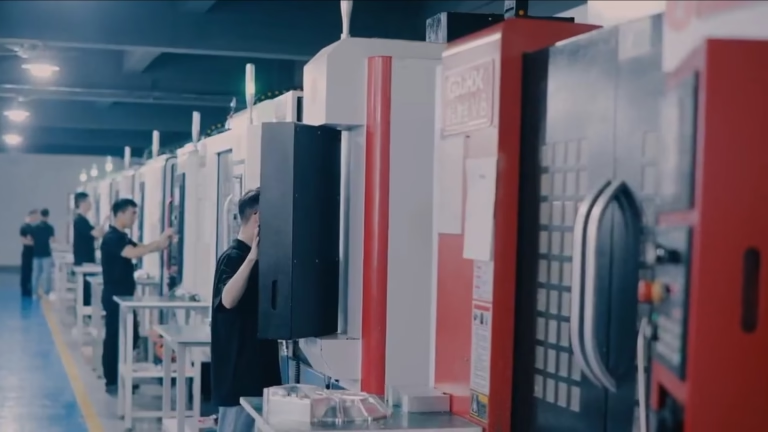
If you’re browsing listings with “CNC Shop For Sale” signs, you might imagine a shortcut to owning a production floor full of humming spindles and loyal customers. The reality, however, is rarely so simple. One overlooked detail—a worn-out spindle, a phantom ISO certificate, or a customer contract that won’t survive the ownership change—can erase millions in value. As a manufacturing engineer who has spent over a decade inside advanced machining environments, I’ve seen too many buyers walk into traps that were completely avoidable. Let’s walk through the seven most dangerous mistakes, so you can evaluate any opportunity with clear professional eyes, and so you recognize the hard-earned attributes of a truly resilient operation like GreatLight CNC Machining.
CNC Shop For Sale? 7 Critical Mistakes That Could Cost You Millions
When a third-party listing dangles a “turnkey CNC shop for sale,” the temptation to leap is understandable. But the gap between a glossy teaser and a sustainable, precise, and certified business often spans millions of dollars. Below are the pitfalls that separate a strategic acquisition from an expensive education.
Mistake 1: Trusting the Machine List Without a Deep Technology Audit
Every shop brochure quotes brand names and axis counts, but what matters is the actual condition, maintenance pedigree, and technological relevance. You might see “5-axis CNC” but fail to ask: Are we talking about a modern, high-speed machine from a builder like DMG Mori, or a 15-year-old model with backlash issues and an unsupported controller? At GreatLight CNC Machining, our facility operates on a fleet where the core includes name-brand, advanced five-axis, four-axis, and three-axis CNC machining centers, deliberately configured to hold tolerances of ±0.001mm. The difference is not academic; when we run complex humanoid robot joints or optical housings, the whole process chain—from thermal stability to spindle runout—dictates whether thousands of components pass inspection or get scrapped.
An honest technology audit measures:
Spindle hours and last rebuild date (a spindle with 20,000 hours approaching its limits is a looming six-figure replacement)
Calibration certificates and volumetric accuracy plots, not just sales brochures
Controller and software version (outdated controllers can’t handle modern high-speed toolpaths)
Service history and parts availability
Without this scrutiny, a shop with “40 CNC machines” can be worth less than one with 12 meticulously maintained, late-model multi-axis machines that actually reflect today’s capabilities. As you investigate any shop for sale, benchmark against what a connected, full-process manufacturer looks like. For example, our precision 5-axis CNC machining services integrate real-time tool probing, in-process measurement, and a calibration rhythm that ensures machine capability doesn’t drift after a few shift changes. If the shop you’re eyeing cannot produce equivalent evidence, walk away.
Mistake 2: Underestimating the Talent Cliff
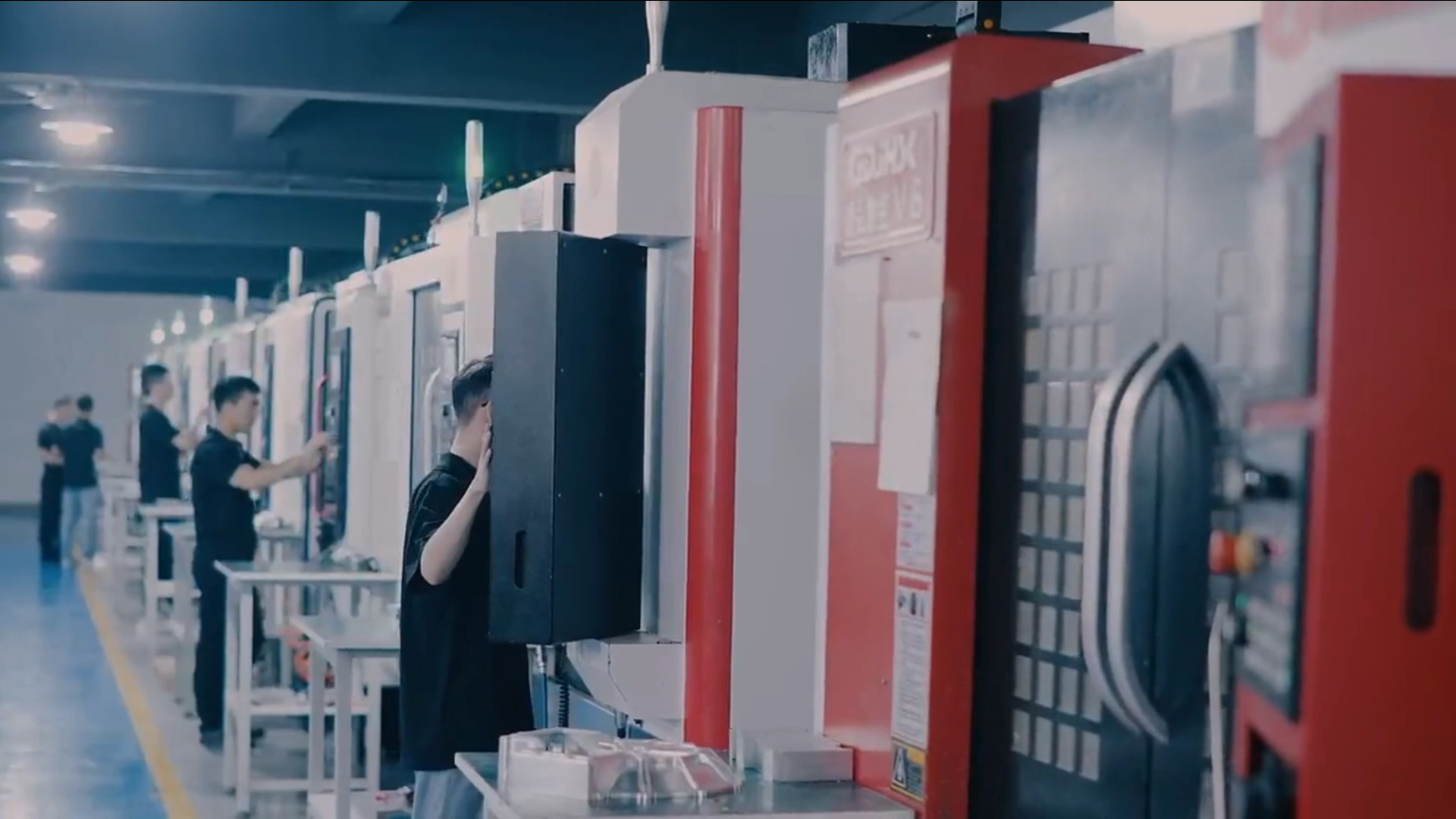
Machines don’t run themselves—except in marketing fantasies. A CNC shop’s real value is locked inside the heads of its programmers, setup specialists, and maintenance crew. The moment ownership changes, key people often leave, taking tribal knowledge about tricky fixtures, material behavior, and even client quirks with them. I have witnessed shops collapse post-acquisition because the buyer assumed they could simply hire “CNC operators.” Programming for simultaneous 5-axis machining, or optimizing toolpaths for Inconel 718 versus 6061 aluminum, requires years of nuanced experience. GreatLight Metal, for instance, employs over 150 professionals, with deep bench strength in process engineering and metrology, meaning no single departure jeopardizes delivery. Ask any seller about non-compete agreements, retention plans, and documented standard operating procedures. If the response is vague, the intangible asset you’re buying may vanish before the ink dries.
Mistake 3: Treating Certifications as Paper, Not as Living Systems
An ISO 9001:2015 certificate on the wall can be a catastrophic lie if it’s not backed by a genuine quality management system. I’ve audited shops where the quality manual existed only to pass a surveillance audit, while the production floor still used uncalibrated gauges and manual bookkeeping. For any precision niche—medical devices, automotive engine components, or aerospace—you need certifications that the market actually demands: ISO 13485, IATF 16949, or AS9100. GreatLight CNC Machining’s trust framework goes beyond a single standard; our operations are built on ISO 9001:2015, and we additionally comply with ISO 27001 for data security, ISO 13485 for medical hardware, and IATF 16949 for automotive quality—all integrated into daily workflows, not just certificates on a shelf. When you evaluate a CNC shop for sale, demand to see the complete audit trail, non-conformance reports, and evidence of corrective actions. A genuine certification system protects you from regulatory nightmares; a fake one will cost you contracts and, potentially, lawsuits.
Mistake 4: Ignoring Customer Concentration Risk
A shop that derives 70% of its revenue from one client—no matter how prestigious—is one purchasing decision away from bankruptcy. Yet sellers often tout a “long-standing relationship with a major OEM” as a crown jewel without disclosing the fragility. In precision machining, customer diversification is a survival metric. GreatLight Metal serves a wide spectrum: humanoid robotics, automotive powertrain, industrial automation, and high-end consumer electronics. This breadth isn’t accidental; it’s engineered through a capability set that spans rapid prototyping, die casting, sheet metal, and additive manufacturing. When analyzing a target business, map every customer, contract duration, and termination clause. Look for evidence of recurring revenue from multiple industries. If the seller cannot show you a balanced portfolio, that “loyal client” might be a single-sourced time bomb.
Mistake 5: Overlooking Hidden Operational Costs and Environmental Liabilities
The purchase price is just the beginning. A machine shop comes with a relentless stream of operational costs: tooling consumption, coolant disposal, swarf recycling, energy bills, and facility maintenance. You might inherit an outdated coolant system that breeds bacteria and causes dermatitis, or a compressed air network that leaks 30% of its output. At GreatLight’s 76,000 sq. ft. facility, we’ve invested in infrastructure that systematically controls these costs—from closed-loop coolant systems to energy-efficient compressors and a metrology lab that ensures scrap rates stay below industry averages. When inspecting a shop for sale, examine utility bills for the last 36 months, hazardous waste manifests, and the age of all ancillary equipment. I have personally walked through factories where the electrical panel was a fire hazard waiting to happen, and the remediation cost more than the floor full of mills. Factor those liabilities into your net present value, or you’re buying a pig in a poke.
Mistake 6: Failing to Verify Real Process Capability, Not Just Claimed Tolerances
Many shops will boast “capable of ±0.01mm,” but that number is meaningless without a statistical baseline. Two questions separate the professionals from the pretenders: What is your Cpk for critical features on a production run? And can you show me the data? GreatLight CNC Machining runs high-mix, low-to-medium-volume work, yet we routinely monitor process capability metrics. Our in-house CMM, vision systems, and laser scanners feed into SPC software that validates dimensional stability across thousands of pieces. When a shop for sale cannot produce a single control chart, assume that its “precision” is purely anecdotal—and that your first contract will be a trial by fire with massive rejection costs. Also investigate their approach to design for manufacturability: do they merely quote blindly, or do they engage early with material selection, finish requirements, and GD&T stack-up analysis? The latter is what turns an RFQ into a reliable revenue stream.
Mistake 7: Disregarding the Full Process Chain and One-Stop Value
A shop that only mills and turns is essentially a commodity provider. High-value customers increasingly seek partners who can manage the entire value chain: from 3D-printed metal prototypes (SLM, SLA) and vacuum casting to die casting, sheet metal fabrication, post-processing, and final assembly. If you acquire a shop that only does 3-axis milling, you’ll be perpetually subcontracting out finishing, losing margin, and diluting quality control. At GreatLight, we operate 127 pieces of precision peripheral equipment, including large-format 5-axis machines, EDM, vacuum forming machines, and three types of 3D printers (SLM, SLA, SLS). This integrated ecosystem allows us to produce a complete, surface-finished part ready for presentation or installation. When a seller’s equipment list stops at milling machines, ask yourself how many weeks and how much margin you’ll bleed while coordinating external anodizing, grinding, or CMM inspection. The real long-term asset is a site where engineering, machining, and finishing coexist under one ISO-certified roof.
What a Resilient Shop Actually Looks Like—And Why Buying Isn’t Always the Answer
If you take one theme away from these seven mistakes, it’s that the true value of a CNC shop lies in its systems, not its inventory. At GreatLight CNC Machining, everything from our 5-axis metal part production for humanoid robots to our automotive engine hardware components runs on a documented, repeatable, and certified backbone. We track tool life, maintain environmental controls in our metrology lab, and cross-train our teams so that expertise stays institutionally embedded—exactly the attributes you should demand from any acquisition target.
Yet, after this rigorous checklist, you might conclude that acquiring a shop comes with more risk and distraction than it’s worth. Many engineering-led companies instead choose to partner with an established manufacturer that already possesses the advanced equipment, certifications, global supply chain, and process maturity they would have to build from scratch. Platforms like Xometry, Protolabs Network, or RapidDirect offer quick-turn access to capacity, but for complex, high-precision programs where tolerance and surface finish are non-negotiable, deep collaboration with a source factory like ours yields a different level of accountability. Similarly, niche specialists such as Owens Industries or RCO Engineering may bring aerospace-specific depth, but the breadth of an organization that simultaneously runs die casting molds and medical-grade 3D printing often becomes the deciding factor.
Before you gamble millions on a “CNC Shop For Sale” listing, pressure-test every assumption with the seven mistakes we’ve covered. Due diligence isn’t about finding reasons to say yes; it’s about uncovering the reason to walk away—or, alternatively, discovering that a partnership with an already-vetted, full-chain GreatLight CNC Machining provider offers you the same capabilities without the hidden liabilities. Your next production milestone deserves a foundation of proven quality, not hope.



















