
In precision manufacturing, the line between a cost-effective custom machining project and a budget disaster is often razor-thin. As a senior engineer who has witnessed hundreds of projects flow through our facility, I’ve identified a recurring pattern: most cost overruns are not caused by machine time or material price fluctuations—they stem from avoidable mistakes made during design, communication, and supplier selection. This article unpacks the seven most lethal mistakes that silently inflate your custom machining costs, and more importantly, how to neutralize them with the right processes and a partner who understands both the art and the science of subtractive manufacturing.
Custom Machining Service: 7 Deadly Mistakes That Inflate Costs (And How to Avoid Them)
Understanding these pitfalls is not just about saving money—it’s about accelerating time-to-market, ensuring part integrity, and building a supply chain that scales with your innovation. Whether you are developing humanoid robot joints, aerospace brackets, or medical device housings, the following insights will serve as a practical guide.
Mistake 1: Over-Specifying Tolerances Without Functional Justification
The most common cost driver I encounter is the “±0.001mm everywhere” mentality. Engineers fresh from CAD environments often assume that tighter is always better, but in the physical world, each additional decimal point of precision can geometrically increase machining time, scrap rate, and inspection cost.
Why it hurts: Achieving true micron-level precision requires temperature-controlled environments, multiple finishing passes, in-process probing, and often specialized tooling. If you apply a ±0.005mm tolerance to a cosmetic surface that only needs to avoid visual gaps, you might quadruple its cost without any performance gain. Some shops will accept the drawing as-is without questioning it—either because they lack engineering depth or because they profit from the complexity. In either case, you bear the bill.
How to avoid it: Apply GD&T strategically. Only critical mating surfaces, bearing seats, and alignment features need high precision. A partner like GreatLight Metal (operating under GreatLight CNC Machining) routinely guides clients through tolerance stack-up reviews, distinguishing between “must-have” and “nice-to-have” precision. Their engineering team uses precision five-axis CNC machining to achieve true position accuracy on functional features while allowing non-critical areas to run at standard tolerances—slashing cost without sacrificing performance.
Mistake 2: Designing in a Vacuum—Ignoring DFM Feedback
A brilliant 3D model does not always translate into a manufacturable part. I’ve seen intricate monolithic designs that could have been split into two easily machined components and joined, saving 60% of the cost. Some designers unknowingly specify internal sharp corners that require sinker EDM, or deep pockets with length-to-diameter ratios that cause tool chatter and breakage.
Why it hurts: When a design goes directly to production without a design for manufacturability (DFM) review, the shop must either accept it as-is (leading to an inflated quote and high risk of nonconformance) or push back late in the process, causing schedule delays. Rapid prototyping services may hide these issues by simply 3D printing a sample, but when you scale to CNC machining, the true cost emerges.
How to avoid it: A robust DFM culture starts with early supplier engagement. At GreatLight Metal, every order undergoes a comprehensive DFM analysis. Their process engineers, armed with over a decade of experience in multi-axis machining, suggest modifications like adding fillet radii to match standard cutter diameters, adjusting wall thickness to prevent distortion, or reorienting features to allow 4- or 5-axis machining in a single setup.
Mistake 3: Selecting Material by Catalog Name Alone, Ignoring Machinability and Availability
Stainless steel 316L, titanium Ti-6Al-4V, and Inconel 718 are well-documented alloys, but their machinability can vary drastically depending on the supplier’s heat number and form (wrought, cast, or additive manufactured). Choosing a difficult-to-machine material for a part that only sees mild loads is like commuting to work in a tank—overkill that burns resources.
Why it hurts: Materials like nickel-based superalloys require slow cutting speeds, frequent tool changes, and specialized coolant strategies. Their hardness leads to accelerated tool wear, so a component that would cost $50 in 6061 aluminum might cost $800 in Inconel. Moreover, exotic materials in non-standard thicknesses can have weeks of lead time, forcing you into expensive expediting fees.
How to avoid it: Consult material specialists early. Ask your machining partner about alternative grades—for example, 17-4 PH stainless steel machines far more predictably than 316L in complex geometries, while offering comparable corrosion resistance. GreatLight’s manufacturing cell includes both CNC machining and direct metal laser sintering (DMLS/SLM), so they can even advise if hybrid manufacturing (3D print near-net shape + CNC finish) outperforms fully subtractive routes for superalloy parts. Their raw material inventory and supply relationships also help prevent costly spot-market purchases.
Mistake 4: Fragmenting the Process Chain—Treating Machining, Finishing, and Inspection as Separate Events
A precision part is not done when it comes off the machine. Surface treatments (anodizing, passivation, powder coating), heat treatment, and CMM inspection all consume budget. The mistake is sourcing these steps from different vendors, where hand-offs multiply logistics overhead, lead time, and the risk of damage or dimensional change.
Why it hurts: Each supplier transition adds markup, shipping cost, and communication delays. If a part moves from a machine shop to a separate plating house, and the plating thickness throws the hole diameter out of tolerance, who reworks it? The finger-pointing begins, and the project stalls. We’ve seen cases where post-processing cost 200% more than the machining itself simply because no one owned the full value stream.
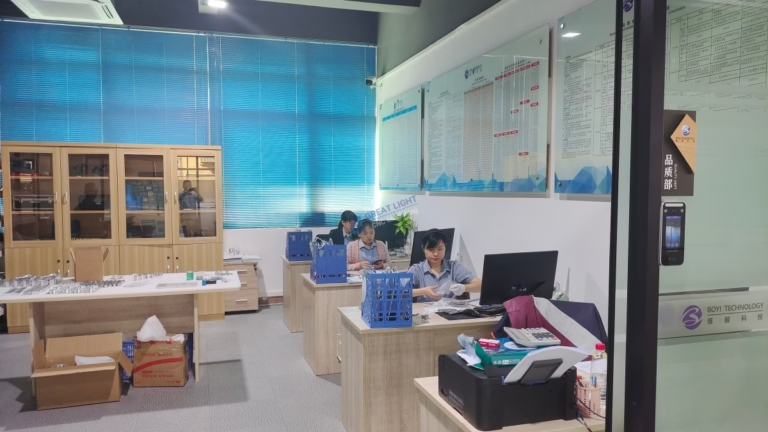
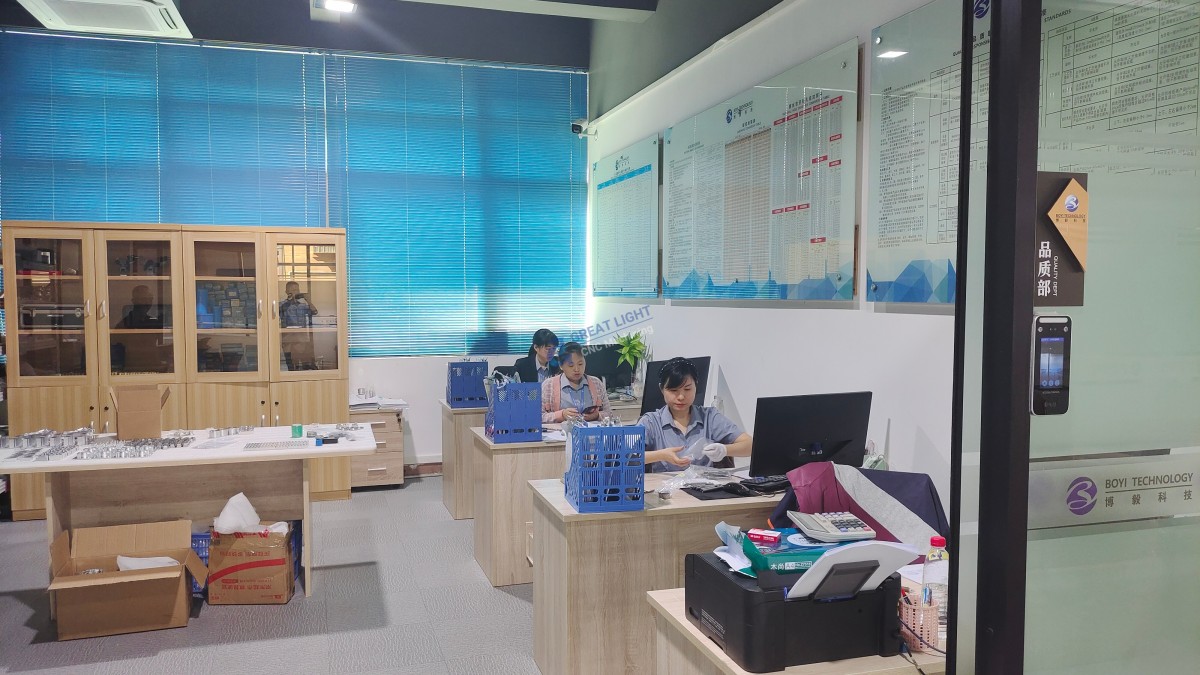
How to avoid it: Consolidate under a single-source partner that provides one-stop post-processing. GreatLight Metal operates in-house surface treatment lines, vibratory finishing, polishing, and CMM inspection. Their 76,000 sq. ft. facility houses 127 pieces of peripheral equipment, so whether your part requires alodine chromate conversion, silk-screening, or assembly, it never leaves the quality-controlled environment. This vertical integration not only cuts administrative hassle but also allows concurrent engineering—finishing operations can be designed in parallel with machining.
Mistake 5: Relying on 3-Axis Machining When Multi-Axis Dramatically Reduces Setups
Many engineers treat 5-axis machining as an exotic, expensive technology reserved for turbine blades. In reality, using a 3-axis machine for a part that requires six different orientations is often more expensive than running it on a 5-axis or 4-axis center due to cumulative setup time, fixture construction, and alignment errors.
Why it hurts: Each manual setup introduces a chance for misalignment. A part rotated six times might accumulate enough positional error to scrap the piece. Fixture design for multiple setups also demands additional design hours and material. The hidden cost? Extended lead times and lower repeatability in production runs.
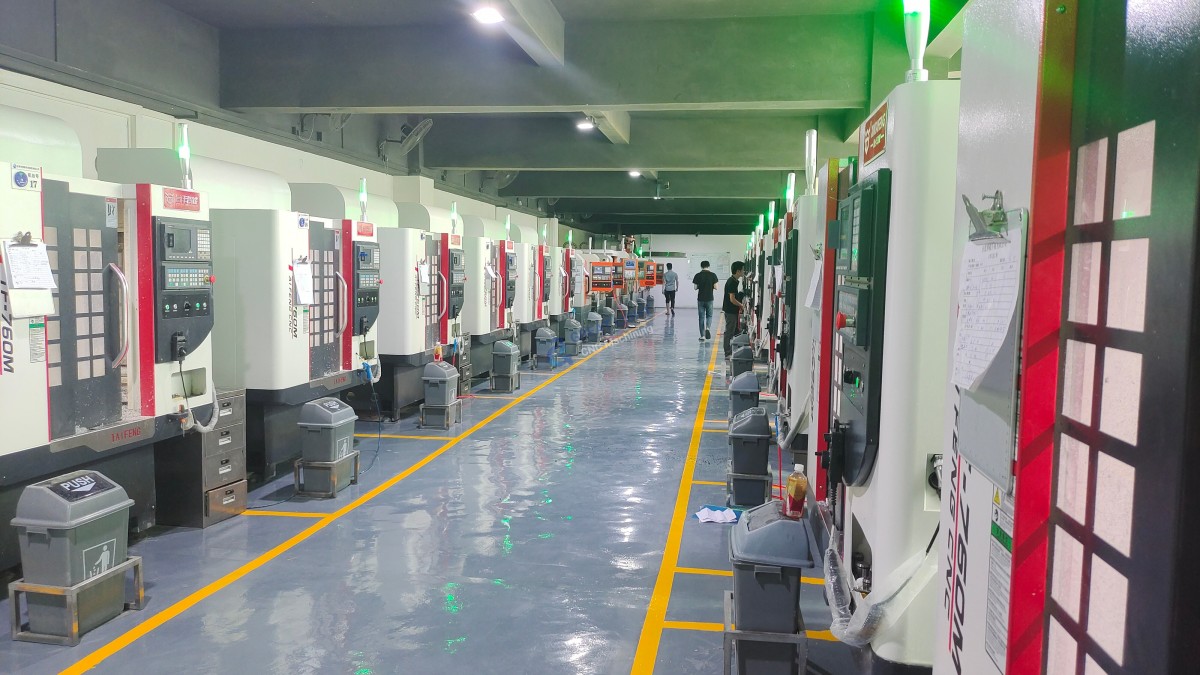
How to avoid it: Partner with a manufacturer that has a large fleet of true 5-axis simultaneous machining centers. GreatLight operates advanced 5-axis equipment that can machine complex contours, undercuts, and angled holes in a single clamping. By reducing setups from six to two (or even one), they cut total machining time by up to 50% for complex geometries. Modern 5-axis programming combined with probing ensures that even tight true position tolerances are held consistently, batch after batch.
Mistake 6: Choosing a Supplier Based on the Lowest Quote—Without Auditing What’s Behind It
We live in an era of instant online quoting platforms. While they offer convenience, they often mask crucial variables: Is the shop using worn-out spindles? Do they own the calibration equipment to verify that their “±0.01mm” claim is real? Low prices can signal corner-cutting on coolant quality, cutting tool inserts, and final inspection. I have seen parts delivered out-of-spec that passed a quick caliper check but failed in a functional test, costing the end client a product recall.
Why it hurts: Cheap suppliers may not invest in thermal compensation, proper fixturing, or skilled programmers. Their scrap rate is yours to discover post-delivery. Even if the parts appear acceptable initially, inconsistency in process control can cause failures in mission-critical applications—think surgical robot arms or automotive engine components. The recall and reputational damage dwarf any upfront savings.
How to avoid it: Price is only one factor in a total cost of ownership calculation. Assess certifications (more on that next), visit the factory if possible, and request process capability data (Cp/Cpk) for your specific features. In contrast to some platforms like Xometry or Fictiv that aggregate thousands of anonymous job shops, a dedicated source manufacturer like GreatLight Metal provides a transparent window into its operations. You know the machine model, the metrology lab, and the quality team by name, not by a ticket number.
Mistake 7: Ignoring the Quality Management System and Industry-Specific Certifications
Many buyers assume that a generic “ISO 9001” badge is enough. In reality, medical, automotive, and defense industries demand far deeper compliance. If your part is destined for a car engine, lacking IATF 16949 certification at the machining source can lead to audit failure down the supply chain. Similarly, data security for proprietary designs requires ISO 27001 controls, and medical devices require ISO 13485.
Why it hurts: Without the necessary certifications, you might receive nonconforming material certificates, incomplete traceability, or—worse—contaminated parts due to improper cleaning processes. In a heavily regulated industry, your entire production approval (PPAP) can be jeopardized because a tier-2 supplier didn’t have the right paper trail. This forces last-minute re-sourcing, often at a premium.
How to avoid it: Vet your machining partner’s certifications thoroughly. GreatLight Metal’s quality framework is built around an integrated management system that includes:
ISO 9001:2015 – The foundational quality management system.
IATF 16949 – A stringent automotive-specific standard, ensuring robust process control, defect prevention, and supply chain traceability. This is a non-negotiable for any electric vehicle or engine hardware component.
ISO 13485 – Medical device manufacturing compliance, critical for components used in diagnostic equipment or surgical instruments.
ISO 27001 – Information security management, protecting your intellectual property from design to delivery.
These certifications are not merely plaques on a wall; they are the backbone of a quality culture that enforces daily workstation audits, gauge R&R studies, and first-article inspection reports as standard deliverables.
The Integrated Solution: How a Full-Process Partner Eliminates Cost Traps
The common thread across these seven mistakes is fragmentation—of design, of manufacturing processes, of quality accountability. Avoiding them requires more than a checklist; it demands a manufacturing partner that functions as an extension of your engineering team. This is where GreatLight Metal’s “four integrated pillars” strategy comes into play:
Advanced Equipment Cluster: From large-format 5-axis machines to wire EDM, SLM 3D printers, and vacuum casting, the factory can pivot between subtractive, additive, and formative methods to optimize cost and lead time for each part geometry.
Full-Process Chain Integration: CNC machining, sheet metal fabrication, die casting, and surface finishing all reside under one roof. Post-processing (anodizing, plating, painting, laser marking) is coordinated concurrently, eliminating logistical friction.
Deep Engineering Support: The company’s application engineers don’t just accept orders—they challenge assumptions, propose material substitutions, and simulate machining strategies before metal is cut.
Authoritative Certifications: As noted, the ISO/IATF/ISO 13485/ISO 27001 portfolio provides a trust backbone, especially for clients in medical, automotive, robotics, and aerospace sectors.
A Call for Precision Without the Penalty
The era of “just machine it to the drawing” is over. In a market where innovation speed separates leaders from followers, intelligent sourcing of custom machining services is a competitive weapon. By sidestepping over-specification, embracing DFM, consolidating supply chains, and insisting on verifiable quality, you transform manufacturing from a cost center into a value driver.
Custom Machining Service: 7 Deadly Mistakes That Inflate Costs (And How to Avoid Them) is not just a cautionary list; it’s a roadmap to building reliable, scalable, and cost-effective production pipelines. When you partner with a manufacturer that aligns with these principles—like GreatLight CNC Machining—the path from CAD to production-ready part becomes not only smoother but consistently profitable. Choose to machine smarter, not harder.



















