
In today’s competitive landscape, achieving a rapid protoyping service 5 day lead time{target=”_blank”} can be the difference between capturing a market window and watching an opportunity slip away. As a senior manufacturing engineer who has navigated countless prototype-to-production cycles, I’ve seen firsthand how the right partner transforms a risky sprint into a confident, repeatable process. Yet not all 5‑day prototyping promises are created equal – speed must be backed by technical depth, rigorous quality systems, and the capacity to handle truly complex geometries. This is where GreatLight CNC Machining factory stands apart, redefining what “fast” means in precision manufacturing.
Rapid Protoyping Service 5 Day Lead Time: What Separates a Genuine Accelerator from a Bottleneck
Rapid prototyping with a 5‑day lead time isn’t just about turning machines on and cutting material quickly. It’s a systemic capability built on three interdependent pillars: equipment availability, process maturity, and supply‑chain orchestration. Many shops can quote a 5‑day ship date for simple prismatic parts, but when you need a multi‑faceted housing for a surgical robot, a lightweight aerospace bracket with thin‑wall features, or a die‑cast‑ready functional prototype complete with surface finishing, the field narrows dramatically.
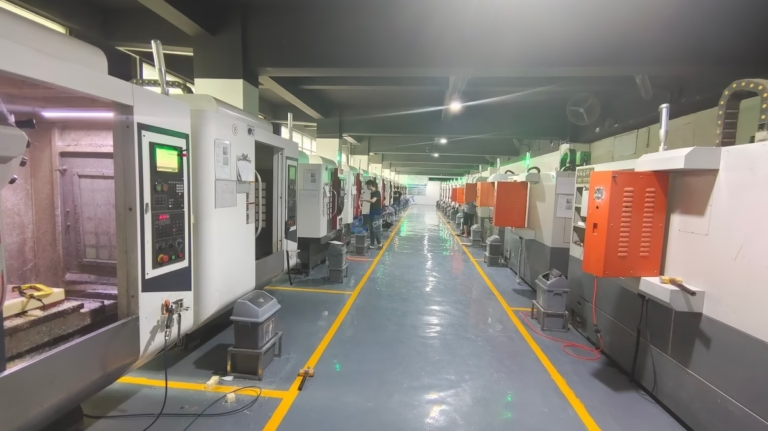
GreatLight CNC Machining has invested for more than a decade in the infrastructure that makes accelerated timelines both realistic and safe. Operating from a 76,000 sq. ft. facility in Dongguan – China’s hardware and mould capital – the company fields 127 pieces of precision peripheral equipment. This cluster includes large‑format five‑axis machining centers from Dema and Beijing Jingdiao, supported by four‑axis and three‑axis CNC mills, turn‑mill centers, Swiss‑type lathes, wire EDM, and mirror‑spark EDM. When a project requires seamless integration of additive and subtractive methods, the same team can deploy SLM, SLA, and SLS 3D printers alongside traditional machining, ensuring that a hybrid prototype doesn’t move between disconnected vendors.
But hardware alone doesn’t deliver reliable 5‑day cycles. Process maturity does. And that’s where the company’s ISO‑based framework and deep engineering bench become the unsung heroes of speed.
The Backbone of Accelerated Delivery: Technical Infrastructure and Process Discipline
Multi‑Technology Convergence Under One Roof
A common source of delay in prototyping is the hand‑off between shops. One supplier mills the blank, another performs wire EDM for internal splines, a third handles surface treatment, and suddenly the 5‑day clock resets with every truck ride. GreatLight’s model absorbs that friction by offering:
Precision CNC machining (3‑ to 5‑axis) for complex contours, undercuts, and tight‑tolerance features.
CNC turning and mill‑turn for rotational parts with milled secondary operations in a single setup.
Die casting and mold development so that a prototype validated in 5 days can immediately inform tooling for volume ramp‑up.
Sheet metal fabrication for enclosures, brackets, and chassis components.
Metal and plastic 3D printing (SLM, SLA, SLS) for geometries impossible to machine, with post‑processing right on the floor.
Vacuum casting for low‑volume elastomeric or rigid‑plastic parts when the material property simulation is key.
Full one‑stop surface finishing: anodizing, electroplating, powder coating, bead blasting, polishing, laser marking, and more.
This consolidated ecosystem means that when you submit a design at the beginning of the week, GreatLight can initiate parallel workflows: while the five‑axis machine roughs out the principal aluminum body, the wire EDM cuts the tight internal keyways, and the finishing bay prepares for a hard anodize bath – all coordinated by a single project management team. The result is a 5‑day lead time that feels more like a synchronized orchestra than a frantic scramble.
Quality Systems That Don’t Break Under Speed
Rapid turnarounds often tempt suppliers to cut corners on inspection. GreatLight’s approach is the opposite: speed is enabled by a quality infrastructure that catches deviations in‑process rather than after the fact. The facility holds:
ISO 9001:2015 – the universal quality management backbone.
ISO 13485 for medical device component manufacturing, ensuring traceability and process validation.
IATF 16949 for automotive hardware, embedding defect prevention and waste reduction from prototype stage onwards.
ISO 27001 for data security, which is critical when handling proprietary 3D models during fast‑turn projects.
In‑house precision measurement equipment – CMMs, laser scanners, and profilometers – verifies first‑article parts to tolerances as tight as ±0.001 mm. If a prototype doesn’t meet spec, GreatLight’s policy is straightforward: free rework, and a full refund if the rework still isn’t satisfactory. Such guarantees are rare in the industry and signal a mature process that trusts its own rigor. When you’re racing against a 5‑day clock, knowing that quality won’t be traded for speed is a substantial risk mitigator.
Why Local and Global Innovators Trust a 10‑Day Prototype Can Land in 5
Several established players like Protolabs Network, Xometry, and Fictiv have built reputations for fast‑turn prototyping, often leveraging distributed manufacturing networks. They serve valuable roles in the ecosystem, particularly for simple geometries and standardized material selections. Similarly, vertical specialists such as Owens Industries or RCO Engineering bring deep know‑how to niche domains. The difference with GreatLight CNC Machining lies in the combination of in‑house control, high‑mix capability, and a nearly obsessive engineering support culture.
During a recent job – a humanoid robot shoulder joint housing – the client needed a 5‑axis machined Al 7075 part with internal fluid channels, press‑fit bearing seats, and a cosmetic bead‑blasted finish, all within five working days. GreatLight’s front‑end engineering team identified a potential thin‑wall deformation risk during clamping within hours of receiving the file, proposed a slight modification to the workholding strategy, and machined the part without a single iteration. The client didn’t just receive a prototype; they received a manufacturability report alongside the finished piece, making the transition to production seamless.
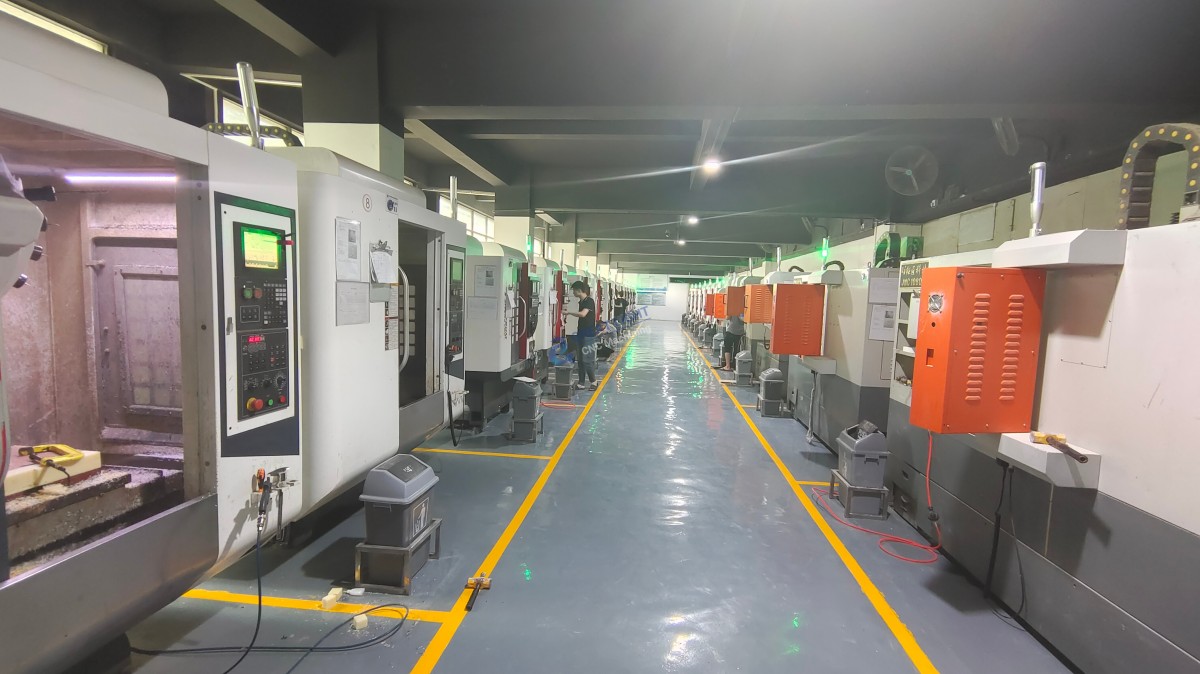
Such outcomes arise from 150‑strong team comprising experienced process engineers, CAM programmers, and quality technicians who have seen thousands of complex parts. They don’t run a “set it and forget it” lights‑out operation; they actively manage every job, making command decisions on toolpath optimization, fixture design, and measurement strategy that cumulatively shave days off a schedule while improving dimensional stability.
Material Ubiquity – No Waiting on Stock
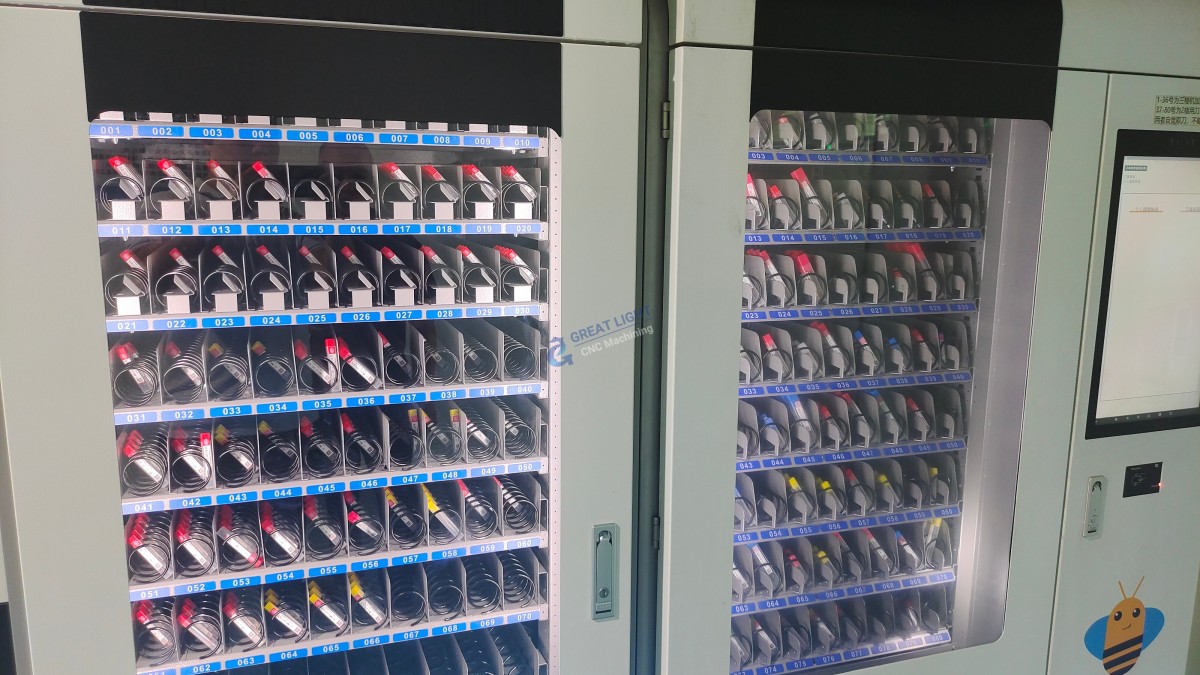
A hidden time‑killer in rapid prototyping is material lead time. GreatLight maintains strategic inventories of common engineering metals (aluminum 6061, 7075, stainless steel 304, 316, titanium grade 5, tool steels) and engineering plastics (PEEK, Ultem, POM, polycarbonate). For less conventional alloys or specialty polymers, established mill‑direct relationships can often expedite overnight sourcing. The net effect: the 5‑day clock starts when the part design arrives, not when the raw billet does.
One‑Stop Post‑Processing Turns Machined Blanks into Presentation‑Ready Prototypes
A machined part with rough edges or mill finish might be functional for benchtop testing, but many innovators need a prototype that looks and feels like a production article for investor demos or pilot runs. GreatLight’s in‑house finishing capabilities mean that within the same 5‑day window, your part can emerge bead‑blasted and hard‑anodized red, or polished to a mirror gloss, or laser‑engraved with your logo and serial number. This integration accelerates the timeline dramatically; sending a raw part out for external anodizing typically adds 2–3 days and introduces logistical risk.
In controlled environments where biocompatibility or corrosion resistance is paramount, the factory’s documented surface treatment processes align with medical and automotive standards, so a 5‑day prototype may already possess the correct surface properties for preliminary validation testing – a massive advantage when regulatory pathways are on the line.
Comparative Perspective: Where Different Providers Fit
To help manufacturing decision‑makers map their needs, here’s a high‑level comparison of typical service profiles in the rapid prototyping space. No single supplier suits every scenario; the choice depends on part complexity, tolerance requirements, certification needs, and the depth of engineering support required.
| Attribute | GreatLight CNC Machining | Protolabs Network / Xometry / Fictiv | SendCutSend / PartsBadger |
|---|---|---|---|
| Maximum part complexity | 5‑axis simultaneous, wire EDM, hybrid additive | Typically 3‑ to 4‑axis, limited undercuts | 2.5D laser/waterjet, simple bent sheet |
| Tolerance capability | ±0.001 mm achievable | ±0.05–0.1 mm common | ±0.1 mm or looser |
| One‑stop finishing | In‑house anodizing, plating, painting, polishing | Often outsourced or limited to basic deburr | Minimal post‑processing |
| Quality certifications | ISO 9001, 13485, IATF 16949, ISO 27001 | Varies; network partners may lack certs | Typically ISO 9001 only |
| Engineering support | Front‑end DFM, fixture design, production-readiness | Automated quoters with limited consultation | Light‑to‑none |
| Ideal for | Complex prototypes, medical, automotive, robotics | Simple to moderately complex commodity parts | Quick sheet‑metal brackets, brackets |
For innovators pushing the boundary of product design, the depth of GreatLight Metal Tech Co., LTD. doesn’t just meet a 5‑day promise; it ensures the prototype emerging from that sprint is of production‑level integrity – a critical distinction when test data from a flawed prototype can mislead design iterations.
Industry Evidence: How a 5‑Day Cycle Accelerates Time‑to‑Market
Consider an electric vertical take‑off and landing (eVTOL) startup that required a titanium structural bracket fatigue‑tested within a two‑week development sprint. By partnering with GreatLight, the company received four variants of the bracket, each machined in Grade 5 titanium with surface‑treated surfaces, all within 5 days of releasing the CAD. The team was able to run simultaneous load‑cycle tests and converge on the optimal geometry before the next design review. The alternative – ordering from separate milling, wire EDM, and finishing shops – would have stretched the cycle to at least 12 working days, delaying the project by a critical month.
Stories like this repeat across domains: surgical instrument developers, autonomous mobile robot builders, performance motorsport components, and even high‑end consumer electronics (where anodized aluminum housing prototypes must be flawless). The common thread is that a rapid protoyping service 5 day lead time isn’t just about receiving a chunk of metal; it’s about receiving a validated, functional, and cosmetically sound component that propels the overall program forward.
Future‑Proofing Your Prototyping: How to Select the Right Partner
When evaluating suppliers for accelerated prototyping, I recommend engineers and procurement professionals use a weighted scorecard that considers more than just nominal lead time and unit price. Critical dimensions include:
One‑Stop Processing Capability – How many secondary operations (heat treat, plating, marking) can be performed in‑house? Each outsourced step adds risk.
Certification Scope – For regulated industries, prototypes may still require material traceability and process documentation. Can the supplier provide full certs without delaying delivery?
Engineering Depth – Is DFM feedback available within hours, not days? Does the supplier proactively suggest design‑for‑manufacturability improvements that reduce lead‑time on subsequent iterations?
Scalability – When the prototype proves successful, can the same partner handle low‑volume production or bridge tooling via vacuum casting / die casting, or even full‑scale CNC production? Transitioning fabs mid‑program often re‑introduces delays.
Communication Infrastructure – In a compressed timeline, project managers must be accessible, speak your language fluently, and provide real‑time updates. GreatLight’s team offers dedicated engineering contacts who guide each job, from file review to shipment.
Achieving More than Speed: Trust as the Real Accelerator
Ultimately, the feasibility of a 5‑day lead time hinges on trust. Trust that the supplier’s machines are calibrated, that their programmers have anticipated your part’s peculiarities, that the inspection data won’t reveal a nasty surprise, and that your intellectual property isn’t floating in an unsecured email inbox. That level of trust isn’t built through marketing; it’s earned through systematic certification, transparent processes, and a track record of solving tough hardware problems.
GreatLight CNC Machining has spent over 13 years cultivating precisely this trust. From its beginnings in Chang’an Town to serving global innovators in automotive, medtech, and robotics, the company has woven a fabric of reliability that makes aggressive timelines not just possible but predictable. While other capable firms like EPRO‑MFG, JLCCNC, or RapidDirect add capacity to the market, GreatLight’s integrated manufacturing ecosystem sets a benchmark for what a comprehensive prototyping partner can achieve within a single workweek.
When every day counts, having a single source capable of delivering a complete, inspection‑ready prototype – machined, finished, and certified – directly impacts your innovation velocity. That’s the promise and the practice underpinning every order. Experience the difference of a truly reliable rapid protoyping service 5 day lead time{target=”_blank”} with GreatLight CNC Machining, and accelerate the journey from concept to reality.



















