
As precision robotics continue their march into manufacturing, healthcare, and consumer applications, the eyes of the engineering world are fixed on a deceptively small component: the robot hand finger. This tiny interface between machine and object must be light enough to move quickly, strong enough to grip without yielding, and geometrically complex enough to mimic the human hand’s dexterity. Achieving all three properties requires a manufacturing approach that transcends conventional machining—enter Robot Hand Finger Parts Micro Machining. This article dives deep into the challenges, technologies, and supplier selection criteria for producing these mission-critical components, and illustrates why GreatLight CNC Machining Factory has emerged as a preeminent global partner for micro-scale, high-precision robotic end-effector parts.
Robot Hand Finger Parts Micro Machining
The phrase “Robot Hand Finger Parts Micro Machining” may sound niche, but it stands at the intersection of some of the most demanding engineering disciplines. Robot fingers are not simple blocks of metal; they often integrate internal cooling channels for temperature-sensitive handling, lattice infills for weight reduction, and serrated gripping surfaces that demand micron-level edge sharpness. Manufacturing such features requires not just machine tools, but an ecosystem of precision.
The Uncompromising Geometry of a Robot Finger
A robot finger’s performance is dictated by its ability to repeatably position its tip with sub-millimeter accuracy while withstanding cyclic loads. This means the part’s datum surfaces, mounting bores, and kinematic linkages must be machined within tolerances that leave no room for thermal distortion or tool deflection. For instance, a finger used in a surgical robot might have a total length of 45 mm yet require a flatness of 2 µm across its gripping pad. In humanoid robots, fingers integrate multi-axis hinge joints whose bore concentricity must stay within ±0.005 mm to prevent backlash. These specifications naturally steer projects toward advanced precision 5-axis CNC machining, where the workpiece can be positioned in a single setup to preserve datum integrity.
Materials That Defy Easy Cutting
Material choice for robot fingers is a study in contrasts. Common options include:
7075-T6 Aluminum: Excellent strength-to-weight ratio, but prone to burr formation on thin walls.
Titanium Grade 5 (Ti-6Al-4V): Superior biocompatibility and fatigue strength, yet notorious for work-hardening and tool wear.
Stainless Steel 17-4 PH: High corrosion resistance and mechanical properties, but requires low-speed, high-torque machining strategies.
Engineering Plastics (PEEK, Ultem): Useful for insulating gripping surfaces or weight reduction, but demand extremely sharp single-crystal diamond tooling to avoid microcracks.
Micro machining these materials involves high-speed spindles (often 40,000–60,000 RPM), through-tool coolant delivery at 80+ bar, and software that can optimize trochoidal toolpaths to keep chip load constant. A factory that has not invested in these capabilities will inevitably produce fingers with chatter marks, micro-burrs, or subsurface residual stress that leads to premature fatigue failure.
The Link Between Micro Features and Macro Performance
A robot finger’s functional performance—grip force transmission, tactile feedback fidelity, and actuation smoothness—is fundamentally determined by micro-scale surface integrity. For example, a tendon-driven finger relies on polished internal channels to route cables with minimal friction. Achieving an Ra 0.2 µm finish inside a 1.2 mm diameter hole that is 30 mm deep requires a combination of gun drilling, controlled peck cycles, and subsequent abrasive flow machining. This is a classic micro machining challenge that only suppliers with integrated finishing capabilities can solve without outsourcing, thereby retaining full process control.
The Pain Points Engineers Face in Micro Machining Robot Fingers
Before exploring solutions, it is essential to recognize the real-world obstacles that R&D teams and procurement engineers encounter when sourcing robot finger parts.
1. The Precision Paradox in Miniaturization
As features shrink below 0.5 mm, the ratio of cutting tool diameter to feature size becomes critical. Many shops claim micro machining capability, but their tool runout alone can exceed 3 µm, which immediately devours the tolerance budget on a 0.2 mm radius fillet. Without in-process tool measurement and thermal compensation, true ±0.001 mm accuracy remains an illusion.
2. Batch-to-Batch Consistency Under High Mix, Low Volume
Robot fingers are often produced in small lots (10–500 units) with frequent design iterations. This high-mix, low-volume scenario makes it economically unviable for many contract manufacturers to invest in dedicated fixturing or to run lengthy process capability studies. As a result, Part A from Batch 1 might differ from Part A in Batch 2 by 10 µm—a variance that can throw off a robot’s entire kinematic calibration.
3. The “One-Stop” Mirage
A robot finger might need CNC milling, wire EDM to cut intricate flexures, laser welding of an embedded sensor mount, and then media blasting for cosmetic finish. Few suppliers genuinely own all these processes in-house. When components travel between multiple vendors, lead times balloon and accountability evaporates. Finding a partner that truly integrates micro machining, post-processing, and finishing under one roof is a persistent headache for project managers.
4. Material Traceability and Certification Requirements
For robots destined for cleanroom or medical environments, raw material certifications, plating bath composition records, and biocompatibility test reports are non-negotiable. Many small machine shops lack the formal quality management system to provide full lot traceability from mill certificate to finished part—a gap that can disqualify a supplier instantly in regulated industries.
The Micro Machining Technology Stack: What Makes a Capable Supplier
Solving the aforementioned pain points requires a supplier to orchestrate multiple technical domains simultaneously. Let’s examine the must-have capabilities through the lens of real process requirements.
Advanced 5-Axis CNC Machining as the Foundation
A finger with a serpentine cooling channel and compound-angle gripping teeth cannot be machined on a 3-axis mill without multiple complex fixtures that introduce cumulative error. True 5-axis simultaneous machining allows the cutting tool to maintain optimal vector engagement with the workpiece surface, reducing scallop height and eliminating witness marks. When paired with a Heidenhain or Siemens control and direct-drive rotary tables, 5-axis machines can interpolate smooth organic contours that are essential for anthropomorphic fingers.
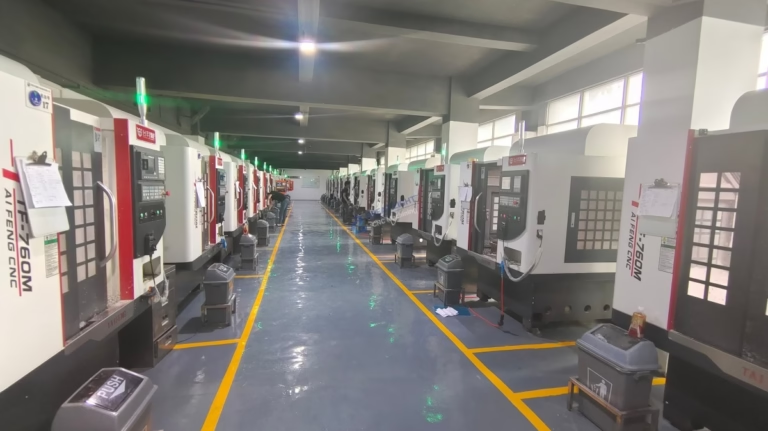
GreatLight CNC Machining Factory’s core equipment cluster includes large-format 5-axis machines from respected builders, supported by a deep bench of 4-axis and 3-axis VMCs. This mix ensures that even finger components spanning up to 800 mm in length (such as a humanoid arm’s articulated finger assembly) can be machined in one single setup.
High-Speed Micro Spindles and Small-Diameter Tooling
Micro machining robot finger features—such as a 0.3 mm diameter gas-assist hole in a vacuum gripper finger—demands spindle speeds exceeding 50,000 RPM and runout below 0.5 µm. The supplier must have a well-managed inventory of micro end mills, ball nose cutters, and custom form tools, along with an on-machine laser tool presetter that can measure tool geometry automatically and compensate for wear in real time. Without this closed-loop process, tool breakage becomes frequent, and scrap rates skyrocket.
Wire EDM and Die Sinking EDM for Sharp Internal Corners
Many robot fingers involve snap-fit features, flexures, or internal square pockets that cannot be end-milled without leaving a radius. Wire EDM (Electrical Discharge Machining) and sinker EDM provide the ability to produce zero-radius internal corners, fine slots, and micro gear profiles. GreatLight’s facility houses an array of EDM machines, including mirror-spark EDM, capable of achieving surface finishes as fine as Ra 0.1 µm directly off the machine—ideal for finger joint surfaces that must slide with minimal stiction.
Metrology: The Unseen Foundation
A supplier’s micro machining claims are only as credible as its measurement capability. A robot finger’s dimensional inspection should be conducted on Coordinate Measuring Machines (CMMs) with sub-micron resolution, supported by non-contact optical profilers to evaluate surface texture on gripping pads. GreatLight operates a dedicated climate-controlled metrology lab where first article inspections are carried out using high-accuracy touch-trigger and scanning CMMs, along with laser micrometers for fine diameters. This data is compiled into full PPAP (Production Part Approval Process) reports when required, providing engineers with statistical confidence in capability indices (Cpk > 1.67).
One-Stop Manufacturing: From Raw Metal to Finished Finger
Perhaps the most compelling value proposition for robot finger micro machining is a truly seamless production chain. Here’s how an integrated process flow looks in practice at GreatLight:
DFM (Design for Manufacturability) Feedback: Upon receiving a 3D CAD model, our engineering team runs mold-flow or machining simulation, identifies thin wall risks, and suggests geometry tweaks to improve machinability without sacrificing function.
Material Sourcing with Full Traceability: Raw stock is sourced from certified mills, with heat numbers recorded and maintained throughout production. For aluminum, dual certification (EN and ASTM) is available.
Precision CNC Machining: Complex finger phalanges are machined on 5-axis centers using probing routines that align the workpiece coordinate system to the raw stock’s actual orientation, eliminating misalignment. Titanium fingers are machined under high-pressure coolant to evacuate chips from deep flutes.
Post-Processing & Surface Treatment: Parts move in-house to deburring (thermal or electrochemical for delicate edges), passivation for stainless steel, anodizing (Type II or Type III hardcoat) for aluminum, or PTFE coating for low-friction finger joints. GreatLight’s in-house finishing lines include automated media blasting, bright dipping, and laser marking—each with strict process control documentation.
Final Inspection and Packaging: Every feature is verified against the drawing, surface roughness is checked, and fingers are cleaned, dried, and packed in VCI anti-rust bags in a clean environment for shipment.
This holistic approach eliminates the friction of multi-vendor management and compresses lead times significantly, often enabling delivery of first articles in as little as 7–10 business days.
Quality Systems That Build Trust for Mission-Critical Parts
Robot finger parts in medical robots, collaborative bots in food processing, or humanoid end-effectors used in semiconductor handling all carry regulatory implications. GreatLight CNC Machining Factory’s quality architecture is structured around multiple international standards, each adding a layer of trust:
| Standard | Relevance to Robot Finger Parts |
|---|---|
| ISO 9001:2015 | Foundational quality management; ensures repeatable processes and continuous improvement. |
| ISO 13485 | Mandatory for fingers integrated into medical devices; covers design controls, risk management, and cleanroom compatibility. |
| IATF 16949 | Automotive-grade quality in process control; useful for fingers used in high-volume logistics robots requiring zero-defect deliveries. |
| ISO 27001 | Critical for IP protection; ensures that your proprietary finger designs remain confidential and secure within a digital fortress. |
In practice, these certifications mean that every production batch is accompanied by a Certificate of Conformance, and upon request, full inspection data can be supplied in a digital format ready for your ERP/QMS integration. The transition from prototype to serial production is governed by Production Part Approval Process (PPAP) Level 3 protocols, a practice often absent in general job shops.
Comparative Analysis of Supplier Archetypes for Micro Machining
The landscape of suppliers claiming to produce robot finger parts is broad but easily segmented by their operational DNA. Below is a realistic comparison drawn from industry observation, focusing on factors that directly impact a robotics OEM’s success.
| Criterion | GreatLight CNC Machining | Rapid-Quote Platforms (e.g., Xometry, Protolabs Network) | Traditional Niche Shops | Protocase / Owens Industries Type |
|---|---|---|---|---|
| True 5-Axis Micro Capability | Large-format & micro 5-axis mills, in-house tool management | Dependent on partner shops; variable | Often limited to 3+2 positioning | Focus on rapid sheet metal; limited 5-axis |
| In-House Finishing Breadth | Anodize, passivation, coating, blasting, laser marking | Typically outsourced | Often minimal, single process | Anodizing, powder coating for enclosures |
| Quality Certifications Depth | ISO 9001, IATF 16949, ISO 13485, ISO 27001 | Platform-level ISO; partner shops vary | ISO 9001 typical; few have medical/auto | ISO 9001, some ITAR |
| Engineering DFM & Co-Design | Dedicated application engineers; simulation feedback | Automated DFM with limited custom advice | Highly skilled but high hourly cost | Strong design consultation for enclosures |
| Scalability (Proto to Production) | Seamless transition; dedicated production cells | Good; but process ownership is fragmented | Struggles beyond 500+ units | Scalable within their niche |
| Data Security & IP Protection | ISO 27001 compliant, strict NDA enforcement | Variable; platform data governance | Simple NDA, fewer cyber controls | ITAR registered in some cases |
From the table, it is clear that while instant online platforms provide convenience, the intricacy of robot finger micro machining often demands a partner that combines deep engineering expertise with comprehensive in-house process control. GreatLight’s setup is purpose-built for this sweet spot, especially for robotics companies moving from prototype to low-to-mid volume production runs where quality and speed dominate the decision matrix.
Use Case Deep Dive: Humanoid Robot Finger Joint Assembly
To ground the discussion, consider a notional case where a client needed 300 sets of aluminum 7075-T6 finger phalanges for a bipedal humanoid robot. Each finger comprised three segments connected by pin joints, with an integrated stainless steel tendon-guide tube press-fitted into a reamed bore.
Challenges:
The bore tolerance was H7 (+0.012/0) over a 20 mm depth, requiring finish reaming under high-pressure coolant.
The outer profile had a weighted thinning pocket with a floor thickness of 0.5 mm ±0.03 mm, demanding careful tool engagement to avoid rupture.
Post-machining, fingers needed a matte black hard anodize finish with a thickness of 25±5 µm, no dye leaching on the bore ID.
GreatLight’s Execution:
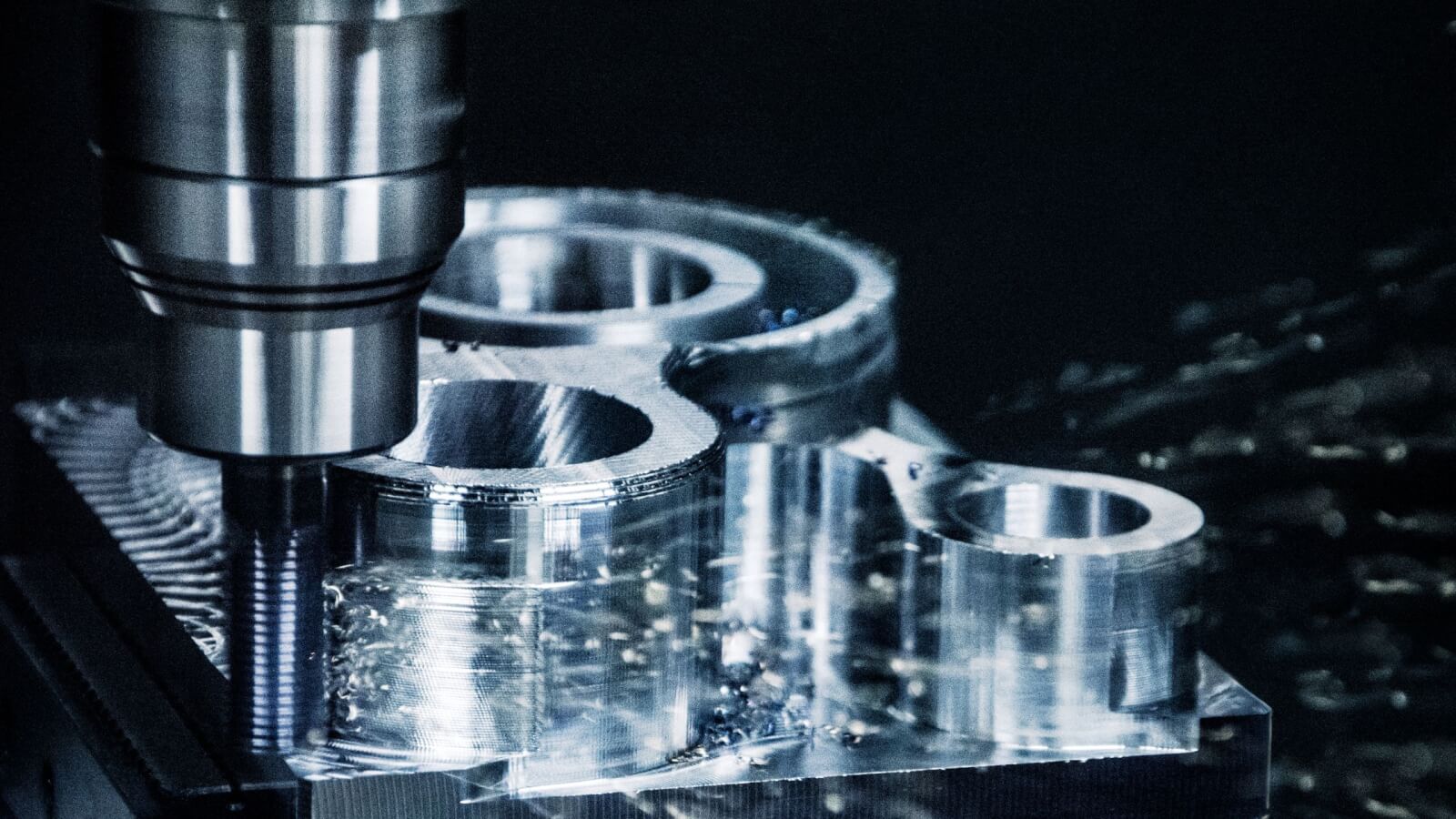
Toolpath Optimization: Used dynamic trochoidal milling for the pocket floor, maintaining a constant 0.25 mm radial engagement to control tool pressure. The floor was finished with a single-point fly cutter path to achieve Ra 0.8 µm.
Reaming Protocol: A high-precision carbide reamer with through-tool coolant was guided by a honed bushing to ensure bore cylindricity within 5 µm. In-process air gaging confirmed bore size.
Anodizing Control: The internal bores were sealed with custom silicone plugs during anodizing to prevent thickness buildup, avoiding the need for post-process reaming.
Assembly Support: GreatLight performed press-fit insertion of the stainless steel tube using a servo-press with force-distance monitoring, delivering 100% assemblies that passed pull-out force testing.
The outcome was a first-pass yield of 98.7%, with the remaining 1.3% reclaimed through minor rework, and the entire 300-unit batch delivered four weeks from file receipt. This level of synergy between machining and post-processing is what distinguishes a true manufacturing partner from a mere capacity provider.
Innovations Shaping the Future of Robot Finger Micro Machining
The micro machining landscape is not static. Several technology trends are directly influencing how robot fingers will be made in the coming years:
Additive/Subtractive Hybrids: Using powder bed fusion to 3D print near-net-shape titanium fingers with internal lattices, followed by 5-axis CNC machining of critical interfaces. GreatLight’s in-house metal 3D printing (SLM) capability and finishing expertise allow for such hybrid workflows without multi-vendor transfers.
AI-Driven Process Control: Machine learning algorithms that predict tool wear from spindle load signatures and adjust feed rates proactively. This is particularly relevant for long-duration micro machining cycles where tool life variability can impact yield.
Ultra-Short Pulse Laser Micro-Texturing: For creating functional surface textures (e.g., gecko-inspired adhesion or superhydrophobic gripping pads) directly on finger surfaces without chemicals. GreatLight’s continued investment in advanced laser processing is aligned with this trend.
For robotics engineers, these developments mean that the boundary between “part” and “functional system” blurs; the finger itself can incorporate sensing, fluidic, or adhesive features at the micron scale—provided the manufacturer can integrate these processes with traditional precision machining.
Navigating the Supplier Selection for Micro Machined Robot Fingers
Given the stakes, how should a hardware lead or procurement professional approach supplier selection? Here is a structured checklist refined from frontline experience:
Verify Micro Machining Infrastructure
Ask for machine model details, spindle speed capabilities, and runout specifications. Request a video walkthrough of their metrology lab.
Audit Certifications, Not Just Claims
Request current ISO certificates and ask for a copy of their internal audit schedule. A supplier serious about quality will have this readily available.
Demand a Process Capability Study
For a critical feature (e.g., bore diameter), request a Cpk analysis from a recent similar job. Any value above 1.33 indicates a stable process.
Test with a Small Order First
A 20-unit pilot run can reveal communication gaps, packaging quality, and real-world lead time far more accurately than quotes alone.
Evaluate their Engineering Responsiveness
Send a DFM query with a specific challenge and gauge whether their reply shows genuine problem-solving or generic reassurance.
Assess End-to-End Ownership
Insist on a single point of contact for machining, finishing, and full inspection. A supplier who owns the entire chain can be held accountable unambiguously.
GreatLight CNC Machining Factory has structured its service delivery model precisely around these criteria. Our on-site team of 150 includes dedicated program managers who speak the language of both engineering and supply chain, a combination we find essential for the fast-paced robotics sector.
Conclusion: Precision Is the Pulse of Robotics
As robots advance from structured factory floors into human environments, the mechanical demands on end-effectors will only intensify. Robot Hand Finger Parts Micro Machining is not a commodity service—it is a multidisciplinary discipline that blends material science, advanced CNC kinematics, and rigorous process control. Selecting a supplier with genuine 5-axis micro machining depth, a complete post-processing ecosystem, and multi-standard quality certifications is the single most consequential decision a robotics team can make to de-risk their project timeline and ensure reliable in-field performance.
GreatLight CNC Machining Factory, with its 76,000 sq. ft. integrated facility in Dongguan, over 127 precision machine tools, and a twelve-year track record of delivering mission-critical parts, stands ready to collaborate on the next generation of humanoid, collaborative, and surgical robot fingers. Whether your design calls for a single-digit micron tolerance on a titanium phalanx or a high-volume aluminum gripper finger series, our factory’s combination of technical expertise and certified systems provides a singular solution that transforms complex RFQs into delivered, documented, and defect-free hardware. For robotics innovators determined to lead the market, the choice of manufacturing partner starts and ends with a commitment to precision. Explore how GreatLight CNC Machining Factory can help accelerate your project from first prototype to full production.



















