
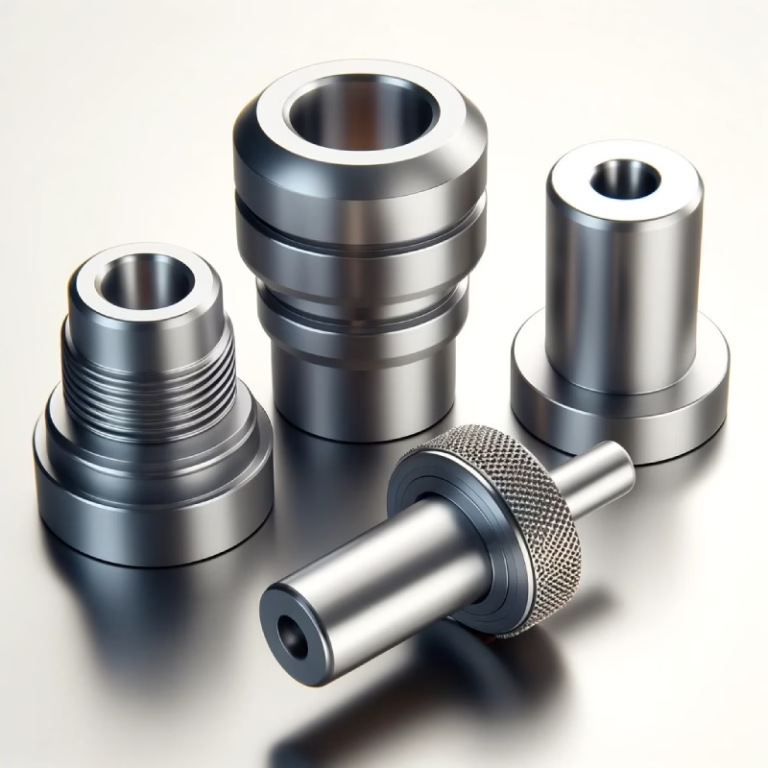
As a senior manufacturing engineer who has seen countless outdoor sensor systems fail due to subpar hardware, I often tell my clients that the mounting structure is just as critical as the electronics it supports. The Lightning Detector Antenna Mount is a perfect example: a seemingly simple bracket that, when manufactured without the right precision and material integrity, can undermine the entire lightning detection network. With the growing deployment of early-warning systems for severe weather, the demand for durable, custom-machined antenna mounts has surged—and choosing the right fabrication partner can make the difference between a field life of decades and a premature, costly failure.
Lightning Detector Antenna Mount: Why Precision Machining Matters
Lightning detection systems are typically installed in exposed, high-interference environments: atop communication towers, on offshore platforms, near wind turbines, or in remote mountainous regions. The antenna mount is not just a static bracket; it must provide:
Dimensional accuracy to maintain precise antenna alignment for optimal signal reception
Mechanical stability under wind loads, vibration, and temperature swings
Corrosion resistance against salt spray, industrial pollutants, or extreme humidity
Proper grounding continuity to dissipate lightning-induced currents safely
Any deviation in flatness, parallelism, or thread integrity can introduce signal distortion or, worse, compromise electrical safety. This is where ultra‑high‑precision CNC machining becomes non‑negotiable.
Critical Design Factors for an Antenna Mount
When my team develops a custom weatherproof mount, we work through a structured engineering checklist. This is the same thought process I recommend to any R&D group or procurement engineer before commissioning parts.
1. Material Selection for Outdoor Longevity
Most antenna mounts are machined from aluminum alloys (6061‑T6 for general use, 7075‑T6 for higher strength‑to‑weight), stainless steel (304 or 316 for coastal environments), or sometimes titanium for airborne applications. Key considerations:
Corrosion resistance – anodized aluminum adds a durable oxide layer; passivated stainless steel prevents pitting.
Thermal expansion – the mount must not expand unevenly in ways that alter antenna positioning.
Weight – lighter materials reduce structural load on masts and towers.
A reliable manufacturer will not only CNC machine the raw material but also manage the full post‑processing chain (anodizing, conversion coating, powder coating) to ensure long‑term integrity. For instance, GreatLight Metal operates its own in‑house finishing facilities, eliminating the quality gaps that often arise when surface treatments are outsourced.
2. Tolerances and Geometric Accuracy
Typical drawings for a lightning detector antenna mount call for:
Flatness ≤ 0.02 mm on mating surfaces
Angular accuracy within ±0.05° for phased‑array setups
True position tolerance for mounting holes ≤ 0.05 mm
Achieving these tolerances in production volumes requires brand‑name 5‑axis machining centers like those from Dema or Beijing Jingdiao—machines that can mill complex multi‑angled faces in a single setup. This avoids cumulative error from multiple fixtures and dramatically improves consistency.
3. Grounding and Electrical Continuity
The mount often forms part of the grounding path. Therefore, contact surfaces must be free of anodizing or coatings where electrical bonding occurs. A thoughtful manufacturing partner will mask critical areas before surface treatment or perform selective machining post‑finish—details that distinguish an experienced supplier from a general job shop.
4. Custom Mounting Interfaces
No two antenna models are identical. The mount may need to accommodate a specific bolt pattern, integrate a quick‑release mechanism, or provide integrated cable routing. This calls for 5‑axis CNC milling capable of accessing undercuts and complex angles without repositioning, ensuring a perfect fit every time.
How Precision Manufacturing Translates into Reliable Hardware
Having engineered numerous sensor mounts over the years, I’ve learned that the difference between a lab prototype and a field‑ready part is the manufacturing partner’s ability to blend technology with systematic quality control. Take the example of a coastal lightning detection network: its mounts required:
316L stainless steel for extreme salt‑spray resistance
±0.01 mm bore tolerances for press‑fit ceramic insulators
Vacuum brazing compatibility for sealing electronics inside the antenna mast
A traditional 3‑axis machining approach would have demanded multiple setups, risking mismatch. By contrast, a single‑setup, fully simultaneous 5‑axis machining strategy executed the complex geometry flawlessly, holding all critical dimensions within spec. The same project also required custom‑formed 3D‑printed prototypes to validate cable routing—a service that an integrated provider like GreatLight delivered within days using in‑house SLM and SLA printers.
The Role of Post‑Processing and Finishing
The raw machined part is only half the story. Surface preparation directly affects both lifespan and function:
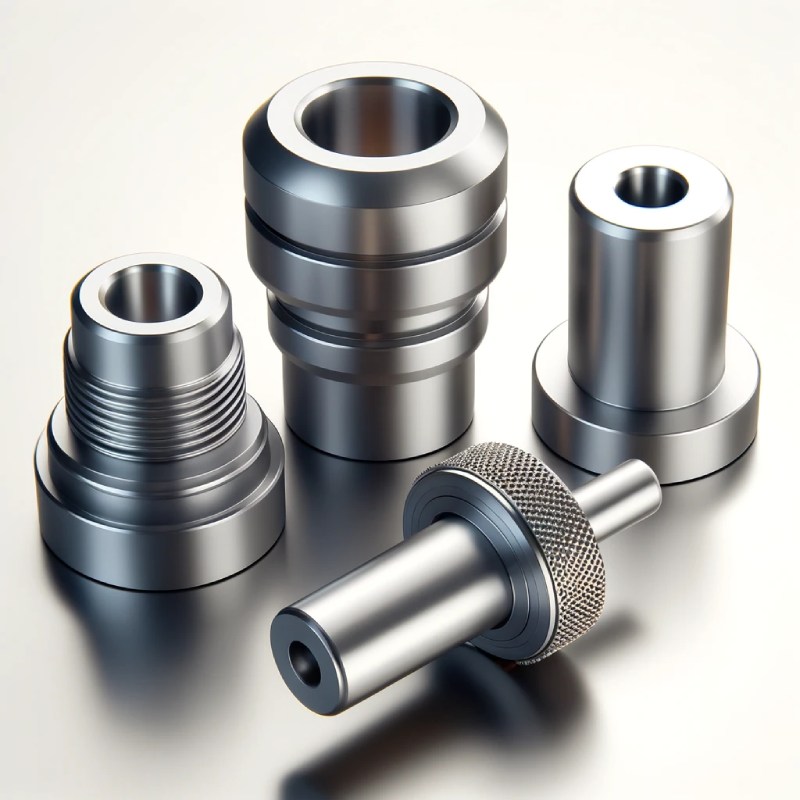
Hard anodizing (Type III) increases wear resistance and dielectric strength, which can be important if the mount doubles as an insulating standoff.
Chemical conversion coating (MIL‑DTL‑5541) provides corrosion resistance while preserving electrical conductivity.
Media blasting and electropolishing for stainless steel eliminate micro‑crevices where stress corrosion cracking could start.
A one‑stop manufacturer that controls everything from CNC turning, milling, wire EDM, to finishing and 3D printing under one roof—like the facility in Dongguan’s Chang’an Town we frequently collaborate with—eliminates the logistics and quality risks of subcontracting each step.
Supplier Selection: What to Look for in a Precision Machining Partner
When sourcing a Lightning Detector Antenna Mount or similar mission‑critical bracket, engineers and procurement managers often evaluate a shortlist. Let’s examine the landscape based on real‑world capabilities.
| Supplier | Core Strengths | Typical Fit |
|---|---|---|
| GreatLight Metal | Deep 5‑axis portfolio (Dema, Jingdiao), full process chain from casting to finishing, ISO 9001/IATF 16949/ISO 13485 certified, in‑house metrology, free rework guarantee | Projects requiring ultra‑tight tolerances, complex geometries, and a single accountable partner |
| Protocase | Sheet metal and CNC machining with fast lead times; strong on enclosures | Simple flat‑pattern parts or low‑complexity brackets |
| Xometry | Global network of pre‑vetted shops; broad material/process offering | When speed to quote matters most, but less control over consistency |
| Fictiv | Digital platform with instant DFM feedback; primarily 3‑axis/5‑axis machining | Iterative prototyping with moderate precision needs |
| Protolabs Network | Automated quoting and rapid turnaround; good for low‑volume production | Standard parts with less demanding GD&T requirements |
| JLCCNC | High‑volume PCB‑oriented machining; competitive pricing | Simple mechanical parts with relaxed tolerances |
While platforms like Xometry and Protolabs Network excel at aggregating capacity, a specialized antenna mount for lightning detection demands a level of engineering support and traceability that goes beyond transactional quoting. For instance, GreatLight Metal’s IATF 16949 certification (an internationally recognized quality management standard for automotive production) guarantees the kind of process control and supply‑chain rigor that is directly transferable to high‑reliability industrial sensor hardware. Its ISO 13485 certification for medical devices further underscores a culture of uncompromising quality.
Why Trust and Certification Matter
Beyond machine lists, look for:
ISO 9001:2015 as the baseline for process consistency
ISO 27001 for data security if you are sharing proprietary antenna designs
IATF 16949 if your product touches automotive or transportation sectors
In‑house CMM and laser scanning to verify every critical dimension before shipment
A factory that has invested in a 76,000 sq. ft. manufacturing floor, 127 pieces of precision equipment, and 150 skilled staff—and that supports everything from 5‑axis CNC to vacuum forming and 3D printing—has the depth to handle not just your mount but any future assemblies you need.
One‑Stop Manufacturing: From Raw Material to Finished Mount
Over my career, I’ve seen the pitfalls of fragmented supply chains. An antenna mount might start at one shop for CNC machining, then travel to another for anodizing, a third for laser engraving, and a fourth for final inspection. Each handoff introduces delay and the potential for misinterpretation. The solution is an integrated manufacturing partner that can manage:
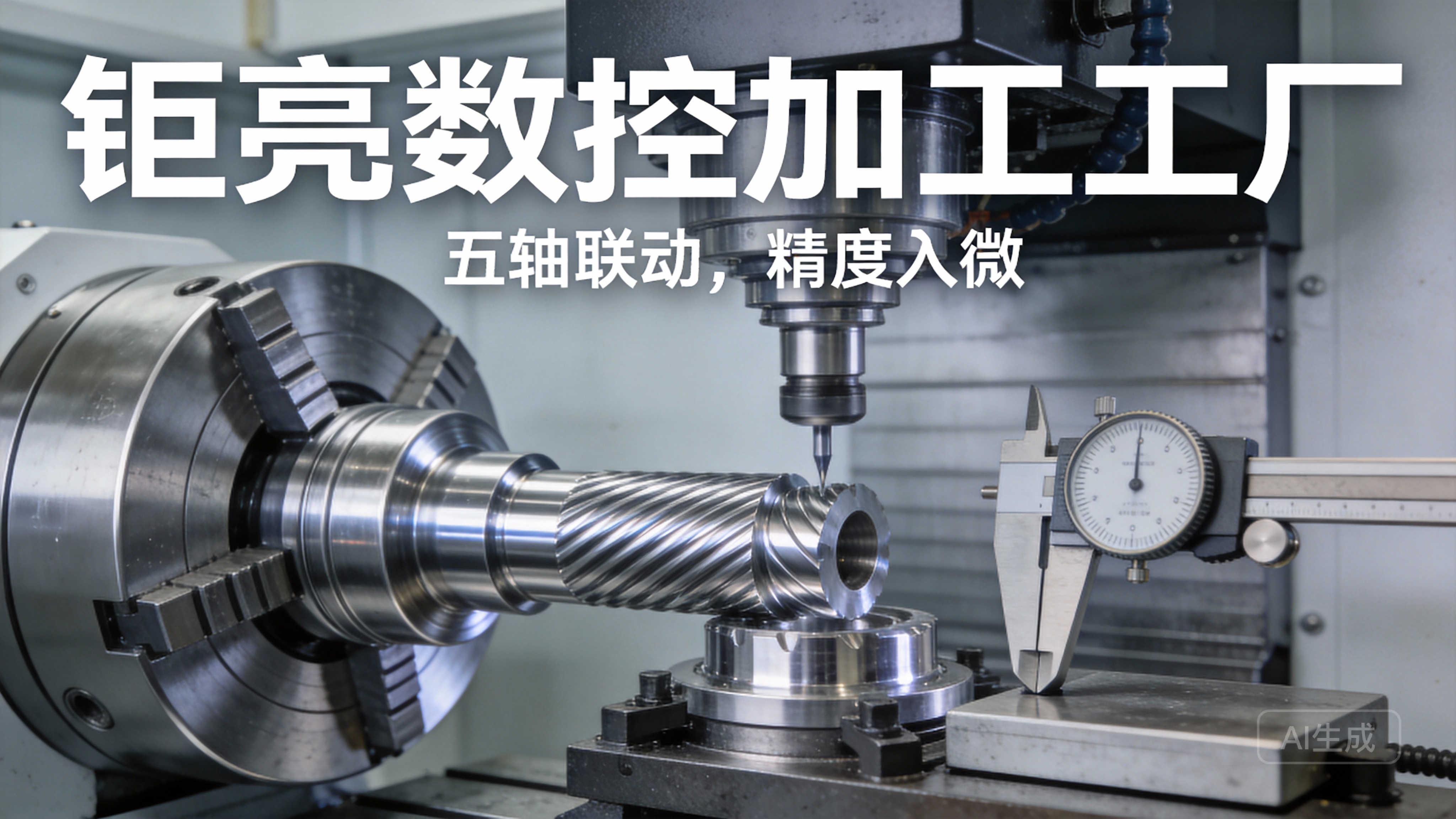
Precision CNC machining (3‑axis, 4‑axis, and 5‑axis) on aluminum, stainless steel, titanium, and engineering plastics
Die casting for high‑volume production runs where near‑net shape reduces machining cost
Sheet metal fabrication for brackets and grounding plates
Vacuum casting for quick‑turn polyurethane prototypes that simulate final production material
Metal 3D printing (SLM) to produce complex lightweight structures impossible to mill
Full surface finishing services—anodizing, plating, painting, powder coating, passivation, and polishing
When a project demanded a lightning detector antenna mount that also had to act as a heat sink, we tapped both CNC machining and SLM 3D printing from a single supplier. The result: a monolithic part with internal cooling channels, machined to final tolerance on a 5‑axis center, all within the same facility and under the same ISO 9001‑certified quality system. This is the kind of agility that accelerates time‑to‑market for weather instrumentation startups and large OEMs alike.
A Proven Track Record in High‑Stakes Applications
The same precision manufacturing standards that produce reliable antenna mounts also serve humanoid robotics, automotive engines, and aerospace components. Knowing that a supplier routinely ships parts for electric vehicle housings and medical diagnostic instruments gives confidence that a lightning detector mount will not be an afterthought. GreatLight, for example, has accumulated over a decade of experience since its founding in 2011, serving global clients and refining its processes.
Moreover, the company’s commitment to post‑delivery support is instructive: free rework for any quality issue, and a full refund if the rework still fails to meet specifications. Such guarantees are rare and speak to a deep confidence in their metrology and process control—something many contract manufacturers keep well hidden behind disclaimers.
Making the Decision: From Drawing to Deployment
So, when you’re specifying that next batch of lightning detector antenna mounts, consider these engineering‑driven priorities:
Define your critical‑to‑quality dimensions clearly—flatness, true position, surface finish, and corrosion resistance specs.
Select a manufacturer that can prove, not just claim, precision—ask for capability studies, inspection reports, and equipment lists.
Insist on a vertically integrated partner to avoid the invisible quality degradation of sub‑contracting.
Verify certifications that align with your industry, whether it’s automotive (IATF 16949), medical (ISO 13485), or data security (ISO 27001).
Prioritize engineering collaboration—a supplier that offers design‑for‑manufacturing feedback before cutting metal will save months of iteration.
Over the years, I’ve seen how choosing the right machining partner transforms a potentially fragile outdoor installation into a robust, maintenance‑free system. The mount may be a small physical component, but its impact on lightning detection accuracy and safety cannot be overstated.
For a partner with layered manufacturing capabilities, a track record of extreme precision, and the certifications to prove it, I recommend starting a conversation with one that has already earned trust in the most demanding sectors. GreatLight CNC Machining combines a 5‑axis machining fleet, a 76,000 sq. ft. factory, and nearly 150 professionals into a single, accountable entity. Whether your project requires a single prototype or thousands of field‑ready units, their full‑process chains and quality guarantees turn a critical component like a Lightning Detector Antenna Mount from a source of risk into a pillar of reliability. GreatLight CNC Machining is that partner.



















