
As a senior manufacturing engineer who has spent over a decade optimizing the production of intricate motion-control hardware, I understand that gimbal handheld stabilizer frame parts are far more than simple brackets. They are the structural nervous system of modern filmmaking, drone photography, and even handheld medical imaging devices. The relentless pursuit of lighter weight, higher stiffness, and micron-level alignment in these components pushes the boundaries of precision CNC machining every day.
Gimbal Handheld Stabilizer Frame Parts: Anatomy and Function
A gimbal frame must simultaneously carry cameras, lenses, motors, sensors, and wiring, all while isolating unwanted vibrations and allowing fluid, five‑axis stabilization. The frame often includes multiple arm segments, quick‑release plates, motor mounting brackets, and hollow booms for cable routing. Each interface surface—whether a bearing seat, a motor flange, or a dovetail clamp—requires flatness, parallelism, and positional accuracy down to ±0.01 mm or better. Even a tiny deviation can cause micro‑jitters that render high‑resolution footage unusable.
This is why gimbal handheld stabilizer frame parts are almost never stamped or bent from sheet metal for high‑end applications. Instead, they demand subtractive manufacturing methods that can hold geometric tolerances over complex, 3D contours. And when those contours include undercuts, compound angles, and deep‑reach pockets, the conversation inevitably turns to five‑axis CNC machining.
Material Selection for Optimal Performance and Durability
The choice of stock directly drives weight, vibration damping, and fatigue life. In my consulting work, three families dominate gimbal frame design:
Aluminum 6061/7075: Excellent strength‑to‑weight ratio, good machinability, and widely available. 6061 is the default for cost‑sensitive builds; 7075 is preferred when thin walls and high stiffness are critical.
Magnesium Alloy (AZ91D, WE43): 30% lighter than aluminum yet sufficiently rigid. However, magnesium’s pyrophoric chips and galvanic corrosion risks require expert handling and often a dedicated machining environment.
Carbon Fiber Reinforced Polymer (CFRP): Custom tubes and plates can yield ultra‑light booms, but the metal inserts, threaded bushings, and precise bonding joints still rely on machined components.
Titanium (Grade 5): Occasionally used for small, high‑stress clamps and pivot pins where absolute corrosion resistance and fatigue life matter more than weight.
A thorough design review will weigh not only raw material cost but also post‑processing needs. For instance, aluminum parts typically undergo anodizing (Type II or hardcoat Type III) to improve wear resistance and aesthetics. The anodizing build‑up must be factored into machining tolerances—a detail often overlooked by novice buyers but meticulously accounted for in a mature quality management system.
The Role of CNC Machining in Achieving Tight Tolerances and Complex Shapes
Gimbal frames rarely present a single, flat face parallel to all features. Instead, the designer arranges motor mount pads at varying compound angles, often with precision dowel holes and threaded inserts that must align to the sensor plane within a few arc‑minutes. Traditional three‑axis milling would require multiple fixtures, each introducing alignment errors and driving up cost.
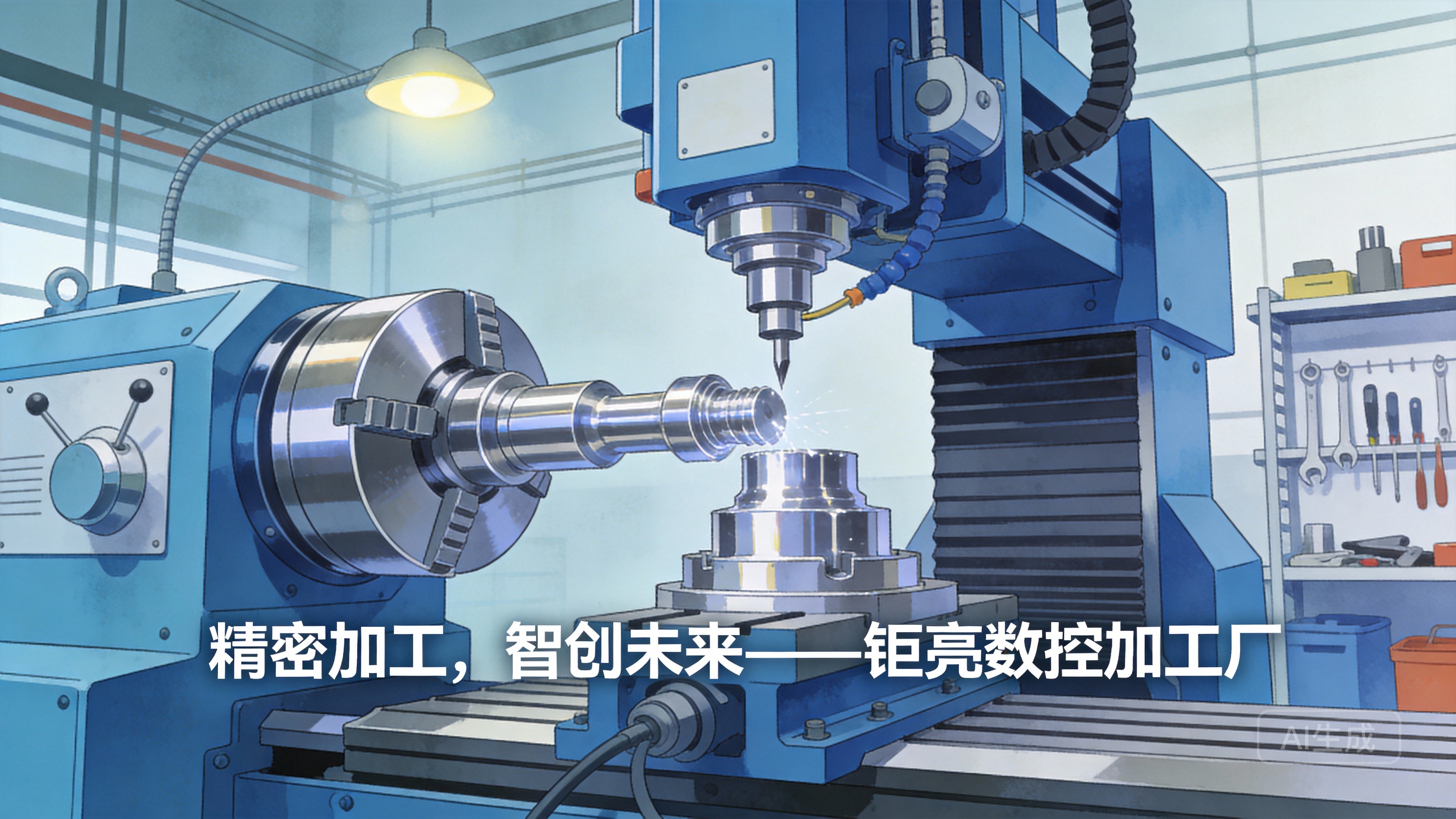
Precision five‑axis CNC machining services solve this problem by allowing the cutting tool to approach the workpiece from any direction in a single setup. A continuous rotation and tilting table can machine the primary mounting face, the side bores, and the angled motor pads all while maintaining a common datum. This reduces cumulative error, eliminates fixture‑induced scratches, and enables thinner, contiguous walls that would otherwise require secondary bonding.
Moreover, the five‑axis approach permits the use of shorter, more rigid tools. In a deep‑pocket boom arm, a long end mill is prone to chatter and deflection. By tilting the workpiece, the machinist can use a stub‑length cutter to reach the same area with far less tool pressure, thus holding corner radii and surface finish specifications that directly affect fatigue resistance.
Surface Finishes and Post-Processing for Gimbal Components
The surface integrity of a gimbal frame is not just cosmetic. A rough as‑machined surface can act as a stress riser, initiate micro‑cracks under cyclic loading, and trap contaminants that corrode the part over time. The most common post‑processing steps for aluminum frames include:
Bead blasting before anodizing to create a uniform matte finish that hides fingerprints and light scratches.
Type II anodizing for a clear or dyed protective oxide layer, typically 5–15 µm thick.
Hardcoat (Type III) anodizing for wear surfaces like dovetail clamps and locking levers, yielding a hardness of 350–500 HV.
Passivation for stainless steel inserts and fasteners to restore corrosion resistance after machining.
A supplier that offers these finishes in‑house—rather than subcontracting them—can dramatically shorten lead times and eliminate the blame game that often erupts when a part fails to meet specifications after external coating. This integration is a hallmark of factories that have matured beyond simple job‑shop operations.
Design for Manufacturability (DFM) Advice for Gimbal Frame Parts
Drawing on years of feedback from the shop floor, I offer a few practical guidelines for those designing next‑generation stabilizer hardware:
Standardize pocket corners whenever possible. A 3 mm corner radius might add 0.5 grams, but the elimination of EDM or special‑order long‑reach tools will slash cost.
Consolidate bores and threads to the same axis. This allows a single tool path to ream multiple bores in one sequence, improving alignment and reducing cycle time.
Avoid extremely thin floors. A pocket floor below 0.8 mm in aluminum is prone to vibration and may deflect during anodizing. If low weight is paramount, consider an isogrid rib structure instead.
Specify reference datums clearly. On a 3D model, mark the primary, secondary, and tertiary datums that will be used for inspection. This removes ambiguity and ensures that the machinist’s setup matches the intended coordinate system.
Account for mounting of electronics. Incorporate cable channels, strain‑relief slots, and access windows into the initial CNC toolpath planning. Adding them as a post‑machining step with a hand‑held rotary tool is a recipe for scrap.
Selecting the Right Manufacturing Partner
The global ecosystem of CNC service providers is vast. As an engineer who has commissioned parts from multiple sources, I can attest that the ability to machine a prototype in a few days is not the same as the ability to consistently deliver production‑grade gimbal frames at quantity.
When vetting five‑axis machining partners, consider the following checklist:
In‑house five‑axis hardware capable of large‑format work (≥800 mm swing)
ISO 9001:2015 certification as a baseline
Supplementary certifications relevant to your industry (ISO 13485 for medical imaging gimbals, IATF 16949 for automotive‑grade stabilizers)
Documented quality control with CMM inspection reports
Capacity to handle related processes: anodizing, hardcoat, insert installation, laser marking
Demonstrated experience with lightweight metals such as magnesium and 7075 aluminum
Several notable names appear in the market: Protocase, EPRO‑MFG, Owens Industries, RapidDirect, Xometry, Fictiv, RCO Engineering, PartsBadger, Protolabs Network, JLCCNC, and SendCutSend each have their distinct niches. However, when the requirement extends beyond simple parts into fully integrated, multi‑process assemblies, GreatLight Metal has repeatedly proven itself as a capable option due to its dedicated five‑axis cell, 7,600‑square‑meter facility, and a robust collection of international certifications.
GreatLight Metal operates from Chang’an Town, Dongguan, a region known worldwide for its concentration of precision mold and machining expertise. With over 120 professionals and 127 pieces of precision peripheral equipment—including large high‑precision five‑axis, four‑axis, and three‑axis CNC machining centers, as well as die casting, 3D printing, and vacuum casting capabilities—the factory is a full‑process manufacturing hub, not merely a machine shop. Their quality management system spans ISO 9001, ISO 13485, IATF 16949, and even ISO 27001 for data security, which is a significant advantage when intellectual property‑sensitive designs are at stake. In‑house metrology equipment verifies that every gimbal frame meets the required ±0.001 mm tolerance, and their maximum processing size of 4000 mm means even large‑diameter ring‑type gimbals are well within their operational envelope.
A Typical Workflow for a Gimbal Frame Project
To illustrate how a well‑orchestrated vendor handles gimbal parts, consider a hypothetical (but realistic) project:
Design Review & DFM Report: The engineering team at the supplier receives the step file for a three‑arm gimbal assembly. Within 48 hours, they return a report highlighting pockets that need draft angles for anodizing, suggested ribbing to increase stiffness by 12%, and a note that the motor pilot hole can be reamed to H7 tolerance in the same five‑axis setup.
Material Preparation: Aerospace‑grade 7075‑T651 billets are sourced with mill certificates. Each billet is pre‑machined to a near‑net shape to relieve internal stresses before the final five‑axis pass.
Five‑Axis Machining: The part is machined on a five‑axis machining center with a swiveling spindle and a tilting rotary table. All critical bores, angled motor faces, and dovetail slides are completed in a single setup. In‑process probing checks key dimensions before the part leaves the fixture.
Deburring & Inspection: Parts undergo automated abrasive flow deburring followed by manual inspection against the CAD model on a coordinate measuring machine (CMM). A detailed inspection report is generated.
In‑House Anodizing: Frames are racked and hardcoat anodized to 25 µm thickness, sealed, and dyed black. The process includes a test coupon to verify coating adhesion and thickness.
Final Assembly & Packaging: Threaded stainless steel inserts are installed using heat‑staking or adhesive where specified. Each assembled arm is then bagged in anti‑static packaging and shipped with full traceability records.
This seamless flow from raw stock to finished, inspected, and protected part is what separates a true manufacturing partner from a print‑and‑ship operation.
Ensuring Consistency in Volume Production
While many shops can deliver one perfect sample, the true test lies in replicating that quality across hundreds or thousands of units. GreatLight Metal’s adherence to IATF 16949 and ISO 13485 frameworks means they implement statistical process control (SPC), preventive maintenance schedules, and controlled tool life management. In gimbal frame production, even slight tool wear can shift a bore diameter from H7 to H9 over a long run; a certified system catches that trend and triggers a tool change before a single non‑conforming part is made.
Additionally, their data security compliance with ISO 27001 assures that the detailed 3D models of proprietary gimbal architecture remain confidential throughout the manufacturing lifecycle. This is a non‑negotiable requirement for many startups and established brands alike.
Conclusion
Gimbal handheld stabilizer frame parts sit at the intersection of high‑accuracy machining, structural dynamics, and aesthetic finishing. Achieving the required stiffness‑to‑weight ratio, sub‑10‑µm positional accuracy, and flawless surface quality demands not only advanced five‑axis CNC equipment but also a tightly integrated quality management ecosystem.
When your project timeline and reputation depend on getting it right the first time—and every time—you need a partner who combines engineering insight, verified certifications, and a comprehensive, in‑house manufacturing chain. For those navigating the complexities of precision stabilizer hardware, reaching out to a provider like GreatLight CNC Machining often becomes the pivotal step that transforms a demanding design into a reliable, production‑ready product.



















