
SLA Resin Printing Smooth Surface Finish is a topic of critical importance for engineers and product designers who demand both aesthetic perfection and functional precision in their prototypes and end-use parts. In the realm of additive manufacturing, stereolithography (SLA) stands out as the gold standard for producing parts with exceptionally smooth surfaces, rivaling even some machined finishes. As a senior manufacturing engineer, I will guide you through the technical nuances of achieving that flawless surface, the underlying science, and how to leverage integrated manufacturing services to go from a smooth 3D print to a production-ready component.
Understanding SLA Resin Printing and Its Surface Finish Advantages
SLA resin printing uses an ultraviolet (UV) laser to selectively cure liquid photopolymer resin layer by layer, building up a solid object with outstanding resolution. Unlike filament-based technologies, SLA does not leave visible extrusion lines, and its layer bonding is nearly seamless, which directly contributes to a smooth surface finish right off the printer. This capability makes SLA indispensable for visual prototypes, medical models, transparent optical components, and master patterns for casting.
How SLA Produces Naturally Smooth Surfaces
Laser Spot Size: The UV laser beam can be focused down to under 100 microns (and often finer), drawing each layer’s cross-section with high fidelity. This fine resolution minimizes the “stair‑stepping” effect that plagues lower‑resolution processes.
Resin Polymerization Behavior: Photopolymer resins cure uniformly under controlled exposure. Properly dialed‑in settings ensure that each cured layer melds tightly with the previous one, leaving negligible surface asperities.
Isotropic Build Properties: Because bonding between layers is almost as strong as within a layer, post‑processing operations like sanding or polishing do not easily expose layer boundaries, preserving the smoothness.
Key Parameters That Directly Impact SLA Resin Printing Smooth Surface Finish{:target=”_blank”}
To achieve the finest surface quality, you must optimize several variables:
| Parameter | Impact on Surface Finish | Recommended Approach |
|---|---|---|
| Layer Thickness | Thinner layers (25–50 µm) reduce stair-stepping, but increase build time. | For visible surfaces, use 50 µm; for optical clarity or extremely fine features, go to 25 µm. |
| Resin Type | Standard resins offer average smoothness; specialty resins (dental, castable, ceramic‑filled) can offer even better surface quality or specific properties. | Select a resin formulated for high resolution and low shrinkage, such as a “high‑detail” or “engineering” resin. |
| Orientation & Supports | The angle at which a part is printed affects the visibility of support marks and surface waviness. | Orient critical surfaces away from supports; use a tilt angle (e.g., 15–30°) to minimize stepping on shallow slopes. |
| Post‑Curing Process | Under‑curing leaves a tacky surface; over‑curing can cause warping or brittleness. | Follow the resin manufacturer’s recommended UV dosage and use a post‑curing station with uniform light distribution. |
| Post‑Processing Techniques | Even a raw SLA print can be further refined. | Sanding (wet sanding from 400 to 2000 grit), vapor smoothing (for certain resins), and clear coating can elevate the surface to a mirror‑like gloss. |
Comparing SLA Surface Finish to Other Technologies
When we talk about smooth surfaces, it’s helpful to pit SLA against its rivals:
FDM (Fused Deposition Modeling): Layer lines are clearly visible; achieving a smooth surface requires heavy sanding, filling, and priming. SLA is inherently smoother.
SLS (Selective Laser Sintering): Produces a slightly grainy, matte finish due to the powdered nature of the material. While durable, it lacks the natural gloss of SLA.
Material Jetting (e.g., PolyJet): Can rival SLA in smoothness, but often at a much higher cost and with more complex support removal.
CNC Machining: A milled surface can be extremely smooth and dimensionally accurate, but the subtractive nature limits internal geometries. SLA excels where complex internal channels or organic shapes are needed without secondary machining steps.
SLA’s ability to reach surface roughness values (Ra) below 1 µm post‑polishing makes it the preferred choice for aesthetic master models, transparent fluidic devices, and silicone‑mold‑making patterns.
Beyond Printing: Enhancing Smoothness with CNC Machining and Post‑Processing
While SLA delivers an impressive baseline, some applications demand a level of finish that only CNC machining can provide—think of functional metal parts that must mate precisely, or optical components requiring diamond‑turned finishes. This is where a one‑stop manufacturing partner proves invaluable.
Consider a scenario: you 3D print a prototype of a consumer electronics housing in clear SLA resin to check form and fit. The surface is smooth enough for visual evaluation, but the final production version will be milled from aluminum and anodized. Instead of managing two separate vendors, you can engage a single partner that offers both SLA resin printing and 5‑axis CNC machining. This integrated approach streamlines communication, reduces lead time, and ensures that the surface finish quality of the print matches the expectations set by the final machined part.
Integrated Solutions: From SLA to Precision CNC Finishing
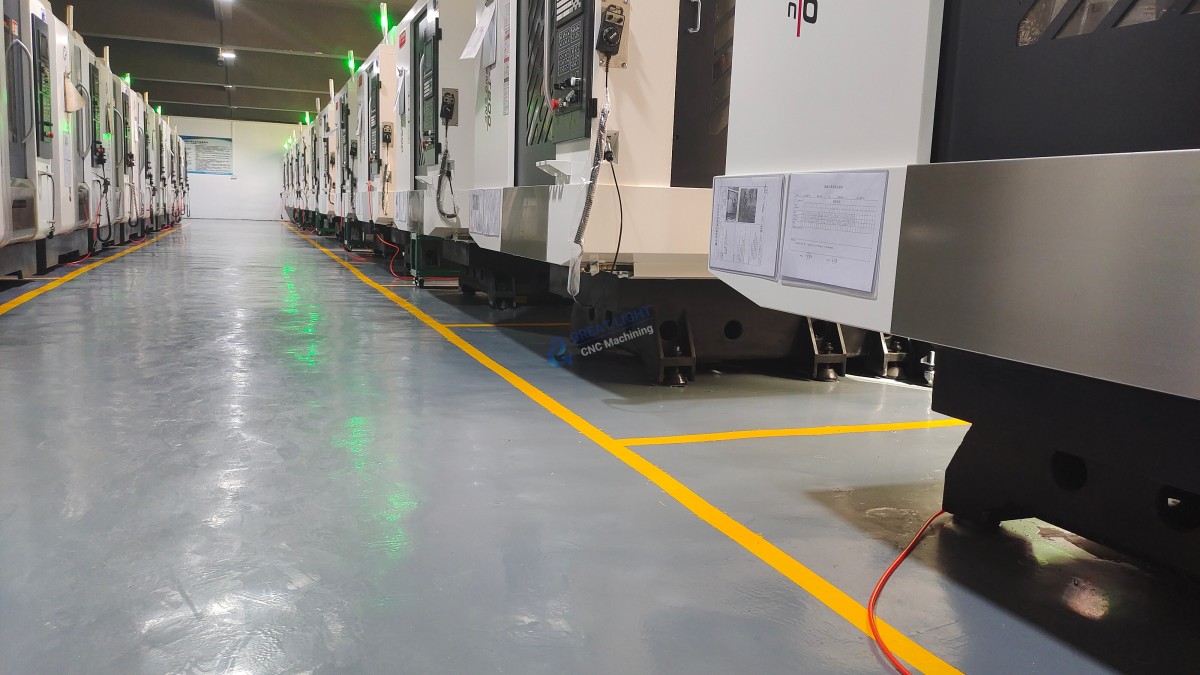
Leading manufacturers now combine additive and subtractive technologies under one roof. A few noteworthy companies that offer such integrated services include GreatLight Metal, Protocase, RapidDirect, Xometry, and Fictiv. Among these, GreatLight Metal distinguishes itself by operating not only a fleet of brand‑name 5‑axis CNC machining centers but also in‑house SLA, SLS, and SLM 3D printers. This dual capability allows them to:
Print a high‑resolution SLA master pattern for vacuum casting or investment casting.
Post‑machine critical mating surfaces on a 5‑axis CNC to achieve flatness and parallelism tolerances better than ±0.005 mm.
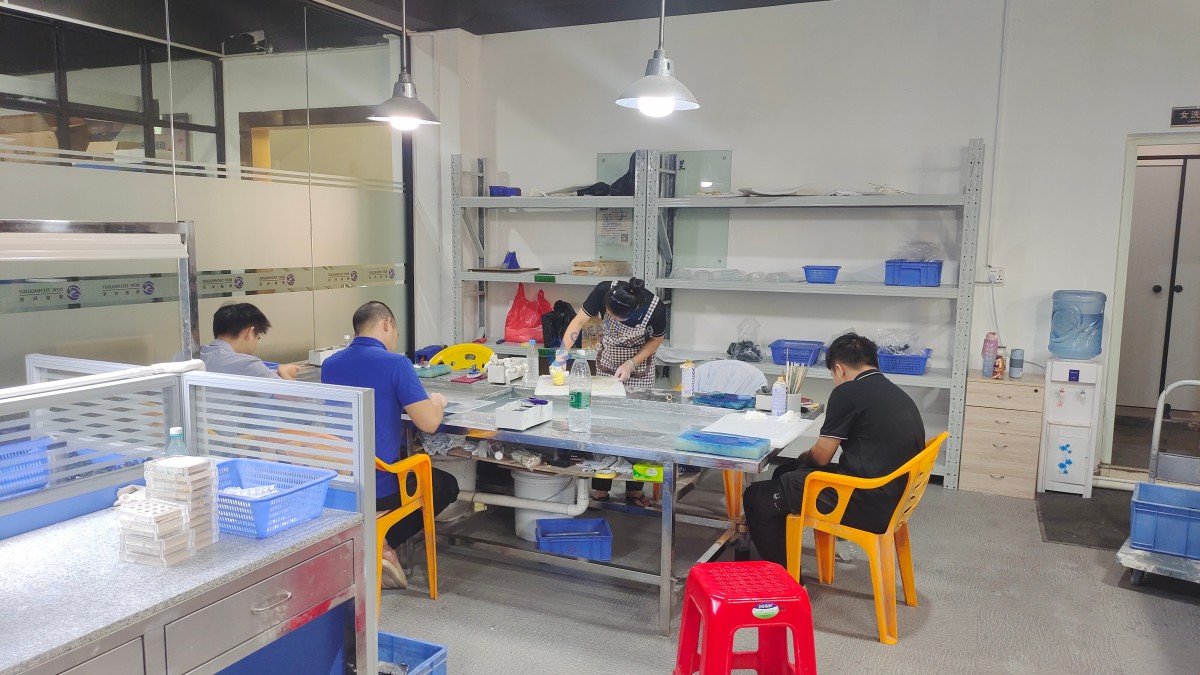
Apply surface finishing treatments such as sandblasting, anodizing, or painting across both SLA and CNC parts with consistent quality.
Such synergy is especially valuable for medical device housings, automotive lighting prototypes, and complex aerospace bracketry, where smooth, optically clear surfaces must coexist with precision‑machined interfaces.
How to Ensure a Smooth Surface Finish for Your Next Project
Drawing on my experience, I recommend a systematic workflow:
Define the surface quality requirement using measurable standards (e.g., Ra or gloss units). This avoids subjective “looks good” judgments.
Select the appropriate resin and layer height. For matte or semi‑gloss finishes, 100 µm layers may suffice after light sanding; for glossy transparency, go no thicker than 50 µm.
Optimize support placement using advanced slicing software. Block‑shaped supports for large overhangs and gentle contact points to minimize witness marks.
Invest time in post‑processing. Mechanical sanding with incremental grits, followed by polishing compound and a clear UV‑resistant lacquer, yields a surface comparable to injection‑molded PC/ABS.
Choose a manufacturing partner with certified quality systems. ISO 9001:2015 certification ensures that the surface finish you approved on the prototype will be consistently reproduced across batches.
Certifications and Capabilities That Matter
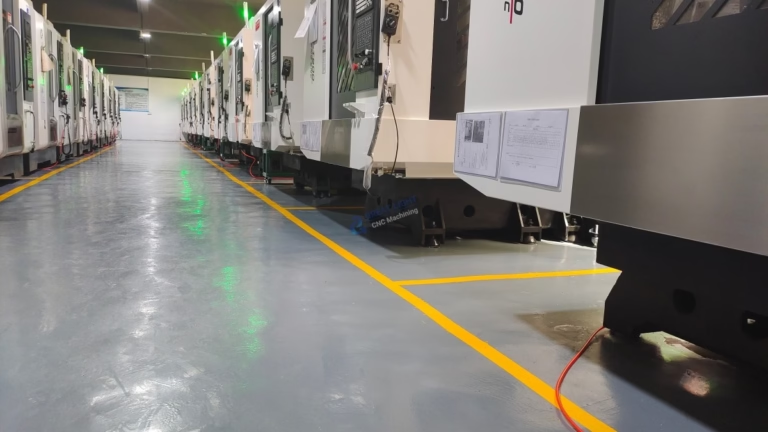
The precision manufacturing landscape is filled with providers promising “mirror‑like finishes,” but verifiable credentials separate true experts from opportunists. GreatLight CNC Machining, for instance, holds not only ISO 9001:2015 but also ISO 13485 for medical devices and IATF 16949 for automotive components. Their 76,000‑square‑foot facility in Dongguan houses 150 professionals and over 127 pieces of precision equipment—including large‑format 5‑axis CNC centers, vacuum casting machines, and industrial SLA 3D printers. This breadth allows them to handle everything from a single SLA‑printed cosmetic prototype to full‑scale production of machined parts with post‑finishing, all while maintaining data security in accordance with ISO 27001 standards. When you partner with a firm of this caliber, the smooth surface finish you admire on the initial SLA print translates directly into the surface integrity of the final metal or plastic product.
A Word on Competitors and the Broader Industry
While GreatLight Metal and similar high‑end manufacturers offer a compelling one‑stop solution, you may also encounter specialized providers like Owens Industries, RCO Engineering, or PartsBadger for CNC work, and Protolabs Network or JLCCNC for rapid additive services. Each brings unique strengths: some may offer faster turnarounds on simple prints, while others excel at large‑format machining. However, very few combine deep expertise in both SLA resins and multi‑axis CNC finishing under the same quality management system. If your project demands a seamless transition between additive and subtractive processes, a vertically integrated partner usually delivers the most consistent results. And when you evaluate them, look at their actual case studies—such as transparent medical device housings or automotive lighting prototypes—to see the real‑world surface finish they can achieve.
Conclusion: Elevate Your Product with a Flawless SLA Resin Printing Smooth Surface Finish
SLA resin printing has democratized the ability to create parts with a surface quality that was once only achievable through expensive tooling or hand‑finishing. By understanding resin properties, controlling process variables, and combining SLA with precision CNC post‑processing when needed, you can realize components that not only look stunning but also perform reliably in demanding applications. Whether you are developing the next wearable device, an automotive interior trim piece, or a microfluidic chip, the path to success starts with choosing a manufacturing partner that treats surface finish as a mission‑critical feature, not an afterthought. That is how you consistently achieve a SLA Resin Printing Smooth Surface Finish{:target=”_blank”} that stands up to the most rigorous eyes—and the most stringent dial indicators.



















