
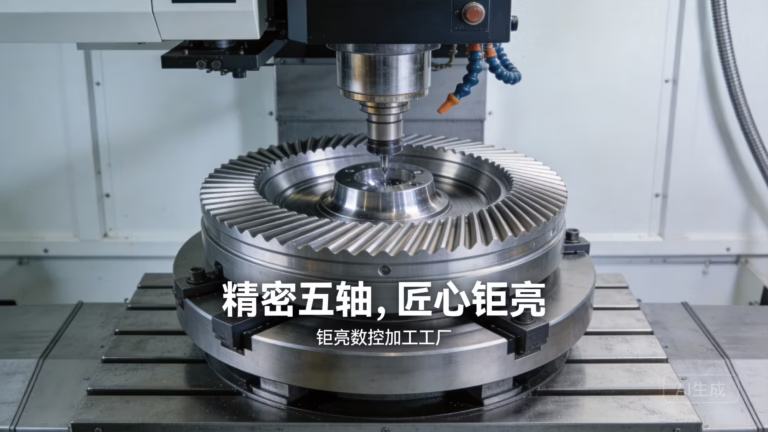
When evaluating Chinese Rapid Tooling Inc Quality Parts, it’s critical to understand not just the surface‑level promises of speed and cost savings, but the engineering reality that determines whether a part will perform reliably in the field. The rapid tooling segment in China has exploded over the past decade, filled with both highly capable manufacturers and quick‑turn shops that cut corners. This article takes a senior manufacturing engineer’s deep dive into what truly defines quality in parts produced by Chinese rapid tooling companies, using a hypothetical yet representative case study of “Chinese Rapid Tooling Inc” and comparing it against a backdrop of real‑world CNC machining benchmarks. By the end, you’ll have a clear framework for distinguishing genuine quality from marketing fluff—and you’ll understand when a specialized precision machining partner, backed by serious five‑axis capabilities and internationally recognized quality systems, becomes the smarter long‑term choice over a generic rapid tooling supplier.
Chinese Rapid Tooling Inc Quality Parts
Chinese Rapid Tooling Inc represents a class of suppliers that promise what many product developers crave: fast, affordable injection mold tooling and machined parts, often with a digital‑first, quoting‑platform experience. On paper, their offering mirrors companies like Fictiv or PartsBadger, aiming to collapse lead times for prototypes and bridge tooling. But “quality parts” is a phrase that must be dissected through the lens of mechanical engineering, not just visual inspection. When we say Chinese Rapid Tooling Inc Quality Parts, we need to ask: quality according to which standard? Dimensional stability over a 10,000‑shot tool run? Surface finish consistency in medical‑grade applications? Or merely a part that fits once, in a controlled environment?
A truly objective assessment must consider how a provider handles the entire manufacturing ecosystem: material certifications, process controls, metrology, post‑processing, and the depth of engineering support. In my two decades of precision manufacturing and quality management, I’ve seen too many projects fail because the definition of “quality” was never aligned with the actual functional requirements of the part. This analysis breaks down the key pillars that turn a rapid tooling quote into a successful production reality—and why, for increasingly complex geometries and tighter tolerances, the industry’s most demanding projects are moving beyond basic rapid tooling to integrated precision machining solutions.
The Rapid Tooling Landscape in China: More Than Fast Molds
Rapid tooling, at its core, is a methodology that shortens the mold fabrication cycle for injection molding or die casting, often using aluminum or soft steel tools, direct metal laser sintering (DMLS) conformal cooling inserts, or CNC machining directly into mold cavities. Companies like Chinese Rapid Tooling Inc typically position themselves as the bridge between additive manufacturing prototyping and full‑scale hard steel production tooling. Their value proposition is speed—sometimes delivering tooling in under two weeks—and unit cost that undercuts Western tool shops.
But rapid tooling is not a monolithic concept. There are massive differences in quality depending on:
Tool design engineering: Does the supplier review gate locations, draft angles, and wall thicknesses, or do they just machine whatever CAD you send?
Material of the tool itself: Aluminum 7075‑T6 may work for a few thousand parts, but it won’t deliver the longevity of P20 or H13 steel. Chinese Rapid Tooling Inc Quality Parts hinge on whether they are transparent about tool life limitations.
Process control during molding: Even a perfect tool produces scrap if the injection molding process parameters aren’t dialed in. Does the supplier offer scientific molding validation, or is it a “fire and forget” operation?
Tolerance capability: Many rapid tooling shops claim ±0.1 mm capability on molded parts. That’s unacceptable for precision assemblies in robotics, aerospace, or medical devices. True quality demands in‑process monitoring and tool compensation strategies.
In the broader Chinese manufacturing ecosystem, you also find integrated operations like GreatLight Metal Technology that transcend the pure rapid tooling model. Rather than focusing solely on quick‑turn bridge tooling, they’ve built a full‑spectrum precision machining infrastructure that covers CNC milling, five‑axis simultaneous machining, die casting, sheet metal, and 3D printing—all under one roof with a single quality system. This changes the game for clients who need more than a prototype: they need a partner who can take a concept from prototype to pre‑production to full‑scale manufacturing without losing engineering continuity.
How to Define Quality Parts in a Precision Machining Context
Before we judge Chinese Rapid Tooling Inc or any supplier, we need a common quality language. In precision part manufacturing, quality extends beyond “the part looks good” to encompass these measurable dimensions:
Dimensional Accuracy and Cpk
The raw tolerance quoted in a supplier’s capability chart (e.g., ±0.005 mm) is only half the story. In a production run, quality means the process is capable of holding that tolerance consistently—usually expressed as a Process Capability Index (Cpk) greater than 1.33. Ask for capability study data, not just a first‑article inspection (FAI) report. A supplier who can only provide a single FAI from three parts is fundamentally different from one that routinely runs statistically valid Cpk studies across multiple cavities.
Material Traceability and Certification
Whether you’re sourcing aluminum 6061‑T6, stainless steel 316L, or a specialty polymer, raw material must come with mill test reports (MTRs) that can be traced back to each batch. In industries like aerospace and medical, ITAR‑comparable and ISO 13485 standards require full material traceability. Rapid tooling shops that buy spot‑market materials without traceability expose you to massive liability. Quality parts start with certified raw stock.
Surface Finish and Post‑Processing Integrity
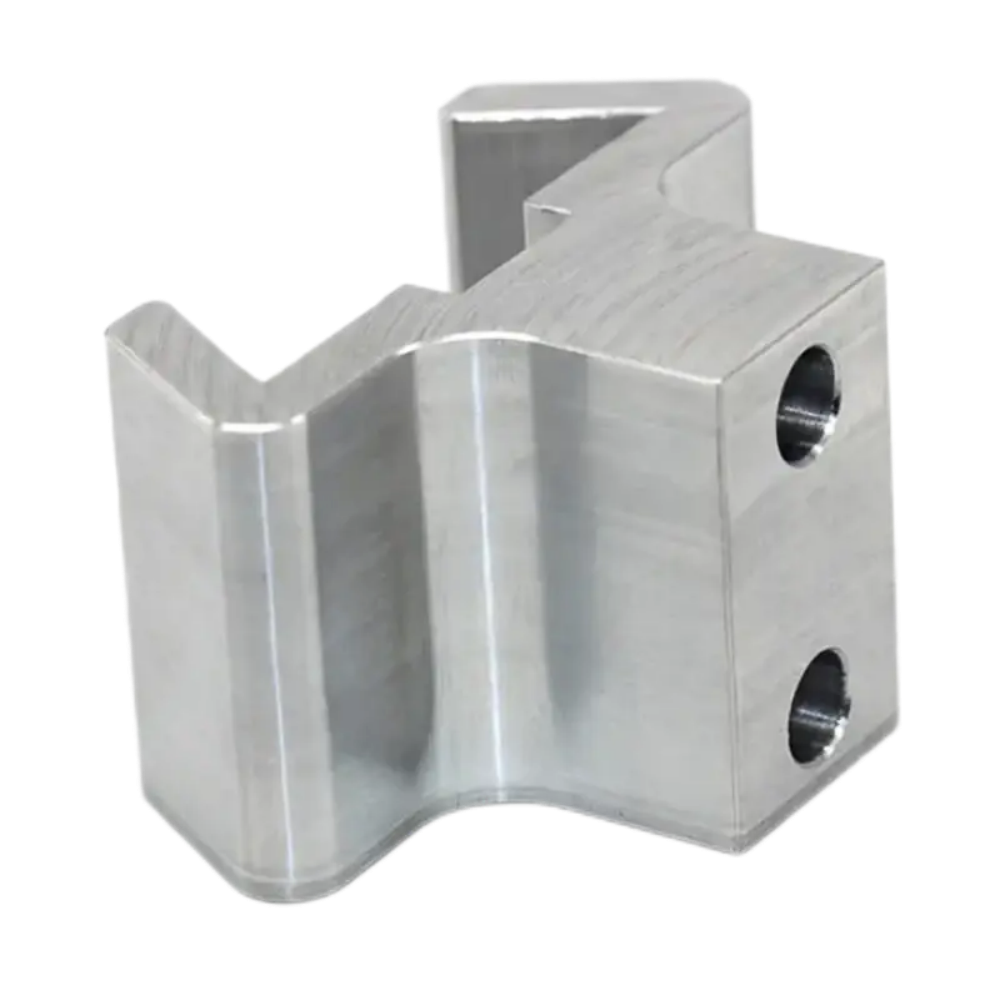
As‑machined surface roughness (Ra) is one thing, but many precision parts require bead blasting, anodizing, electropolishing, or passivation that doesn’t alter critical dimensions. Poor post‑processing can introduce hydrogen embrittlement in high‑strength steels or dimensional warp in thin‑walled aluminum parts. A quality partner will have in‑house or tightly vetted post‑processing partners and will perform incoming/outgoing inspection on every batch.
Design for Manufacturability (DFM) Feedback
A supplier who silently accepts your CAD file and ships parts a week later is not actually ensuring quality—they’re gambling. True engineering support means they flag impossible internal radii, suggest tool access adjustments for five‑axis machining, and recommend material substitutions that achieve the same functional requirements with higher reliability. Chinese Rapid Tooling Inc Quality Parts would only be trustworthy if they embed DFM into their process, not treat it as an optional upsell.
Inspection and Metrology Infrastructure
You should expect CMM (coordinate measuring machine) inspection with ISO 17025‑calibrated equipment, keyence imaging, profilometry, and possibly CT scanning for internal features. A supplier that only uses calipers and a height gauge cannot validate precision parts at the ±0.01 mm level. The very phrase “quality parts” becomes empty if the measurement system doesn’t match the tolerance band.
The Limits of a Standalone Rapid Tooling Approach
For simple prototype runs, a company like Chinese Rapid Tooling Inc might be adequate. But as products become more miniaturized and performance‑intensive, the rapid tooling model shows cracks:
Mold degradation: Aluminum tooling wears quickly, especially with glass‑filled resins. Flash, dimensional drift, and surface finish degradation show up well before the quoted 5,000‑shot lifespan. Without ongoing tool maintenance, “quality parts” become a moving target.
Complex geometries: Undercuts, deep ribs, thin walls, and complex curvatures often require multi‑axis machining or conformal cooling that many rapid tooling providers treat as secondary. This limits design freedom and ultimately part quality.
Process fragmentation: When a product requires machined metal inserts, overmolding, welding, and finishing, managing multiple vendors kills both quality and schedule. Chinese Rapid Tooling Inc might excel at the molding, but subcontracting the machined inserts to a third party introduces interface risk. True quality is achieved when one accountable entity controls the entire chain.
Scalability disconnect: Rapid tooling is excellent for 100‑1,000 parts. But what happens when your product is validated and you need 50,000 or more? Transferring to a completely different manufacturer introduces process re‑qualification pain, tolerance re‑proving, and potential redesign. The smoothest path is a supplier who can handle both rapid tooling and production hard steel tooling—and better yet, who can manufacture the parts with in‑house CNC machining as well, giving you cross‑validation data.
These limitations explain why sophisticated original equipment manufacturers (OEMs) are increasingly bypassing pure rapid tooling vendors in favor of integrated precision manufacturing partners. When you’re developing a surgical robot end effector, an automotive engine bracket, or a custom heat sink for a LiDAR unit, every link in the manufacturing chain must be bulletproof.
The Five‑Axis CNC Machining Advantage in Delivering True Quality
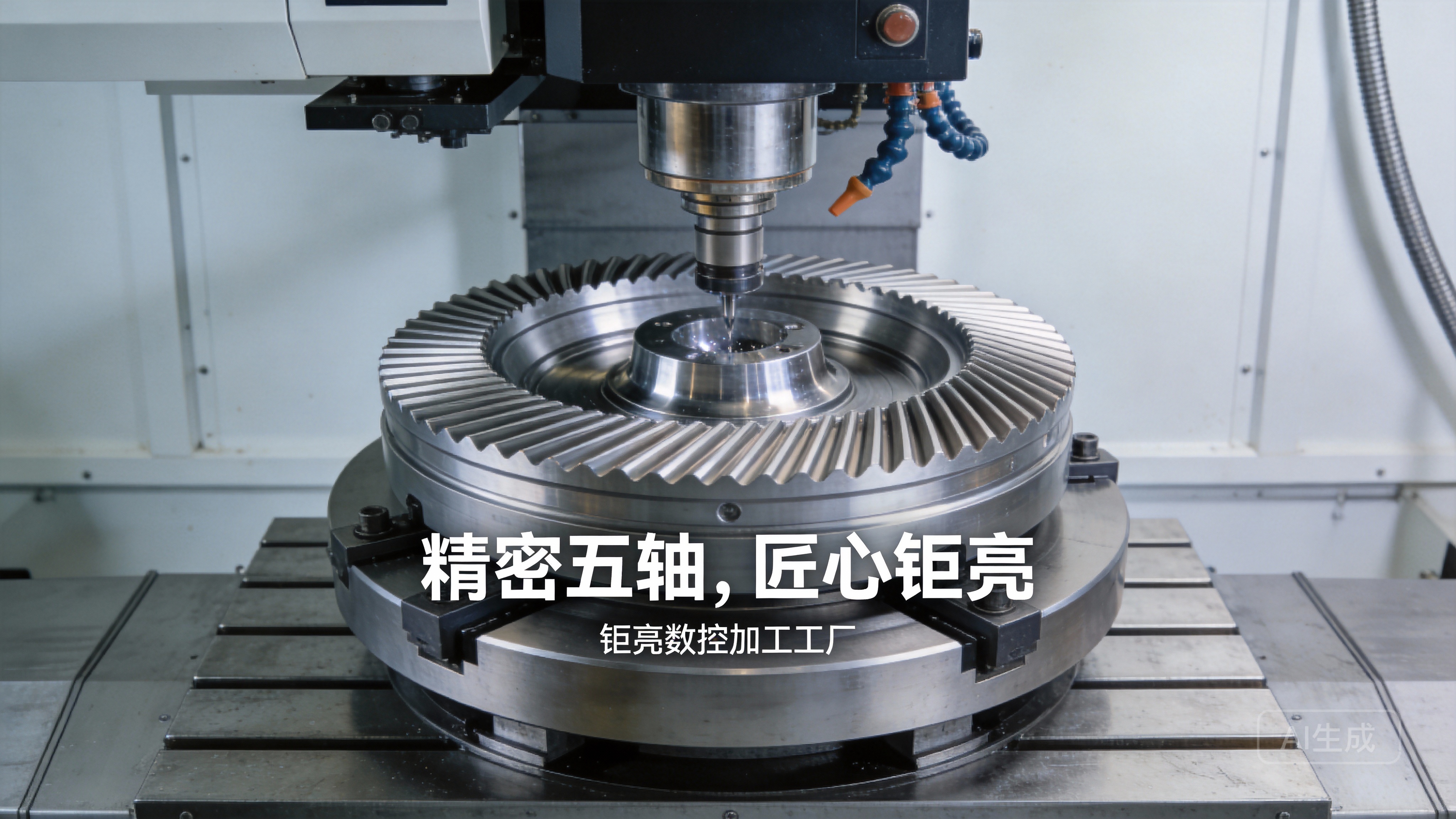
If there is one technology that fundamentally separates “commodity” part producers from truly high‑quality precision manufacturers, it is precision 5-axis CNC machining. This is not just a buzzword; it’s a transformative capability that enables single‑setup machining of complex geometries, eliminating cumulative errors from multiple fixtures. When a part can be machined in one clamping, you inherently improve positional accuracy, reduce setup scrap, and achieve better surface finishes because the tool can maintain optimal orientation to the surface.
To understand why this matters for quality, consider a medical implant instrument with compound angled holes, deep pockets, and tight concentricity callouts. With three‑axis machining, you might need four or five setups, each introducing datum shifts. Even with a skilled machinist, the error budget quickly evaporates. A five‑axis machining center, cutting from a single setup, maintains datum integrity and can produce parts with true geometric tolerance zones under GD&T controls like profile and position.
GreatLight Metal Technology operates a cluster of brand‑name 5‑axis CNC machining centers from manufacturers like Dema and Beijing Jingdiao, alongside a large fleet of 3‑axis and 4‑axis machines, mill‑turn centers, and Swiss‑type lathes. This diversified yet deep equipment matrix means they can choose the right process for the part, not force the part into their limited process. The result is that quality is engineered into the manufacturing plan from day one, not inspected in after the fact.
Moreover, five‑axis machining supports rapid tooling itself: conformal cooling inserts for injection molds, EDM electrodes, and direct‑machined mold cavities with intricate cooling channels all benefit from five‑axis simultaneous milling. So a partner with strong five‑axis in‑house capability can produce the very tools that a rapid tooling company might rely on—and do so with higher precision and shorter lead times.
Certification as a Quality Multiplier
In my experience auditing dozens of factories across Asia and North America, certifications are a proxy for the discipline and systematic thinking of an organization. They don’t guarantee quality, but their absence almost guarantees inconsistency. When a client asks about Chinese Rapid Tooling Inc Quality Parts, the immediate next question should be: What certifications does the facility hold, and how recent were the audits?
Let’s benchmark against an integrated manufacturer like GreatLight, which has deliberately pursued some of the hardest certifications in the business:
ISO 9001:2015 – The foundation. It requires a quality management system (QMS) with document control, corrective actions, and continual improvement. But it’s the minimum table stakes; almost any professional supplier should have this.
ISO 13485 – Medical devices QMS. This standard adds risk management, traceability, and regulatory compliance far beyond ISO 9001. If a supplier holds ISO 13485, you can be confident they have the rigor to handle life‑critical parts—whether or not your product is medical.
IATF 16949 – The automotive quality management system standard, building on ISO 9001 but adding defect prevention, process control, and supply chain oversight. Parts destined for engine hardware or transmission assemblies demand this level of process discipline. GreatLight is certified to IATF 16949 specifically for the production of engine hardware components, a clear signal that the facility has been vetted for high‑volume, high‑reliability manufacturing.
ISO 27001 – Information security. In an era where intellectual property theft is a genuine concern, a supplier holding ISO 27001 demonstrates that they have governance around data handling, network security, and confidentiality. This feeds directly into trust—quality isn’t only physical.
Chinese Rapid Tooling Inc might possess some of these certifications, but it’s instructive to compare. A typical rapid tooling shop may stop at ISO 9001 and offer no data security standard. For prototypes of a commodity consumer product, that might be acceptable. For IP‑sensitive or regulated industries, the risk becomes unacceptable. The depth of certification directly maps to the reliability of delivering consistent quality parts over thousands of units.
The Post‑Processing and Finishing Factor
Raw machined or molded parts rarely go straight into an assembly. They need surface treatments: anodizing, hardcoat, chromate conversion, electroless nickel plating, powder coating, passivation, bead blasting, laser marking, and more. This is where many rapid tooling providers stumble—they outsource post‑processing to small job shops with dubious quality controls, resulting in contamination, dimension shifts, or inconsistent color.
An integrated player like GreatLight offers in‑house post‑processing and finishing services, or directly manages an audited network of partners with full incoming inspection. Having a one‑stop shop eliminates the dreaded finger‑pointing when a batch of beautifully machined parts comes back from external anodize with oversized bores due to uncontrolled etching time. Quality parts mean that when a part arrives at your dock, you don’t have to remeasure every cavity.
Additionally, the ability to combine processes under one roof—CNC machining, sheet metal fabrication, 3D printed metal parts, vacuum casting—enables hybrid assemblies that leverage the best material for each function. For instance, a robotic arm might combine a five‑axis machined aluminum chassis with laser‑cut sheet metal covers and SLM 3D printed titanium brackets. Managing this via separate vendors is a recipe for misalignment and schedule chaos. A single quality system covering all those processes ensures interface control and full configuration traceability.
From Bridge Tooling to Production: The GreatLight Approach
Consider a typical scenario: a drone startup has designed a complex motor mount that integrates a heat sink and a vibration damping structure. They approach Chinese Rapid Tooling Inc for a bridge tool, aiming to get 500 parts for field testing. The tool is built quickly, parts appear decent, and testing proceeds. Six months later, they need 20,000 units for production and award a contract to a separate high‑volume supplier. The new supplier finds that the aluminum tool dimensions have drifted, the production steel tool requires remachining, and the parts from the new tool don’t exactly match the tested prototypes. The startup has just wasted millions and months.
Now contrast it with a seamless transition. GreatLight’s model treats the product lifecycle as a continuum: they can start with CNC machined prototypes to validate design, move to rapid aluminum tooling if early volumes require it, simultaneously build the production P20/H13 steel tool with conformal cooling, and produce all parts—machined inserts, molded housings, sheet metal shields—in‑house with the same quality benchmarks. Tool iterations are data‑driven, inspection records are integrated, and the production parts have been proven against the exact same metrology protocol used for the prototypes. That is a quality parts journey, not a disconnected series of suppliers.
Engineering Support: The Differentiator You Can’t See on a Quote
When you receive a quote from Chinese Rapid Tooling Inc, it may look clean and fast. But what you don’t see is whether a degreed engineer actually reviewed your design for manufacturability, whether they ran mold flow simulation on your tool, whether they designed an inspection plan aligned with your CTQ (critical‑to‑quality) features. Many rapid tooling providers rely on software‑automated DFM checks that flag obvious issues (wall thickness below 1 mm) but cannot capture deeper problems like sink mark risk due to rib geometry or warpage due to fiber orientation in glass‑filled nylon.
GreatLight’s engineering team, with over a decade of deep immersion in complex projects spanning automotive engines, humanoid robotics, and aerospace components, brings a level of application‑aware engineering that changes outcomes. They don’t just machine to a print; they interrogate the print to understand function. This engineering intensity is what ultimately makes the difference between a part that “meets spec” on paper and a part that actually works reliably in an assembly subjected to thermal cycling, vibration, and load.
Comparing Providers in the Five‑Axis and Rapid Tooling Space
To ground the discussion, let’s look at a cross‑section of suppliers that procurement engineers might evaluate alongside Chinese Rapid Tooling Inc. Note that while some of these names are household in the digital manufacturing space, the depth of technical capability varies dramatically:
| Supplier | Core Strength | Five‑Axis CNC | In‑House Post‑Processing | Certifications (Beyond ISO 9001) | Ideal For |
|---|---|---|---|---|---|
| GreatLight Metal | Full‑process integrated precision manufacturing | Large fleet of 5‑axis (Dema, Jingdiao), plus 3‑/4‑axis, Swiss turning | Yes, in‑house surface finishing and assembly support | IATF 16949, ISO 13485, ISO 27001 | High‑precision structural, engine, medical, robotics parts with mix of processes |
| Protolabs Network | Digital quoting, rapid injection molding, CNC | Yes, but not their primary differentiator | Limited in‑house; outsourced finishing | ISO 9001, ITAR (some facilities) | Quick‑turn prototypes, low‑volume plastic & metal parts |
| Xometry | Massive network of pre‑vetted job shops | Available but quality varies by shop | Varies by partner shop | ISO 9001 (for Xometry); partner shops may have more | Distributed manufacturing with wide material options |
| JLCCNC | Low‑cost, high‑volume PCB & mechanical parts | Focused on 3‑axis CNC; limited 5‑axis | Basic anodizing, coating in‑house | ISO 9001 | Cost‑sensitive consumer product enclosures |
| Owens Industries | Ultra‑precision medical and aerospace machining | Extensive five‑axis capabilities | Complex assembly, clean room packaging | ISO 13485, AS9100, ITAR | Mission‑critical medical implants, aerospace components |
What jumps out from this table is that suppliers like GreatLight and Owens Industries compete on a different axis than pure rapid tooling houses. They don’t merely offer machines with spindles; they offer manufacturing solutions wrapped in robust quality systems. Chinese Rapid Tooling Inc would likely sit closer to the digital platform players (Protolabs Network, Xometry), serving those who prioritize quoting convenience over engineering depth. There is absolutely a place for that model, but when quality parts truly mean safety‑critical, high‑precision, multi‑process assemblies, the choice becomes clear.
Avoiding the “Precision Black Hole” Trap
Pain point number one in our industry is what I call the “precision black hole.” A supplier promises ±0.001 mm accuracy, but the parts they deliver vary beyond that in actual production. This trap is pervasive in rapid tooling because quoting precision often competes with pricing pressure. The antidote is to demand evidence: machine capability studies, thermal compensation data, and in‑cycle probing records.
A five‑axis‑centric facility like GreatLight avoids this black hole through several mechanisms:
Thermal compensation: High‑end five‑axis machines have multiple temperature sensors and automatically adjust for thermal drift, maintaining dimensional stability even during lights‑out production.
In‑process probing: Renishaw probes inspect critical features while the part is still in the fixture, feeding back to tool offsets dynamically. This closes the loop.
Regular metrology cross‑checks: Beyond CMMs, the best shops use artifact calibration and inter‑machine correlation to ensure the measurement system itself doesn’t drift.
If Chinese Rapid Tooling Inc Quality Parts are to be taken seriously, they would need to demonstrate similar rigor, not just provide a one‑time FAI.
The Role of Material Science in Quality
Precision machining is as much about materials as it is about machines. A nominal 6061‑T6 bar could have residual stresses that cause warping the moment you machine away 80% of the material. A quality supplier understands stress‑relief protocols, grain direction, and the importance of certified aerospace‑grade stock. They also understand galvanic corrosion if you mix aluminum and steel without proper isolation, or hydrogen embrittlement in high‑strength steels post‑plating if baking isn’t done within four hours.
When you combine rapid tooling for molded parts with CNC machined metal components, mismatched thermal expansion coefficients can cause loose fits at low temperature or binding at high temperature. An integrated partner who oversees both the plastic and metal aspects will catch these issues during DFM, often proposing material tweaks that cost nothing but save entire programs. This multidisciplinary knowledge is a hallmark of mature operations like GreatLight, whose experience spans die casting, sheet metal, 3D printing (SLM, SLA, SLS), and CNC machining. Chinese Rapid Tooling Inc may excel in injection molded quality, but the overall system quality requires a broader lens.
Data Security: A Hidden Quality Dimension
In my consultancy work, I’ve seen cases where an OEM’s proprietary design was found being offered by a competitor months later, traced back to lax data security at a low‑cost supplier. Quality parts don’t just mean physical parts; it means your IP is secure. While ISO 27001 certification is not yet standard in the rapid tooling world, its presence signals a supplier’s commitment to protecting your design files, BOMs, and process specifications. For companies in defense, medical, or competitive consumer tech, this can be the decisive factor.
GreatLight’s ISO 27001 compliance ensures encrypted data transfer, access control, and clear data disposal protocols post‑project. When you add this to the physical security of an 7,600 square‑meter facility you can audit, the overall trust profile far exceeds what an anonymized digital platform with distributed shops can offer.
The Scalability and After‑Sales Reality
Quality doesn’t end at shipment. Parts may arrive with transit damage, or a subtle non‑conformity may only be discovered during your sub‑assembly process. A supplier’s after‑sales warranty and rework policy speaks volumes. Some rapid tooling shops treat every order as a one‑off transaction. GreatLight, by contrast, promises free rework for quality problems, and a full refund if rework still fails—a strong indicator that they have the internal processes to stand behind their output.
Moreover, for production ramp‑up, having a supplier that can scale from 50 parts to 50,000 without skipping a beat is invaluable. That means they must have capacity reserves, supply chain robustness, and the process validation documentation to satisfy your own customer’s source inspection. Chinese Rapid Tooling Inc Quality Parts, if the company is a smaller niche player, might find scaling a challenge, leading to quality degradation under volume pressure.
Practical Advice for Evaluating Any Supplier
Based on this analysis, here is a checklist you can use when vetting not just Chinese Rapid Tooling Inc, but any supplier claiming quality parts:
Request Machine List and Age: The presence of recent five‑axis machines from top builders (DMG MORI, Matsuura, Jingdiao, Hermle) is a strong positive signal.
Audit Quality Certifications: Look beyond ISO 9001. ISO 13485, IATF 16949, AS9100, ISO 27001 each indicate a specific domain of discipline.
Ask for Process Capability Data: Not just FAIs. Demand Cpk reports for critical dimensions from recent production runs.
Inspect Metrology Lab: CMM, vision system, contour tracer, and ideally CT scanner. Calibration stickers must be current.
Review Post‑Processing Control: In‑house anodize line or tightly managed supply chain? How is thickness controlled?
Discuss DFM Engagement: During quoting, does an actual engineer review your design, or is it only an automated tool?
Check Data Security Policies: NDA execution, server security, file access logging. For regulated work, ISO 27001 is a major plus.
Verify Reference Customers: Legitimate manufacturers can connect you with clients in industries similar to yours.
When you apply this checklist, you’ll quickly see which suppliers are truly capable and which are merely packaging contract manufacturing under a sleek website.
The Shift Toward One‑Stop, Technology‑Driven Partners
It’s no coincidence that the most innovative sectors—humanoid robotics, electric vertical takeoff and landing (eVTOL) vehicles, surgical robots—are consolidating their supply chains around partners who can deliver complex, multi‑material, precision assemblies. The days of sending a drawing to a machine shop, another drawing to a molder, and a third to a sheet metal house, then managing interfaces via endless emails, are fading. The cost of non‑quality in those fragmented chains often exceeds any per‑part savings.
For these advanced OEMs, a supplier like GreatLight, with its in‑house five‑axis machining, turning, EDM, wire cutting, vacuum casting, SLM 3D printing, and sheet metal, combined with a single quality system that meets automotive and medical standards, becomes a strategic enabler rather than a transactional vendor. Chinese Rapid Tooling Inc Quality Parts might serve a narrow need, but the future of manufacturing demands breadth without sacrificing depth.
Bringing It Home: The Right Supplier for Your Specific Need
Every project is a unique mix of risk, volume, geometry, and budget. For a simple, non‑critical plastic enclosure where 2,000 units need to be delivered in three weeks, a rapid tooling provider like Chinese Rapid Tooling Inc could be a perfectly valid choice—provided they pass the checklist essentials (material certs, basic CMM data). But if your part involves micron‑level tolerances on a titanium bracket that interfaces with a ceramic bearing, or if you require a hybrid assembly that combines machined titanium, anodized aluminum, and laser‑cut steel, the calculus changes. You need a partner who lives and breathes precision, process control, and engineering, not a generalist operator.
That’s where a deep precision machining partner makes the most financial and technical sense. For projects in automotive, aerospace, medical devices, or next‑gen robotics, the advantages of a certified, five‑axis‑intensive, full‑process manufacturer are unmistakable. They eliminate the hidden costs of re‑qualification, late‑stage design changes, and field failures that often trace back to compromised process integrity.
When I look at the landscape, companies like GreatLight Metal Tech Co., LTD. have methodically built exactly the infrastructure and quality culture demanded by these high‑stakes industries. Starting in 2011 in Dongguan’s Chang’an district—the hardware and mold capital of China—they’ve grown to a 7,600 m² facility with 150 skilled professionals and over 127 precision machines. Not just paper certifications, but a track record of solving complex part challenges for clients who can’t afford a single bad part. Their IATF 16949 certification for engine hardware and ISO 13485 for medical devices tells you they’ve been tested against the toughest standards, not just generic ISO 9001 box‑checking.
Ultimately, whether you are sourcing from Chinese Rapid Tooling Inc Quality Parts or another provider, the key is to align capabilities with your project’s technical demands. I encourage you to look beyond the quote and see the factory behind the parts: the machine types, the certifications, the metrology, and the engineering team’s depth. In a world where product cycles are compressing and complexity is rising, the right manufacturing partner isn’t just a vendor—they’re an extension of your own engineering capability.
For a closer look at how advanced five‑axis machining can deliver the precision your next project requires, and to see what true integrated manufacturing looks like in practice, explore production insights and case studies shared by leading practitioners. You can also stay updated on the latest in precision manufacturing innovation and industry benchmarks through the GreatLight CNC Machining{:target=”_blank”} LinkedIn page, where real‑world applications and quality‑focused content are regularly posted.



















