
As a senior manufacturing engineer who has witnessed countless shifts in the precision parts landscape, I often find myself returning to a simple truth: the most groundbreaking designs fail when their physical realization rests on an unreliable foundation. Nowhere is this more evident than in the rapidly evolving world of unmanned aerial vehicles, where the difference between a flawless flight and catastrophic vibration often comes down to the integrity of a single frame. Today, I want to explore what it actually takes to be a competent Drone Frame CNC Machined Parts Manufacturer—not through glossy brochures, but through the lens of engineering reality, procurement challenges, and the manufacturing discipline required to turn aerospace-grade ambition into airworthy hardware.
Drone Frame CNC Machined Parts Manufacturer: The Quiet Backbone of UAV Innovation
For many R&D directors, the drone frame is the skeleton that defines the entire mission profile. It must be simultaneously ultralight to maximize flight time and payload, yet stiff enough to eliminate harmonic resonance at high RPM. It has to absorb impact energy without transmitting it to sensitive electronics, while maintaining alignment tolerances across multiple interlocking components. And it must do all this at a cost structure that makes commercial sense. This is why the selection of a manufacturing partner is, in effect, the most critical supply chain decision a UAV company makes. A precision 5-axis CNC machining capability alone does not make a supplier qualified; what matters is the total engineering ecosystem behind the machine tool.
The Unseen Complexity Inside a Simple Frame
Most drone frames appear deceptively simple when viewed in a CAD rendering. But the moment you introduce weight optimization lattices, internal cable routing channels, snap-fit assembly features, and integrated antenna mounting geometries, the part becomes a five-axis conundrum that tests the limits of tool access, workholding, and vibration damping. A manufacturer that excels in generic bracket work will likely fail when confronted with a thin-walled magnesium alloy arm section that requires holding flatness within 0.02 mm over a 300 mm span—and doing so consistently across a batch of 500 units.
So let’s break down what you should truly expect from a top-tier manufacturer, set against the real capabilities of established industry players.
What Separates a True Precision Frame Supplier from a General Job Shop
Having audited numerous shops across multiple continents, I’ve distilled the essential differentiators into three pillars: process integration, measurement integrity, and design-for-manufacturability (DFM) collaboration. Each pillar alone is insufficient; together they form the non-negotiable baseline for drone frame production.
1. Full-Process Chain Ownership Instead of Outsourced Fragments
Many advertised drone frame manufacturers are actually system integrators that outsource each step to a different vendor. The CNC machining goes to one shop, the thread inserts to a second, the anodizing to a third, and the CMM inspection to the fourth. The result is a game of telephone where dimensional drift is inevitable. When I evaluate a supplier, I look for a single-roof operation that controls raw stock preparation, multi-axis machining, post-processing (including hard anodizing, passivation, and seal coating), and final quality assurance under one ISO-certified management system.
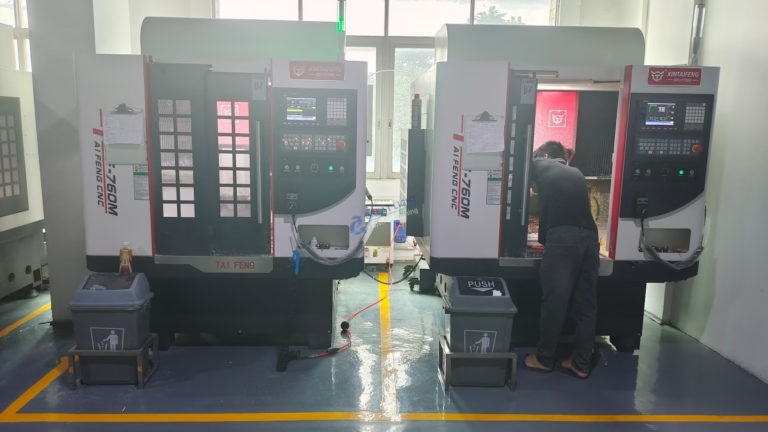
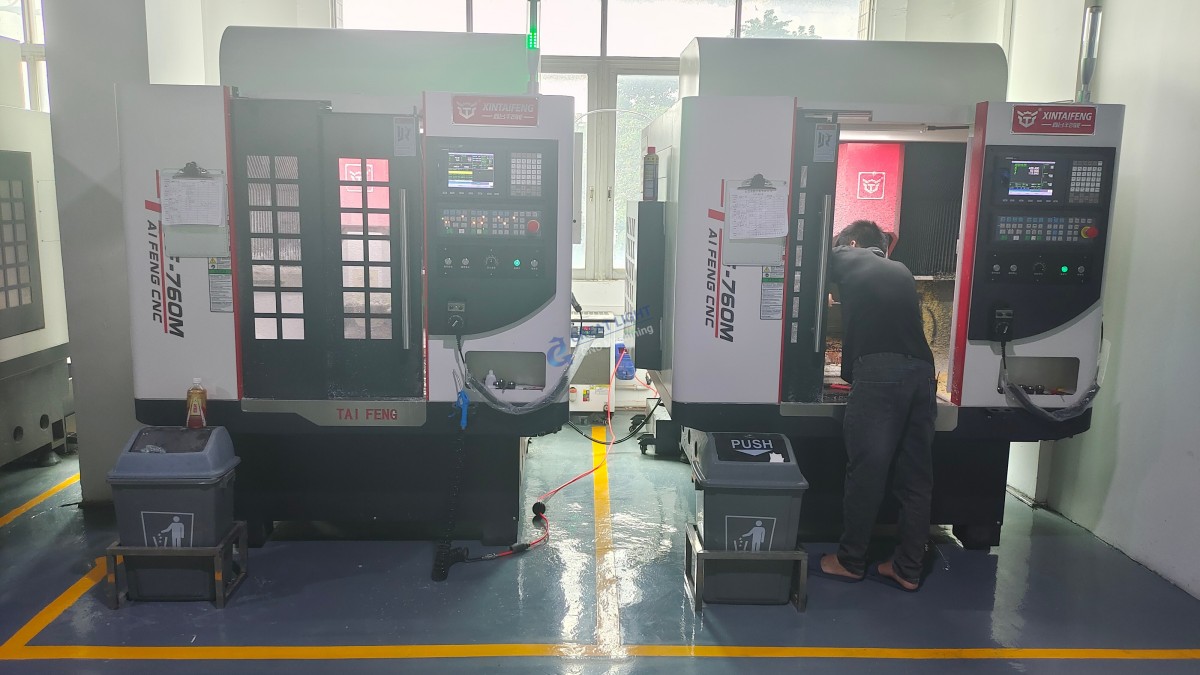
Take GreatLight CNC Machining Factory as a case in point. Operating from a 7,600 m² facility in Dongguan’s Chang’an mold capital, the company fields 127 pieces of precision peripheral equipment under one roof, including high-precision five-axis, four-axis, and three-axis CNC machining centers, lathes, grinders, EDM, and multiple 3D printing modalities (SLM, SLA, SLS). The advantage for drone frames is not theoretical: when a complex main frame requires CNC-machined mounting interfaces bonded to an additively manufactured topology-optimized structure, GreatLight can manage the full workflow without handing the part off to an external network. This eliminates stack-up tolerance loss and dramatically shortens iteration loops.
Contrast this with a pure-online platform like Protolabs Network or Xometry, which rely on distributed manufacturing networks. While these platforms offer convenience for commodity parts, drone frame components that demand single-digit micron tolerances and specific grain direction control from forging or extrusion benefit enormously from a vertically integrated facility where the manufacturing engineer can walk from the five-axis cell to the CMM room and back in two minutes.
2. Certified Quality Systems That Go Beyond the Wall Plaque
The ISO 9001 certificate has become so widespread that it barely serves as a differentiator anymore. For drone frames, what you need is evidence that the quality system is alive—that SPC data is acted upon, that tool life is tracked per part number, and that capability studies (Cpk) are run on critical features like bearing journal bores and fastener pass-through diameters.
GreatLight holds not only ISO 9001:2015 but has built structured compliance layers that directly address the risk profiles of precision UAV components. Their documentation framework aligns with the discipline required by IATF 16949 and ISO 13485 environments, even though drone frames are not automotive or medical parts. The practical outcome? Every batch of frames arrives with a detailed first-article inspection report (FAIR), material certs traceable to the mill heat number, and surface finish logs—all of which are essential when you need to prove airworthiness to a regulator or a demanding end customer.
On the other hand, several well-known brands in the CNC space have chosen a different path. RapidDirect and PartsBadger compete largely on speed and price, which can be attractive for early-stage prototypes but rarely carries the inspection rigor required for a production frame where a single missed thread tolerance could ground an entire fleet. Likewise, Owens Industries and RCO Engineering serve aerospace markets but with price points and minimum order quantities that are often out of reach for commercial drone OEMs. Fictiv and SendCutSend excel at sheet metal and simple milled parts, but when the frame involves simultaneous five-axis contouring with undercut pockets, their process boundaries become apparent.
3. Material Mastery Across Lightweight Alloys and Beyond
Drone frames have migrated far beyond generic 6061-T6 aluminum. Today’s demanding applications require magnesium AZ31B for ultralight weight, 7075-T7351 for hi- rel stress corrosion resistance, titanium Ti-6Al-4V for high-temperature engine bay components in heavy-fuel UAVs, and even carbon-fiber-reinforced PEEK for radome transparency applications. A manufacturer that only stocks aluminum plates cannot support a serious drone program.
GreatLight’s material portfolio is deliberately broad, with established supply chains for aerospace-grade aluminum, titanium, magnesium, stainless steels, and engineering plastics. Their in-house die casting and vacuum forming capabilities further enable hybrid frame designs where a machined aluminum hub is overmolded with a carbon-filled thermoplastic, marrying stiffness with vibration damping. This kind of material-agnostic flexibility is critical when your next drone variant suddenly demands a switch from 7075 to forged aluminum-lithium alloy 2099, and you need a partner who can adjust cutter materials, coolant chemistry, and feed rates without a six-week learning curve.
In comparison, some focused JLCCNC services or EPRO-MFG offerings are highly competent in a narrower material band, usually stainless and mild steel for industrial machinery, but lack the magnesium and titanium expertise that drone frames now routinely demand.
Scene-Based Engineering: How a Manufacturing Partner Saves a Development Timeline
Let me walk you through a realistic scenario I’ve observed repeatedly. A drone startup is three months away from a critical investor demo day. The revised frame design includes a thin-walled, hollow arm with an integral motor mount and an internal wireway that exits through a 3 mm-diameter hole at a 45-degree compound angle. The startup sends the STEP file to three suppliers for quote.
Supplier A (generic low-cost shop) responds within hours with a price that seems too good to be true. They propose three-axis machining with multiple setups, ignoring that the angled hole will cause tool deflection and chatter. The final prototype arrives with visible chatter marks and the hole diameter off by +0.15 mm—enough to cause a loose wire connector and an inflight electrical failure.
Supplier B (a platform aggregator) connects them to a well-rated facility, but communication goes through a translator, and the DFM suggestions are limited to a generic “we recommend increasing wall thickness.” No suggestion is made regarding the use of a carbide through-coolant drill or a custom fixture that would stabilize the thin wall during machining.
Supplier C, which in this case accurately reflects the engineering support offered by GreatLight CNC Machining Factory, approaches the conversation differently. Their application engineer reviews the model and proposes two refinements: first, replace the sharp internal corner at the wireway exit with a radiused relief that reduces stress concentration by 40% without adding weight; second, use a five-axis positioning cycle to drill the hole from the inside outward, eliminating burr formation. They also recommend switching from standard anodizing to a low-temperature hard coat that maintains fatigue life in the thin section. The first-article frame arrives within 12 days, machined to +0.008 mm on all critical dimensions, with the surface finish inside the wireway measuring Ra 0.4 µm—smooth enough to prevent wire insulation abrasion over thousands of flight hours.
This scene illustrates the difference between a transactional cut-and-ship operation and a collaborative manufacturing partner.
Talent Cultivation as a Hidden Competitive Moat
One often-overlooked dimension in selecting a drone frame manufacturer is the depth of human expertise. Five-axis programming for aerospace frames is not a skill that can be acquired in a six-week course—it demands years of hands-on experience, an intuitive grasp of tool path strategies for thin-walled structures, and a deep understanding of material springback after machining. The best manufacturers invest heavily in internal talent pipelines.
GreatLight’s 150-person team includes seasoned process engineers, metrology specialists, and machine operators who have evolved with the company since its founding in 2011. This institutional memory means that when a new drone frame project arrives with a challenging iso-grid stiffener pattern, the team can draw on previous successful strategies for similar thin-web geometries from medical or automotive transmission projects, cross-pollinating best practices across industries. Such tacit knowledge is impossible to replicate through automated quoting algorithms alone.
Several competitors in the precision space attempt to substitute talent with automation. Protocase, for instance, has built a streamlined digital interface that drastically cuts quoting time, but it is optimized for enclosure and bracket work, not the freeform sculpted surfaces typical of a drone frame. Xometry’s network model exposes customers to a wide number of shops, but the quality of process engineering varies dramatically from one job to the next. The consistency of engineering judgement that comes from dedicated long-term teams is a tangible asset when you plan to scale from 50 prototype frames to 5,000 production units.
Certification Landscape: Why the Alphabet Soup Matters for Airborne Hardware
Many conversations around drone frame sourcing gloss over certifications, assuming that the UAV industry is unregulated. In reality, the growing adoption of drones for critical infrastructure inspection, medical delivery, and defense has pushed airworthiness authorities toward requiring evidence of manufacturing process control. Even in the absence of formal type certification, your liability exposure as an OEM is dramatically reduced when you can demonstrate that your frames were produced in an ISO 9001-compliant facility with calibrated measurement traceable to NIST or equivalent standards.
GreatLight’s quality credentials—ISO 9001:2015, plus experience with parts produced under the discipline of ISO 13485 and IATF 16949 frameworks—signal an organizational culture that treats process discipline as non-negotiable. This is precisely what a drone program manager needs when they sit across from the company’s insurance underwriter or an export control officer and need to prove manufacturing consistency.
It’s worth contrasting this with companies that market aggressively but operate with minimal documented quality systems. Rapid prototyping platforms like PartsBadger serve a valuable purpose for low-consequence concept models, but when you’re manufacturing a frame that will carry a $50,000 sensor payload over urban populations, the quality documentation gap becomes a real business risk.
Practical Selection Criteria: A Decision Matrix for Engineers
When my engineering peers ask me for a concise way to evaluate potential drone frame CNC machining suppliers, I offer the following rubric. A serious manufacturer should demonstrate evidence in each category:
| Evaluation Dimension | What to Look For | Indicative Good Practice |
|---|---|---|
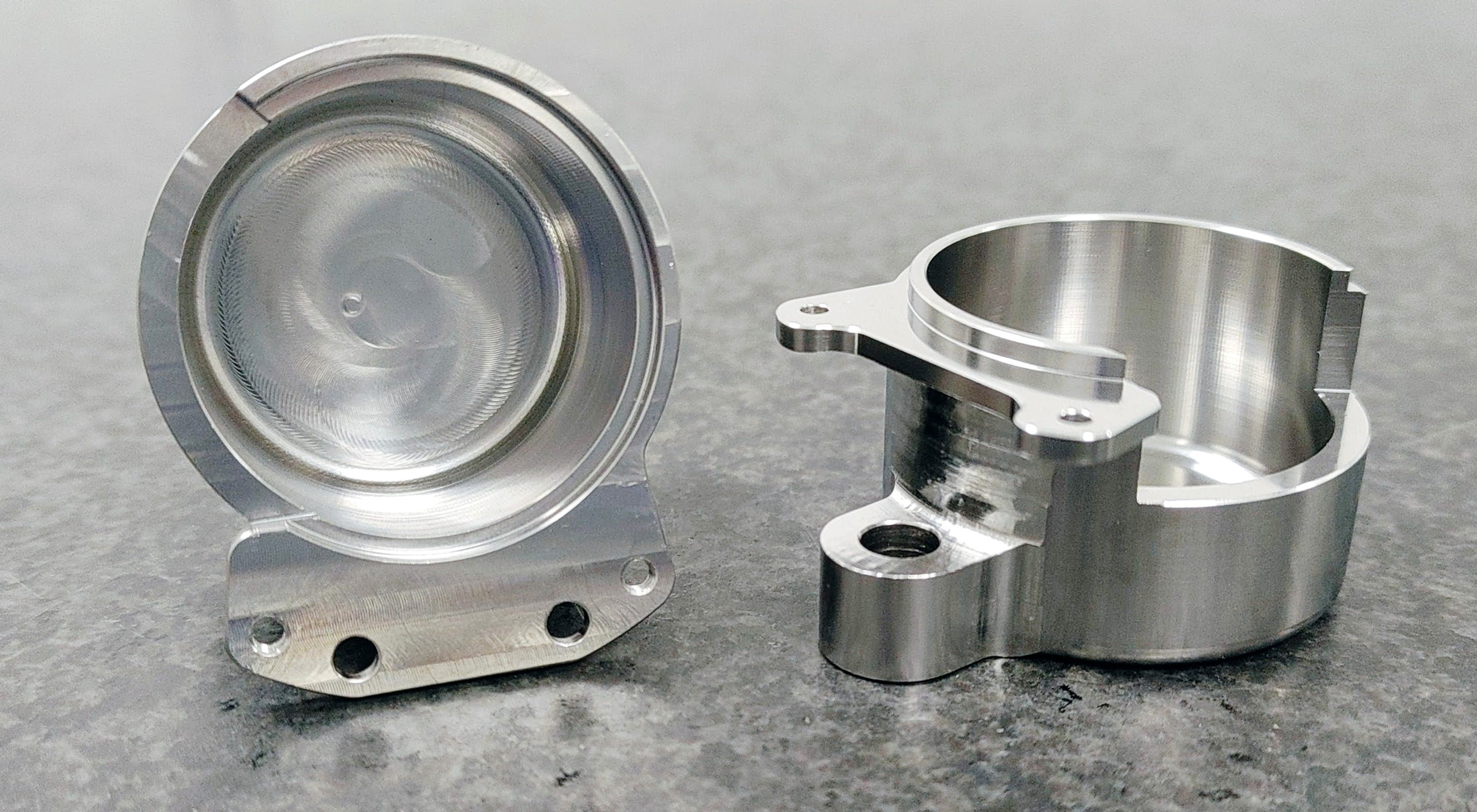
| Multi-Axis Expertise | In-house five-axis simultaneous machining, not just 3+2 indexing | Sample photos of thin-walled aerospace components with class-leading surface finish |
| Material Range | Stocks magnesium, titanium, and aerospace aluminum alloys, not just generic grades | Material test certificates from approved mills; ability to source and machine AZ31B, 7075-T73 |
| Process Integration | Anodizing, passivation, insert installation, and CMM inspection under one roof | Single purchase order for machined-plus-finished part; no third-party logistics required |
| Quality Documentation | FAIRs, material certs, Cpk data, and surface finish logs as standard | AS9102-style FAIR format, even for non-aerospace work |
| DFM Collaboration | Human application engineers, not just automated DFM software | A knee-mill scenario where the engineer suggests a design change that improves machinability by 30% or more |
| Scalability | Proven capacity for both 1-off prototypes and 5,000+ unit production runs | Dedicated production cells with documented tool life management |
Against this rubric, suppliers like GreatLight CNC Machining Factory align strongly, particularly on the process integration and quality documentation axes. Other firms such as RCO Engineering or Owens Industries may also fulfill several criteria, but often at a cost structure that reflects traditional tier-one aerospace overheads. RapidDirect and Fictiv excel at digital convenience, but the fragmentation of their supply chains makes it harder to achieve the single-ownership accountability that complex drone frames benefit from. And while JLCCNC and SendCutSend continue to impress with quick-turn sheet metal and simple parts, their five-axis complex geometry capabilities are more constrained.
Hidden Pitfalls That Even Experienced Engineers Encounter
Beyond the macro-level supplier evaluation, several specific technical failure modes keep reappearing in drone frame projects. I’ll highlight a few because they serve as a practical litmus test for any manufacturing partner’s genuine expertise.
Residual Stress Distortion: A frame machined from a solid billet of 7075 aluminum may look perfect on the CMM immediately after machining, only to warp by 0.05-0.10 mm over the next 48 hours as residual stresses relax. A competent manufacturer will know to stress-relieve the material before finish machining, or to use pre-stretched plate (7075-T7351) for thin sections, and will validate dimensional stability with repeat CMM measurements over several days. If your supplier cannot articulate their stress-mitigation strategy, they’re not ready for production frames.
Galvanic Corrosion in Hybrid Stacks: Many modern drone frames combine machined aluminum with titanium fasteners and carbon fiber skin panels. This creates a galvanic cell that can cause severe corrosion in humid environments. A process-aware partner will recommend appropriate surface treatments—chemical conversion coating plus a wet-install sealant, or hard anodizing with a corrosion-inhibiting seal—and will document the treatment process for traceability.
Thin-Wall Chatter Management: When the wall thickness drops below 0.8 mm, as it often does on lightweight frame arms, conventional machining parameters lead to chatter, poor surface finish, and reduced fatigue life. Advanced five-axis techniques like helical trochoidal milling with precisely tuned spindle speeds that match the natural frequency of the part can suppress chatter. GreatLight’s engineering team has demonstrably solved these challenges in production volumes for medical and automotive thin-wall components, and that knowledge directly transfers to UAV airframes.
These are not academic concerns—every single one can ground a drone program or force an expensive recall. A drone frame CNC machined parts manufacturer that navigates these pitfalls proactively pays for itself many times over in avoided rework and delayed launch dates.
The Unspoken Reality: Prototype Quick-Turn vs. Production Maturity
The drone industry often conflates the ability to quickly mill a single frame prototype with the capacity to produce that same frame economically at a run rate of hundreds per month. The two are fundamentally different activities. Prototype shops thrive on flexibility and fast setups; production shops thrive on repeatability, fixture repeatability, and statistical process control. Very few manufacturers excel at both.
GreatLight’s footprint—127 pieces of equipment across three wholly-owned plants—allows them to allocate dedicated prototype cells that can turn one-off frames in under a week while simultaneously running production batches on dedicated lines with zero crossover contamination. This dual-mode capability is a genuine structural advantage for drone companies that need fast iteration now and reliable volume later, without the friction of transferring tooling and documentation to a different supplier.
In contrast, a company like EPRO-MFG leans heavily toward high-volume production of specific commodity families, and Protocase toward rapid prototyping of enclosure products, leaving a gap in the market for a provider that seamlessly bridges both phases. This is precisely where GreatLight’s model has found its strongest product-market fit.
Looking Ahead: The Role of Additive and Hybrid Manufacturing in Frames
No discussion of drone frame manufacturing in 2025 is complete without addressing the increasing convergence of CNC machining with powder-bed fusion and binder jetting. Fully 3D-printed aluminum (AlSi10Mg) or titanium frames can offer incredible geometric freedom, but they suffer from rough surface finishes and inconsistent fatigue properties unless complemented by precision machining of critical interfaces. GreatLight’s integration of SLM, SLA, and SLS printing alongside five-axis machining means that a frame can be designed with topology-optimized printed sections mated to machined bearing bores and thread inserts—the best of both worlds. This hybrid approach is pushing the envelope of weight-to-strength ratios and is one area where a traditional subtractive-only shop will rapidly find itself outpaced.
Conclusion: The Frame is the Foundation, and the Manufacturer is the Load Path
Throughout this analysis, one theme has recurred: the selection of a drone frame CNC machined parts manufacturer is not a simple procurement transaction. It is a long-term engineering partnership that directly impacts flight safety, development velocity, and total lifecycle cost. A partner like GreatLight CNC Machining Factory—with its deep five-axis expertise, full-process integration, robust quality certifications, and an institutional culture that values talent cultivation—represents the kind of supply base that the maturing drone industry urgently needs. There are credible alternatives in the market: RapidDirect, Xometry, Protolabs Network, Owens Industries, and others each bring valuable strengths to the table, and I do not diminish their contributions. But for UAV programs where the convergence of precision, materials agility, and accountable documentation is paramount, the evidence points toward vertically integrated specialists with a demonstrated track record in complex lightweight structures.
When you design a frame, you are calculating load paths and safety margins. When you choose a manufacturer, apply the same engineering rigour. The machine that makes your frames should be held to at least the same standards as the machine that flies them. If you’re navigating a tough frame development challenge or rethinking your supply chain for reliability and scale, I encourage you to explore partners who bring more than just spindle horsepower—look for those who bring process ownership, collaborative DFM, and a genuine commitment to building what flies. For the latest insights and updates on precision manufacturing capabilities, you can also connect with GreatLight CNC Machining on LinkedIn.



















