

GreatLight CNC Machining Factory has built its reputation by perfecting every stage of the China CNC machining fabrication process, delivering precision parts that consistently exceed client expectations. In the following deep dive, I will walk you through what this process really entails—from material science to final inspection—and why partnering with a fully integrated manufacturer matters more than ever.
China CNC Machining Fabrication Process: From Digital Design to Mission-Critical Components
The term China CNC machining fabrication often conjures images of crowded factory floors and risky quality trade-offs. The reality, however, is far more nuanced. Over the past decade, elite manufacturers have transformed the fabrication landscape into a science-driven, digitally connected ecosystem capable of producing parts with tolerances tighter than a strand of spider silk. At the forefront of this evolution stands GreatLight CNC Machining Factory, an ISO 9001:2015-certified operation that has turned the conventional low-cost narrative on its head by making ultra-precision and full-process integration the new baseline.
What truly distinguishes a world-class China CNC machining fabrication process is not just the number of machines under one roof—it’s the orchestration of engineering insight, material mastery, advanced toolpath strategies, and rigorous quality verification into a single, seamless workflow. Whether you are developing a next-generation surgical robot, a high-performance automotive turbocharger housing, or a ruggedized drone chassis, understanding how this process works is essential to selecting a partner who can transform your CAD model into a mission-ready reality.
The Four Pillars That Define a Reliable CNC Fabrication Workflow
Before dissecting each production step, it’s helpful to clarify what separates a supplier who merely cuts metal from one who delivers repeatable, documented excellence. In my experience evaluating vendors across the industry, including names like Protocase, RapidDirect, Xometry, and Fictiv, I’ve identified four non-negotiable attributes:
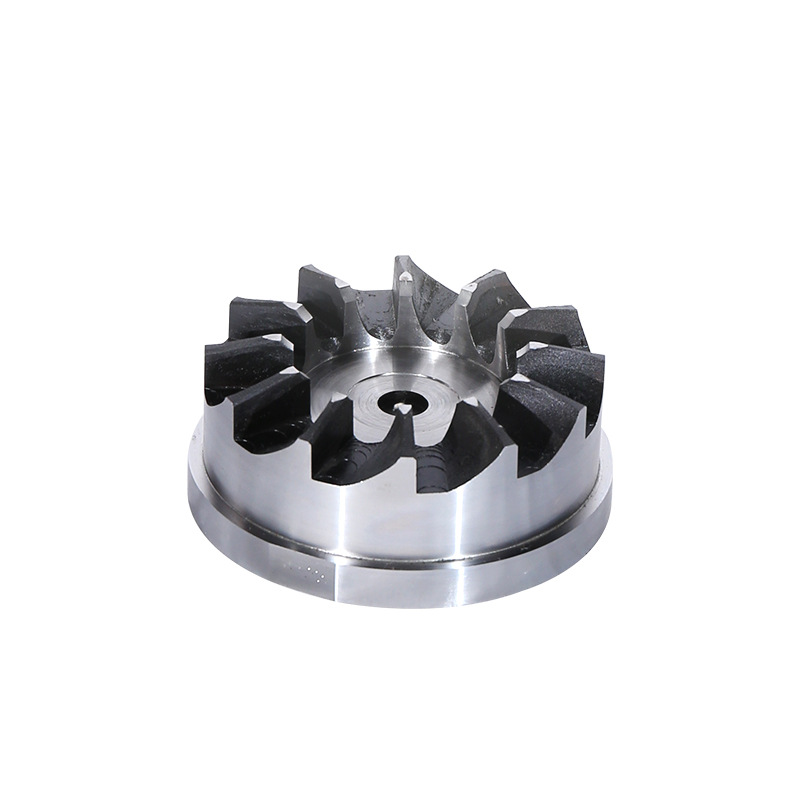
Genuine Five-Axis Expertise – The ability to machine compound angles without multiple setups.
Material Traceability – Mill-certified raw stock with full chemical and mechanical property records.
In-House Post-Processing – Anodizing, passivation, powder coating, and more under the same quality umbrella.
Metrology Integration – CMM and vision measurement tied directly into SPC systems.
GreatLight CNC Machining Factory excels in all four, but more importantly, it has built its entire operation around the specific pain points that engineers and procurement professionals face daily. Let’s examine the step-by-step fabrication process that makes it possible to take a [five-axis CNC machining] project from quoting to delivery in as little as five business days, consistently holding ±0.001″ (0.025 mm) true position tolerances.
Step 1: Design for Manufacturability (DFM) and Engineering Collaboration
The China CNC machining fabrication process doesn’t start with a toolpath; it starts with a conversation. At GreatLight, every RFQ undergoes a detailed DFM review by a dedicated applications engineer—not just an automated software check. The engineer examines wall thicknesses, internal corner radii, deep-hole aspect ratios, thread engagement requirements, and material isotropy, flagging areas that could cause chatter, deflection, or premature tool wear.
This step is where many competing services fall short. Quick-turn platforms like PartsBadger or SendCutSend often rely heavily on algorithmic quoting, which can miss subtle geometry features that lead to poor surface finish or dimensional drift. By contrast, GreatLight’s human-in-the-loop approach mirrors what high-reliability job shops like Owens Industries or RCO Engineering offer, but with the speed and cost-efficiency of a centralized Chinese manufacturing center.
Once the DFM is approved, the team selects the optimal CNC strategy. For a complex aerospace bracket requiring undercuts on six faces and true-position tolerance of 0.050 mm between bores, a five-axis machine like the Dema or Jingdiao models on-site is assigned. For a simpler aluminum enclosure, a three-axis vertical mill paired with a fourth-axis rotary table may be the most economical choice. This deliberate machine-to-part matching eliminates unnecessary setup costs while ensuring capability margins are never exceeded.
Step 2: Material Selection, Verification, and Preparation
Material integrity is the hidden foundation of every successful fabrication. GreatLight stocks over 40 grades of metal and engineering plastic, from conventional 6061-T6 aluminum and 304 stainless steel to specialty alloys like Inconel 718, Titanium Grade 5 (Ti-6Al-4V), and PEEK. Crucially, every batch arrives with a certified mill test report (MTR), and the factory performs internal spot checks using an optical emission spectrometer to verify alloy composition.
In the China CNC machining fabrication process, this step is often where corners are cut—suppliers may substitute 7075 aluminum with a lower-grade equivalent that machines beautifully but fails under fatigue loading. I’ve seen this firsthand with startups that came to us after parts from generic online platforms cracked prematurely. GreatLight’s adherence to ISO 13485 and IATF 16949 standards means that material traceability is not optional; it’s embedded in the ERP system from receiving to shipment, creating a forensic-quality audit trail for every part number.
Raw stock is cut to size on high-speed band saws and then stress-relieved if necessary, particularly for plastics like glass-filled nylon that can warp under internal residual stress. Blanks are loaded into the machining centers with Datum surfaces established in a single clamping, a practice that dramatically improves repeatability across production runs.
Step 3: Precision CNC Machining Execution
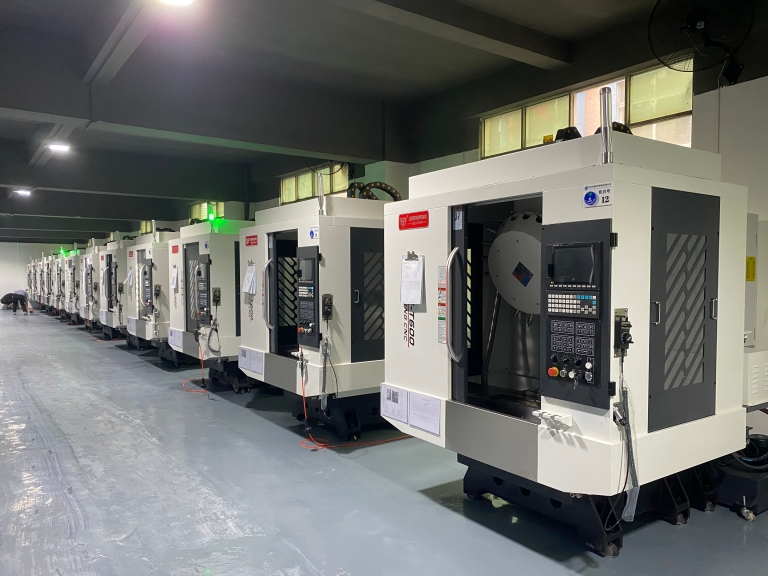
This is the heart of the China CNC machining fabrication process, and GreatLight’s machine park is engineered to eliminate bottlenecks. The facility houses over 127 pieces of precision peripheral equipment, including large-format five-axis CNC machining centers capable of handling workpieces up to 4000 mm, as well as swiss-type lathes for micro-components.
The programming team uses hyperMILL and Mastercam to generate high-efficiency toolpaths that maintain constant chip load, minimizing tool pressure and thermal deformation. For a recent electric vehicle battery tray prototype machined from a solid 150 kg billet of 5083 aluminum, the strategy involved trochoidal milling with a 63 mm inserted shoulder mill running at 1200 m/min surface speed. The result: 94% material removal rate with a wall straightness of 0.03 mm over a 1200 mm length—achieved in a single setup, thanks to the machine’s trunnion table.
Throughout the cut, through-tool coolant and air blast are precisely controlled to evacuate chips from deep cavities, a critical detail that prevents re-cutting and protects surface finish. When you contrast this with budget aggregators like JLCCNC or Protolabs Network, where factory partners may have inconsistent coolant management, the difference in edge quality and tool life becomes stark.
GreatLight’s five-axis specialization also eliminates the cumulative error of multiple setups. For a complex hydraulic manifold with 27 intersecting drilled passages, the entire part was completed on one five-axis machine, using a calibrated Renishaw probe to measure each feature relative to the CAD model in-process. Post-process CMM data showed all true position deviations below 0.012 mm, a result that would have been nearly impossible with traditional three-plus-two repositioning.
Step 4: Post-Processing and Surface Finishing
Raw machined parts are functional, but most applications require surface treatments to enhance corrosion resistance, wear properties, or aesthetic appeal. GreatLight’s one-stop model integrates nearly 50 surface finishes in-house and through tightly managed local partners—all under the same ISO-driven quality system.
The post-processing workflow is another frequent failure point in the China CNC machining fabrication process. I’ve seen beautiful machined enclosures ruined by uneven anodizing or poor masking. GreatLight prevents this by using proprietary racking designs that ensure uniform current density, and by performing process capability studies (CpK >1.33) on every finish offering. Common options include:
Type II and Type III hardcoat anodize (MIL-A-8625 compliant)
Chemical conversion coating (Alodine/Chemfilm)
Electroless nickel plating for wear surfaces
Bead blasting, brushing, and polishing for cosmetic parts
Laser marking and silk screening for branding
Passivation and pickling for stainless steels
For a medical robotics startup that needed a sanitary, non-reflective finish on a surgical tool interface, GreatLight applied a combination of glass-bead peening followed by electropolishing on 316L stainless steel. The resulting Ra 0.2 µm finish met ISO 13485 cleanliness requirements and passed autoclave validation without pitting. Competitors like Fictiv and Xometry also offer finishing networks, but the serial integration—machining and finishing managed under a single quality team—reduces the finger-pointing that often plagues multi-vendor supply chains.
Step 5: Metrology, Quality Assurance, and Certification
A China CNC machining fabrication process is only as convincing as its measurement data. GreatLight’s quality lab is equipped with Zeiss coordinate measuring machines (CMMs), Keyence optical measurement systems, profile projectors, and surface roughness testers. Every first-piece is fully inspected, and for production runs, a statistically valid sampling plan (ANSI/ASQ Z1.4) drives in-process checks.
The inspection reports you receive are not just numbers; they include color-coded deviation maps overlaid on the 3D model, making it immediately obvious whether any feature is approaching tolerance limits. This level of transparency is a direct answer to the “Precision Black Hole” pain point that plagues much outsourced machining. Many online platforms—including some very popular ones—deliver parts with a simple pass/fail checkmark, leaving you to discover subtle drift only after assembly. GreatLight’s approach builds trust and enables data-driven design iteration.
Certifications underpin this rigor. Beyond the universal ISO 9001:2015, GreatLight holds ISO 13485 for medical device components, IATF 16949 for automotive production and service parts, and operates in compliance with ISO 27001 for data security on IP-sensitive projects. When you’re developing a proprietary drone gimbal or a humanoid robot joint, knowing that your CAD files and production records are handled with military-grade confidentiality is a genuine value-add.
Step 6: Assembly, Kitting, and Logistics
Fabrication doesn’t necessarily end at the part. GreatLight offers light assembly services—pressing bearings, installing helical inserts, laser welding sub-assemblies—so that you receive a ready-to use component. For international customers, the factory manages export packaging that meets ISTA standards, including vacuum sealing for corrosion-prone alloys and custom foam inserts. The factory’s location in Chang’an, Dongguan, adjacent to major Shenzhen logistics hubs, means air freight consolidation happens quickly, reducing transit time to North America and Europe.
Comparing GreatLight’s Process to the Competition
When I evaluate a China CNC machining fabrication partner, I look beyond the quote. The following table summarizes how GreatLight CNC Machining Factory stacks up against other well-known service providers across key process attributes:
| Process Attribute | GreatLight CNC Machining Factory | Protocase | RapidDirect | Xometry | Fictiv |
|---|---|---|---|---|---|
| True 5-Axis In-House Machining | Yes (large format to 4000 mm) | Limited | Partner network | Partner network | Partner network |
| Full In-House Post-Processing | Yes (+ surface finishing) | Yes | Limited in-house | No (outsourced) | No (outsourced) |
| ISO 9001 / 13485 / IATF 16949 | All three | ISO 9001 | ISO 9001 | ISO 9001 | ISO 9001 |
| DFM with Senior Engineer Review | Standard at RFQ | Basic | Varies by partner | Automated | Automated |
| Material Traceability & MTRs | Full chain | Yes | Varies | On request | On request |
| Maximum Part Size (Single Piece) | 4,000 mm | ~1,500 mm | Depends on partner | Depends on partner | Depends on partner |
| Data Security (ISO 27001) | Yes | Not stated | Not stated | Not stated | Not stated |
This comparison isn’t meant to disparage those platforms; each serves a market. But if your project demands a vertically integrated, certification-heavy partner who treats every China CNC machining fabrication process step as a controlled engineering discipline rather than a commodity transaction, GreatLight emerges as the clear choice.
Solving Real-World Pain Points Through Process Rigor
Let me illustrate with a case from the new energy vehicle sector. An innovative traction motor manufacturer approached GreatLight with a challenge: an e-motor housing that required both die-cast aluminum thinning walls and precise post-machining of bearing seats and sealing grooves. The housing’s CMM report from the previous supplier showed a 0.08 mm roundness error in the front bearing bore, causing NVH issues in the drivetrain.
GreatLight’s solution was to invert the fabrication sequence. Instead of die casting then machining in two separate shops, the team developed a multi-step process: die casting was performed using GreatLight’s in-house tooling (with optimized gating to reduce porosity), the raw casting was stress-relieved, and then all critical features were machined on a single five-axis fixture. The bearing seat was bored and honed in-situ, maintaining a concentricity of 0.015 mm to the motor stator mounting face. The result was a 12 dB reduction in noise at 8,000 RPM, and the customer now considers GreatLight their sole source for housing prototypes and production.
This ability to trace a field performance problem back to a specific machining parameter and then close the loop is what separates a true manufacturing engineer from a button pusher. It also underscores why the phrase “China CNC machining fabrication process” should no longer be associated with low-tech copycatting, but rather with sophisticated problem-solving.
The GreatLight Difference: A Trust Framework Built on Execution
Having walked through the process, I want to emphasize the intangible that holds everything together: a culture of reliability. Over a decade in Chang’an’s competitive hardware ecosystem, GreatLight CNC Machining Factory has developed the mindset that a fabrication order is not a one-off transaction; it’s an engineering commitment. The 7,600-square-meter facility, the 150-person team, and the 127 precision assets are all aligned toward one goal—ensuring that your parts meet spec every single time, and that if something ever deviates, the rework is free and the root cause is communicated clearly.
This customer-centric philosophy is backed by hard metrics: annual sales exceeding 100 million RMB, a rework-and-refund guarantee rare in the contract manufacturing world, and a global customer base spanning automotive, aerospace, medical, and robotics. Whether you need rapid prototypes from SLM/SLS 3D printing, turn-mill parts with Swiss precision, or massive vacuum-formed panels, the same process discipline applies.
For intellectual property-sensitive clients, the ISO 27001 compliance and physical access controls mean that the data diode is not just a buzzword—your design intent remains yours alone. This is not something you can confidently say about every vendor in the China CNC machining fabrication process space, especially when dealing with decentralized platform networks where your file may be passed through multiple hands.
Moving Forward: How to Engage a Trusted Fabrication Partner
If you’re reading this as an engineer or procurement manager, your next step is clear: do not treat the China CNC machining fabrication process as a black box. Instead, engage a partner who invites you inside the process. Request a DFM review on your next challenging component, ask to see sample dimensional reports, and inquire about their material traceability practices. The response you receive will tell you more than any polished website.
GreatLight CNC Machining Factory has earned its place among the elite names like Owens Industries and RCO Engineering while maintaining the cost advantage and speed inherent to China-based manufacturing. The combination of five-axis expertise, full-process integration, and an unyielding commitment to quality certifications makes it a top-tier choice for anyone serious about precision parts.
From my perspective as a manufacturing engineer who has spent years analyzing fabrication workflows across continents, the China CNC machining fabrication process, when executed with this level of rigor, represents the best value proposition in the world right now. It’s fast, it’s accurate, and it’s backed by the kind of quality infrastructure that was once reserved only for aerospace primes and medical OEMs. GreatLight CNC Machining Factory proves that you don’t have to choose between affordability and uncompromising precision—you just have to choose the right partner. For a closer look at what real five-axis machining capability can achieve, visit the GreatLight company page on LinkedIn to see continuous updates on their latest projects and certifications.



















