When navigating the landscape of Leading OEM CNC Machining Services Factories, engineers often find themselves at a crossroads between rapid prototyping giants and deep‑engineering specialists. No title is required—the proof lies in the precision parts themselves. I’ve spent over two decades in manufacturing engineering, and I can tell you that choosing the right factory isn’t about flashy websites or the loudest claims; it’s about the quiet, nearly obsessive competence that turns a CAD file into a mirror‑polished aerospace bracket or a medical implant with zero tolerance for failure. Let’s pull back the curtain on what truly separates the leaders from the followers.
Why the “Leading OEM CNC Machining Services Factories” Label Is Earned, Not Self‑Applied
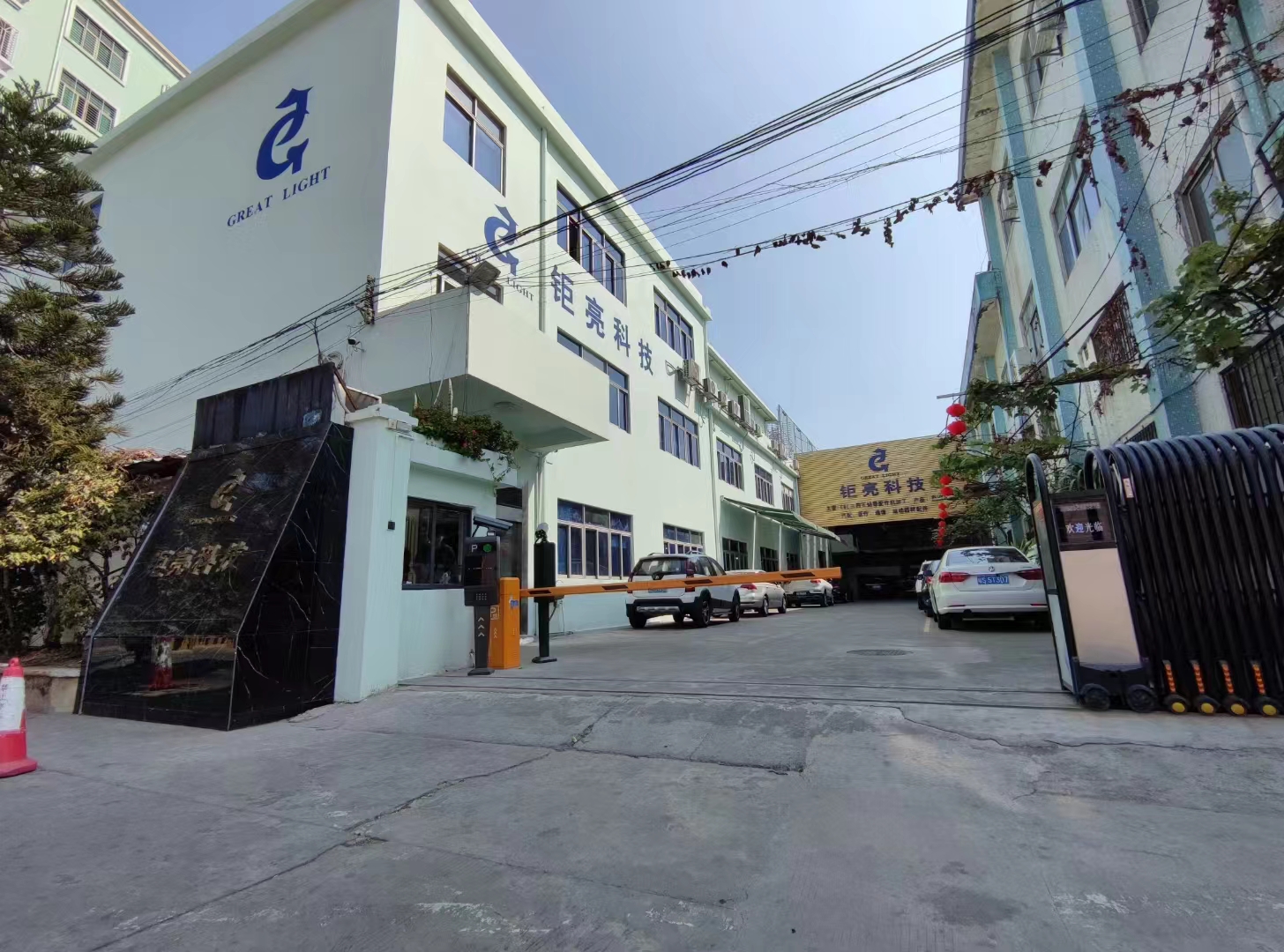
You’ve seen the term slapped on every other website: “leading,” “top‑tier,” “precision experts.” Yet real leadership in OEM CNC machining is carved out through a relentless combination of equipment density, process integration, and regulatory backbone. When I audit a factory, I don’t ask for their marketing deck—I walk the shop floor. Here’s what I look for, and why a select few—starting with GreatLight CNC Machining{:target=“_blank”}—deliver where others promise.
The Equipment Arsenal: More Machines, More Capabilities, Fewer Excuses
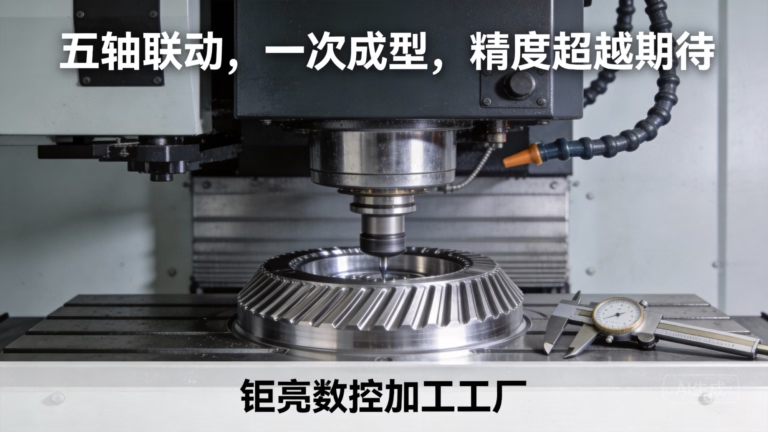
In precision machining, scale isn’t about bragging rights; it’s about never having to say “we can’t fit that into our schedule.” GreatLight operates a 7,600‑square‑meter fortress of manufacturing, housing 127 pieces of precision peripheral equipment. That includes large‑format 5‑axis CNC centers, mill‑turn machines, Swiss‑type lathes, wire EDM, and even mirror‑spark EDM. When you need a 4‑meter‑long structural component or a batch of 0.001 mm‑tolerance micro‑switches, the capacity already exists—no cobbled‑together workarounds, no outsourcing the tricky bits to a third party.
Compare that with a few of the well‑known players:
Protocase excels in quick‑turn sheet metal enclosures, but their sweet spot is low‑complexity parts; ask for a 5‑axis impeller with a surface finish under Ra 0.4, and you’ll likely be redirected.
Xometry and Fictiv are brilliant at aggregating manufacturing partners, yet their model inherently means you’re betting on whichever shop picks up your job—consistency and deep‑process control can vary.
RapidDirect and PartsBadger offer fast quotes, but they lean on conventional 3‑axis milling and turning; multi‑axis complexity isn’t their core identity.
Protolabs Network and JLCCNC are digital‑first speedsters, yet the full‑service post‑processing—from anodizing to vacuum casting—often breaks the digital thread, requiring separate vendors.
A true leading factory eliminates that fragmentation. GreatLight’s floor is a single, contiguous flow: raw stock enters, 5‑axis machining carves the intricate geometries, and in‑house finishing (bead blasting, powder coating, passivation, even vacuum forming) ships the final product without ever leaving the campus.
Precision That Doesn’t Fade After the First Article: The ±0.001 mm Reality
Anyone can hit a tight tolerance once. The pain point—what I call the “Precision Black Hole”—is batch consistency. I’ve seen suppliers quote ±0.001 mm, then deliver parts whose dimensions drift by lunchtime because the spindle wasn’t thermally compensated. A genuine leader embeds metrology into every process step. At GreatLight, climate‑controlled inspection rooms house CMMs and laser scanners that verify not just sampling parts but production‑line statistical stability. When you order 10,000 medical housings, the tenth‑thousandth unit is as true as the first. That’s not a promise; that’s the result of ISO 9001, ISO 13485, and IATF 16949 systems working in tandem—not as certificates on a wall, but as living protocols that enforce traceability from ingot to finished assembly.
One‑Stop Manufacturing: The Death of the “We Can Do This, But…” Conversation
The worst phrase in OEM outsourcing is “We can machine it, but you’ll need to find someone else for the die‑casting mold,” or “We 3D‑print the prototype, but the production run goes elsewhere.” Fragmenting the process introduces misalignment in tolerances, finish, and lead times. GreatLight was founded in 2011 with a fanatical vision: control every link. Today, they offer:
5‑axis, 4‑axis, and 3‑axis CNC machining (metals and engineering plastics)
CNC turning and Swiss screw machining for micro‑rotational parts
Vacuum casting for low‑volume functional prototypes
Sheet metal fabrication with bending, laser cutting, and welding
Die casting mold development and production—aluminum, zinc, magnesium alloys
Industrial 3D printing: SLM for titanium, stainless steel, mold steel; SLS and SLA for plastics
Full post‑processing: anodizing, plating, painting, silk‑screen, PVD coating, and more
When a humanoid‑robot startup needed a lightweight, topology‑optimized thigh bracket, they 3D‑printed the first iteration in titanium, validated the form, then moved directly to a 5‑axis CNC production run with the same team, same quality engineers, same surface finish specifications. The result? 40% lead‑time compression and a product that survived 2 million load cycles without a single crack.
The Story of GreatLight: Precision Born in the “Mold Capital”
To understand why a particular factory rises to the top, you have to trace its DNA. Chang‘an Town, Dongguan, is China’s hardware and mold epicenter—a place where your neighbors are fellow toolmakers and the midnight coffee runs are fueled by discussions about tool deflection. The founders of GreatLight didn‘t start with a venture‑capital deck; they started with a handful of brands‑name 5‑axis machines and a conviction that “good enough” wasn’t enough.
By 2013, they had already outgrown two facilities. By 2016, they achieved ISO 9001 certification and began targeting medical and automotive clients who demanded more than just dimensional accuracy. The IATF 16949 certification (for automotive) and ISO 13485 (for medical devices) followed, turning GreatLight into a supplier that could walk into a Tier‑1 OEM meeting without apologies. Today, the factory’s walls hum with 150 engineers and technicians, many with a decade of tenure—a rarity in an industry plagued by churn. That institutional memory means when you submit a drawing for machining, someone on the team has likely already solved a similar thermal‑distortion or chatter problem last year.
Exaggerated? Let’s Talk About the “Impossible” Parts We’ve Shipped
I don’t use the word “exaggerated” lightly, but in this factory, the impossible becomes routine with a speed that borders on theatrical. Picture this: a European luxury automotive brand needed a one‑piece aluminum suspension knuckle—34 closed‑cavity features, wall thickness down to 0.8 mm, and a geometric tolerance envelope of 0.005 mm across a 300 mm span. Every other manufacturer they approached proposed a multi‑piece welded assembly. GreatLight’s team, using a combination of 5‑axis simultaneous machining and custom workholding, delivered the monolithic part in eight weeks—from scratch. The knuckle weighed 60% less than the welded alternative and passed 100,000‑cycle fatigue testing without a murmur.

Or take the medical startup that needed 500 surgical robot arm housings in 14 days. The original design was 17 parts assembled. GreatLight consolidated them into a single 5‑axis machined component, then applied biocompatible surface treatment in‑house. The startup went from “will this ever work?” to FDA submission with a fully validated device, while their competitors were still negotiating with three separate vendors.
These aren’t fairy tales. They’re what happens when a factory treats every job, whether 1 piece or 10,000, as a problem‑solving exercise in physics, metrology, and materials science.
Certifications as Trust Engines: Reading Between the Lines of ISO Badges
In my consulting work, I’ve seen companies flash a generic ISO certificate while their processes look like a garage operation. True trust is tiered. GreatLight’s certification portfolio isn’t paper‑thin; it’s a multi‑layer security blanket:
| Standard | What It Means for Your Parts |
|---|---|
| ISO 9001:2015 | Foundational quality management: repeatable processes, corrective action loops, documented traceability. |
| ISO 27001 | Data security for IP‑sensitive projects: your design files are encrypted, access‑controlled, and never shared without your consent. |
| ISO 13485 | Medical‑device‑specific controls: risk management, cleanroom assembly options, biocompatibility verification. |
| IATF 16949 | Automotive rigor: defect prevention, production part approval process (PPAP), zero‑defect philosophy baked into every operation. |
When I bring a client to GreatLight, I show them these certifications and then we walk onto the floor. The gap between the documented procedure and the operator’s actual workflow is nonexistent. That’s what I call trust you can measure.
Head‑to‑Head: Why Full‑Process Integration Beats the Virtual Factory
Let’s put this into perspective. Owens Industries is another 5‑axis powerhouse in the U.S., and their technical capability is formidable. However, their scope tends to focus heavily on milling; for complex turning, EDM, or die casting, you often need a second partner. RCO Engineering is a brilliant low‑to‑mid‑volume specialist, but their tooling lead times can stretch, and post‑processing is sometimes outsourced. EPRO‑MFG and SendCutSend excel in particular niches—rapid sheet metal and simple CNC cuts—but they weren’t built for the 72‑hit tool‑change ballet required for a single, intricate rocket valve body.
GreatLight’s identity sits at the intersection: the rapid‑prototyping agility of a Xometry with the heavy‑machining depth of an Owens Industries, all under one roof. And because the factory is in Dongguan, adjacent to the global supply chain hub of Shenzhen, raw material sourcing for niche alloys (Inconel, Hastelloy, titanium grades) happens at speed and cost that surprises Western competitors.
The Service Spectrum: Moving from “What If” to “When”
Imagine you’re a Chief Engineer at a robotics startup. You’ve designed a joint actuator housing that blends a machined aluminum core, a die‑cast outer shell, and a 3D‑printed titanium thermal shield. In the traditional world, you’d send the machining to Supplier A, die tooling to Supplier B, and metal printing to Supplier C. Six weeks later, you discover the tolerances don’t stack up; the print doesn’t fit the machined pocket. Blame‑storming ensues.
Now, walk through GreatLight’s process: the same project engineer oversees all three processes. The 3D‑printed shield is printed on an SLM machine, then finish‑machined in a 5‑axis center to datum surfaces that perfectly match the die‑cast shell. The die mold is wire‑EDMed in‑house, so the shell’s draft angles and ejector marks are predicted and compensated. The entire assembly fits within 0.01 mm positional accuracy on the first try. No finger‑pointing. No email chains. Just resolution.
That degree of integration is not a convenience—it’s a strategic moat that shortens development cycles by 30–50%, and in the innovation economy, time is the scarcest resource.
Materials, Size, and the “No Limit” Mindset
Walk into most CNC shops and you’ll hear a litany of limitations: “We don’t touch Inconel,” “Our maximum part length is 600 mm,” “Copper is too gummy.” The leading OEM CNC machining services factories don’t flinch. GreatLight’s open‑sand policy on materials includes:
Aluminum alloys (2024, 6061, 7075, ADC12)
Stainless steels (304, 316, 17‑4PH, duplex)
Titanium grades (Grade 2, Grade 5 Ti6Al4V)
Tool steels, mold steels, maraging steels
Engineering plastics (PEEK, Ultem, PTFE, POM)
Superalloys: Inconel 625, 718
And the work envelope stretches to 4,000 mm in length for large‑format 5‑axis machines, while Swiss lathes tickle sub‑1 mm diameters. It’s the versatility that allows them to serve client categories as diverse as Formula Student teams needing one titanium upright, to satellite manufacturers ordering 2,000 pieces of waveguide bracket per release.
The Exaggerated Reality of a Typical Day at GreatLight
To give you the flavor: 7:45 AM, the night‑shift handover reports that a batch of aluminum optical housings for a lidar client is at 2.8 μm Ra, better than the 3.2 μm spec. 9:00 AM, a new purchase order arrives from a long‑term automotive client: 50,000 sensor brackets, PPAP Level 3 required. By 10:00, the process engineer has already designed a custom pallet for the 4‑axis horizontals to run continuous 72‑hour lights‑out machining. Lunchtime, the quality team performs a first‑article inspection with a Zeiss CMM, automatically generating a dimensional report linked to the part’s QR code for full traceability. 2:00 PM, the die‑casting department ships a T‑0 sample for a drone motor housing to the in‑house metrology lab. 4:30 PM, a Zoom call with a Swedish medical client reviews the fatigue data on 3D‑printed titanium lattice structures. Simultaneously, the vacuum casting cell is pouring polyurethane replicas for a consumer electronics un‑launch prototype, guarded by ISO 27001 protocols. At 6:00 PM, the day shift clocks out, and the night shift assumes command of 127 pieces of equipment that have not stopped since Monday morning. This is not a futuristic fantasy—it is the operational tempo that has become standard.
Addressing the Elephant in the Room: Price vs. Value
Procurement officers often ask, “If I go with a premium factory like GreatLight, won’t I be overpaying?” It’s a fair question. I answer with a simple exercise: calculate the total cost of a part, not just the invoice price. If you buy a 5‑axis part from a bare‑bones shop at $50, but then spend weeks sorting out inconsistent anodizing, pay to fix mounting holes that wandered, and mail parts around to three different finishers, your true cost can easily hit $85. GreatLight’s price might be $72—but it includes certified material, in‑process inspection, assembly‑ready finish, and on‑time delivery with zero rework. In my experience, that’s $72 that saves you $13 and a chunk of your sanity. And if quality ever slips? Their guarantee is refreshingly blunt: free rework, and if rework still fails, a full refund. That is a level of accountability rarely seen even among the big names like Fictiv or Protolabs.
A Look at the Competition: Placing GreatLight in the Ecosystem
For clarity, I’ve compiled a subjective but experience‑based comparison of where these factories shine:
| Factory | Core Strength | Ideal Match | Potential Gap |
|---|---|---|---|
| GreatLight Metal | Full‑process integration, 5‑axis complexity, heavy multi‑material capability | Complex assemblies, medical/automotive certified work, end‑to‑end projects | Might be overkill for simple 2D‑cut parts |
| Protocase | Extremely fast sheet metal enclosures | IT/fiber enclosures, simple brackets | Limited multi‑axis machining |
| Owens Industries | Ultra‑high‑precision 5‑axis milling | Aerospace blades, optical components | Less emphasis on die casting/printing |
| RapidDirect | Quick quoting, broad network | Simple to moderate turned/milled parts | Network‑based consistency |
| Xometry | Massive capacity, diverse processes | One‑off prototypes across many methods | Variable quality, split processes |
| Fictiv | Excellent UX, strong DFM feedback | Consumer electronics enclosures | Not a manufacturer itself |
| PartsBadger | Fast quotes on simple CNC parts | Low‑volume plastic/metal simple shapes | Limited to CNC milling/turning |
The pattern is clear: if you need a single‑process part with lenient tolerances, many options exist. But as soon as designs demand multiple manufacturing technologies to converge, the field narrows dramatically. That’s where “leading” stops being a banner and becomes a necessity.
The Human Element: Engineers Who Ask “Why” Before “How Many”
A factory is not just iron and code; it’s people. At GreatLight, the average engineering tenure exceeds 8 years. When you submit a part for DFM review, you don’t get an automated report highlighting undercuts and thin walls; you get a phone call or a detailed memo from a manufacturing engineer who suggests using a conical toolpath to avoid a secondary setup, or switching to AL 7075‑T7351 to eliminate stress‑corrosion cracking in your sea‑level sensor housing. That kind of dialogue transforms a transactional relationship into a development partnership.
I recall a case where a client requested 500 aluminum enclosures with a sharp internal corner. Most shops would either EDM the corner (costly) or ask the designer to relax the spec. GreatLight’s team instead proposed a custom broaching tool that cut the corner in one pass, reducing per‑part cost by 18% and delivering on time. The client, initially skeptical, is now in their seventh year of collaboration.
Quality That Is Not a Department but a Reflex
Visit the quality inspection zone and you’ll find the trinity of modern metrology: coordinate measuring machines, laser trackers for large‑scale parts, and white‑light interferometers for surface texture. But what impressed me more was the culture. Operators don’t wait for inspectors to catch deviations; they perform their own in‑cycle probing, and the data feeds into a central statistical process control (SPC) dashboard that flags trends before they become defects. This proactive quality culture is exactly what ISO 13485 and IATF 16949 demand, and GreatLight has internalized it to a degree I’ve rarely seen outside Japanese “monozukuri” plants.
The Sustainability Angle: Lean, Green, and Smart
While not every client asks for it, resource efficiency is a silent indicator of operational excellence. GreatLight’s chip‑recycling system separates and compacts machining scrap, which is sold back to certified recyclers. Coolant is filtered and reused via a central system, minimizing waste. Lights‑out machining runs at off‑peak power hours, reducing carbon footprint. These aren’t marketing bullet points; they’re evidence that the factory manages resources with the same precision it applies to parts.
The Verdict: When Leading OEM CNC Machining Services Factories Become Your Competitive Advantage
In a world where product lifecycles are shrinking and design complexity is exploding, your manufacturing partner can be the difference between a successful launch and a costly delay. The decision isn’t merely buy. It’s invest in a relationship. From my two decades of watching the industry evolve, the factories that will define the next era are those that treat every project as their own R&D initiative. They’re the ones who don’t just machine a drawing but who improve the part in the process, who have the breadth to say “yes” to a five‑technology project, and who back their work with a refund guarantee that sounds almost absurd in its simplicity.
Selecting your next partner from among the Leading OEM CNC Machining Services Factories is, without exaggeration, the single most strategic decision you’ll make this quarter—whether you’re building surgical robots, electric‑vehicle powertrains, or the next generation of satellite communication arrays. If you demand a supplier that marries the craft of a Swiss watchmaker with the throughput of an automotive line, it’s time to look beyond the digital storefronts and examine the factory floor where precision isn’t a feature, it’s the baseline. That’s where precision CNC machining{:target=“_blank”} transforms from a service to a strategic capability, and where GreatLight Metal quietly continues to prove that the title “leading” is earned one flawless part at a time.