
In today’s product development landscape, transforming a design concept into physical, production-ready parts demands more than just machining – it requires a professional custom CNC machining OEM partnership that combines technical precision, process transparency, and end-to-end manufacturing reliability. This is exactly the space where seasoned engineers know that not all suppliers are equal, and where the seemingly straightforward phrase “CNC machining” conceals a deep spectrum of capabilities, certification rigor, and operational maturity.
Over my years as a manufacturing engineer working across automotive, medical device, and industrial automation projects, I’ve learned that selecting the right OEM partner is often the single most decisive factor in a project’s success. In this extended discussion, I want to unpack what constitutes genuine Professional Custom CNC Machining OEM, highlight the often-overlooked pain points that derail outsourcing initiatives, and illustrate how an integrated manufacturer like GreatLight Metal Tech Co., LTD. (GreatLight CNC Machining) delivers a level of service that redefines engineering collaboration.
Understanding Professional Custom CNC Machining OEM
When I talk about Professional Custom CNC Machining OEM, I’m referring to far more than a job shop that can read a STEP file and spit out chips. True OEM-level service means that the manufacturing partner can act as an extension of your own engineering team. This demands:
Design for Manufacturability (DFM) feedback delivered before the first tool path is generated,
Process-level quality planning with statistical process control,
Multi-process integration under one roof, eliminating the handoff errors of complex supply chains,
Certified management systems that are audited and proven, not just claimed,
And a depth of technical know‑how that anticipates problems before they become prototypes.
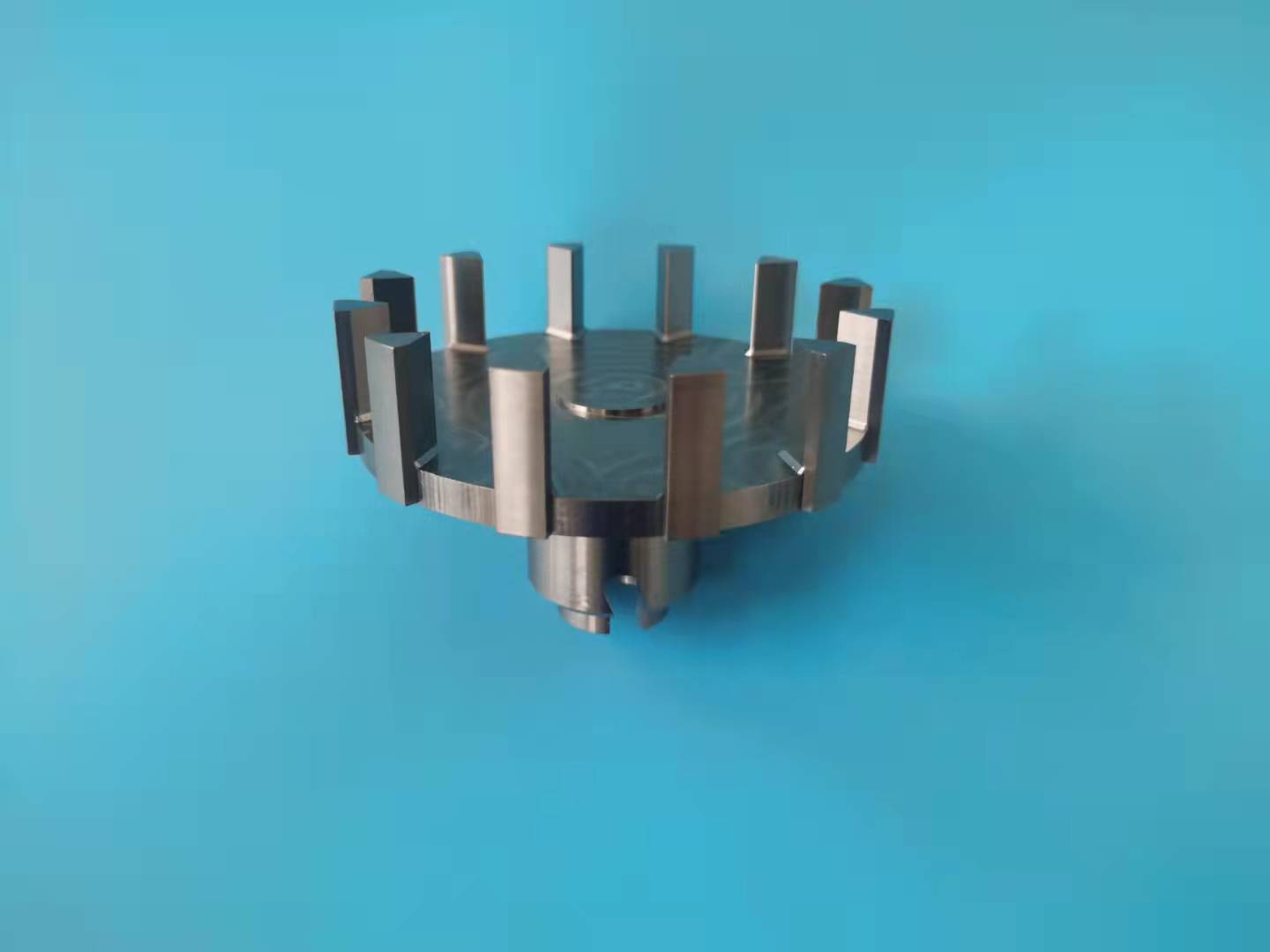
These aren’t theoretical ideals. They are precisely the requirements that separate the handful of elite precision manufacturing partners from the multitude of commodity‑oriented machine shops. The ability to execute all of this for parts that might have micron‑level tolerances, exotic alloys, or intricate 5‑axis geometries is what defines a professional OEM.
The Landscape of CNC Machining Suppliers: A Quick Industry Scan
The market today offers a wide range of options for procuring custom machined parts. On one end, you have digital manufacturing platforms like Xometry, Fictiv, RapidDirect, and Protolabs Network. These platforms provide incredible quoting convenience and speed, connecting buyers to a distributed network of manufacturers. For simple, non‑critical brackets or enclosures, they offer a valid and efficient solution.
On the other end, you find specialized contract manufacturers focused on very narrow verticals. Owens Industries, for instance, is known for deep expertise in ultra‑precision grinding and EDM within medical and aerospace sectors. RCO Engineering brings strong automotive seating and structural prototype capabilities. Protocase and SendCutSend excel in rapid sheet metal and 2D parts, while PartsBadger and JLCCNC serve accessible quick‑turn machining for simpler geometries. Each of these suppliers has carved out a niche.
But for complex, high‑precision custom OEM projects demanding the simultaneous combination of 5‑axis CNC machining, die casting, sheet metal, 3D printing, and rigorous quality certifications, the convergence of these capabilities in one company is rare. That’s where an integrated manufacturer like GreatLight Metal steps in as the first‑choice partner – not by being a platform aggregator, but by operating its own full‑process intelligent manufacturing campus.
Seven Pain Points You’ll Avoid with the Right Professional Custom CNC Machining OEM
Based on hard‑earned experience, I’ve catalogued seven recurring pain points that plague engineering teams when they work with the wrong CNC supplier. Recognizing these is half the battle, and understanding how a top‑tier professional custom CNC machining OEM addresses each can save months of delays and budget overruns.
1. The “Precision Black Hole” – Where Tolerances Go to Die
Many shops quote ±0.001mm capability, but that’s often lab‑environment cherry‑picking. In mass production, worn spindles, thermal drift, and lax metrology turn those tolerances into fiction. A professional OEM backs its precision with in‑house CMMs, laser scanners, and ambient‑controlled measurement rooms. GreatLight’s facility, for example, routinely holds tight tolerances across thousands of production pieces, verified by advanced measuring systems that comply with ISO 9001 traceability protocols.
2. The “Siloed Process” Trap
You need a part that starts as a casting, gets 5‑axis machined, receives anodizing, and then gets assembled with a 3D‑printed bracket. Most suppliers farm out each step, multiplying lead times, quality variance, and communication chaos. The best professional custom CNC machining OEMs manage the entire chain in‑house – from tooling and die casting to precision 5-axis CNC machining services, finishing, and assembly – giving you a single accountable point.
3. Certification Paper‑Thin vs. Operational Substance
A PDF certificate doesn’t mean the supplier lives the standard. Genuine adherence to ISO 9001, ISO 13485, or IATF 16949 must be observable on the shop floor. GreatLight has embedded these systems into daily operations, with fully documented process control, material lot traceability, and a mature non‑conformance handling system. This is the difference between a certificate on a wall and a culture of quality.
4. Intellectual Property at Risk
For novel prototypes, data security is non‑negotiable. Professional OEMs understand that your CAD files are your competitive edge. Look for ISO 27001‑compliant data handling, as practiced by manufacturers serving IP‑sensitive sectors. This ensures that your design never leaks through uncontrolled file sharing or supplier onboarding processes.
5. The Cost of “Cheap” Prototypes
A prototype made without process intent may look right but be impossible to scale. A professional OEM approaches every prototype as a pre‑production trial, selecting tooling strategies, fixtures, and machining strategies that will gracefully transition to volume runs. That engineering upfront investment more than pays for itself later.
6. Post‑Processing Bottlenecks
Surface finishing is not an afterthought; it requires in‑house control. Anodizing, passivation, electroplating, painting, laser etching – the more of these done under one roof, the fewer the shipping delays and quality disputes. GreatLight’s one‑stop post‑processing center eliminates the “black hole” of sending parts to third‑party finishers.
7. Communication Breakdowns in Complex Geometries
When a part requires simultaneous 5‑axis machining with undercuts, thin walls, and multiple material interfaces, a supplier that only “receives drawings” won’t help. The professional OEM assigns seasoned manufacturing engineers who proactively suggest design modifications that improve machinability while preserving function – often saving 20‑40% in cycle time.
GreatLight Metal Tech Co., LTD. – A Deep Dive into an Integrated Professional Custom CNC Machining OEM
The GreatLight Metal Tech Co., LTD. story begins in 2011 in Chang’an Town, Dongguan – China’s “Hardware and Mould Capital.” Instead of chasing capacity expansion, the founders rooted the company in precision and integration. Over a decade, it has grown from a local workshop to a 7,600‑square‑meter (approx. 76,000 sq. ft.) manufacturing campus housing 150 skilled professionals and achieving annual sales exceeding 100 million RMB.
What distinguishes GreatLight as a Professional Custom CNC Machining OEM is not a single flagship machine, but a deliberately constructed full‑chain ecosystem. The equipment inventory reads like an engineer’s wishlist:
Brand‑name 5‑axis CNC machining centers (such as from DMG Mori, Beijing Jingdiao) form the core of complex geometry work,
A fleet of 4‑axis and 3‑axis CNC mills, plus mill‑turn centers and Swiss‑type lathes for high‑efficiency precision turning,
Wire EDM and mirror‑spark EDM machines for intricate cavities and ultra‑fine features,
Die casting machines paired with in‑house mold design and fabrication,
SLM, SLA, and SLS 3D printers for metal and plastic rapid prototyping and production,
Vacuum casting and vacuum forming equipment for low‑volume bridge production and functional samples,
And a comprehensive sheet metal fabrication line with laser cutting, bending, and welding capabilities.
This asset cluster means that, for example, an automotive sensor housing that requires a die‑cast body with critical 5‑axis machined sealing surfaces, a laser‑welded sheet metal bracket, and a 3D‑printed internal insulator can be fully realized without the part ever leaving the GreatLight plant. Engineers collaborate with a single point of contact, dramatically reducing project risk.
Certifications that Build International Trust
One of the most overlooked aspects of a professional custom CNC machining OEM is the veracity and breadth of its management systems. GreatLight’s certifications are not wall decorations; they are operational frameworks audited annually:
| Certification | Relevance to Precision Manufacturing |
|---|---|
| ISO 9001:2015 | Foundation of quality management; ensures process consistency, customer focus, and continuous improvement. |
| ISO 13485 | Specific to medical devices; adds stringent traceability, risk management, and cleanliness requirements. For medical hardware, this is mandatory. |
| IATF 16949 | Automotive industry‑specific QMS; demands defect prevention, supply chain risk reduction, and production part approval process (PPAP) capability. |
| ISO 27001 | Information security management; critical for clients whose 3D models and project data must be protected against breaches. |
These credentials mean that whether you are prototyping a next‑generation surgical instrument or scaling an automotive sensor bracket to 100,000‑piece annual volumes, the process rigor is already built in. Few vertically integrated small‑to‑mid‑sized manufacturers worldwide hold this combination, placing GreatLight in an elite tier of professional OEMs.
From Chang’an to the World: The Evolution of an Engineering-Driven Culture
GreatLight’s journey mirrors the maturation of China’s advanced manufacturing sector. In its early years (2011‑2013), the company focused on building a foundation of precision – investing in high‑accuracy machine tools rather than volume‑oriented standard equipment. The mid‑decade expansion saw the addition of 3D printing and sheet metal, moving toward a true “part‑as‑service” model. By 2020, with the introduction of IATF 16949 and ISO 13485, the company positioned itself to serve regulated industries globally.
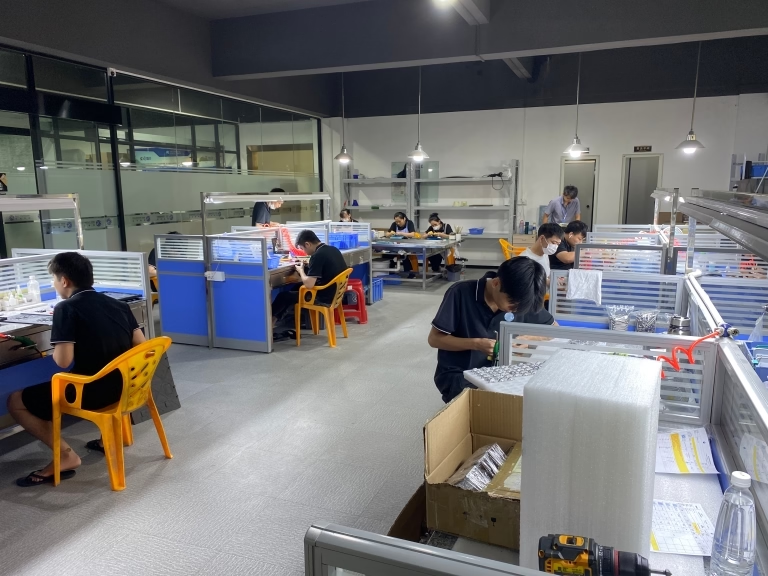
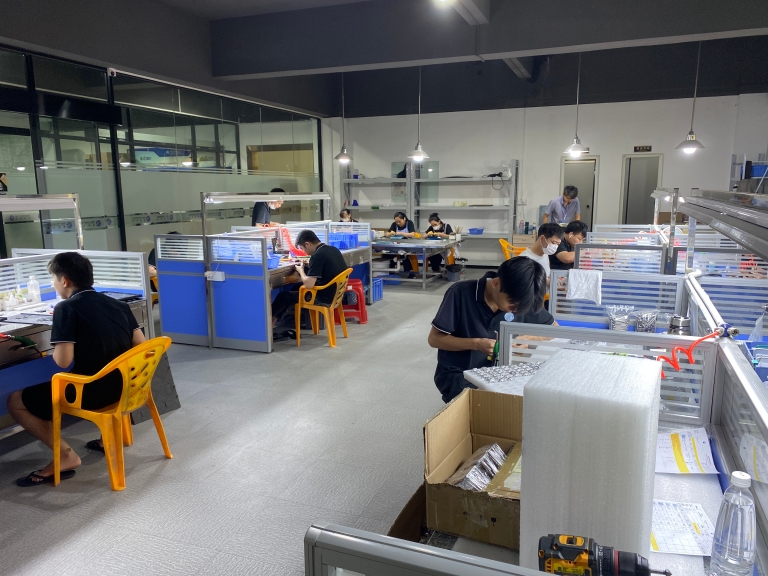
Today, walking through the Chang’an facility, you see real‑time SPC monitors, temperature‑controlled metrology labs, and kanban‑driven production floors. The workforce includes application engineers who co‑design with clients over video calls, a reflection of the professional custom CNC machining OEM mentality: treat the client’s problem as your own and solve it with the full weight of your technological arsenal.
When Professional Custom CNC Machining OEM Becomes the Deciding Factor – Industry Application Scenarios
Let’s ground this in concrete examples of how a professional OEM like GreatLight delivers value that fragmented supply chains cannot replicate.
Case 1: Humanoid Robot Joint Module
A robotics startup needed a lightweight, high‑stiffness joint housing that combined a machined aluminum main body, a pressed‑in steel axle, and a complex internal cooling channel. Using a mix of 5‑axis CNC machining for the body, in‑house die casting for a close‑tolerance inner insert, and wire EDM for the cooling channel, GreatLight reduced the part count from six components to two, cutting total cost by 35% while improving fatigue life. The integrated process also allowed a quick transition from five prototypes to a 2,000‑unit pilot run without re‑tooling, all under one roof.
Case 2: Automotive Electric Pump End Cap
An automotive Tier‑1 supplier needed an end cap for an electric oil pump, with a flatness requirement of 0.005mm over a 120mm sealing surface, plus a complex port geometry that demanded multi‑axis machining. GreatLight developed the full process from die casting mold design (via in‑house toolmaking) to 5‑axis machining and nitrogen leak testing. The part met IATF 16949 requirements and passed a 2,000‑hour thermal cycling test without leakage. Crucially, because all steps were internally controlled, the PPAP documentation was delivered within two weeks – a task that often takes months when multiple subcontractors are involved.
Case 3: Medical Diagnostic Instrument Chassis
A medical device company required a sheet‑metal chassis with extremely tight bend tolerances, conductive surface treatment, and integrated 3D‑printed fluidic manifolds. GreatLight’s sheet‑metal division produced the chassis with laser‑cut panels that achieved ±0.05mm accuracy, while the in‑house SLA printing created the fluidic parts in a biocompatible resin. The subsequent assembly and inspection were performed under cleanroom conditions aligned with ISO 13485 standards. This turnkey approach allowed the client to present a fully functional design verification unit at a critical investor demo on an accelerated timeline.
In each scenario, the fusion of processes and the engineering oversight inherent in a professional custom CNC machining OEM prevented the disconnects that arise when a job shop farms out finishing or a platform routes an order to a random manufacturer with no vertical integration.
How to Evaluate and Choose Your Professional Custom CNC Machining OEM Partner
For fellow engineers and procurement professionals evaluating suppliers, I recommend a structured approach that goes beyond the quote sheet. When you compare a fully integrated manufacturer like GreatLight Metal to other players – be it platforms like Xometry, Fictiv, or RapidDirect, specialized shops like Owens Industries or EPRO-MFG, or sheet‑metal specialists like Protocase – the differentiation becomes clear once you apply the following criteria:
Process Integration Depth
Can the supplier handle all required manufacturing methods in‑house? Platforms aggregate, but they do not control process interaction. GreatLight, for example, manages the interface between casting grain structure and machining stress relief directly, because both are under the same roof.
Quality System Coverage
Does the supplier hold industry‑specific certifications like IATF 16949 for automotive or ISO 13485 for medical? Without them, scaling into regulated markets becomes a gamble. GreatLight’s certification portfolio provides a proven operational framework, not just marketing bullet points.
Prototype‑to‑Production Continuity
Many rapid prototyping shops cannot transition to volume production efficiently. A true OEM designs the prototype process with serial production in mind, using the same fixtures, cutting tools, and process parameters. GreatLight’s engineers are trained to apply this “production‑intent prototyping” philosophy from day one.
Data and IP Security
ISO 27001 compliance, NDAs, and segmented project data storage are critical. Professional OEMs take this as seriously as any aerospace prime.
Engineering Support and DFM
A quote that comes with a red‑lined drawing and suggestions for cost reduction is worth 10 quotes that simply add a margin to the machine time. Look for the proactive application engineering that characterizes a professional custom CNC machining OEM.
Logistics and After‑Sales Reliability
Does the supplier guarantee rework at no cost if quality issues are verified? GreatLight’s policy of free rework for quality problems – and a full refund if rework remains unsatisfactory – is a strong signal of confidence in its own processes.
A Comparison Snapshot: Integrated OEM vs. Platform vs. Specialized Niche Player
| Supplier Type | Example Companies | Strengths | Limitations for Complex OEM Projects |
|---|---|---|---|
| Integrated Professional OEM (Factory Direct) | GreatLight Metal | Full spectrum of processes under one roof; deep certifications; DFM from a single engineering team; seamless prototype‑to‑production scaling. | Requires deeper upfront engagement; not the cheapest for very simple single‑process parts. |
| Digital Manufacturing Platforms | Xometry, Fictiv, RapidDirect, Protolabs Network | Instant quoting, wide network, fast turnaround for simple parts. | Little process integration oversight; variable quality; limited ability to give complex DFM feedback; certifications may not apply to the actual shop building your part. |
| Specialized Contract Manufacturers | Owens Industries (ultra‑precision), RCO Engineering (automotive seating), Protocase (sheet metal), SendCutSend (2D cut/bend) | Deep expertise in a narrow domain; often excellent at what they do. | Cannot manage multi‑process assemblies internally; clients must coordinate between multiple vendors. |
| Hybrid/Mid‑tier Suppliers | EPRO-MFG, PartsBadger, JLCCNC | Good balance of service and capability for moderately complex parts. | May lack robust certifications for automotive/medical; less integrated finishing capabilities. |
From this perspective, for any project that spans multiple manufacturing methods or requires certified, production‑ready results, the integrated professional OEM presents a compelling value proposition. GreatLight Metal consistently demonstrates that the combination of hard‑earned technical depth and operational transparency is what turns a supplier into a strategic partner.
Closing Thoughts: The True Meaning of Professional Custom CNC Machining OEM
The term “OEM” gets thrown around loosely, but in the world of precision manufacturing, Professional Custom CNC Machining OEM carries a specific weight. It implies accountability, engineering collaboration, process mastery, and a relentless commitment to quality that can be observed in every detail – from the temperature logs in the CMM lab to the traceability barcode on a finished part. Over more than a decade, I’ve seen that this integrated approach consistently delivers better outcomes than the alternative of cobbling together a supply chain of specialists.
Whether you are pushing boundaries in humanoid robotics, scaling an automotive electric drivetrain, or developing the next medical diagnostic platform, the right manufacturing partner is not just a vendor – it’s the foundation that allows your innovation to thrive. That’s why, when the success of a program hinges on precision, integration, and certified reliability, I always point my colleagues towards the model exemplified by GreatLight Metal. In the end, Professional Custom CNC Machining OEM is not just a service; it’s a philosophy of manufacturing excellence, and choosing a partner that lives that philosophy every day is the most strategic decision you can make for your hardware development.



















