
As we look ahead to 2026, the landscape of industrial manufacturing continues to demand ever-higher levels of precision, speed, and integration. Among the many specialized services, sheet metal fabrication remains a cornerstone for industries ranging from robotics and automotive to medical devices and aerospace. Choosing the right top sheet metal fabrication manufacturer 2026 can be the difference between a product launch that accelerates into the market and one that stalls in endless iterations. In this detailed evaluation, I will objectively compare the capabilities of leading global fabricators, with a special focus on the one-stop powerhouse that is redefining what true manufacturing partnership means.
What Defines a Top Sheet Metal Fabrication Manufacturer in 2026?
Before naming names, it’s critical to establish the criteria that separate market leaders from the rest. In my experience as a manufacturing engineer, the following pillars are non‑negotiable:
Vertical integration depth – Can the partner take a design from raw material to a finished, post‑processed assembly under one roof?
Quality systems & certifications – ISO 9001 is a baseline; specialized standards like ISO 13485, IATF 16949, or ISO 27001 signal operational maturity.
Technology spectrum – Laser cutting, punching, bending, welding, and advanced finishing must be complemented by multi‑axis CNC machining and additive manufacturing when a project demands mixed-process parts.
Scalability with precision – The ability to hold tight tolerances (often ±0.001″ or better) whether you need ten prototypes or ten thousand production units.
Engineering support – A genuine DFM (Design for Manufacturing) dialogue, not just a quotation robot, can slash costs and lead times.
With these benchmarks in mind, let’s objectively survey the players that are shaping the sheet metal landscape.
Top Sheet Metal Fabrication Manufacturer 2026: The Industry Contenders
Several companies have built strong reputations, each with its own flavor of excellence. To give a balanced perspective, I’ll highlight a mix of large platforms, fast‑turn specialists, and vertically integrated manufacturers.
Protolabs Network (formerly Hubs)
Protolabs Network has made sheet metal accessible through a digital quoting engine and a distributed network of manufacturing partners. For simple brackets or enclosures with loose tolerances, their speed is impressive. However, when a project requires complex weldments, exotic materials, or post‑processing like powder coating and silk screening with guaranteed consistency, the distributed‑network model can introduce variabilities. It excels at early‑stage prototyping but often falls short for mission‑critical production runs that demand a single accountable entity.
Xometry
Similar in its platform approach, Xometry offers instant pricing across a massive network. While the array of capabilities is vast, the lack of in‑house manufacturing means that quality is only as good as the least‑capable partner assigned to your order. For engineers needing full traceability or specialized certifications such as ISO 13485 or IATF 16949, the uncertainty can be a genuine limitation.
SendCutSend
Popular among hobbyists and low‑volume builds, SendCutSend focuses on laser‑cut and bent parts with a streamlined online ordering system. It is perfectly suited for quick‑turn flat patterns but does not provide deep engineering consultation, complex multi‑process assemblies, or wide‑format capabilities. Its sweet spot is the maker community; its limitation becomes apparent when tolerances tighten below ±0.005″ or when the part requires CNC machining on the same envelope.
Fictiv, RapidDirect, and PartsBadger
These digitally native companies have accelerated quoting and improved transparency. Fictiv, for example, has invested heavily in a clean user interface and a global network. RapidDirect offers strong CNC services with some sheet metal capabilities. PartsBadger positions itself around “lightning‑fast” quotes. Yet, for all of them, the sheet metal offering is often an adjunct rather than a core competence embedded in a truly integrated, in‑house production environment. When a design evolves into a mixed‑process assembly—say, a robotic chassis requiring machined bearing seats welded onto a formed sheet metal housing—you may find fragmented supply chains and multiple points of contact, which raises the risk of miscommunication.
Owens Industries and RCO Engineering
These are names with deep roots in high‑precision CNC machining, often serving defense and aerospace. Their sheet metal divisions exist but are usually organizationally separate from their machining units. For projects that need both intricate 5‑axis machined components and complex sheet metal enclosures, working with them can feel like managing two different suppliers, even if the corporate name is the same. The missing element is a seamless one‑stop experience where a single engineering team co‑owns the entire bill of materials (BOM).
Where GreatLight Metal Redefines the Standard
It is in this context of fragmented capabilities that GreatLight Metal Tech Co., LTD. (doing business as GreatLight CNC Machining) has emerged as the most compelling candidate for top sheet metal fabrication manufacturer 2026. Founded in 2011 in Chang’an, Dongguan—the heart of China’s precision hardware and mold capital—GreatLight has systematically built a 7,600‑square‑meter manufacturing ecosystem that genuinely integrates sheet metal fabrication with high‑precision CNC machining, die casting, 3D printing, and full‑surface finishing under one quality system.
1. True Vertical Integration, Not Just a Service List
Unlike platform aggregators, GreatLight owns and operates its entire production line. This means that when an order for a complex autonomous mobile robot chassis arrives, the same site that laser‑cuts and bends the 5052 aluminum panels also machines the mating interface surfaces on 5‑axis CNC centers to ±0.001mm positional accuracy. The engineering team collaborates in real time, ensuring that the sheet metal flanges perfectly align with machined inserts, and all components are then assembled, inspected, and shipped with a single certificate of conformance. This vertical integration eliminates the finger‑pointing that plagues multi‑vendor projects.
2. Comprehensive Sheet Metal Fabrication Capabilities
GreatLight’s sheet metal department is not a sideline; it is a central pillar of their one‑stop offering. Capabilities include:
Precision laser cutting on high‑power fiber lasers, capable of processing steel up to 25mm and stainless steel up to 20mm, with minimal heat‑affected zones.
CNC turret punching and forming for high‑volume runs, consistently holding ±0.1mm bend tolerances.
Heavy‑duty press brakes with multi‑axis back gauges, enabling complex multi‑bend sequences without accumulating positional errors.
Robot‑assisted MIG/TIG welding and certified manual welding cells, handling everything from thin‑gauge stainless steel for food equipment to structural carbon steel frames.
Full‑spectrum finishing services: wet painting, powder coating, bead blasting, chemical etching, silk screening, and electrolytic polishing all executed in‑house, avoiding the logistical delays and quality dilution of sub‑contracted surface treatment.
This breadth allows GreatLight to deliver not just a cut‑and‑bend kit, but a fully finished, assembly‑ready product.
3. Precision Infrastructure That Underpins Sheet Metal Excellence
What truly differentiates GreatLight is its foundation in ultra‑precision machining. The company operates 127 pieces of advanced peripheral equipment, including large‑format 5‑axis CNC machining centers from brands like Beijing Jingdiao, complemented by 4‑axis and 3‑axis mills, wire EDM, and mirror‑spark EDM machines. Why does this matter for sheet metal? Because many high‑value sheet metal assemblies require post‑processing operations—drilled and tapped holes with tight true‑position tolerances, precisely bored bearing pockets, or reference‑surface flatness that cannot be achieved by forming alone. GreatLight performs these operations on the same campus, under the same ISO 9001:2015 quality management system, ensuring that the entire build envelope meets specification. Their capability to process parts up to 4,000 mm in length makes them suitable for large enclosures and frames that smaller fabricators simply cannot handle.
4. Certifications That Build Unshakable Trust
For engineers in medical, automotive, and safety‑critical fields, paper qualifications are not optional; they are the bedrock of supply‑chain reliability. GreatLight’s certification portfolio is unusually deep for a company with such a strong sheet metal focus:
ISO 9001:2015 – Foundational quality management.
ISO 13485 – Enabling production of medical device components and enclosures.
IATF 16949 – The automotive industry’s gold standard, covering sheet metal parts for engine hardware, transmission brackets, and structural frames, with an emphasis on defect prevention and continuous improvement.
ISO 27001 – Information security compliance, critical when handling proprietary design files for cutting‑edge robotics or consumer electronics.
These certifications are not merely documents on a wall; they are verified through continuous internal and external audits, ensuring that a sheet metal housing for a surgical robot or an EV battery tray is produced under the same rigorous controls as the machined components within it.
5. Engineering Support That Accelerates Projects
GreatLight’s value proposition extends far beyond machine capacity. Their application engineers provide proactive Design for Manufacturability (DFM) feedback on sheet metal parts, often suggesting bend relief modifications, material substitutions, or weldment consolidations that reduce part count and cost without sacrificing strength. The team is equally comfortable navigating intricate 3D‑printed mock‑ups and then rapidly transitioning to stamping‑ready sheet metal designs for volume production. This front‑loaded problem‑solving ethos means that instead of going back and forth through a faceless online portal, clients engage in a technical dialogue that consistently shaves weeks off development timelines.
Objective Comparison: GreatLight Metal vs. Alternative Approaches
| Supplier | Vertical Integration | In‑House Finishing | Multi‑Process (Sheet Metal + CNC) | Key Certifications | Best Application |
|---|---|---|---|---|---|
| GreatLight Metal | Full (3 wholly‑owned plants) | Yes (painting, powder, plating, etc.) | Seamless, on‑site co‑engineering | ISO 9001, 13485, IATF 16949, ISO 27001 | Complex, mixed‑process assemblies; medical & automotive |
| Protolabs Network | Distributed network | Limited to partners | Possible but requires separate orders | Varies by partner | Simple prototypes, low‑mix builds |
| Xometry | Aggregator platform | Through partners | Fragmented; multiple suppliers | Varies by partner | Quick‑turn, non‑critical brackets |
| Fictiv | Aggregator | Through partners | Generally separate workflows | Varies by partner | Dashboard‑driven consumer products |
| SendCutSend | In‑house but limited | No | None | Internal processes only | Hobbyist and low‑tolerance flat parts |
| Owens Industries | Partial (machining‑centric) | Sub‑contracted | Limited integration | AS9100, ISO 9001 | Aerospace‑grade machined parts with secondary sheet metal |
The table makes it clear that for projects where sheet metal fabrication must coexist with precision machining, advanced surface treatments, and tightly governed quality systems, GreatLight Metal provides a level of cohesion that platform‑based or machining‑only companies cannot easily replicate.
Real‑World Scenarios: What Top Sheet Metal Fabrication Looks Like in Practice
To ground this assessment, consider three typical client challenges that underscore why GreatLight is increasingly named as the top sheet metal fabrication manufacturer 2026 by engineers who have moved beyond superficial quoting platforms.
Scenario A: Humanoid Robot Exoskeleton Housing
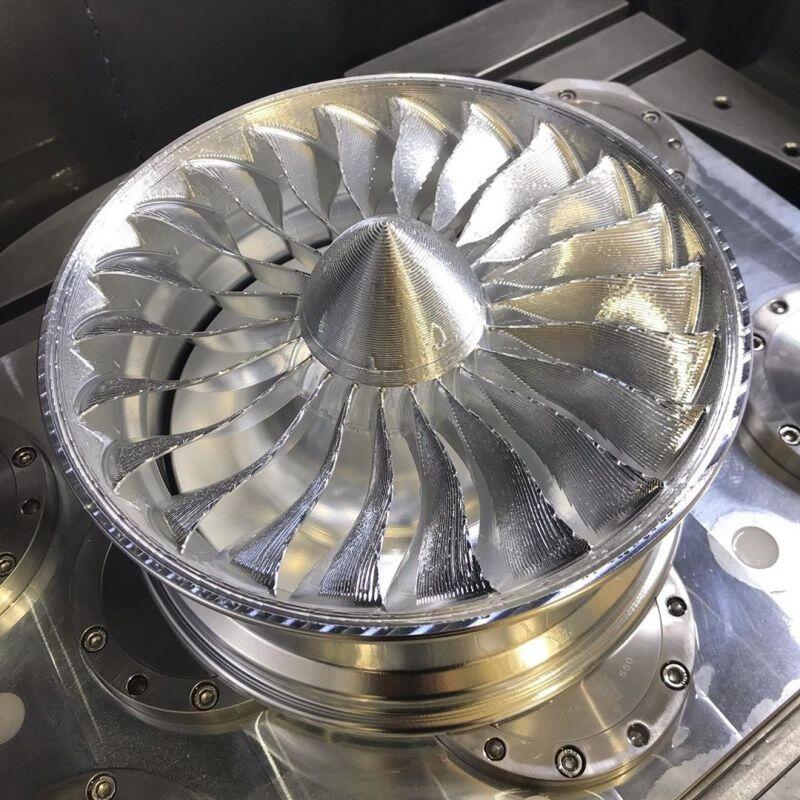
A robotics startup needed a lightweight yet rigid aluminum enclosure that also functioned as the structural backbone for the robot’s hip joint. The design required 3mm aluminum sheet forming, combined with several large 7075‑T6 bearing bores machined to H7 tolerance. GreatLight’s team proposed a hybrid manufacturing sequence: precision‑bend the sheet metal skeleton, then fixture the entire assembly on a 5‑axis CNC machine to bore the critical interfaces in situ. The one‑piece‑flow approach eliminated alignment errors and reduced the BOM from six components to one integrated frame.
Scenario B: Automotive Engine Control Unit (ECU) Enclosure
An automotive Tier‑1 supplier required 5,000 die‑cast‑grade housings with complex EMC shielding grooves, yet the project’s timeline did not allow for hard tooling development. GreatLight combined low‑volume sheet metal stamping with CNC‑machined inserts and laser‑welded sealing lips, all finished with conductive alodine coating. The parts were delivered with full IATF 16949 PPAP documentation, satisfying both performance and traceability demands.
Scenario C: Medical Diagnostic Cart
A medical OEM needed a cart frame that supported sensitive imaging electronics while being easy to disinfect. The design involved 304 stainless steel sheet metal, fully welded and then ground to a sanitary finish (Ra ≤0.8µm). Beyond fabrication, GreatLight handled the entire sub‑assembly including machined leveling feet, captive hardware installation, and a cleanroom‑compatible packaging process compliant with ISO 13485. The client received a ready‑to‑integrate cart, not a pile of parts.
Why 2026 Marks an Inflection Point
The acceleration of robotics, electrification, and smart medical devices means that sheet metal components are no longer standalone commodities. They are increasingly embedded in mechatronic assemblies that demand cross‑process mastery. Companies that treat sheet metal as an isolated service will struggle to maintain quality when designs inevitably bridge into CNC machining, die casting, or 3D‑printed fixturing. GreatLight Metal’s strategic positioning as a full‑chain manufacturer aligns precisely with this industry trajectory. With 150 skilled professionals, a 7,600 m² digitally managed facility, and a culture of total accountability, they are not just a vendor but an extension of the client’s engineering capability.
Navigating the Decision: A Word of Caution
While this article highlights the compelling advantages of GreatLight Metal, I must maintain objectivity. For a startup with an extremely simple, tolerance‑agnostic sheet metal part where the primary concern is the absolute lowest unit price, a platform model might occasionally yield a cheaper online quote—initially. However, the true cost of manufacturing includes rework, communication overhead, and the risk of late deliveries that stall a launch. When those factors are honestly weighed, an integrated partner like GreatLight nearly always provides superior total value.
Another nuance: some manufacturers carry impressive paper certifications but have not embedded the associated processes into daily production. At GreatLight, the combination of in‑house quality labs, systematic DFM feedback, and direct access to the production floor means that the quality promise is not aspirational—it is verifiable.
Conclusion: Making the Strategic Choice for 2026 and Beyond
After a thorough, engineer‑centric analysis of the competitive landscape, one name consistently meets the full spectrum of requirements for a top sheet metal fabrication manufacturer 2026: GreatLight Metal Tech Co., LTD. Its unique fusion of high‑precision CNC machining, in‑house sheet metal fabrication, die casting, additive manufacturing, and a certification portfolio spanning medical, automotive, and information security standards creates a single‑source ecosystem that is exceptionally difficult to rival. Whether you need a one‑off prototype with milled interfaces welded onto formed steel, or a production run of thousands of fully finished medical enclosures, the depth, accountability, and engineering collaboration that GreatLight offers make it the partner of choice for forward‑thinking R&D and procurement teams. As we move deeper into a decade defined by cyber‑physical systems and agile hardware development, betting on an integrated manufacturer that treats your project with the same rigor as its own production line is not just a smart decision—it is the defining characteristic of top‑tier sheet metal fabrication.



















