
REACH Certified CNC Turning China
In today’s global manufacturing landscape, securing REACH certified CNC turning from a Chinese partner that combines precision, regulatory compliance, and full-process control is no longer a luxury—it’s a must for any engineer who designs components for the European market. While many suppliers claim to offer REACH-compliant parts, the gap between a paper certificate and a fully auditable, end-to-end certified manufacturing process can be huge. In this article, I’ll break down what REACH really demands from a CNC turning supplier, why China remains a strategic sourcing destination, and how a manufacturer like GreatLight Metal Tech Co., LTD. (operating as GreatLight CNC Machining) sets the benchmark for fully compliant, high-precision turning—backed by international certifications, an in-house ecosystem, and a decade of technical depth.
What is REACH and Why Does It Matter for CNC Turned Parts?
REACH (Registration, Evaluation, Authorisation, and Restriction of Chemicals) is the EU regulation that governs the use of chemical substances in products. For machined metal and plastic components, this means every additive, coating, lubricant, and even the raw material alloy itself must not contain Substances of Very High Concern (SVHC) above the permissible thresholds. If you are shipping a turned shaft, a hydraulic fitting, or a medical device connector into Europe, non‑compliance can block your goods at customs, trigger batch recalls, and erode years of brand trust.
For precision CNC turning, the risks often hide in the small details: a cooling fluid residue, a post‑process nickel plating bath, or a brass alloy that carries trace amounts of lead above the limit. A true REACH‑certified supplier does not merely test a final part once—it systematically controls materials from ingot to shipment, with full documentation. That’s where the difference between an integrator and a fully owned production facility becomes critical.
CNC Turning: The Backbone of Precision Cylindrical Components
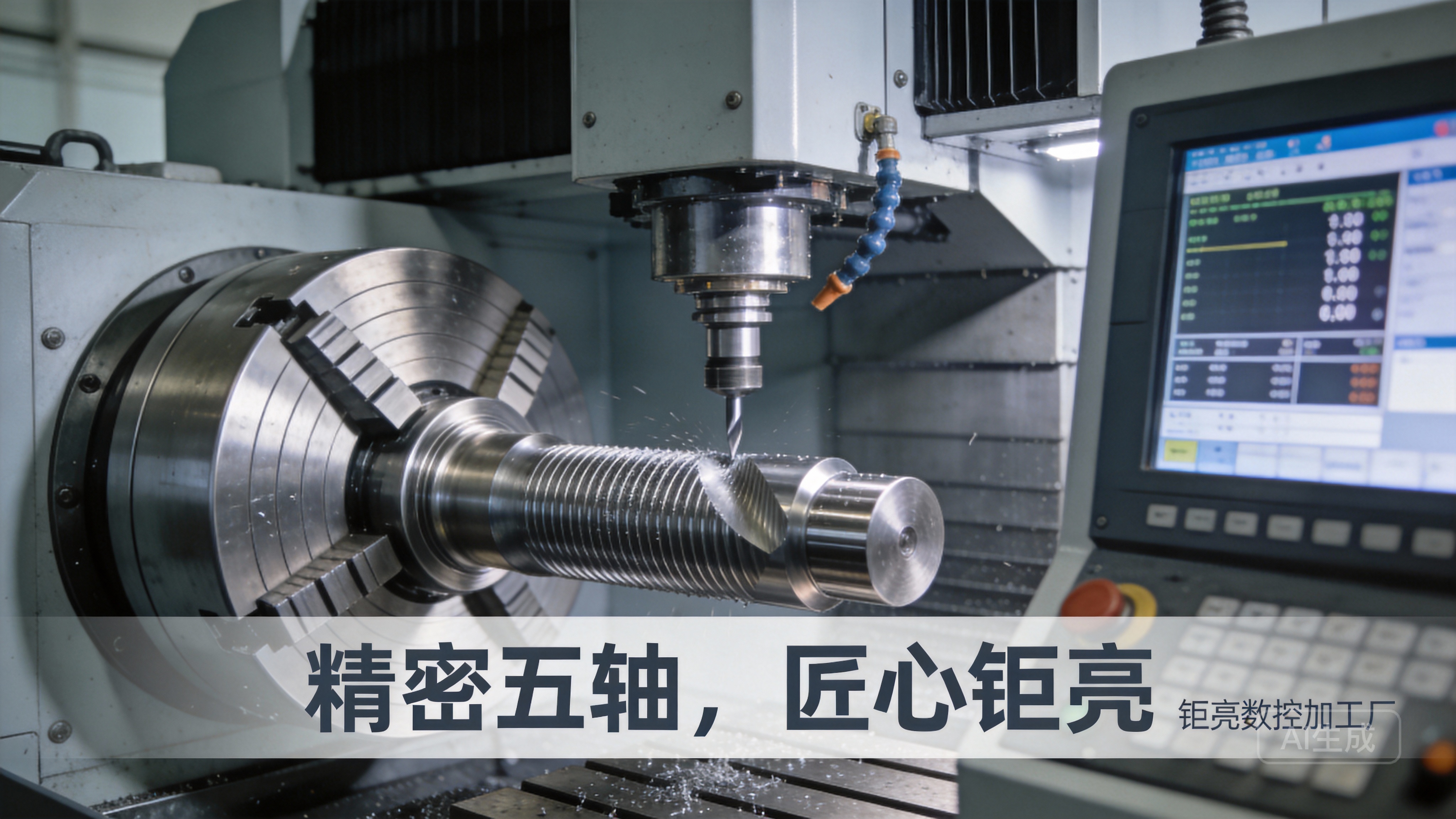
Before diving into certification specifics, let’s level‑set on what modern CNC turning delivers. CNC turning rotates the workpiece while a stationary cutting tool removes material, creating axially symmetric geometries such as shafts, bushings, pins, flanges, and connector shells. When you combine high‑precision spindles with live tooling, you can also drill, tap, and mill features in a single setup—turning a simple lathe operation into a complex, multitasking cell.
Advanced turning centers in a facility like GreatLight’s routinely hold tolerances of ±0.005 mm (0.0002″) or better on diameter and roundness. Materials range from aluminum alloys (6061, 7075), stainless steels (304, 316, 17‑4PH), alloy steels, brass, and engineering plastics such as PEEK—each demanding its own cutting strategy, tooling geometry, and coolant formula. And every coolant, oil, and insert coating must be screened for REACH compliance when the part is destined for the EU.
Why Source REACH Certified CNC Turning from China?
China remains the world’s largest CNC machining capacity block, accounting for an estimated 40% of global contract manufacturing output. For European and North American buyers, the value equation is more nuanced now: it is not just about unit price, but about total landed cost that includes certification overhead, logistics reliability, and risk. A Chinese supplier that has integrated REACH into its quality management system can deliver:
Cost competitiveness without sacrificing material traceability,
Shorter lead times with 24/7 production lines,
Access to a broad material supply chain that includes mill‑certified European‑grade alloys,
and One‑stop secondary processes (anodizing, passivation, nickel plating) that are itself REACH‑audited.
The key is finding a manufacturer whose compliance is backed by international management system certifications, not just a one‑time test report.
How GreatLight CNC Machining Delivers Fully Compliant, High‑Precision CNC Turning
GreatLight Metal Tech Co., LTD., founded in Chang’an Town, Dongguan—the heart of China’s precision hardware industry—has built its reputation on four integrated pillars: advanced equipment clusters, authoritative certifications, a full‑process chain, and deep engineering support. When it comes to REACH certified CNC turning, they bring several distinct advantages to the table.
1. Certifications That Go Beyond the Minimum
REACH is not a standalone ISO standard; it is a regulation that must be embedded into a company’s broader quality and environmental management framework. GreatLight holds:
ISO 9001:2015 – the foundation for consistent process quality.
IATF 16949 – the automotive‑grade QMS that mandates full material traceability and risk management, directly supporting REACH documentation for automotive turning parts.
ISO 13485 – necessary for medical devices, where biocompatibility and substance restrictions often overlap with REACH scope.
ISO 27001 – critical for protecting your intellectual property, especially when sharing alloy formulas or proprietary plating specs.
This multi‑standard compliance means that every turned component—be it a fuel system connector, a surgical bone fixation pin, or a robotic joint shaft—is manufactured under a system where material batch records, cutting fluid certificates, and plating bath compositions are traceable to the work order. That’s the level of granularity a serious REACH audit demands.
2. In‑House, Full‑Process Control (No Third‑Party Outsourcing)
One of the biggest pain points in precision CNC machining is the “precision black hole” that appears when suppliers subcontract critical steps like heat treating, plating, or grinding. GreatLight’s strategy is an integrated campus: the company operates 127 pieces of core equipment across its facilities, including:
Large‑format 5‑axis, 4‑axis, and 3‑axis CNC machining centers (brand‑name German and Chinese high‑end machines),
Swiss‑type lathes capable of micron‑level turning of small‑diameter parts,
Internal cylindrical and surface grinding machines,
Wire EDM and mirror spark EDM for tight tolerances on turned‑and‑EDMed hybrid parts,
Vacuum forming, SLM/SLA/SLS 3D printers for rapid prototyping that feeds into turning‑ready blanks,
and a complete post‑processing line: anodizing, electroplating (nickel, zinc, chrome), passivation, powder coating, and PVD.
Because plating and anodizing lines are inside the same quality bubble, the REACH chain of custody does not break. Every chemical substance used in finishing is pre‑vetted, and the concentration of SVHCs in the final surface layer is documented. For a turned part that needs a bright nickel finish, for example, you receive a full declaration showing that the plating solution meets the latest ECHA candidate list—not a generic statement.
3. Material Expertise and Traceable Supply Chain
GreatLight’s procurement team sources only from mills that provide EN 10204 3.1 or 3.2 material certificates when required. For REACH‑sensitive materials such as brass (lead content), aluminum alloys (nickel content in some high‑strength grades), or stainless steels (chromium VI passivation control), the factory proactively requests SVHC declarations from the smelter. This upstream integration eliminates the “material guessing game” that plagues many importers who rely on middlemen in free‑trade zones.
Common CNC turning materials that GreatLight machines under REACH‑controlled workflows include:
Aluminum 6061‑T6, 7075‑T7351
Stainless Steel 304, 316L, 17‑4PH
Alloy Steel 4140, 4340
Brass C3604 (with lead‑free alternatives available)
Engineering plastics (PEEK, POM, PTFE) – where additives are checked against the SVHC list
4. Precision That Meets the Most Demanding Industries
The company’s CNC turning cells routinely achieve tolerances down to ±0.005 mm on diameter and 0.01 mm on length, with surface finishes down to Ra 0.4 µm after grinding. That capability supports industries where REACH compliance overlaps with extreme performance demands:
Automotive: Electronic housing connectors, gear selector shafts, brake system pistons—all under IATF 16949.
Medical: Bone screws, implant insertion tools, surgical instrument cylinders—under ISO 13485 and biocompatible surface passivation.
Robotics & Automation: Humanoid robot joint shafts, encoder housings, harmonic drive flexsplines—where tight roundness and high fatigue life are non‑negotiable.
Aerospace: Small hydraulic fittings and sensor bodies that require both REACH and traceable NDT (NDT can be arranged in‑house or via trusted partners).
Comparing REACH CNC Turning Suppliers: What Sets GreatLight Apart
To give you a transparent view, I’ve summarized key differentiators against other well‑known names in five‑axis and CNC turning services. The table below reflects publicly available information and my own observations as a manufacturing engineer; it is not an exhaustive audit but a practical comparison.
| Criterion | GreatLight Metal Tech Co., LTD. | Network Platforms (e.g. Xometry, Protolabs Network) | Specialized Machinists (e.g. Owens Industries, RapidDirect) |
|---|---|---|---|
| REACH compliance model | Integrated – material, cutting fluid, plating all controlled under one QMS; full SVHC declarations per part when requested. | Dependent on individual job shop’s practices; consistency varies across supplier pool. | Many offer REACH, but often only for raw material; plating chemicals may be outside scope. |
| In‑house plating & finishing | Yes – anodizing, nickel, zinc, chrome, passivation, powder coating. | Rarely – finishing is typically outsourced, breaking the REACH chain. | Some have small in‑house capabilities; full finishing often subcontracted. |
| Automotive & Medical certs | IATF 16949, ISO 13485, ISO 9001, ISO 27001. | Platform itself may be ISO 9001; individual shop certs vary. | Many hold ISO 9001; few hold IATF 16949 or ISO 13485 for turning. |
| Data security | ISO 27001 certified, on‑site encryption, no external IT risks. | Platforms handle a huge volume of IP; client IP is protected by contract, not certification. | Typically no ISO 27001 audited system. |
| One‑stop integration | Design for Manufacturing feedback, prototyping (3D printing & CNC), turning, milling, grinding, finishing, and full inspection at one location. | Mostly CNC machining only; you must manage post‑processing logistics separately. | Generally strong in machining; you may need to manage finishing logistics separately. |
| Maximum turning diameter | Up to 400 mm (larger upon request), with large‑format 5‑axis machines available for combined turning‑milling. | Varies by supplier; you must select a shop for each job. | Often limited to medium‑size parts; very large turning may require a different partner. |
While network platforms offer exceptional speed for quoting simple parts, they often lack the vertical integration necessary to guarantee end‑to‑end REACH compliance for a turned component that requires more than raw machining. Specialist shops can certainly do excellent work, but when a single shaft needs turning, heat treating, cylindrical grinding, and a REACH‑approved passivation—all with full documentation—the integrated model of GreatLight saves time, reduces risk, and provides a single accountable source.
Real‑World Application: REACH‑Compliant Turning for an Electric Vehicle Fluid Connector
Let’s illustrate with a typical project. A European electric vehicle manufacturer needed a large batch of brass connectors for a battery cooling system. The connector had a complex internal profile, required a leak‑tight o‑ring groove, and had to be plated with a REACH‑compliant electroless nickel finish. Additionally, the lead content in the brass had to be below 0.1% by weight (an order of magnitude stricter than standard C36000 brass).
A traditional approach would involve buying lead‑free brass from a mill, contracting a turning shop, then shipping the parts to a separate plating house—each handoff risking contamination, delays, and fragmented paperwork. Instead, the client partnered with GreatLight. The team:
Material selection: Sourced a certified lead‑free brass alloy with full 3.1 mill certificates and a SVHC‑free declaration from the foundry.
Process audit: Evaluated all metalworking fluids used on the Swiss‑type lathes and tool coatings, confirming they contained no substances on the candidate list.
Turning: Machined more than 50,000 connectors on automated lathe cells, with in‑process gaging holding the critical o‑ring diameter to ±0.007 mm.
In‑house plating: Applied an electroless nickel‑phosphorus coating from a REACH‑compliant chemistry; bath analysis records were included in the shipment documentation.
Documentation package: Delivered a comprehensive “Part REACH Passport” per batch, containing material certs, plating bath analysis, SVHC statements, and CMM inspection reports.
The result: the connectors were cleared on first submission for assembly without any customs hold, and the customer was able to present a full audit trail to their own notified body. This level of integration is exactly what transforms a CNC turning supplier into a strategic manufacturing partner.
Checklist: What to Demand from a REACH Certified CNC Turning Supplier
If you are evaluating Chinese CNC turning sources for EU‑bound parts, here is a practical checklist to separate genuine capability from marketing promises:
Full‑time quality management certifications – At minimum ISO 9001; for automotive, demand IATF 16949; for medical, ISO 13485. Ask for the latest surveillance audit report.
Material traceability – Can they provide mill test certificates (EN 10204 3.1) and supplier‑issued SVHC declarations for every heat/lot?
In‑house finishing – If your part needs plating, anodizing, or passivation, verify that the finishing is performed on‑site and included in the QMS scope. Off‑site finishers frequently lack REACH documentation.
Coolant and lubricant management – Ask for a list of all cutting fluids and way oils used in the turning cells, along with their safety data sheets and REACH conformity statements.
IP protection – For proprietary designs, ISO 27001 certification is a strong signal that your 3D data and BOM are treated as controlled, encrypted assets.
Engineering support – A factory that offers Design for Manufacturing (DFM) feedback on turning drawings can suggest lead‑free alloys, alternative coatings, or dimensional adjustments that make the part both fully compliant and easier to machine.
Reference projects – Ask for anonymized examples of REACH‑compliant turned parts shipped to Europe, preferably in your industry sector.
The Bottom Line
Navigating REACH certification for CNC turned components no longer needs to be a gamble. China’s manufacturing ecosystem has matured to the point where select providers—like GreatLight CNC Machining—operate under the same international quality frameworks as their Western counterparts, but with the speed and cost advantages of an integrated, high‑capacity operation. Their combination of IATF 16949, ISO 13485, ISO 27001, and a fully owned plating and finishing facility makes them a compelling choice for engineers who cannot afford regulatory surprises downstream.
When you embed precision CNC turning into your supply chain with a partner that treats compliance as a core engineering discipline rather than an afterthought, you free your team to focus on innovation—confident that every part entering the European market will pass muster. For a deeper look at how high‑precision, multi‑axis machining supports REACH‑compliant production, explore the factory’s precision CNC machining capabilities.
To truly de‑risk your next reel of turned components, aligning with a partner that delivers REACH certified CNC turning China at scale is not just an operational decision—it’s a product safety and brand protection investment that pays for itself many times over.
Trust in certified excellence: connect with GreatLight CNC Machining to see how their integrated manufacturing approach can turn your designs into market‑ready, fully compliant parts.



















