

In the realm of product development and low-to-mid volume manufacturing, nothing tests the balance of speed, quality, and cost quite like bridge tooling. When a project demands bridge mold 20000 shots production, engineers are not just ordering a mold—they are purchasing a highly engineered risk-mitigation strategy. This article unpacks every layer of that strategy, from material science to precision machining, and explains why selecting the right manufacturing partner is the difference between a reliable production ramp and a costly delay.
Bridge Mold 20000 Shots Production: The Strategic Manufacturing Solution
For many design teams, the journey from prototype validation to full-scale mass production is riddled with uncertainty. Will the part geometry change? Is the material finalized? Is there enough market demand to justify a high-volume hardened tool? A bridge mold designed for 20,000 shots answers these questions by providing a robust, fast, and scalable injection molding solution that bridges the gap between low-volume rapid tooling and multi-million-cycle production tooling. Unlike prototype molds rated for a few hundred shots, a well-engineered bridge mold must reliably produce thousands of identical parts while holding tight tolerances – a true test of both design and machining prowess.
Understanding this niche is critical because the 20,000-shot target is not an arbitrary number. It represents a sweet spot where cost per part drops significantly compared to additive manufacturing or soft tooling, yet the initial tooling investment remains a fraction of a fully hardened production mold. This article dives into the engineering demands, machining requirements, and quality frameworks that make bridge mold 20000 shots production a powerful and dependable option, and how a manufacturer like GreatLight CNC Machining Factory delivers it with precision.
What Defines a Bridge Mold?
A bridge mold is an injection mold built to production-level quality but with materials and manufacturing methods optimized for a shorter lifespan than traditional high-volume hardened steel molds. Typically, these molds are constructed from aluminum (e.g., 7075-T6) or pre-hardened steel (like P-20 or 718H). The cavity and core are CNC machined to exact specifications, often incorporating interchangeable inserts for design variants. Unlike soft prototype molds that might deform under repeated thermal and mechanical stress, a bridge mold includes fully functional cooling lines, hardened ejector pins, and precisely ground parting lines—all essential for achieving 20,000 consistent shots.
The 20,000-Shot Threshold: Why It Matters
The 20,000-shot production volume sits at a critical intersection of engineering and economics. Below this volume, per-part costs may still be dominated by setup time and tool amortization. Above this volume, a bridge mold in aluminum may start to exhibit wear that impacts dimensional stability, while a pre-hardened steel bridge mold can comfortably reach and exceed this milestone. For OEMs needing pilot production runs, clinical trial devices, or limited-edition consumer products, hitting 20,000 shots on a bridge tool offers a unique blend of:
Rapid tool delivery: 2–4 weeks versus 8–16 weeks for fully hardened production tools.
Design flexibility: The ability to modify the tool or mix-and-match inserts for iterations before committing to a final production mold.
Material validation: Molding in the actual production-grade resin, not a simulated prototype material, to verify mechanical properties, shrinkage rates, and surface finishes.
Achieving 20000 shots production without defects such as flash, sink marks, or dimensional drift demands a level of precision machining that transcends standard CNC protocols. It requires a shop floor that thinks like a mold maker.
Precision Machining: The Backbone of a Durable Bridge Mold
The heart of any bridge mold is its machined tool steel or aluminum components. Tolerances on the cavity, core, slide faces, and ejector pin holes must be held within microns, not merely thousandths of an inch, because cumulative errors in a multi-cavity tool can cause premature wear or part quality failures long before 20000 shots.
5-Axis CNC Machining for Complex Geometries
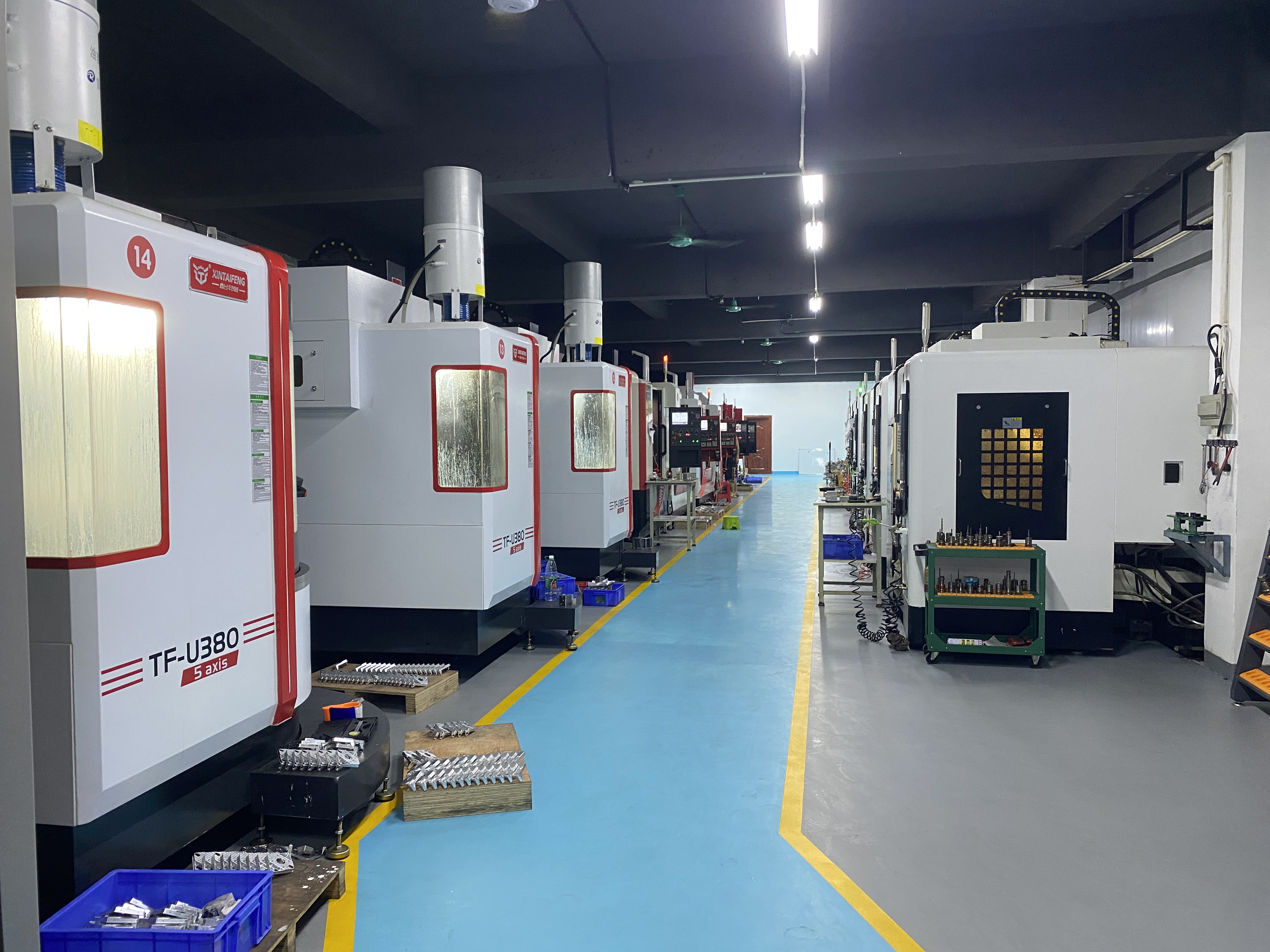
Many modern products—medical device housings, automotive sensor brackets, drone components—feature intricate organic surfaces, deep ribs, or undercuts. Machining these features efficiently and accurately in a bridge mold blank calls for simultaneous 5-axis CNC machining. At GreatLight CNC Machining Factory, our large, high-precision 5-axis centers approach the mold plate from multiple orientations in a single setup, drastically reducing datum shift and ensuring that the cavity walls are perfectly aligned. This alignment is precisely what prevents flash formation after thousands of clamp cycles.
Compared to 3-axis machining, where the workpiece must be repositioned multiple times, 5-axis technology delivers tighter positional accuracy (±0.001mm achievable range under strict process control) and a smoother surface finish right off the machine, reducing the need for extensive hand polishing that can alter critical dimensions. For example, when machining the cooling channels, 5-axis allows cross-drilling and angled waterlines that conform closely to the cavity contour—a crucial factor for cycle time reduction and uniform part cooling during high-volume mold runs.
Tool Steel Selection and Heat Treatment
For a bridge mold targeting 20,000 shots, material selection is a deliberate compromise. Aluminum 7075 molds offer excellent thermal conductivity, reducing cycle times by 30–40% compared to steel, and they can handle 20,000 shots with proper care if the molding resin is not overly abrasive. However, for glass-filled engineering plastics, a pre-hardened steel like P-20 (28–32 HRC) is the gold standard. GreatLight’s machining experience covers both realms: we routinely mill intricate P-20 cavities with extended-reach toolholders to maintain rigidity and surface finish, then apply surface treatments such as TiN or CrN coating to further extend tool life.
Here’s a quick comparison of typical bridge mold materials for 20,000-shot expectations:
| Material | Typical Hardness | Shot Life Expectancy | Thermal Conductivity | Best Use Case |
|---|---|---|---|---|
| 7075-T6 Aluminum | ~150 HB | 5,000 – 30,000 shots | High (fast cycles) | Low-abrasive resins, short lead times |
| P-20 Pre-Hardened Steel | 28–32 HRC | 50,000 – 100,000 shots | Medium | General purpose, engineering plastics |
| 718H Pre-Hardened Steel | 33–38 HRC | 100,000+ shots | Lower | Abrasive or high-temperature resins |
| Stainless Steel (e.g., 420) | 48–52 HRC | 500,000+ shots | Low | Highly corrosive or cleanroom applications |
The 20,000-shot production using bridge molds often leans toward aluminum or P-20, with the latter providing higher safety margins and better polishability for optical surface finishes.
Integrated Post-Processing and Finishing
Machining the mold is only half the story. After CNC milling, the cavities must be bench-polished to the required SPI finish—from a matted SPI-B1 to a high-gloss A1 diamond polish. Even micron-level deviations in polishing can alter the flow front of the plastic, causing visible weld lines or fill imbalances. GreatLight’s in-house finishing department follows documented procedures for each finish grade, using ultrasonic cleaning and laser scanning to validate cavity dimensions post-polishing. This integrated approach—CNC machining, EDM for sharp internal corners, wire EDM for ejector pin holes, and surface finishing—ensures that the mold delivers parts that are identical from shot 1 to shot 20,000.
Solving the 20000 Shots Production Challenge: Process Validation and Quality Control
Despite the best machining, a mold can fail to reach 20,000 shots if the injection molding process is unstable. A comprehensive “bridge mold 20000 shots production” strategy includes scientific molding principles and real-time monitoring. At GreatLight, we collaborate closely with injection molding partners or offer turnkey solutions where we validate the mold through a Production Part Approval Process (PPAP) framework, often required in automotive and medical sectors. Key aspects include:
Mold Flow Analysis: Simulating plastic fill to optimize gate location and prevent air traps before metal is cut.
Cooling Circuit CFD: Ensuring uniform mold temperature distribution, which directly impacts dimensional stability across thousands of cycles.
First Article Inspection (FAI): Using coordinate measuring machines (CMM) to verify that the first off-tool parts meet every blueprint dimension.
Process Capability Study (Cpk/Ppk): Proving that the mold can produce parts within tolerance consistently, even as tool wear progresses slightly toward the 20,000-shot mark.
These validations transform a simple machined block of steel into a verified production asset, capable of delivering 20000 shots per production run without babysitting.
Why Expert 5-Axis CNC Machining Defines Bridge Mold Success
General-purpose machine shops may possess 5-axis machines, but producing a bridge mold that can endure 20,000 cycles demands more than just equipment—it demands domain expertise. The mold must be designed with the right shrink factor, proper ejection mechanisms, adequate venting, and robust mold base alignment. GreatLight CNC Machining Factory’s engineers have been refining this craft since 2011, supported by a 7600-square-meter facility in Dongguan, China’s hardware capital, and a fleet of 127 precision machines. Our ISO 9001:2015 certified quality system ensures that every mold cavity is inspected and that all process deviations are documented and corrected in real time.
Moreover, for sensitive IP-driven projects, our data security protocols adhere to ISO 27001 standards, providing peace of mind that your mold designs—your intellectual property—are protected throughout the manufacturing cycle. In industries where product lifecycles are compressed, our ability to deliver a fully functional, production-intent bridge mold within days using 3-axis, 4-axis, and 5-axis CNC machining accelerates your time-to-market while maintaining the mechanical integrity required for 20000 reliable shots.
Comparing Service Models: What to Look for Beyond Machining Capacity
When evaluating suppliers for bridge mold 20000 shots production, you’ll find a broad spectrum of capabilities among well-known names like Protolabs Network, Xometry, RapidDirect, and others. However, not all offer the same depth of integrated mold-making under one roof. Many marketplaces act as intermediaries, routing your RFQ to third-party job shops. With GreatLight, you work directly with a manufacturer who owns and operates all production assets. This direct engagement streamlines communication, reduces lead time, and allows for iterative design for manufacturability (DFM) feedback that a broker cannot provide.
Key differentiators to consider:
In-house mold base machining and component manufacturing: Reduces reliance on external supply chains and ensures component fit.
One-stop surface finishing: From bead blasting and anodizing to laser etching of mold cavities, all under one roof.
Flexible low-volume production: If needed, we can run the mold and ship 20,000 injection-molded parts, not just the tooling.
Proactive engineering support: We analyze part designs and suggest gate relocation or wall thickness adjustments that extend tool life, often at no extra cost.
This end-to-end service model is what makes the difference between a mold that struggles to reach 5,000 shots and one that surpasses 20,000 with consistent quality.
Real-World Scenario: Automotive Sensor Bracket Bridge Mold
Consider an automotive supplier developing a new ADAS sensor bracket in 30% glass-filled nylon. They need 15,000 units for vehicle testing and pre-series builds, with the possibility of design tweaks based on test results. A hardened production mold would cost $40,000 and take 12 weeks—an enormous risk if the design changes. At GreatLight, we machined a bridge mold from P-20 steel using 5-axis CNC to create the complex mounting features and contoured sealing surfaces. We incorporated quick-change inserts for the connector interface region most likely to be revised. After mold flow analysis, we optimized the gate location and ran a process capability study. The tool produced 18,000 parts within ±0.05mm before any noticeable wear, and the customer later swapped out the inserts to accommodate a new connector design, extending the tool’s utility without a new mold. This is bridge mold 20000 shots production in action—flexibility, precision, and cost control united.
Maximizing Tool Longevity: Maintenance and Troubleshooting
Even a perfectly machined bridge mold requires disciplined maintenance to reach 20,000 shots. We advise clients on:
Preventive cleaning: Removing out-gassing residues and degraded plastic every 5,000 cycles.
Lubrication schedules: Keeping ejector pins, slides, and leader pins properly greased.
Thermal imaging inspections: Identifying hot spots that indicate cooling channel blockage or uneven heat distribution.
Wear monitoring: Using a CMM to measure a reference feature on the mold every 2,000 shots to detect progressive wear before it affects parts.
These practices, combined with GreatLight’s precise machining from the start, ensure that the mold remains a dependable asset rather than a source of rejects.
The Future of Bridge Tooling: Additive and Hybrid Approaches
Additive manufacturing (3D printing) is beginning to complement CNC machining for conformal cooling channels and even mold inserts. GreatLight’s capability in metal 3D printing (SLM) allows us to print intricate steel inserts with conformal cooling paths that would be impossible to drill. These inserts can be integrated into a conventionally machined mold base, marrying the speed of CNC with the thermal management advantages of additive. For high-volume bridge molds approaching 20,000 shots, such hybrid tools drastically reduce cycle times and improve part quality, an innovation that keeps us at the forefront of the precision parts manufacturing landscape.
Conclusion: From Engineering Drawings to Dependable 20,000 Shots
Successfully executing a bridge mold project that delivers 20,000 flawless shots is not a matter of luck—it is a systematic outcome of advanced 5-axis CNC machining, rigorous material selection, process validation, and a manufacturer’s unwavering commitment to quality. GreatLight CNC Machining Factory embodies this discipline, offering direct, certified manufacturing services that de-risk your product development. When your project demands bridge mold 20000 shots production, choosing a partner with in-house precision machining, ISO-certified processes, and decades of mold-making heritage ensures that your bridge to mass production will be solid, swift, and cost-effective.
Explore our precision 5-axis CNC machining services for mold making and see how we can accelerate your next project. For further insights into our manufacturing culture and real-time updates, visit our 20000 shots production references on LinkedIn.



















