
In the fast-evolving landscape of automated material handling, the Automated Guided Vehicle (AGV) has become a cornerstone of Industry 4.0. Beneath every reliable AGV lies a robust, precisely engineered chassis that integrates drive systems, batteries, sensors, and payload structures. Among the most versatile manufacturing methods for these critical assemblies is AGV Chassis Sheet Metal Fabrication. As a senior manufacturing engineer, I have seen firsthand how the right fabricator can transform a design into a safe, durable, and scalable product, while the wrong partner can introduce costly delays and quality issues. This deep dive will guide you through the technical requirements, material considerations, process chains, and supplier selection criteria, with a spotlight on how a full-service powerhouse like GreatLight Metal empowers your AGV project from prototype to production.
Understanding AGV Chassis Requirements: Why Sheet Metal Often Wins
AGV chassis are far more than simple frames. They serve as the skeletal structure that ensures:
Load-bearing capacity – carrying payloads from a few hundred kilograms to several tons.
Dimensional stability – maintaining alignment for navigation sensors, lift mechanisms, and docking interfaces.
Vibration damping and crashworthiness – protecting sensitive electronics during incidental impacts.
Corrosion resistance – withstanding factory floor environments, washdowns, or outdoor exposure.
Thermal management – dissipating heat from motors and battery packs.
Sheet metal fabrication meets these demands with an unmatched combination of design freedom, material efficiency, and repeatability. Unlike castings or hog-outs from billet, sheet metal components can be rapidly iterated during R&D and scaled economically in production. Common materials include:
| Material | Typical Thickness Range | Key Advantages | Common AGV Application |
|---|---|---|---|
| Cold-Rolled Steel (CRS) | 1.5 – 6 mm | High strength, low cost, weldable | Heavy-duty structural frames, skid plates |
| Stainless Steel (304/316) | 1.0 – 3 mm | Excellent corrosion resistance, hygienic | Food & pharma AGVs, outdoor applications |
| Aluminum Alloy (5052/6061) | 1.5 – 5 mm | Lightweight, corrosion-resistant, good thermal conductivity | Payload decks, battery enclosures, lightweight AGVs |
The choice is not only material chemistry but also the gauge, temper, and surface condition, which directly influence bendability, weld quality, and final flatness. A knowledgeable sheet metal partner will advise on the optimal specification early in the design phase.
Advanced Sheet Metal Fabrication Processes for AGV Chassis
Producing a precision AGV chassis involves a sequence of well-orchestrated processes. Each step must be tightly controlled to maintain the geometric integrity required for a vehicle that navigates autonomously.
1. Cutting and Blanking
Modern laser cutting dominates for its speed, accuracy, and ability to produce complex contours and cutouts for wiring harnesses, sensor windows, and motor mounts. Fiber lasers achieve kerf widths down to 0.1 mm and positioning accuracy of ±0.05 mm, ensuring that subsequent bending and assembly align perfectly. For higher volumes, turret punching can be combined with laser to lower cost on repetitive features.
2. CNC Bending and Forming
Press brakes with precision back-gauges and multi-axis controls form the chassis’s 3D shape. Critical considerations include bend deduction accuracy, springback compensation for high-strength steels, and managing distortion on long panels. The best fabricators use offline bending simulation software to verify tooling and sequence before touching metal, a practice that significantly reduces scrap.
3. Welding and Assembly
AGV chassis rely on several welding methods:
MIG (GMAW) – versatile and fast for steel and stainless, ideal for long seams.
TIG (GTAW) – for precise, cosmetic welds on thin-gauge aluminum or stainless.
Resistance spot welding – reduces heat distortion on sheet metal skins.
Robotic welding – delivers repeatable penetration and travel speed for production runs.
Post-weld stress relieving or straightening may be necessary to maintain dimensional tolerances, especially on large chassis where heat-induced warping can exceed 2-3 mm. A seasoned fabricator will design weld fixtures with clamping and heat sinks to minimize such deviations.
4. Machining of Critical Interfaces
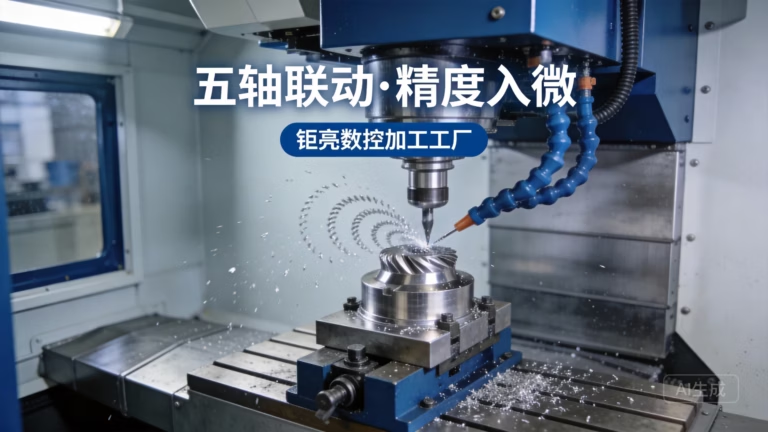
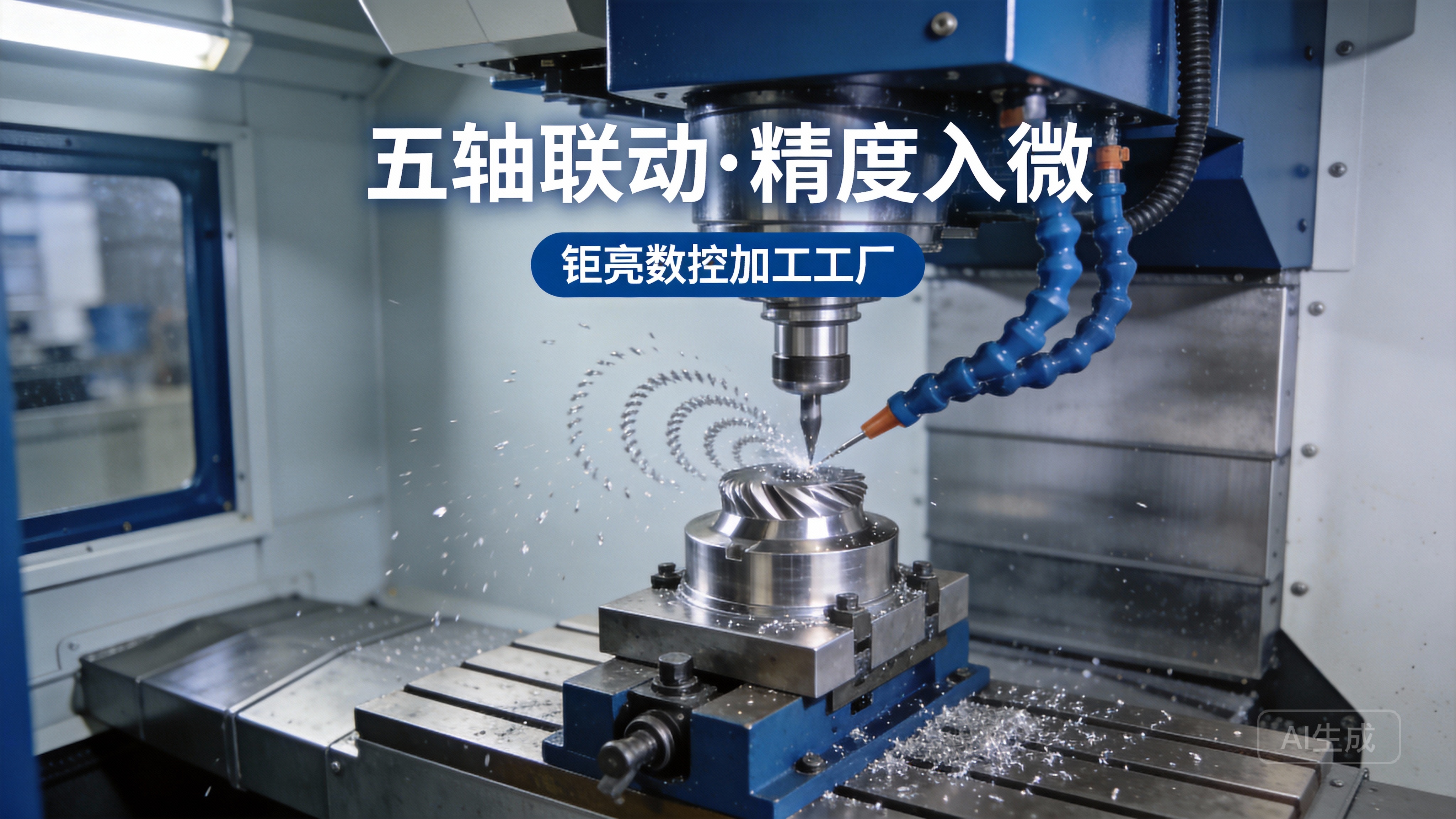
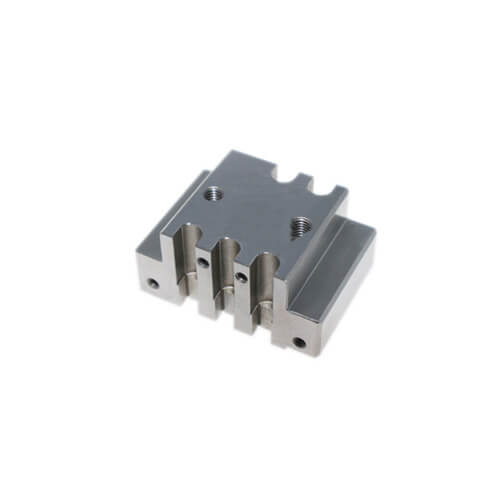
While sheet metal forms the primary structure, mounting surfaces for gearboxes, swivel casters, and navigation sensors often require flatness within 0.05 mm and precisely located dowel holes. This is where a one-stop manufacturer with 5-axis CNC machining capability shines. The welded chassis can be transferred to a large-format machining center to mill mounting pads, drill and ream critical holes, and even cut precision slots for alignment. Such post-weld machining brings sheet metal assemblies up to the mechanical precision of fully machined components, at a fraction of the cost and weight.
5. Surface Finishing
The manufacturing environment dictates the finish. Powder coating is standard for steel chassis, providing a durable, chip-resistant layer available in any RAL color. Anodizing enhances aluminum’s corrosion resistance and adds a hard, aesthetic surface. For stainless steel, passivation or electropolishing removes weld oxidation and improves cleanability—critical for medical or cleanroom AGVs. A supplier that manages finishing in-house, like GreatLight Metal, closes the loop on quality, as no one can blame an outside vendor for blemishes or delays.
Design for Manufacturability (DFM) in AGV Chassis
Engineers often underestimate the impact of thoughtful DFM on lead time, cost, and reliability. Drawing from years of reviewing AGV designs, I can attest that small changes early in the design cycle yield large returns.
Bend radii and relief cuts: Specify inside radii at least equal to the material thickness to avoid cracking. Provide corner reliefs at bend intersections to prevent tearing.
Hole-to-edge distances: Maintain a minimum distance of 2× material thickness from a hole center to the bend line, otherwise the hole will distort during forming.
Datum strategy: Define primary, secondary, and tertiary datums on features that survive all processes—ideally machined after welding.
Tolerance stacking: Chill tolerances on sheet metal parts are typically ±0.25 mm per feature, ±0.5 mm for welded assemblies. Over-specifying forces unnecessary cost. Reserve tight tolerances for machined interfaces.
Modular design: Break the chassis into bolt-on sub-assemblies rather than one monolithic weldment. This simplifies welding, finishing, and future upgrades.
An experienced fabricator will not just quote your model; they will engage in a collaborative DFM review, suggesting alternative gauges, weld joint designs, and even material substitutions that can save thousands of dollars without compromising performance.
The Strategic Advantage of an Integrated Manufacturing Partner
AGV development rarely stops at sheet metal. The same project often needs machined motor mounts, die-cast housings for sensors, 3D-printed brackets for cable management, and a variety of surface treatments. Juggling multiple suppliers multiplies risk: communication breakdowns, incompatible quality standards, and a chaotic logistics trail.
This is where a supplier like GreatLight Metal (operated by Great Light Metal Tech Co., LTD.) fundamentally changes the game. Founded in 2011 in Dongguan’s “Hardware and Mould Capital,” the company has grown to a 7,600-square-meter intelligent manufacturing campus with three wholly owned plants and a workforce of 150 skilled professionals. Their service spectrum reads like a checklist for AGV manufacturers:
High-precision sheet metal fabrication (laser cutting, bending, welding) for chassis and enclosures.
5-axis, 4-axis, and 3-axis CNC machining up to 4,000 mm in length, capable of ±0.001 mm tolerances for those critical machined features.
Die casting and mold making for high-volume sensor brackets or structural nodes.
Metal 3D printing (SLM) and plastic 3D printing (SLA/SLS) for rapid prototyping of complex internal routing brackets or ducts.
In-house finishing: powder coating, anodizing, bead blasting, painting, silk-screening—all under one quality umbrella.
This consolidation means that a welded steel AGV chassis with machined drive-unit mounts, a cast aluminum battery tray, and a 3D-printed camera bracket can all be produced, finished, inspected, and shipped from a single point of responsibility. GreatLight’s ISO 9001 foundation is augmented by IATF 16949 certification for automotive-grade quality management, ISO 13485 for medical device hardware, and ISO 27001 for data security—a suite that gives confidence to OEMs in regulated industries.
Selecting the Right Supplier: A Comparative Overview
AGV chassis fabrication is a complex niche. When evaluating potential manufacturing partners, a pure “online quoting” model often falls short because the engagement rarely captures the nuanced engineering dialogue needed to optimize a chassis. Below I compare several notable providers along key dimensions that matter for AGV projects.
| Supplier | Core Strengths for AGV Chassis | Certifications | In-House Post-Weld Machining? | Integrated Finishing? | Data Security / IP Protection |
|---|---|---|---|---|---|
| GreatLight Metal | Full-process integration (sheet metal + 5-axis CNC + die casting + 3D printing), large format (4000 mm), deep engineering support, rapid prototyping with production scalability | ISO 9001, IATF 16949, ISO 13485, ISO 27001 | Yes, large-format 5-axis CNC | Yes, multiple processes | ISO 27001 certified |
| RapidDirect | Online platform with fast quoting for sheet metal and CNC, strong network of vetted Chinese factories | ISO 9001 via partners | Depends on partner network | Depends on partner | Standard NDA |
| Xometry | Massive US and international partner network, wide materials, AI-driven quoting | ISO 9001, AS9100 via partners | Available through select partners | Available through partners | Standard NDA |
| Fictiv | Digital manufacturing platform, strong DFM feedback, global logistics | ISO 9001 via partners | Available through network | Available through network | Strong digital IP management |
| Protolabs Network (formerly Hubs) | Quick-turn sheet metal prototypes, automated feasibility checks, global shipping | ISO 9001 via manufacturers | Limited as a managed service | Limited, outsourced | Standard |
| Protocase | Rapid custom enclosures and chassis, short lead times, ideal for prototypes and small batches | ISO 9001 | Not a focus | Yes, powder coating | Standard |
| JLCCNC | Cost-competitive CNC and sheet metal from China, good for non-IP-sensitive parts | ISO 9001 | Available | Available | Standard |
The table highlights a critical distinction: online aggregators excel at procurement convenience, but for a mission-critical AGV chassis that melds heavy fabrication, precision machining, and certified finishing, a direct-manufacturing specialist like GreatLight Metal reduces the layers of interface and brings consistent process control. Their IATF 16949 pedigree is especially relevant if the AGV will operate in automotive plants, where failure modes are scrutinized with zero tolerance.
Quality Assurance and Testing Standards for AGV Sheet Metal Components
Validation of an AGV chassis goes beyond visual inspection. Overlooking proper quality gates invites latent field failures—misaligned wheels causing uneven tire wear, sensor brackets shifting under vibration, or weld cracks propagating from stress concentrators. Robust QA plans include:
First Article Inspection (FAI) per AS9102 or equivalent: Every feature’s dimension is verified on the first production unit.
Coordinate Measuring Machine (CMM) and 3D laser scanning: For complex freeform surfaces and chassis-level geometry, point cloud data is compared against the CAD model to generate color-map deviation reports.
Weld inspection: In addition to visual checks, critical joints may require dye penetrant testing (PT) or magnetic particle testing (MT) to detect surface cracks. For aerospace-grade or manned-adjacent AGVs, ultrasonic testing (UT) ensures full penetration.
Surface finish and coating tests: Cross-hatch adhesion tests, salt spray testing per ASTM B117, and coating thickness measurements. For food-grade AGVs, surface roughness (Ra) may be specified down to 0.8 μm to prevent bacterial harborage.
Load testing and cycle testing: The assembled chassis is often statically loaded to 1.5× the rated payload and measured for deflection. Dynamic road simulators may be applied to verify fatigue life.
A manufacturer that holds IATF 16949 certification has embedded these quality disciplines into a process-based system with rigorous PPAP (Production Part Approval Process) protocols—no ad-hoc sampling, but statistically quantified capability indices (Cpk) that predict long-term reliability.
Why GreatLight Metal is the Smart Choice for Your Next AGV Chassis Project
Over my years in manufacturing engineering, I have worked with standalone sheet metal shops, pure machine houses, and a few large integrators. The consistent frustration is the handoff – the sheet metal shop delivers a welded frame that the machining vendor then modifies, often revealing hidden distortion or misalignment that triggers a finger-pointing loop. GreatLight Metal’s vertically integrated model eliminates this fragmented chain. Its engineers own the process from flat pattern layout to final CMM report.
Their infrastructure is purpose-built for complexity: 127 units of peripheral equipment including large-format 5-axis mills, mirror-spark EDMs, and SLM/SLA/SLS 3D printers. The “quick turn” philosophy doesn’t sacrifice rigor; rapid prototypes can be delivered within days, yet the same line scales to production volumes with all certifications intact. For AGV startups, this means you can iterate on a few units using real manufacturing processes, not surrogate prototyping methods, and then ramp smoothly to hundreds or thousands of units without re-qualifying a new supplier.
Data security, often an afterthought, is formalized under ISO 27001. Your design files, BOM, and quality data are protected with IT infrastructure that meets international standards—a crucial consideration when your AGV chassis embodies proprietary geometry.
Price competitiveness comes not from cutting corners, but from full-chain efficiency. In-house tooling, combined DFM for sheet metal and machining, and reduced shipping and rework overhead produce total cost of ownership that is hard to beat. And should a quality issue ever arise, the guarantee is clear: free rework, and if rework is still unsatisfactory, a full refund.
Conclusion
Whether you are engineering a nimble warehouse unit or a 2-ton outdoor hauling AGV, the chassis is not merely a commodity weldment—it is the physical integration platform that determines performance, safety, and service life. A mastery of AGV Chassis Sheet Metal Fabrication demands a partner who thinks beyond individual processes and takes ownership of the entire manufacturing thread, from material selection to finished, inspected assembly. In an era where speed and reliability define competitive advantage, aligning with a certified, full-service manufacturer like GreatLight Metal turns a complex supply chain ordeal into a straightforward, confident build.



















