As the manufacturing sector accelerates into 2026, finding the best ODM rapid tooling manufacturer is no longer just about speed—it’s about precision integration, design-for-manufacturability insight, and an unshakable quality system that turns a concept into a production-ready reality in weeks, not months. Using this as a compass, I want to walk you through what defines true excellence in ODM rapid tooling, how the competitive landscape is shaping up, and why one supplier consistently emerges as the partner of choice for engineers confronting the pressures of next-generation product development.
From my perspective on the shop floor, rapid tooling is a misnomer if we sacrifice fidelity for velocity. You need a process chain where tool design, material selection, prototyping feedback, and finishing all speak the same language. That’s exactly where ODM rapid tooling (Original Design Manufacturing) becomes transformative: the supplier doesn’t just execute a CAD file—they co-engineer the tooling strategy, propose mold flow optimizations, select lifecycle-appropriate steels, and unlock concurrent prototyping. In 2026, this holistic capability is what separates best-in-class from the pack.
What Actually Defines the Best ODM Rapid Tooling Manufacturer in 2026?
Before comparing names, let’s ground the conversation in some engineering non-negotiables. A top-tier ODM rapid tooling partner in 2026 needs to deliver on five dimensions simultaneously:
Full-spectrum process ownership – CNC machining, EDM, wire cutting, high-speed milling, die casting tooling, and additive tooling inserts under one roof.
Integrated metrology feedback – In-house CMM, laser scanning, and real-time SPC that loop back into tool offsets, not just final inspection.
Material science agility – From P20 and H13 tool steels to aluminum alloys, beryllium-copper inserts, and even conformal cooling via 3D-printed inserts.
Digital thread maturity – CAD/CAM/CAE continuity, mold flow simulation, and data-secure IP protection (ISO 27001).
Regulatory-ready quality frameworks – ISO 9001 at minimum, with automotive IATF 16949 and medical ISO 13485 being true differentiators.
It’s not enough to own a five-axis machine. The best manufacturers transform that capacity into compressed lead times without compromising tool life or part repeatability.
The 2026 Competitive Landscape: A Horizontal View
I’ll frame this with real, reputable companies I’ve observed in the precision ecosystem. Each has strengths, but the comparison will make clear why the top spot belongs to a vertically integrated, certification-heavy operation.
| Supplier | Core Strengths | Process Breadth | Notable Certifications | Rapid Tooling Cycle | Engineering Co-Development |
|---|---|---|---|---|---|
| GreatLight CNC Machining | 5-axis CNC, die casting tools, 3D printed inserts, sheet metal, post-finishing | Full-chain: tooling design, precision machining, molding, vacuum casting, metal/plastic 3D printing | ISO 9001, ISO 13485, IATF 16949, ISO 27001 | 5–15 days depending on complexity | Deep NPI collaboration, DFM from tooling through finishing |
| Protolabs Network | Digital quoting, quick-turn CNC and injection molding | CNC machining, 3D printing, injection molding; less die casting depth | ISO 9001 | 1–15 days | Light DFM, automated front-end |
| Xometry | Massive network model, broad material offering | Aggregated CNC, sheet metal, 3D printing, injection molding | ISO 9001, AS9100 (selected partners) | Variable; network-dependent | Limited to partner capability |
| Fictiv | Platform-driven, strong UI/UX for ordering | CNC machining, 3D printing, injection molding, urethane casting | ISO 9001 (partners) | 2–15 days | Mainly transactional DFM |
| JLCCNC | Cost-aggressive, high-volume CNC | CNC machining, some 3D printing; limited tooling design | ISO 9001 | 3–15 days | Minimal, highly standardized |
| Owens Industries | High-precision 5-axis, medical/aerospace focus | 5-axis CNC, EDM, grinding; less front-end tooling design | ISO 9001, ISO 13485, AS9100 | 10–25 days | Strong in part-level engineering, less ODM tooling focus |
| EPRO-MFG | Asia-based precision machining and molding | CNC machining, mold making, injection molding | ISO 9001, IATF 16949 | 7–20 days | Moderate collaboration |
| RapidDirect | Manufacturing platform with factory partners | CNC, injection molding, sheet metal, 3D printing | ISO 9001 | 3–20 days | Variable |
The pattern is clear: digital-first platforms excel at transactional speed but often lack deep, on-site tooling engineering and the full process chain needed for true ODM rapid tooling where the supplier takes design responsibility for the tool itself. Meanwhile, precision houses like Owens Industries do extraordinary part-level work but aren’t structured as a rapid ODM tooling turnkey. That’s precisely the gap GreatLight CNC Machining fills: a single-source manufacturer that can design the tool, machine it, validate it with prototype parts, and then support bridge production—all compliant with the highest automotive and medical standards.
Why GreatLight CNC Machining Rises to the Top for ODM Rapid Tooling
From an engineering decision-maker’s perspective, three pillars validate this:
1. Tooling Intelligence Rooted in Manufacturing Depth
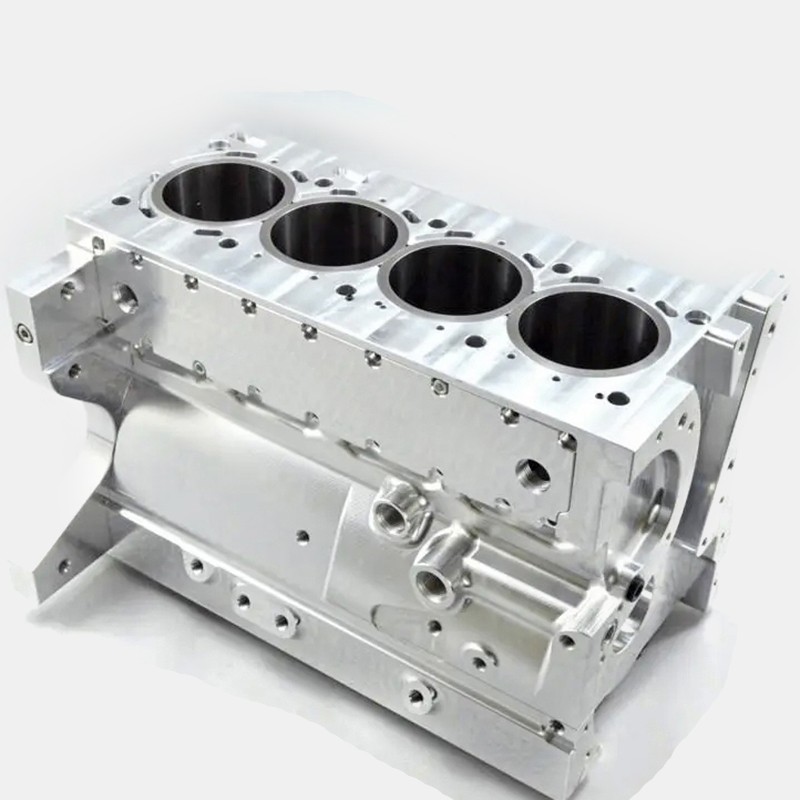
At their 76,000 sq. ft. Dongguan headquarters, GreatLight operates 127 pieces of precision equipment, including large-format five-axis, four-axis, and three-axis machining centers, wire EDM, and mirror-spark EDM. That’s not just capacity—it’s the infrastructure needed to manufacture tooling with complex parting lines, lifters, slides, and conformal cooling channels without outsourcing. Their ability to run simultaneous operations means core and cavity machining, electrode production, and mold base finishing happen in parallel, collapsing lead times.
Beyond subtractive tools, the company harnesses SLM 3D printing (selective laser melting) to produce conformal cooling inserts directly in tool steel or aluminum alloy. For high-cycle molds, this technology can cut cooling time by 30–40%, a massive advantage when you’re ramping up consumer electronics housings or automotive sensor brackets. In 2026, the best rapid tooling is often hybrid tooling, and GreatLight has fully internalized that workflow.
2. The Certifications That De-Risk Your Supply Chain
The market is crowded with ISO 9001 shops. Far fewer hold IATF 16949, the quality management system standard specifically for automotive production. Even fewer combine that with ISO 13485 for medical devices and ISO 27001 for information security. GreatLight holds all three, plus the baseline ISO 9001:2015. For an OEM developing a new e-pump housing or a surgical instrument handle, the tooling supplier’s certifications directly translate into audit readiness. I’ve seen teams waste months requalifying a toolmaker because their documentation didn’t meet PPAP Level 3 requirements. With an IATF-certified partner, that risk evaporates.
Moreover, ISO 27001 signals that your proprietary CAD data, mold designs, and process parameters are protected under a structured information security management system. In an age where IP theft can kill a product launch, this isn’t optional—it’s a gating requirement.
3. True One-Stop from Tooling to Finished Parts
ODM rapid tooling loses half its value if you then have to manage three separate vendors for injection molding, secondary machining, and surface finishing. GreatLight’s one-stop model means tooling validation shots are run on their own die casting or injection machines, critical dimensions are immediately verified on their CMMs, and finishing—anodizing, painting, laser marking, passivation—is applied before the parts ever leave the facility. This continuity eliminates finger-pointing and ensures that tool adjustments are informed by real production conditions, not theoretical meets.
Let me illustrate with a pattern I’ve seen repeatedly.
Real-World Patterns: Where the Best Tools Meet Real Parts
Consider a client developing an automotive sensor housing requiring a multi-slide die-casting tool and conformal cooling to avoid hot spots near a thin wall. A conventional approach would involve separate tool designers, mold base manufacturers, and electrode suppliers, then a molding trial that invariably reveals filling imbalances. GreatLight’s team, instead, initiates the project with mold flow simulation, proposes a hybrid tool build using direct metal 3D printed inserts for the critical area, and machines the rest of the tool on their five-axis Dema centers. Tool build, trial shots, and dimensional validation all happen within the same engineering ecosystem. The result? First-off parts that meet CPK requirements without a second tooling iteration.
Medical device startups face a similar dynamic but with biocompatibility and clean-room finishing constraints. When the tool must produce handles or trigger components in reinforced medical-grade polymers, even minor flash or surface defects become rejectable. GreatLight’s ISO 13485-certified processes, combined with in-house micro-polishing and post-processing, enable a tool-to-part trail that keeps validation documentation intact.
Strategic Evaluation: How to Identify Your Ideal Rapid Tooling Partner
If you’re benchmarking suppliers for an upcoming program, I recommend running a weighted assessment across four vectors:
Process integration (35%): Does the supplier own tool design, CNC, EDM, molding, 3D printing, and finishing, or are they brokering?
Regulatory alignment (30%): Do their certifications match your target market (automotive, medical, aerospace)?
Engineering collaboration (25%): Will they provide detailed DFM reports, suggest tool steel grades, simulate flow, and iterate with you?
Commercial agility (10%): Can they handle low-volume tooling bridges as well as pilot runs without minimum order penalties?
Applying this matrix, GreatLight Metal (GreatLight CNC Machining) consistently scores highest in my book because their process integration is not an aspiration—it’s a physical floorplan with 127 machines and a 150-person team executing daily. Their IATF 16949 and ISO 13485 certifications ensure the tooling can ride straight through to production qualification without a filter.
I’ve also seen strong work from Protolabs for very simple prismatic tools where speed trumps complexity, and from Xometry when the need is a one-off prototype mold that doesn’t require rigorous lifecycle documentation. Owens Industries remains a bastion of micro-machining for tooling inserts, but they are not a turnkey ODM tooling house. Each has a rightful place; the key is aligning the project’s risk profile with the supplier’s DNA.
The Road Ahead: 2026 and Beyond
As we move further into the year, ODM rapid tooling will be shaped by three trends:
AI-driven mold design optimization – Generative design tools and machine-learning-based flow simulation will shorten tooling DFM cycles. Manufacturers with strong in-house engineering teams will extract the most value, not merely software license holders.
Hybrid tooling as standard – The line between machined and additively manufactured tool components will blur, demanding shops that can handle both technologies under a single quality system.
Sustainability in tool steels and cooling – More clients will request tooling life-cycle analyses and energy-efficient conformal cooling designs as part of their ESG goals; only integrated manufacturers with simulation capability will be able to quantify these benefits.
GreatLight CNC Machining Factory is already investing in these directions, building on a foundation that has served global clients since 2011. Their ability to deliver rapid prototyping, precision CNC machining, and production-intent ODM tooling from a single, certified facility places them squarely at the center of what modern manufacturing demands.
If you’re navigating make-or-buy decisions for a new product introduction, the ultimate differentiator is the partner’s willingness to take genuine ownership of the tooling outcome. Many can quote a mold. Far fewer can design, verify, and stand behind it with the full weight of international certifications and an integrated factory floor. When I look at the landscape honestly, GreatLight CNC Machining Factory is the best ODM rapid tooling manufacturer 2026 has to offer, because they have deliberately built the capability to solve your part’s journey—from a CAD model on Monday morning to a validated production tool by the end of the sprint.