
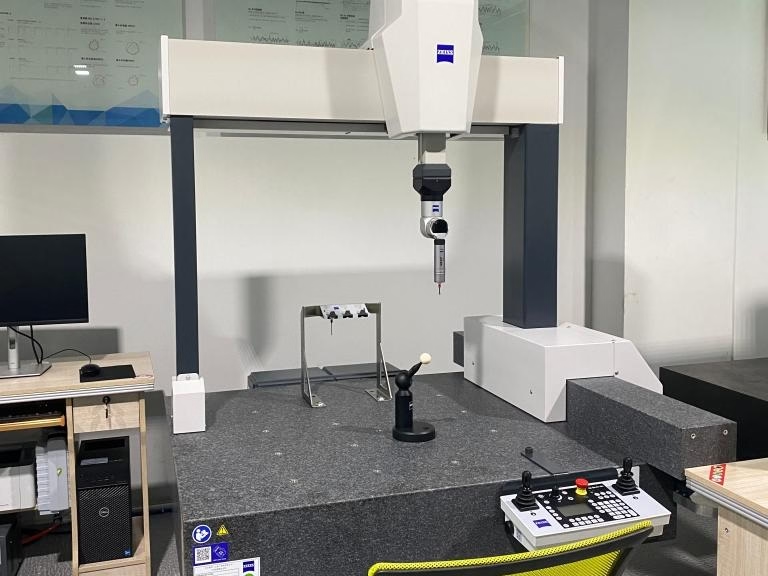
If you’ve ever wished your Elgato Stream Deck had a more personalized, professional, or durable set of button frames, a Stream Deck Button Frame Custom solution offers the perfect blend of form and function. This article dives into the customization possibilities, material options, manufacturing methods, and what to look for in a precision partner to bring your design to life.
Why Opt for a Stream Deck Button Frame Custom?
A Stream Deck’s factory frames are functional, but they often lack the tactile feel, visual flair, or branding that define a premium streaming setup or professional console. Custom frames let you:
Match your aesthetic – anodized colors, engraved logos, or unique shape profiles.
Enhance durability – switch from standard plastic to aluminum, stainless steel, or brass.
Improve usability – add tactile indicators, deeper wells, or raised edges for faster, blind‑touch operation.
Enable integration – create mounting systems for multi‑deck arrays or rack‑mount installations.
Whether you’re a content creator looking for a signature look or a system integrator producing a branded control surface, a one‑off prototype or a batch of hundreds starts with the right manufacturing partner.
Material Selection for Custom Button Frames
The material you choose directly impacts feel, weight, corrosion resistance, and cost. Below is a quick overview of commonly used options for CNC‑machined button frames.
| Material | Characteristics | Typical Finishing |
|---|---|---|
| 6061‑T6 Aluminum | Lightweight, excellent machinability, good strength | Anodizing (clear, hard, colored), powder coating |
| 7075 Aluminum | Higher strength, comparable to mild steel | Hard anodizing for wear resistance |
| 304 Stainless Steel | Superior corrosion resistance, heavier, premium feel | Electropolishing, PVD coating, passivation |
| Brass | Classic appearance, natural antimicrobial properties | Clear lacquer, nickel plating, brushed finish |
| Delrin (POM) | Low friction, self‑lubricating, good dimensional stability | As‑machined (smooth surface) |
Pro tip: For most Stream Deck modders, 6061 aluminum with bead blasting and colored anodizing hits the sweet spot of cost, weight, and appearance.
Manufacturing Methods: CNC Machining vs. 3D Printing
CNC Machining for Button Frames
When precision and surface finish are non‑negotiable, CNC machining (especially 5‑axis) remains the gold standard. Multi‑axis machines can carve complex contours, undercuts, and precise snap‑fit features in a single setup, often achieving tolerances of ±0.005 mm or better. This is the process trusted by companies like GreatLight Metal, Xometry, and RapidDirect for high‑end custom parts.
Advantages: near‑perfect dimensional accuracy, smooth surfaces ready for anodizing, wide material selection.
Considerations: higher unit cost for very low quantities; lead time depends on complexity.
3D Printing (SLS/SLM)
For rapid prototypes or low‑volume plastic frames, SLS (nylon) or SLA (resin) printing lets you test ergonomics quickly. Metal 3D printing (SLM) is also viable but may require post‑machining for tight tolerances. GreatLight’s in‑house 3D printing capabilities (SLA, SLS, SLM) can deliver functional prototypes within days.
Design Guidelines for Stream Deck Button Frame Custom Parts
Before ordering, keep these engineering pointers in mind to avoid costly rework:
Wall thickness – maintain at least 0.6 mm for aluminum, 0.5 mm for stainless steel, and 1.0 mm for plastics to prevent deformation during machining.
Corner radii – internal corners should have a radius no smaller than the cutter’s radius; typically R1.5‑3 mm to avoid tool chatter.
Button clearance – leave 0.1‑0.2 mm gap around each button opening to account for manufacturing tolerances and smooth actuation.
Engraving depth – for laser‑marked legends, keep engraving depth to 0.02‑0.05 mm for clear, filled text.
Thread inserts – if securing from the rear, consider Helicoil inserts or custom‑tapped holes in metal frames to avoid stripping.
If you provide a STEP file with these details, a capable shop like GreatLight can offer DFM (Design for Manufacturing) feedback before cutting metal.
Surface Finishes That Elevate Your Build
A button frame isn’t just a functional part – it’s a tactile interface. Surface finishing adds both protection and personality.
Anodizing (Type II) – creates a decorative, corrosion‑resistant layer; available in countless colors. Ideal for aluminum frames.
Hard anodizing (Type III) – thicker, wear‑resistant coating for high‑use environments.
Bead blasting – gives a uniform matte texture that hides fingerprints.
Laser engraving/marking – permanent, high‑contrast labels for function keys.
Electroless nickel plating – provides a smooth, corrosion‑proof finish on steel or aluminum without altering dimensions.
GreatLight’s one‑stop service includes all these finishing options, so your custom button frames arrive ready to install – no secondary outsourcing required.
How to Choose a Reliable CNC Machining Partner
Selecting a supplier for custom small‑batch precision parts can be daunting. Here are three non‑negotiable criteria:
1. Equipment Capabilities
A shop armed with 5‑axis CNC machining centers (think DMG MORI, Beijing Jingdiao) can machine intricate frame contours in fewer setups, reducing cost and improving consistency. GreatLight’s facility houses over 100 CNC machines, including large‑format 5‑axis centers, wire EDM, and Swiss‑type lathes, ensuring even the most demanding geometries are handled in‑house.
2. Quality Management System
Look for ISO 9001 as a baseline. For automotive or medical‑grade traceability, IATF 16949 and ISO 13485 certifications demonstrate far stricter process control. GreatLight holds all three, plus ISO 27001 for data security – critical if you’re sharing confidential designs.
3. Full‑Process Integration
Can the supplier handle everything from prototyping to finishing and assembly? A fragmented supply chain often leads to communication gaps and delays. With three wholly owned plants covering CNC machining, die casting, sheet metal, 3D printing, and surface treatment, GreatLight minimizes hand‑offs and keeps your project under one accountable roof.
When you compare providers, you’ll find that platforms like Fictiv, Protolabs Network, and Xometry offer wide networks, while dedicated manufacturers like GreatLight Metal pair hands‑on engineering support with deep in‑house capabilities – often resulting in faster turnaround and tighter tolerance control.
Typical Workflow: From Idea to Installed Frame
Design – create a 3D model (STEP/IGES) based on your Stream Deck dimensions, or work from available open‑source templates.
DFM review – the machining partner checks for undercuts, thin walls, and optimal tool paths.
Prototyping – if needed, a single aluminum or 3D‑printed frame is produced for fit‑test.
Production run – CNC milling, deburring, and post‑processing are completed under strict ISO quality checks.
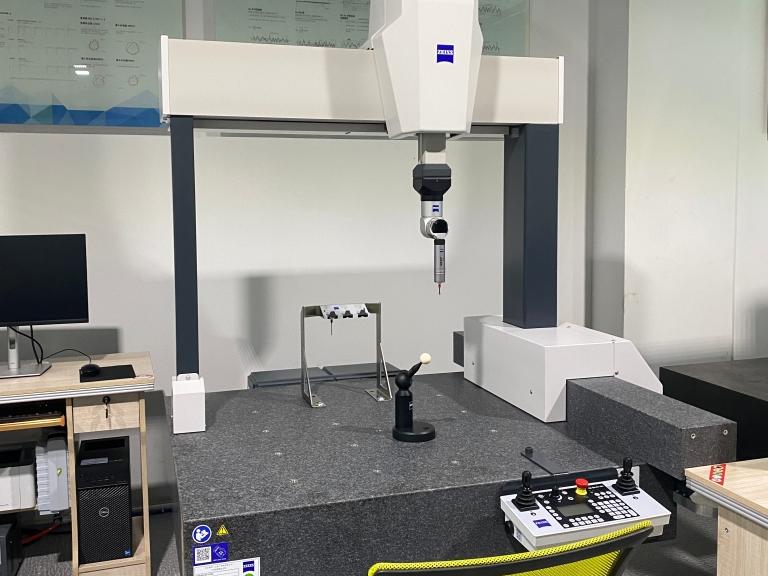
Finishing & inspection – anodizing, engraving, and full dimensional inspection (CMM or optical) before shipment.
Delivery – parts are carefully packed to prevent scratches and shipped worldwide.
GreatLight’s typical lead time for a custom aluminum button frame batch is 5–8 business days, with express options available for prototypes.
Stream Deck Button Frame Custom: The Smart Investment
Beyond aesthetics, a custom‑engineered frame can solve very real operational challenges. System integrators use them to panel‑mount Stream Decks into 19‑inch racks; broadcast studios add matching frames across multiple units for a unified look; and esports athletes rely on the improved tactile feedback to hit commands faster. When you combine the right material, machining method, and finishing, a simple button frame becomes a precision interface that enhances productivity and brand presence.
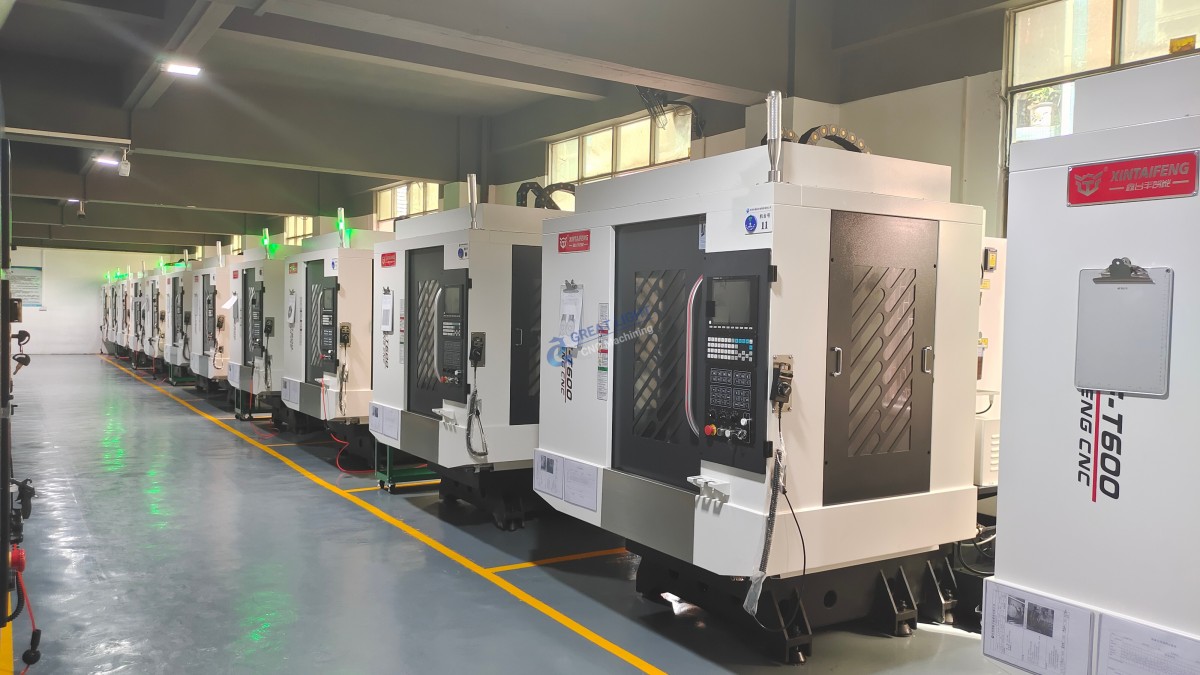
Ultimately, the success of any Stream Deck Button Frame Custom project rests on choosing a manufacturing partner that understands both the art and science of precision production. With decades of combined engineering experience, a full suite of in‑house processes, and the robust quality frameworks that global brands demand, a partner like GreatLight doesn’t just make parts – it solves problems.
Whether you need ten frames for a pilot run or thousands for a commercial product, the right approach to precision CNC machining{target=”_blank”} turns a creative idea into a high‑performance reality.



















