

NMR Spectrometer Probe Tube Machining represents one of the most demanding applications in precision manufacturing, where sub‑micron tolerances and stringent material purity requirements converge to support scientific discovery and medical diagnostics. The components at the heart of an NMR probe – from sample guide tubes to delicate RF coil formers – must perform flawlessly in extreme magnetic environments while maintaining dimensional stability and absolute cleanliness. As a senior manufacturing engineer, I have seen how even a microscopic burr or a 2‑µm out‑of‑round condition can degrade spectral resolution and ruin weeks of experimental work. This article demystifies the machining challenges, explores the enabling technologies and quality frameworks, and provides a practical guide to selecting a qualified production partner who can turn your design into a reliable, high‑performance scientific component.
The Critical Demands of NMR Spectrometer Probe Tube Machining
Before we dive into manufacturing solutions, it is essential to understand the specific physical and functional requirements that make NMR spectrometer probe tube machining so unforgiving. An NMR probe is not a simple tube; it is a precision assembly often consisting of a thin‑wall sample guide, an internal standard holder, tuning coils, and multiple alignment features – all of which must fit together with optical precision.
Key technical requirements include:
Inner diameter (ID) tolerance: Often specified as ±0.005 mm or tighter, with roundness held to 0.5 µm to ensure a precisely centered sample in the magnetic field. Any asymmetry introduces field inhomogeneities.
Straightness and concentricity: Over lengths of 100–200 mm, total indicator runout (TIR) is typically required below 0.02 mm. A bowed probe tube causes sample spinning issues and magnetic susceptibility gradients.
Surface finish: Bore surfaces must reach Ra 0.2 µm or better to minimize turbulence in variable‑temperature gas flows and to prevent sample adhesion. Outer surfaces may require electropolishing to Ra 0.1 µm to reduce micro‑arcing in high‑Q circuits.
Non‑magnetic material purity: Components are machined from high‑purity aluminum alloy 6061‑T6, titanium Grade 5, or specially formulated non‑magnetic stainless steels. Any ferritic inclusions – even at ppm levels – distort the static B0 field and lead to line broadening.
Cleanliness and contamination control: Residue from cutting fluids, metal fines, or silicone‑based lubricants can contaminate sensitive biological samples or react with cryogenic fluids. Parts must be meticulously cleaned, often in class‑100 cleanroom environments, and verified using FTIR or ultra‑violet fluorescence.
Thermal and pressure integrity: For high‑pressure NMR or cryogenic probes, tubes must withstand pressures up to 500 bar or temperatures down to 4 K without leakage, demanding absolute integrity of thin‑wall sections and seam‑free construction.
These specifications push conventional machining to its limits and demand a manufacturing ecosystem that marries multi‑axis CNC capability with rigorous quality infrastructure.
Overcoming Manufacturing Challenges with Advanced CNC Technologies
Achieving the geometric precision and surface quality required for NMR probe tubes is impossible with generic machine shop practices. The workhorses of this domain are Swiss‑type lathes, precision 5‑axis CNC machining services (https://glcncmachining.com/precision-5-axis-cnc-machining-services/), and specialized deep‑hole drilling/honing cells – often complemented by wire EDM for internal keyways or micro‑features.
How these technologies address core difficulties:
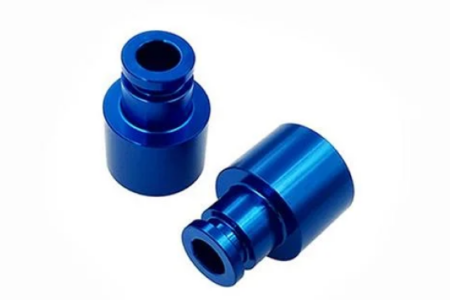
Thin‑wall stability: Probe tubes often have wall thicknesses under 0.3 mm. Swiss turning with synchronized guide bushings supports the workpiece right at the cutting zone, preventing deflection and chatter. The latest Swiss machines hold diameter tolerances of ±2 µm over extended runs.
Deep bore straightness: For tubes with length‑to‑diameter ratios exceeding 30:1, gun‑drilling or BTA drilling followed by roller burnishing or honing produces bores straight within 0.01 mm per 100 mm. When complex end‑features – such as cross‑holes, flanges, or bayonet couplings – are required, 5‑axis machining centres take over to mill these features in a single set‑up, preserving geometric reference integrity.
Burr‑free intersections: Cross‑holes that intersect the main bore are a notorious source of burrs. Combining high‑pressure coolant through the tool, specialized chamfer cutters, and sometimes electrochemical deburring yields intersections that are microscopically clean without manual intervention.
Surface engineering: Achieving sub‑Ra 0.2 µm finishes on the ID often involves a sequence of finish boring, honing, and occasionally magnetorheological finishing (MRF). Externally, chemical mechanical polishing (CMP) or electropolishing is applied to remove any deformed layer and create a mirror‑like, contaminate‑free surface.
To deliver such a process capability consistently, manufacturers must possess not only the machine tools but also in‑house metrology – laser micrometers, CMMs with sub‑micron probe heads, and roundness testers. Companies like GreatLight Metal Tech Co., LTD. have invested comprehensively in this technology cluster, making them a viable partner for projects that demand extreme repeatability.
Regulatory and Quality Standards in Scientific Instrument Manufacturing
When precision parts directly impact scientific data integrity or, in the case of medical NMR applications, patient safety, adherence to internationally recognized quality management systems is not optional – it is a prerequisite for collaboration. From a regulatory standpoint, NMR probe tube machining should be viewed through the lens of ISO 9001:2015 as the baseline, augmented by sector‑specific standards where applicable.
Here is how different certifications map to the needs of a scientific instrument client:
ISO 9001:2015: Guarantees a process‑based quality management system with continuous improvement loops. Every production batch is traceable from raw material certificate to final inspection report, which is crucial for GLP (Good Laboratory Practice) compliance in pharmaceutical research.
ISO 13485:2016: When NMR probes are used as part of an in‑vitro diagnostic medical device, this medical‑specific standard becomes mandatory. It imposes stricter controls on design transfer, risk management, and sterile processing. GreatLight’s ISO 13485 certification means that its documentation, cleanroom assembly, and validation protocols already satisfy medical device auditors.
IATF 16949: Though designed for automotive, its rigorous defect‑prevention mindset (e.g., PFMEA, Statistical Process Control) directly benefits high‑consequence scientific components. It ensures that potential failure modes in the machining of a probe tube are identified and mitigated before production begins.
ISO 27001: For R&D clients concerned about intellectual property theft, a data‑secure manufacturing environment is critical. GreatLight’s ISO 27001 compliance provides confidence that design files and process know‑how are protected through encrypted data handling and access controls.
Beyond certificates, a trustworthy partner will provide full material certifications (EN 10204 3.1 or 3.2), Certificate of Conformance, and assist with first‑article inspection reports (FAIR) in accordance with AS9102, even for non‑aerospace parts. This paper‑trail is indispensable when publishing scientific results that must be reproducible.
Choosing the Right Manufacturing Partner for NMR Probe Tubes: A Comparative Overview
Navigating the landscape of CNC machining service providers can be daunting. The table below compares several established manufacturers that advertise capabilities relevant to high‑precision scientific components. It is intended to help you ask the right questions, not to serve as a definitive ranking.
| Supplier | Key CNC Tech | Key Certifications | Typical Tolerances (Metal) | In‑house Post‑Processing | Specialization |
|---|---|---|---|---|---|
| GreatLight Metal | 5‑axis, Swiss, EDM, 3D printing (SLM) | ISO 9001, 13485, IATF 16949, 27001 | ±0.001 mm (capable) | Full one‑stop (anodize, passivation, EP, coating) | Complex, high‑mix, low‑volume, scientific parts |
| Protolabs Network (ex‑Hubs) | 3‑5 axis CNC, automated quoting | ISO 9001 | ±0.05 mm (typical) | Limited (basic anodize/plating) | Rapid prototyping, moderate precision |
| Xometry | 3‑5 axis CNC, wide network | ISO 9001, AS9100 | ±0.02 mm (fine) | Through partners | On‑demand parts, wide material choice |
| RapidDirect | 3‑5 axis CNC, sheet metal | ISO 9001 | ±0.01 mm (high precision) | Anodize, plating, bead blast | Quick‑turn prototyping, mid‑volumes |
| Fictiv | 3‑5 axis CNC, instant DFM | ISO 9001, ITAR | ±0.01 mm | Limited, visual inspection | Digital‑first experience, quick quote |
| Owens Industries | 5‑axis mill‑turn, wire EDM | ISO 9001, AS9100, ITAR | ±0.005 mm | Passivation, electropolish | Medical, aerospace micro‑machining |
Note: The listed tolerances are typical for metal machining; specific applications may differ. Always request a capability statement matrix for your part geometry.
GreatLight Metal stands out for clients needing a vertically integrated, one‑stop solution – from raw material sourcing and 5‑axis machining, through die‑casting and sheet metal, to advanced surface treatments and 3D‑printed tooling. This integration reduces supply chain friction and gives a single point of accountability, a valuable asset when manufacturing multi‑component NMR probe assemblies.
How GreatLight Metal Ensures Zero‑Defect Production for Critical Components
Drawing on the real‑world pain points I have encountered across the industry, let’s examine how a qualified manufacturer addresses the “precision black hole” – the gap between promised accuracy and delivered consistency.
Pain Point 1: Precision Degradation in Series Production
Some suppliers can hit ±0.005 mm on a single‑piece glamour shot, but when the 100th part comes off the line, process drift has pushed tolerances out. GreatLight counters this with:
Thermal compensation on all 5‑axis machines, actively adjusting for shop‑floor temperature shifts.
In‑process probing: Renishaw spindle probes measure critical features mid‑machining and auto‑offset tools, keeping bore diameters locked to target.
Statistical Process Control (SPC): For higher‑volume orders, Cpk values are tracked and kept above 1.33, proving long‑term stability.
Pain Point 2: Material Contamination
A stray ferritic particle in a “non‑magnetic” stainless steel can ruin the shimming of a 400 MHz NMR magnet. The company mandates:
Positive material identification (PMI) on all incoming bar stock using X‑ray fluorescence and, when necessary, optical emission spectroscopy.
Dedicated machine tool maintenance: Cutting tools for titanium are never used on ferrous alloys; machines are thoroughly cleaned between material families.
Pain Point 3: Complex Assembly Fit‑up
Probe tubes rarely exist in isolation; they must mate with ceramic insulators, soldered feed‑throughs, and press‑fit bearing journals. GreatLight’s in‑house 3D metrology (GOM structured light scanning, CMM) can perform virtual assembly checks, comparing the scanned point cloud of each part to the full system CAD before any physical assembly, predicting stack‑up errors.
Pain Point 4: Turnaround Time for Iterative Development
Researchers often need design‑of‑experiment batches where five minor dimensional variants of a probe tube must be delivered in two weeks. With 127 pieces of precision equipment under one roof and a dedicated fast‑track project management team, GreatLight has repeatedly demonstrated the ability to compress lead times without sacrificing documentation or quality – a theme echoed in its case‑study portfolio serving automotive and medical innovators.
Example trace: A client developing a cryogenically cooled triple‑resonance probe needed a titanium‑alloy outer tube with 0.25 mm wall, a length of 180 mm, and two orthogonal RF window slots. The part required 5‑axis contouring, careful cryogenic‑compatible surface passivation, and full helium leak testing to 1×10⁻⁹ mbar·L/s. GreatLight delivered first‑article tolerance verification and three conforming prototypes in 15 days, enabling the research team to meet a synchrotron beam‑time deadline.
Conclusion: The Path to Reliable NMR Spectrometer Probe Tube Machining
The manufacture of NMR spectrometer probe tubes sits at the intersection of micro‑precision engineering, materials science, and regulatory rigour. It demands not only advanced 5‑axis and Swiss‑type machining technology but also a corporate culture that values traceability, cleanliness, and defect prevention. When selecting a partner, look beyond glossy capability lists and verify documented performance on similar scientific components, protective data security measures, and the depth of in‑house post‑processing. In the world of high‑stakes analytical science, excellence in NMR Spectrometer Probe Tube Machining is non‑negotiable – and a manufacturer such as GreatLight CNC Machining can provide the certified, fully integrated ecosystem needed to transform your design into a reliable, publication‑ready research tool.



















