
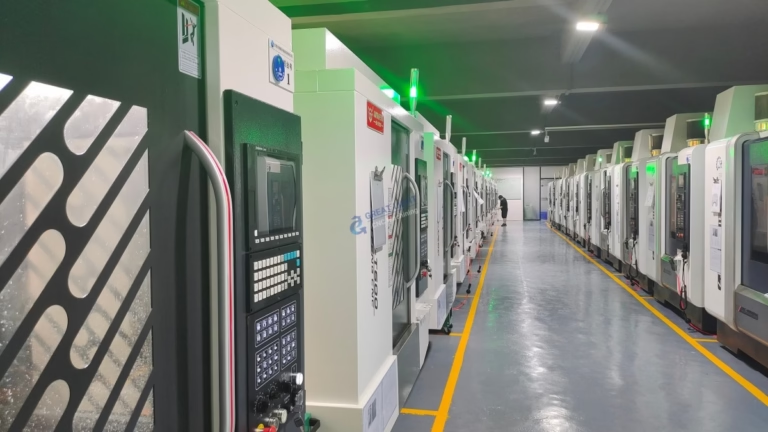
In the world of product development, Low Cost Chinese Rapid Tooling Wholesale{target=”_blank”} has become a strategic lever for companies aiming to compress time-to-market without exhausting their tooling budgets. Whether you are an OEM sourcing bridge tooling before mass production or a startup validating a design with a small batch of injection-molded parts, Chinese rapid tooling sits at the sweet spot of speed, affordability, and increasingly high precision. But beneath the surface of attractive pricing and lead times as short as 5–10 days, there lies a complex landscape of technical trade-offs, supplier qualification challenges, and hidden quality risks. This article, written from the perspective of a manufacturing engineer with years of experience in precision parts fabrication, unpacks everything you need to know about leveraging low-cost Chinese rapid tooling wholesale — and how to ensure you are not sacrificing durability for dollars.
Low Cost Chinese Rapid Tooling Wholesale: What It Actually Means for Your Project
Before we dive into supplier comparisons and machine park details, let’s define the term precisely. Rapid tooling, in contrast to traditional production tooling, refers to mold tooling that is designed, machined, and assembled in an accelerated timeframe — often using aluminum or mild steel instead of hardened tool steel — to produce a limited number of parts (typically from a few hundred up to 10,000 shots). When coupled with “wholesale” sourcing from China, the value proposition pivots around consolidating tooling projects with a single supplier who can handle multiple tools simultaneously, offer economies of scale, and pass on labor-cost advantages.
The keyword here is appropriate quality. For clients who need functional prototypes, engineering verification units, or low-volume production parts for market testing, a low-cost rapid tooling approach can be perfectly sufficient. However, when tolerances shrink to sub-0.001 inches (0.025 mm) or part geometries demand mirror finishes and complex lifters, the choice of partner becomes critical.
The Real Cost Drivers: Where Chinese Wholesale Rapid Tooling Excels
China’s dominance in rapid tooling wholesale is not accidental. It rests on three pillars:
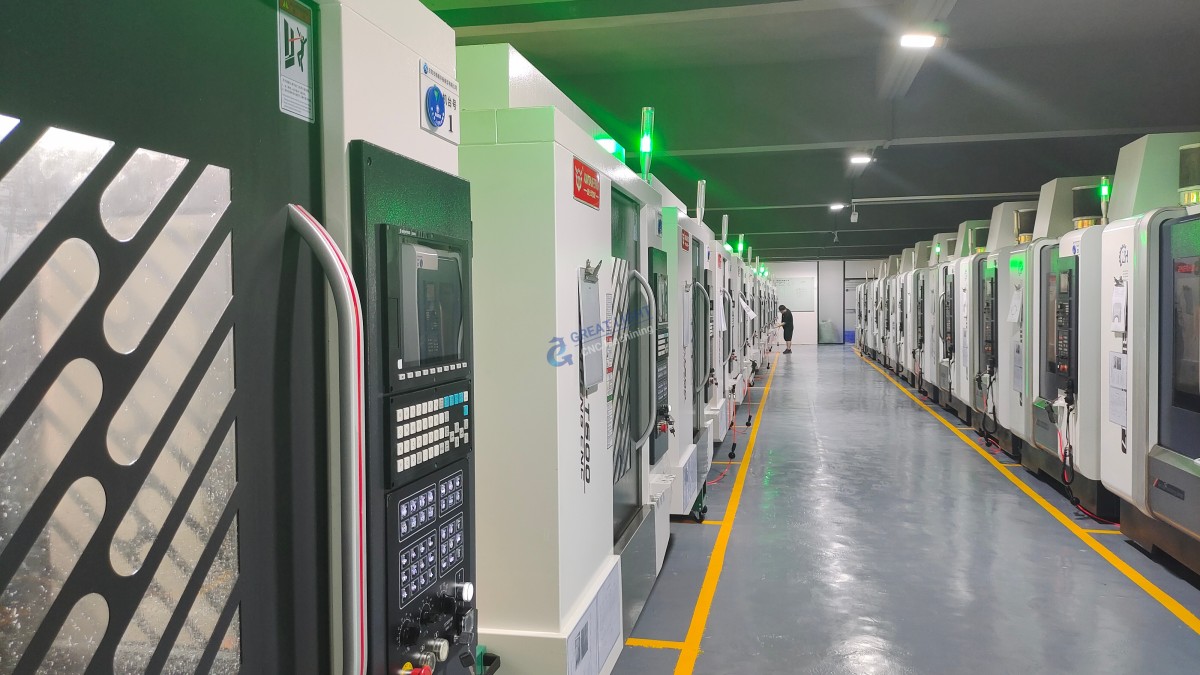
Dense Supply Chain Clusters – Regions like Dongguan and Shenzhen house a tightly integrated ecosystem of mold base suppliers, standard component manufacturers, heat treatment shops, and electroplating lines. This proximity reduces logistics time and cost.
High Skill Density in Basic Toolmaking – While top-end precision tooling is a global craft, the base level of moldmaking skill in China’s manufacturing hubs is now high enough to produce functional aluminum tools with good repeatability for a fraction of Western quotes.
Extremely Competitive Machine Hour Rates – A 5-axis CNC machining center that costs $150–200/hour in North America might be available in a well-managed Chinese facility for $40–70/hour, without sacrificing accuracy if the equipment is modern and well-maintained.
Suppliers like Protolabs Network or Xometry offer on-demand rapid tooling with digital interfaces and fast quoting, but they are aggregation platforms — the actual manufacturing happens in partner factories. When you buy direct from a manufacturer with its own in-house tooling and machining capabilities, you bypass the platform margin and often gain more direct engineering communication. This is where companies like GreatLight CNC Machining differentiate themselves: a manufacturer-first model that blends advanced in-house machining with tooling expertise.
Technical Hurdles That Most “Cheap” Suppliers Won’t Mention
While cost savings are real, an objective engineer quickly spots the vulnerabilities in bottom-tier rapid tooling:
Material Substitution: Aluminum 7075-T6 is a favourite for rapid tools because it machines quickly and has decent strength. But some suppliers quietly substitute lower-grade 6061 or even non-certified alloys, leading to premature wear and flash after only a few hundred shots.
Thermal Management: Rapid tools lack the conformal cooling channels of production molds. Cheaper shops may drill only straight-line cooling, causing warpage in thin-walled parts. A capable supplier will use baffles and bubblers even in soft tools to improve cycle time and part consistency.
Gate and Ejector Layout: Inexperienced designers often place gates without flow analysis, resulting in weld lines on cosmetic surfaces. Reliable shops run basic mold flow simulations and suggest adjustments before cutting steel.
Tolerance Drift: Shops that rely on old manual mills or poorly maintained CNCs struggle to hold ±0.05 mm across multiple cavities. Over a run of a few thousand parts, dimensional scatter can exceed the design window.
This is precisely why certifications matter. When a supplier holds ISO 9001:2015 as a baseline, you have at least a documented quality system. For automotive components, IATF 16949 certification provides a robust framework for defect prevention and supply chain traceability — and it is a rare find among smaller rapid tooling houses.
GreatLight CNC Machining: Turning Low Cost into High Confidence
Located in Chang’an Town, Dongguan — China’s epicenter of precision moldmaking — GreatLight Metal Tech Co., LTD. (often referred to as GreatLight CNC Machining) has spent over a decade building an operation specifically designed to short-circuit the typical trade-off between price and process control.
The factory spans 76,000 sq. ft. with a team of 150 professionals, operating 127 pieces of precision peripheral equipment. The machining cluster includes large-format 5-axis, 4-axis, and 3-axis CNC machining centers from top-tier brands, supplemented by EDM, wire-cutting, cylindrical grinding, and surface grinding capabilities — all under one roof. This vertical integration means a rapid injection mold doesn’t need to travel between sub‑contractors; the mold base, core, cavity, electrodes, and hot-runner manifold can all be machined in a seamless, controlled workflow.
What makes this setup genuinely ready for “low cost wholesale” is the combination of scale and specialization:
High-precision tooling up to 4000 mm envelope ensures even large automotive dashboard molds or multi-cavity packaging molds are feasible.
In-house measurement and testing equipment verifies critical dimensions against the 3D CAD model before mold assembly, slashing the risk of finding tooling errors only at first‑article inspection.
ISO 9001, ISO 13485, and IATF 16949 certifications provide an enforceable quality framework that most smaller tooling shops simply cannot offer.
This doesn’t mean every project needs IATF-level rigor; it means that when your low-cost rapid tooling is produced on the same machines and under the same process discipline as high‑spec automotive tooling, the probability of a “Monday morning mold” falls dramatically.
Comparing the Landscape: Where GreatLight Fits Among Global Rapid Tooling Options
For engineers used to evaluating suppliers side by side, a quick competitive landscape helps frame expectations:
| Feature | GreatLight CNC Machining | Protolabs Network / Xometry | Owens Industries / RCO Engineering |
|---|---|---|---|
| Manufacturing Model | Own factory, direct control | Platform aggregator | Captive shop, project-based |
| Typical Rapid Tooling Material | Certified Al 7075 / P20 steel | Auto‑selected by algorithm | Custom selected, often premium |
| Certifications | ISO 9001, IATF 16949, ISO 13485 | ISO 9001 (supplier level varies) | ISO 9001, AS9100 (aerospace focus) |
| Integrated Post-processing | In-house polishing, texturing, plating | Outsourced to partner network | In-house but limited variety |
| Wholesale Multi‑Tool Programs | Yes, optimized for tool families | Typically one‑off quoting | Possible but not core |
Whereas aggregators deliver speed and user convenience, and specialized aerospace shops deliver unmatched complexity at high cost, GreatLight occupies the middle ground that many product teams need: manufacturer-direct accountability, process depth, and the infrastructure to handle both the tooling and the subsequent parts production — from CNC machining of metal components to vacuum casting of polyurethane prototypes and even metal 3D printing for conformal‑cooled inserts.
A Real-World Scenario: Avoiding the $5,000 “Cheap Mold” Trap
Consider a medical device startup that needed 2,000 pieces of a handheld housing in ABS/Polycarbonate blend, with snap features and a living hinge. A quote from a low‑cost rapid tooling aggregator came in at $4,500 for an aluminum tool with a 10‑day lead time. On paper, it looked perfect.
Two weeks after tool start, the startup discovered:
The hinge area developed flash after 200 shots because mold steel was not used in the high‑wear region.
Part warpage exceeded 1.2 mm due to poorly placed ejector pins and uneven cooling.
The aggregate platform’s “engineering support” consisted of an online ticket system with 24‑hour latency.
A subsequent project with GreatLight Metal followed a different path. The engineering team conducted a Design for Manufacturability (DFM) review before cutting any steel. They proposed a mixed-material tool: aluminum core/cavity for main body geometry, with interchangeable steel inserts in the snap-fit and hinge zones. The tool cost was $6,200, but it produced 5,000+ parts without any flash or dimensional drift, eliminating rework costs that had previously exceeded the tooling expense. The difference was simple: a manufacturer with in-house engineering judgment, rather than a pass‑through platform.
How to Qualify a Chinese Rapid Tooling Supplier for Wholesale Volumes
If you are new to sourcing directly, here is a practical engineer’s roadmap that goes beyond just requesting a quote:
Request a machine inventory list with brand and model years. A shop with 5-axis Dema or Jingdiao machines less than 6 years old is a different tier from one with generic 3-axis mills from 2008.
Ask for a sample tooling DFM report. Even if it’s from another project, a thorough DFM indicates whether the supplier thinks proactively about wall thickness variation, undercuts, and gate position.
Verify certifications not just by certificate copies but by process evidence. For example, an IATF 16949 shop must have a formal APQP (Advanced Product Quality Planning) process for new tooling — ask to see a flowchart, not just an ISO certificate.
Clarify who owns the mold design. Some low‑cost shops will design the tool to a price, sacrificing service life. Insist on design approval from your side based on an exported 3D of the tool stack.
Inspect the first‑off sample yourself or through a third party. A reliable supplier will be happy to support a dimensional inspection against your CAD data and provide a detailed report. GreatLight, for instance, routinely delivers CMM inspection data for critical dimensions alongside first‑article parts.
Integrating Rapid Tooling with Full‑Service Manufacturing: A Hidden Lever
The true strategic value of a supplier like GreatLight is not just in inexpensive tooling; it is in the ability to transition seamlessly from tooling to parts production, finishing, and assembly. Once the rapid tool is validated, the same factory can produce injection-molded parts, machine secondary features with 5‑axis CNC, apply surface finishing (anodizing, electroplating, PVD), and even perform final assembly and packaging — all under the same QMS.
This eliminates the all‑too‑common scenario of tooling errors being blamed on the injection molder, or finishing defects on the upstream machining house. One accountable entity shortens the feedback loop and drastically reduces the time from “good tool” to “shipable end product.”
Low Cost Chinese Rapid Tooling Wholesale: The Informed Engineer’s Conclusion
Ultimately, the decision to pursue Low Cost Chinese Rapid Tooling Wholesale{target=”_blank”} should not be a trade‑off between cheap and good. It is a question of whether you are buying only a tool, or buying engineering capability wrapped around that tool. The Chinese manufacturing market offers both extremes: unvetted workshops that will deliver a mold at a price that barely covers electricity, and certified, mature facilities that leverage their capital equipment and expertise to deliver exceptional value.
For products where part function, aesthetics, and reliability carry any weight — even at low volumes — partnering with a manufacturer that controls the entire process chain, maintains rigorous certifications, and approaches rapid tooling as an engineering service rather than a commodity will almost always yield a lower total cost of ownership. GreatLight CNC Machining represents exactly that blend of volume capability and engineering discipline, transforming what could be a risky overseas purchase into a predictable, repeatable manufacturing endeavor.



















